







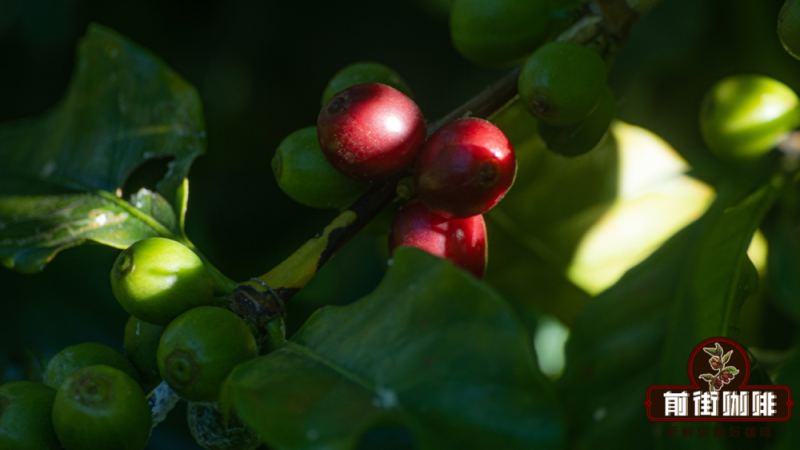
What is the Catimor arabica variety?
Catimor is an arabica variety bred by crossing Arabica with Robusta. Portugal's CIFC crossed Timor, which carries Robusta ancestry, with the Bourbon variant Caturra in 1959 to create a plant resistant to coffee leaf rust and high yielding. Central and South America adopted it widely in the 1980s after severe leaf rust outbreaks, and Yunnan also grows it, mostly in river valleys around 1,100 meters.
Catimor keeps Robusta's disease and pest resistance, tolerates high-density planting and yields steadily, but it inherits flavor drawbacks: weak aroma, a relatively bitter taste and occasional astringency, sometimes described as a devilish finish. Baoshan small bean is noted for being strong yet not bitter and aromatic yet not harsh, and specialty lots such as Front Street 2013 Yunnan Typica show what the region can do beyond Catimor.
Catimor is a coffee variety produced by crossing Arabica with Robusta. Because of its resistance to leaf rust and high yield, it is widely planted in Central and South America and Yunnan. It inherits the robust genes of Robusta, but in cupping it is also often criticized for insufficient aroma and a bitter finish. Yunnan Catimor is mostly grown in river valleys at around 1,100 meters, and the small-bean coffee produced in places such as Baoshan is known for being strong yet not bitter, aromatic yet not harsh. This article will begin with Catimor's breeding history, disease-resistance advantages, flavor defects, and the growing conditions and harvest cycle of the Yunnan producing region, to give you a comprehensive understanding of this variety, and introduce the performance of specialty coffees such as Front Street 2013 Yunnan Typica.
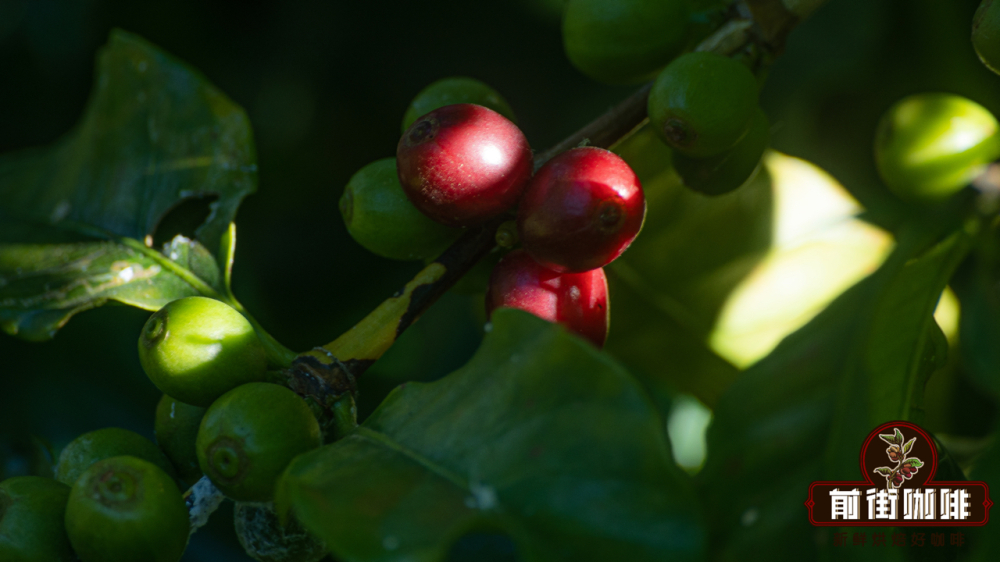
In the coffee world, Arabica has always been regarded as synonymous with high quality, while Robusta is often associated with a rough, bitter taste. Arabica has a delicate and elegant flavor, while Robusta is intense and bitter. So, after crossing these two varieties, what kind of flavor would the result present? Today, Front Street will talk with everyone about the Catimor variety.
Catimor Variety Catimor
In the 1970s and 1980s, many countries in Central and South America suffered large-scale attacks of coffee leaf rust, and coffee production was severely affected. In response to this disease, the Coffee Research Center CIFC in Portugal crossed Timor, which carries Robusta ancestry, with the Bourbon variant Caturra in 1959, and finally bred Catimor, which is both disease-resistant and high-yielding. In order to cope with the losses caused by leaf rust, and with the promotion of coffee industry organizations, Central and South America began large-scale introduction of this variety in the 1980s.
Because it carries Timor's Robusta genes, Catimor has strong resistance to coffee leaf rust, coffee berry disease, and pests, and can also be planted at high density, with high and stable yields. On the other hand, however, Catimor also inherited Robusta's flavor shortcomings. In cupping it is often described as having a "devilish finish," with weak aroma performance, a relatively bitter taste, and sometimes an unpleasant astringency.
As is well known, the higher the altitude at which coffee trees are grown, the more obvious the temperature difference between day and night. The coffee fruit grows more slowly, accumulates more nutrients, and contains more sugars and aromatic substances, so the final flavor in the cup is more outstanding. Compared with other Arabica varieties, even when Catimor is planted above 1,200 meters, its cupping performance is still inferior to high-quality varieties such as Bourbon, Caturra, and Catuai. If planted in low-altitude areas below 1,000 meters, Catimor is no different from ordinary commercial coffee beans.
Yunnan coffee is often directly called Yunnan small-bean coffee. Yunnan small-bean originally referred to the old Arabica variety Typica, but because the later-introduced Catimor occupies the vast majority of Yunnan's coffee cultivation, what Front Street calls Yunnan small-bean coffee today is actually the Catimor variety.
Yunnan Catimor is suitable for planting on hillsides between 800 and 1,800 meters above sea level. Too high an altitude easily produces sharp acidity, while too low an altitude gives a heavy bitterness. Therefore, Yunnan usually plants Catimor in river valleys at around 1,100 meters. In addition, Yunnan's broad slopes, obvious undulating terrain, fertile soil, abundant sunshine, plentiful rainfall, and large temperature differences between day and night are all conditions very favorable for coffee tree growth.
Yunnan small-bean coffee is mainly distributed in Lincang, Baoshan, Simao, Xishuangbanna, Dehong, and other places. Among them, Baoshan has an average annual temperature of 21.5°C and an extreme maximum temperature of up to 40°C, with no frost throughout the year. Coffee trees, however, cannot grow in environments with frost, so this place is very suitable for small-bean coffee cultivation and is also recognized as the best small-bean coffee producing region. The small-bean coffee produced in Baoshan is renowned at home and abroad for being strong yet not bitter, aromatic yet not harsh, small and uniform in bean size, mellow and rich, with fruity notes.
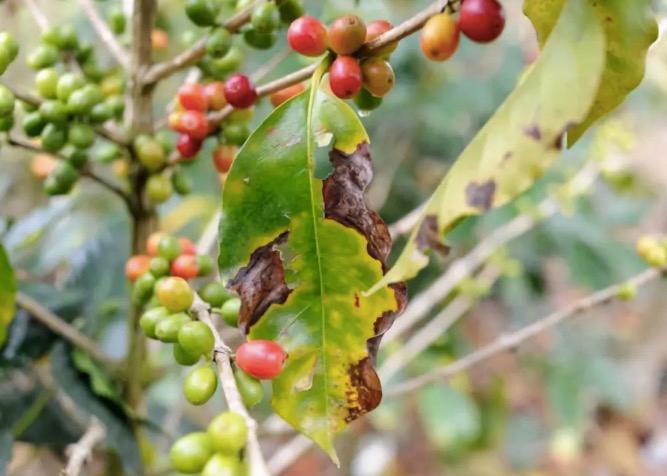
Yunnan small-bean coffee trees usually need to be planted for three to four years before they begin to bear fruit. The flowering period of small-bean coffee in Yunnan is generally from February to July, with the full flowering period from March to May. Coffee tree flowering is affected by local climate conditions, and the blooming time is very short, usually only two or three days. The growth and ripening period of coffee cherries is relatively long. Yunnan small-bean coffee generally takes 8 to 10 months to mature. Local harvesting begins in November, and the harvest season continues until March to April of the following year. The higher the altitude, the slower the ripening speed. For example, Front Street 2013 coffee beans grown by Front Street itself, a new-season batch launched in February 2022, began harvesting between November and December.
When talking about Yunnan specialty Arabica, one cannot fail to mention Front Street 2013 Yunnan Typica. Front Street 2013 Typica is grown in high-altitude areas, thus showing the rich aroma of pure small-bean coffee. It uses sun-drying processing and medium roasting. After brewing, it has apricot-like sweet acidity, nutty notes, brown sugar sweetness, and a tea-like finish. It is suitable for making pour-over, cold brew, Clever Cup, and drip bags.
The above content is compiled by CoffeeHunters, a coffee news website.


