







Is Decaf Coffee Healthier Than an Arabica Bean?
An arabica bean holds roughly 0.9% to 1.4% caffeine by weight, averaging about 1.2%, while Robusta runs 1.8% to 4%. Decaf falls into two groups: naturally low-caffeine varieties and beans decaffeinated after harvest. The EU caps processed decaf at 0.1% caffeine in green beans; the US FDA allows removal down to below 3% of the original content.
Taste complaints usually trace back to the decaffeination method rather than the coffee itself. The Swiss Water Process uses water and carbon filtration instead of chemical solvents, which preserves more of the original flavor. Front Street's Colombia Huila decaf keeps sweetness and body despite the reduced caffeine, and its pour-over parameters stay close to standard arabica beans.
Decaf coffee has attracted growing attention in recent years. It has lower caffeine content than Arabica beans, but how do its taste and health value actually compare? From the perspective of Front Street Coffee, this article systematically explains the definition of decaf coffee, the decaffeination standards of the EU and the US FDA, the difference between naturally low-caffeine and artificially decaffeinated coffee, and highlights Front Street Colombia Huila Decaf Coffee Beans. The article also analyzes the real reasons why decaf coffee tastes bad, the process and pros and cons of the Swiss Water Process, and common questions such as whether decaf coffee is healthy and whether it can aid fat loss. Finally, it includes Front Street Coffee's pour-over parameters and flavor description for decaf beans, helping coffee enthusiasts gain a comprehensive understanding of decaf coffee.
For more specialty coffee information, welcome to follow Front Street Coffee (Frontsteet Coffee).
Anyone familiar with specialty coffee knows that this field basically uses Arabica coffee beans. Compared with Robusta, Arabica has lower caffeine content and performs better in cupping; Robusta, due to its higher caffeine content, rough flavor, and even potential health effects from excessive consumption, rarely appears in specialty coffee. Nowadays, a type of decaf coffee bean with even lower caffeine content than Arabica is also popular on the market. So, is drinking decaf coffee healthy? What advantages and disadvantages does it have? Below, Front Street Coffee (FrontStreet Coffee) explains them one by one for coffee fans.
What is decaf coffee?
Generally, the caffeine content of coffee beans is measured as a proportion of weight. Arabica beans have a caffeine content between 0.9% and 1.4% (average about 1.2%), while Robusta ranges from 1.8% to 4% (average about 2.2%). Decaf coffee can be divided into two types: naturally low-caffeine and artificially decaffeinated. The EU standard for artificially decaffeinated coffee is that after processing, the caffeine content must not exceed 0.1% of the green beans; the US Food and Drug Administration FDA standard is removal to below 3% of the original caffeine content.
Front Street Coffee (FrontStreet Coffee) currently has a decaf coffee bean from the Colombia Huila region with quite an excellent flavor that is worth recommending. It retains Colombia's traditional rich body while, because its caffeine content is extremely low, it will not interfere with sleep.
Front Street Colombia Decaf Coffee Beans
Region: Colombia Huila Altitude: 1,750 meters Variety: Typica Processing method: Swiss Water Process Flavor: berries, citrus, cocoa, nuts
Does decaf coffee taste good?
Front Street Colombia Decaf Coffee Beans come from Colombia's most prestigious and highest-altitude Huila region. The coffee beans produced here are selected high-mountain coffee beans of the Colombian state-owned company and are hailed as a national treasure of Colombia. Therefore, the flavor of this Huila decaf bean is naturally not bad. After all, the quality of a bean depends on the region, variety, and processing method, and even the same region needs to be graded again. As long as it is a high-quality bean that has gone through layer after layer of screening, how bad can the flavor be? If you drink one that tastes bad, then that bean itself must be of poor quality, and it cannot be blamed on the entire category of decaf coffee. If you drink one that tastes bad, it only means you did not choose the right one.
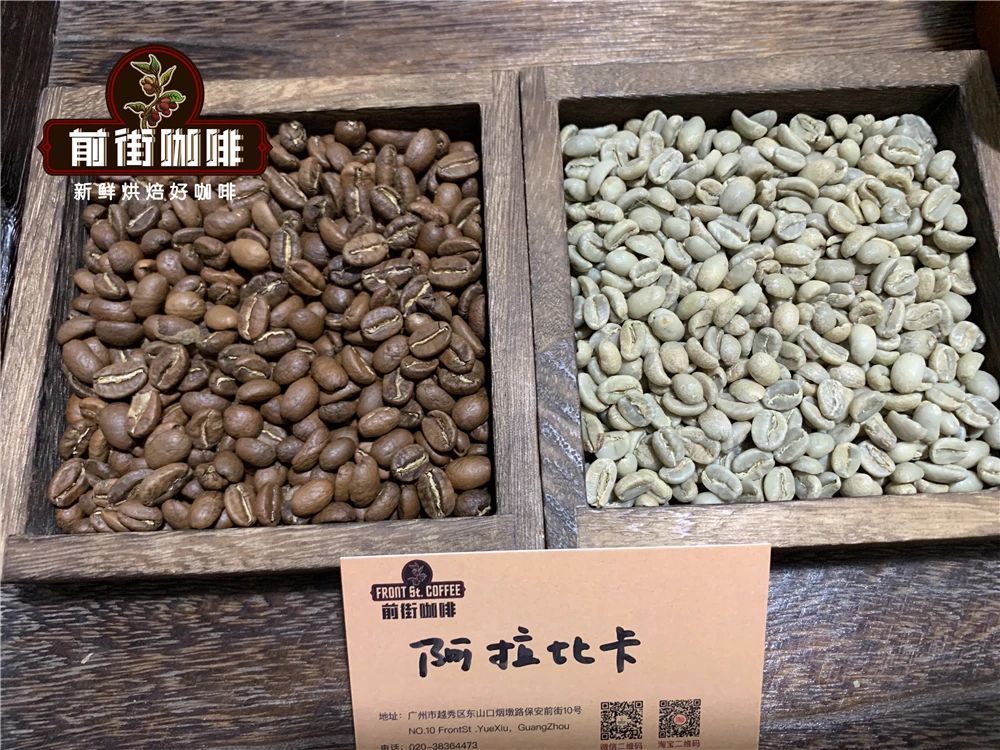
Therefore, Front Street Coffee (FrontStreet Coffee) believes that the bad taste of decaf coffee is not caused by the decaffeination process. Most decaf coffee chooses cheap commercial-grade coffee beans as its raw material. Modern decaffeination technology is quite complex, and in most cases, companies producing decaf coffee tend to choose varieties with high caffeine content (such as Robusta). Before decaffeination, the beans themselves are already not tasty. Like coffee beans sold by other coffee shops, if decaf coffee uses high-quality Arabica from the green bean stage, then even after decaffeination, it can still perform well.
In addition, the batch of Colombia decaf green beans selected by Front Street Coffee (FrontStreet Coffee) is graded Supremo. In Colombia's coffee grading system, Supremo is the highest grade, so the quality is naturally very well guaranteed.
Processing methods for Colombia decaf coffee
There are mainly four decaffeination methods: the direct/indirect solvent process, the supercritical carbon dioxide process, the Swiss Water Process, and the mountain spring water process. The common ones are the direct solvent process and the Swiss Water Process. As mentioned above by Front Street Coffee (FrontStreet Coffee), this Colombia Huila decaf bean uses the Swiss Water Process.
Swiss Water Process
The process is as follows: first soak the green coffee beans in hot water; some caffeine is already removed during the soaking stage. Then filter the soaking liquid with activated carbon, and finally pour the solution back into the coffee beans. This series of steps can remove caffeine more effectively without chemical solvents, and the soaked solution can also be reused in different batches. The downside is that the coffee will lose some flavor during the filtration process.
However, this method can achieve a caffeine removal rate of up to 99.9%, the highest removal rate. Although the Swiss Water Process loses some flavor, it is low-cost, easy to operate, and highly efficient, so most decaf coffee beans on the market today mainly use the Swiss Water Process.
Is drinking decaf coffee healthy?
Many people believe that drinking decaf coffee is unhealthy. Is that really true?
As Front Street Coffee (FrontStreet Coffee) said above, decaf coffee, Decaf, is the abbreviation of decaffeinated coffee. There are many methods for removing caffeine. Apart from caffeine content, the nutritional value of decaf coffee should be almost the same as regular coffee. However, depending on the method used, the taste and aroma may become slightly milder, and the color may also change. This can make decaf coffee friendlier to people who are sensitive to the bitterness and aroma of regular coffee.
So are decaf coffee beans completely caffeine-free? Not exactly. Decaf coffee actually removes only about 97% of the caffeine, not all of it. Although caffeine is still present, compared with regular espresso, the caffeine in decaf coffee will not have any effect on the vast majority of people.
Therefore, as long as you drink it normally and do not exceed the amount your body can accept in a day, it will not harm your body; but if you drink it without restraint and exceed the daily caffeine intake limit, then naturally it will also be harmful.
The above is the decaf coffee knowledge compiled by Front Street Coffee (FrontStreet Coffee), hoping to help coffee fans better understand decaf coffee. Next, Front Street Coffee (FrontStreet Coffee) will share how to brew decaf coffee.
How does Front Street Coffee (FrontStreet Coffee) brew decaf coffee beans?
After decaf coffee beans release caffeine through soaking, their fiber structure differs from that of regular coffee beans, and their strong water absorption slows down extraction, so the brewing parameters need to be adjusted.
Dripper: Kono dripper Water temperature: 88.8°C Dose: 15g Coffee-to-water ratio: 1:15 Grind size: Coarse grind / yellow granulated sugar coarseness (70% passing through China standard No. 20 sieve)
Front Street staged brewing: Add the coffee powder, pour in 2 times the amount of water (30 ml) and bloom for 30 seconds. Then perform the second pour, gently circling to pour in 150 ml of hot water, pushing the coffee bed higher so that a golden foam surface forms on top. Wait until the water level of the coffee bed drops slightly, then pour in the final 45 ml. After all the coffee liquid has flowed into the server, remove the dripper and end extraction. Extraction time is 2 minutes 10 seconds.
Brewed flavor of Colombia decaf coffee beans: Dark chocolate, caramel, nuts, rich body.
For more specialty coffee beans, please add the private WeChat Front Street Coffee (FrontStreet Coffee), WeChat ID: kaixinguoguo0925
The above content is compiled by CoffeeHunters, a coffee news website.


