







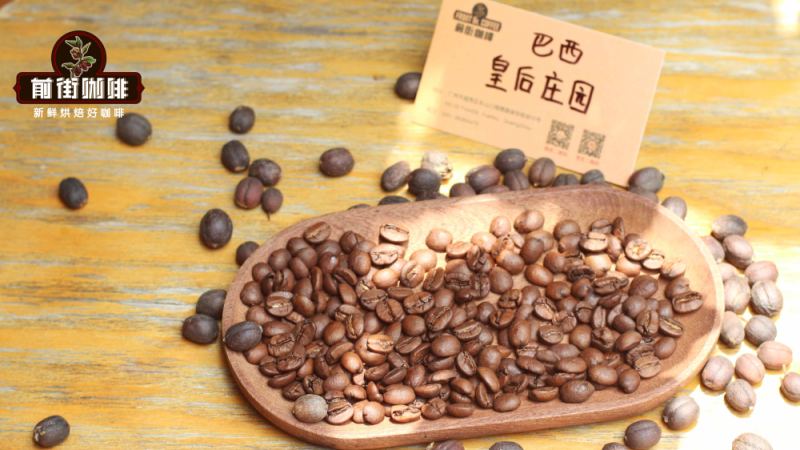
Why Does Yellow Bourbon Coffee Taste Sweet and Nutty?
The Brazil Queen Estate pulped natural Yellow Bourbon comes from Fazenda Rainha in the Mogiana region of Minas Gerais, a 280-mu farm sitting at roughly 1,400 meters in the volcanic Vale da Grama. The estate won Brazil's Cup of Excellence in 2011, and 200 mu are planted with Yellow Bourbon trees. All cherries are picked by hand because the rolling terrain keeps large machinery out.
The beans are pulped, then dried on raised beds and in mechanical dryers, with mechanical and hand sorting afterward. High density and low moisture content call for heat-curve adjustments during roasting. The resulting cup carries Brazilian coffee notes of cream, nuts, roasted peanuts, and sugarcane sweetness.
Located in the Mogiana region of Minas Gerais, Brazil, Fazenda Rainha (Queen Estate) won the Brazilian Cup of Excellence in 2011. The estate sits in the ancient volcanic valley of Vale da Grama at about 1,400 meters, and all coffee is harvested by hand. This article focuses on Front Street Coffee's Brazil Queen Estate pulped natural Yellow Bourbon, covering the estate's background, the variety's origins, the pulped natural process, green bean characteristics, and roasting strategy, showing how this bean, with its high density and low moisture content, is guided through adjustments to the heat curve to ultimately deliver a cup that weaves together cream, nuts, roasted peanuts, and sugarcane sweetness.
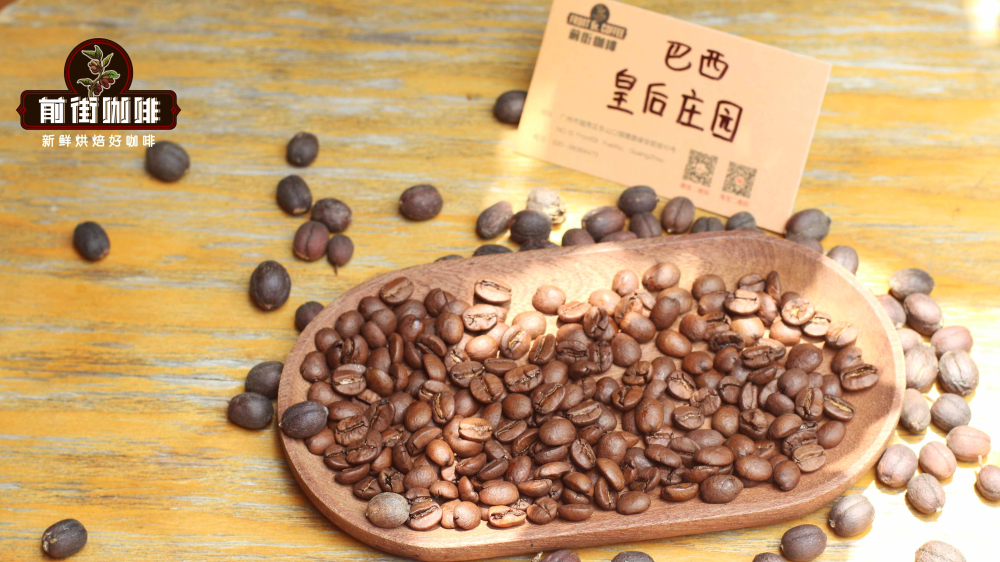
Front Street Coffee Brazil Queen Estate Pulped Natural Yellow Bourbon Introduction
This Front Street Coffee Brazil semi-washed Yellow Bourbon comes from Fazenda Rainha (Queen Estate), a 280-mu property set in Brazil's historic volcanic valley of Vale da Grama. In 2011, the estate took first place in Brazil's Cup of Excellence competition. Two hundred mu are planted with Yellow Bourbon coffee trees. Because the terrain rolls and the mountains stretch on, large machinery struggles to get in, so every cherry is picked by hand. The estate first uses a washed process, then completes drying with raised beds and mechanical dryers; after mechanical sorting, additional hand sorting follows. The heavy workload means farm employees need to be on site year-round. In return, all employees and their families receive housing, healthcare, and education support here.
The estate belongs to a mid-sized local farm organization in Grama Valley, whose export business focuses mainly on specialty Bourbon coffee. The organization's office is in nearby Pocos de Caldas, and it has built a national-level cupping lab equipped with large warehousing facilities. In addition, the organization collaborates with local universities and research institutions on projects, including Lavras University—renowned scholar Dr. Flavio Borem came from its agricultural research center.
Product Name:
Front Street Queen Estate Pulped Natural Yellow Bourbon Coffee
Estate: Fazenda Rainha
Region: Vale da Grama, Mogiana, Brazil
Altitude: 1,400 m
Process: Pulped Natural
Variety: Yellow Bourbon
Green Bean Analysis
This Front Street Brazil coffee is pure Yellow Bourbon, whose lineage traces back to the Bourbon variety's original home—Reunion Island in Madagascar. In the 18th century, French explorers first introduced coffee there, which is why the variety is also called "French Missionary." In the 20th century, it spread to the African continent and then made its way to Brazil; today its derived varieties are found throughout Africa and the Americas. Bourbon grown in Brazil, affected by a recessive gene, produces yellow fruit.
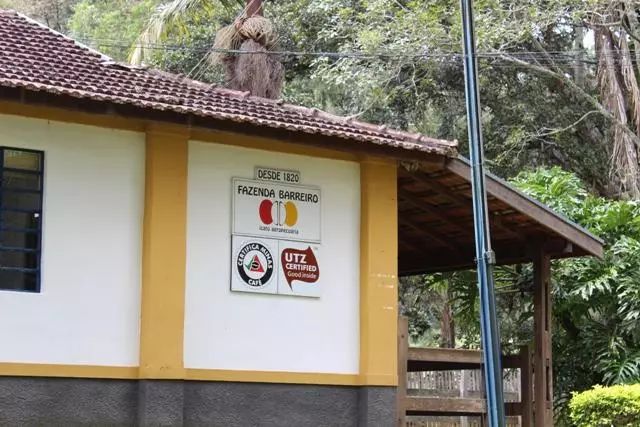
This Front Street Brazil coffee is processed using the Cerezadescascado method (pulping method) invented by Brazilians—a quasi-honey process that sits between washed and full natural and gives the coffee a rounder flavor. In practice, a small amount of water is first used to remove the pulp and skin, then the coffee is spread directly on raised drying beds to dry, with constant turning to ensure every bean gets sunlight; after several days of drying, it is mechanically dried to bring moisture down to the right level.
Coffee processed this way is fairly stable and can be stored long-term. The beans are relatively high in density, low in moisture, and large in size: 98% of the beans reach screen size 16 or above, and about half can reach screen size 18.
Roast Analysis by Chris Kornman
Roasting Analysis
Front Street believes an espresso roast direction suits this bean better, though with a relatively light roast color. During roasting, this bean overturned Front Street's usual impression of Brazilian coffees. This lot from Front Street Brazil Queen Estate is high in density yet low in moisture, which makes its heat absorption capacity quite strong; as a result, roasting requires extra heat to enter first crack smoothly and sustain development. The final roast level is medium-dark, and the coffee shows a complex profile of cream, nuts, roasted peanuts, cream, sugarcane, and fruity sweet-tart notes.
The above content is compiled by CoffeeHunters, a coffee news website.


