







What Do Coffee Grades Like AB and AA Mean in Kenya?
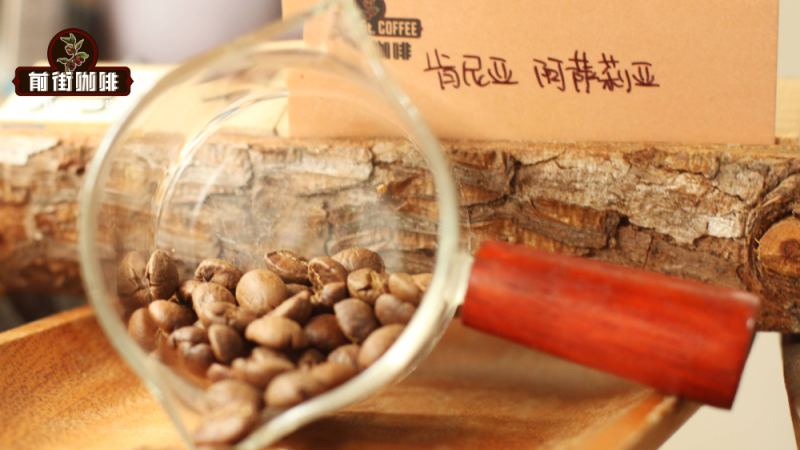
In Kenya's coffee grading system, AA is the top size grade and AB sits just below it, covering screen sizes 15 and 16. AB lots are still considered high quality and often deliver the same bright, juicy acidity as AA. The Kenya AB Komatina Little Cranberry, grown in Kiambu at 1,400m to 1,800m, shows berry sweetness and a silky creamy finish.
Those flavors also come from varieties and processing. SL-28, SL-34, and Ruiru 11 are common on Kenyan coffee farms, and the K72 method adds a fermentation step on top of conventional washing, which sharpens the mouthfeel and acidity. Kenyan coffee is judged on its clean cup and fruity character, not on bitterness alone.
Kenyan coffee occupies a unique position in the global specialty coffee landscape thanks to its bright fruity acidity and clean cup. This article starts with the Kenya AB Komatina Little Cranberry that Front Street Coffee once offered, and systematically covers the geography and growing background of Kenyan producing regions, the lineage of the main cultivars SL28 and SL34, the specific meaning of grading standards such as AB and AA, and a detailed breakdown of the complete K72 double fermentation washed process. The article also includes Front Street's roasting curve analysis for this bean and in-store brewing parameters, helping you fully understand the origins of Kenyan coffee's acidic aromatic flavor and how to present its balanced and juicy side through brewing.
Although FrontStreet Coffee currently keeps only one Kenyan coffee on its bean list, looking back, Front Street has introduced quite a number of beans from Kenyan producing regions. If you are an old friend who has followed Front Street for a long time, you should still remember that Kenya AB Little Cranberry. The AB grade in the Kenyan coffee system is second only to the highest AA grade, making it a fairly outstanding batch in terms of quality. This Little Cranberry presents a bright, uplifting acidity like freshly squeezed juice; at high temperatures the berry aroma is striking, and the sip is full of berry sweetness; as the temperature drops, the acidity becomes tighter and more concentrated, and the finish brings out a silky creamy touch. Below is the detailed profile of this Front Street Kenya AB coffee:
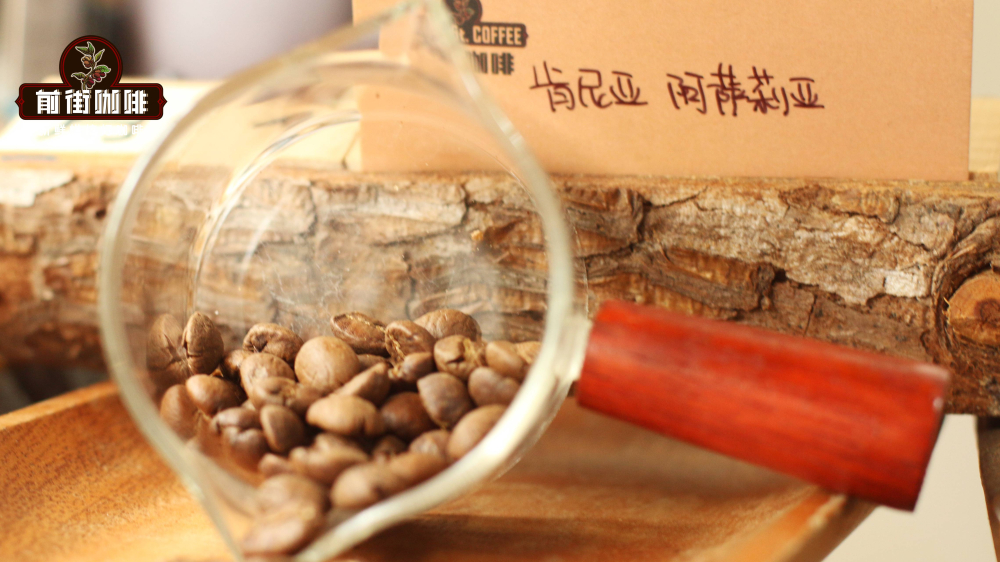
FrontStreet Coffee: Kenya AB Komatina Little Cranberry
Region: Kiambu
Micro-region: Gitwe
Soil: Volcanic clay
Altitude: 1,400m–1,800m
Varieties: L-28, SL-34, Ruiru 11
Processing: Kenyan-style 72-hour washed
So where exactly lies the secret to Kenyan coffee's deliciousness? Front Street believes it is related to many conditions such as altitude, growing environment, and processing method. But specifically for this Little Cranberry, what Front Street wants to discuss first is the K72 processing method it uses. Little Cranberry processed with K72 has a noticeably different flavor profile from ordinary washed Kenyan coffee. K72 adds a fermentation step on top of conventional washing, so this bean has a brighter mouthfeel and particularly striking acidity. As for the complete operating steps of the K72 processing method, FrontStreet Coffee will explain them one by one in the latter part of this article; let us begin with the producing region background.
01 | Introduction to Kenyan Producing Regions
Friends with some knowledge of geography should know that Kenya is located in East Africa and borders Ethiopia. However, what many may not know is that although Kenya shares similar growing conditions with Ethiopia, which is known as the "birthplace of coffee," Kenya's coffee industry started quite late. After reviewing relevant materials, Front Street learned that coffee was first planted in Kenya in 1893, with seeds introduced from Brazil, of the Bourbon variety (also called French Mission, to commemorate the French missionaries who brought the seeds). The spread of coffee is like a story of "left turn, right turn"—it did not go south deep into the African interior, but crossed the Red Sea to the north, taking root and mutating around the world over centuries, and finally found its way back to its homeland: The Great Rift Valley in Africa.
Kenya is now one of the important coffee-producing countries, with about six million people nationwide making a living from the coffee industry, and the industry structure mainly consists of a combination of smallholder farmers, wet mills, and cooperatives. Kenyan coffee is almost entirely washed, and coffee trees are mostly grown in mountainous areas at altitudes of 1,400 to 2,000 meters. Producing regions include Ruiri, Thika, Kirinyaga, Mt. Kenya West, Nyeri, Kiambu, and Muranga. Kenya's renowned producing regions are mainly concentrated in the central area, such as Nyeri, Kiambu, and Kirinyaga, as well as the mountainous areas in the west near Uganda (Nakuru, Bungoma, Kitale, etc.).
02|Kenyan Coffee Cultivation
Most local coffee farms are small-scale operations, often producing only a few hundred kilograms per year. Farmers decide which nearby processing plant (Coffee Factory) to sell their coffee cherries to based on transportation distance and purchase price. The land held by farmers is usually very small, sometimes even measured by how many trees are planted on a plot, which also means producers often have more autonomy and can strategically pick coffee cherries at optimal ripeness before sending them to the local wet mill. Processing plants generally have sufficient water sources for fine washing operations, including soaking the coffee beans in fresh water for a long time, thereby strengthening the flavor signature unique to Kenyan coffee.
03|Kenyan Coffee Varieties
Kenya's main varieties are SL28 and SL34, both bred and named by the "Scott Laboratories" laboratory in 1930. The Kenyan Asalia coffee beans currently sold in Front Street stores use a combination of SL28 and SL34. According to SL laboratory botanists, SL28 and SL34 are both genetic mutations. SL28 combines the lineage of French Mission, Mocha, and Yemen Typica. The original purpose of breeding SL28 was to obtain a coffee variety with both high yield and pest resistance. Although the final yield did not meet expectations, SL28's bronze leaves and broad bean-shaped beans give it excellent sweetness, balance, and layered flavors, with citrus and smoked plum notes especially prominent. SL34 is similar to SL28 in flavor, also possessing complex and varied acidity and a beautiful sweet finish, but SL34 has a heavier, richer mouthfeel than SL28 and higher cleanliness. SL34's lineage includes French Mission, Bourbon, and more Typica components. Its bean appearance is close to SL28, but it can better withstand sudden heavy rain. It is precisely these two varieties that have led coffee lovers to appreciate the unique charm of Kenyan coffee. Currently popular varieties in Kenya also include Ruiru 11, which has strong disease resistance but slightly inferior flavor, as well as Batian, K7, and Kent, which are outstanding in drought tolerance.
The varieties of Front Street's Kenya AB Komatina Little Cranberry are exactly a blend of SL-28, SL-34, and Ruiru 11. It has classic Kenyan coffee characteristics: excellent sweetness, good balance, rich flavor layers, and clearly recognizable citrus and smoked plum notes.
04| Processing Method: Kenyan-Style 72-Hour Washed Process
Front Street believes that the reason Kenyan coffee is known for its rich layers and clean mouthfeel lies in its special K72 processing method. This process undergoes two rounds of washing and fermentation, also commonly called "double fermentation," and is a rather cumbersome but refined green bean processing method. Compared with ordinary washing, it consumes more time and water, so Kenyan coffee is also priced relatively high, but it is precisely this step that creates Kenyan coffee's signature acidic aroma and clean mouthfeel. Below, Front Street will break down its operating process in detail.
First Washing and Fermentation
After coffee cherries are harvested, they first undergo water flotation density sorting. The principle is to sort using the coffee fruit's own density differences: denser (heavier) beans sink to the bottom, while less dense ones float on the surface. Fully ripe and high-quality fruits have higher density, so they are selected to enter the next stage. After selecting fruits with acceptable ripeness, the skin is removed, then they are washed and soaked so that the mucilage attached to the outer layer of the green beans ferments. The mucilage naturally contains sugars and alcohols, which play a key role in the development of coffee sweetness, acidity, and overall flavor. This fermentation lasts 24 hours, and after it ends, most of the mucilage can be removed, leaving only the flavor substances inside the coffee beans.
Second Washing and Fermentation
Next comes the second round of washing and fermentation. After the coffee beans from the previous stage are cleaned, they are soaked in water again for 12 to 24 hours. This process increases the content of proteins and amino acids, and the acidity of the coffee beans thereby develops complex and delicate layers. Finally, the remaining mucilage is thoroughly removed, and the coffee beans are transferred to raised drying beds for sun drying. Drying time depends on weather conditions and generally takes 5 to 10 days to complete.
05 | Front Street Kenya AB Komatina Little Cranberry Green Bean and Roasting Analysis
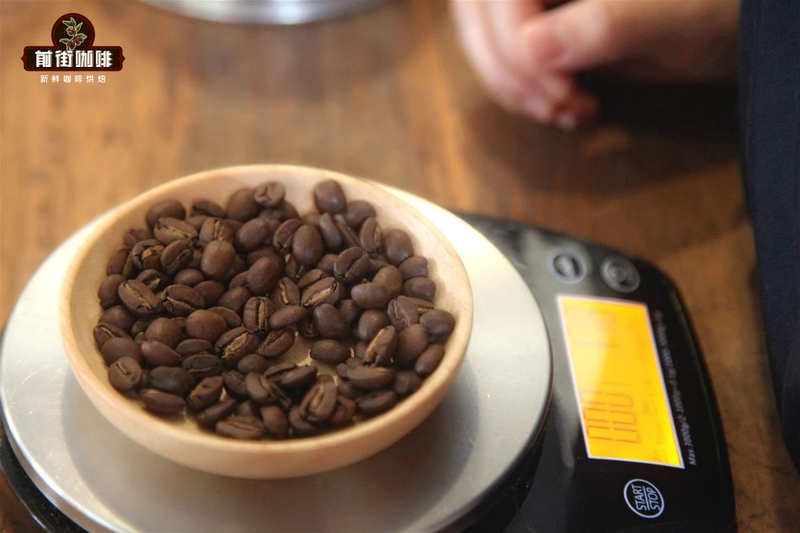
This coffee's beans are on the small side, with medium density and not high moisture content. The roasting target is set around light-medium roast. Unlike the light roast commonly used for other Kenyan beans, this Little Cranberry uses a light-medium roast to reduce the sharpness of acidity, thereby improving texture and balance, making the overall performance sweeter and juicier. In the first batch of roasting, the drop temperature was relatively high, with a charge temperature of 200°C and relatively high heat. During roasting, it was found that this bean's altitude is not particularly high and the bean quality is slightly soft, so a strategy of gradually reducing heat and stabilizing the rise was adopted, lowering the heat at the yellowing point, after dehydration was complete, and at the sign before first crack, to avoid scorching the bean surface, and moderately extending first crack time to increase caramelization reactions and enhance flavor texture and balance.
Roaster: Yangjia 600g semi-direct fire
The drum temperature was raised to 200°C for charging, the damper was set to 3, and after 30 seconds the heat was adjusted to 150°C, with the damper kept unchanged. At the turning point of 1 minute 38 seconds, the heat was maintained. At 5 minutes 16 seconds, the bean surface turned yellow, the grassy smell completely dissipated, and the dehydration stage began; the heat was lowered to 120°C and the damper adjusted to 4. At 7 minutes 05 seconds, dehydration was complete, and the heat was lowered to 80°C. At 8 minutes 00 seconds, wrinkles and dark streaks appeared on the bean surface, and the toast aroma clearly changed to coffee aroma, which could be judged as the prelude to first crack. At this time, listen carefully for the sound of first crack. At 8 minutes 28 seconds, first crack began; reduce the heat to 50°C and fully open the damper to 5 (be especially careful when adjusting heat; it must not be so low that there is no cracking sound). After first crack, develop for 2 minutes 00 seconds, and drop at 193°C.
06|Kenyan Coffee Grades
Many people are confused by the letters such as AA and PB in Kenyan coffee names. In fact, these letters represent the grade of Kenyan coffee. Kenya is very strict about coffee quality control, and grades are divided by bean size and shape into AA, AB, C, E, PB, TT, T, ML, and MH. The original purpose of grading was to distinguish bean shape and size, but many believe that larger beans contain more oils that produce coffee aroma, so larger beans also fetch higher prices on the market. AA corresponds to screen sizes 17 and 18, while AB corresponds to screen sizes 15 and 16. Taking Front Street's Little Cranberry as an example, it belongs to the AB grade, and compared with AA-grade beans, the size difference is obvious at a glance. Within the same level, the highest grade is estate beans, followed by the "+" mark, and then ordinary AA and AB grades. Grade C is for smaller beans, and Grade E is for extra-large elephant beans. As for the later TT, T, ML, and MH, they are all substandard beans seen only locally.
In terms of quality distinction, Kenya also once used a numerical grading method to classify coffee quality, but this method was rarely publicized externally and few people know about it. Therefore, actual grading still prioritizes bean size. PB, which differs in shape, is roughly equivalent to AA, but if it is estate grade or "+" grade, each is raised by two or one level respectively. For example, AB estate beans are roughly equivalent to AA+ and PB+. The flavor grades are, in order, TOP, PLUS, and FAQ. FAQ stands for "Fair to Average Quality," which may contain some slight defective beans but does not affect flavor.
Many friends have told Front Street that Kenyan coffee generally brews rather sour, so how should high-acidity Kenyan beans be brewed? Front Street shares the brewing parameters used for in-store service:
V60 dripper
Water temperature 91°C
Water-to-coffee ratio 1:15
Dose 15g
Grind size (80% passing rate on China No. 20 standard sieve)
Front Street brewing method: Use 30 grams of water for a 30-second bloom, then pour in a small stream in circles until 125 grams for a pour stage; when the water level drops and is about to expose the coffee bed, continue pouring until 225 grams and stop; when the water level drops and is about to expose the coffee bed, remove the dripper. (Timing starts at the beginning of the bloom.) Extraction time is 2 minutes 00 seconds.
Kenyan coffee brewed this way has a relatively balanced texture, with obvious yet soft sweet-acid notes and rich citrus, grapefruit, and berry flavors. If you have already mastered three-pour extraction and know how to adjust coffee taste, you can change parameters in subsequent brewing to find an extraction method that suits you.
Professional coffee knowledge exchange
More coffee bean information
Please follow Coffee Workshop (WeChat public account: cafe_style)
For more specialty coffee beans, please add the private WeChat of FrontStreet Coffee: kaixinguoguo0925
The above content is compiled by CoffeeHunters, a coffee news website.


