







What Makes Espresso Coffee Beans Right for a Café?
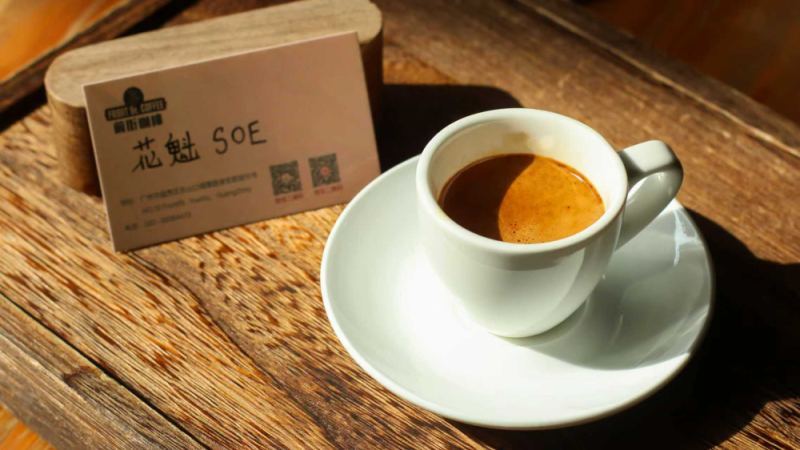
A proper espresso shows reddish-brown crema with faint tiger stripes, a glossy surface, and no holes or visible liquid beneath. The shot should balance acidity, sweetness, and slight bitterness with a smooth texture and a clear sweet aftertaste. Choosing espresso coffee beans means matching the blend to that profile rather than chasing a single origin.
In Italy, the blend a household chose once reflected its means: lighter blends with less Robusta for those who could afford them, heavier and more bitter blends for those who could not. Blended coffee beans sold today usually combine arabica for sweetness and aroma with a little Robusta for body and crema, and they behave consistently across grinders and machines.
Espresso is the soul of a café. A qualified Espresso needs to have reddish-brown crema, tiger-stripe patterns, an intense aroma, and a balanced taste of acidity, sweetness, and slight bitterness. From the perspective of Front Street Coffee, this article systematically explains the history and origin of espresso, its flavor characteristics, and the logic behind choosing espresso blend beans. It also recommends several suitable beans such as Front Street Strawberry Candy and Commercial Blend, while breaking down extraction parameters and operating steps in detail to help coffee lovers recreate an authentic espresso at home.
For more specialty coffee knowledge, please follow: Front Street Coffee (Frontsteet Coffee)
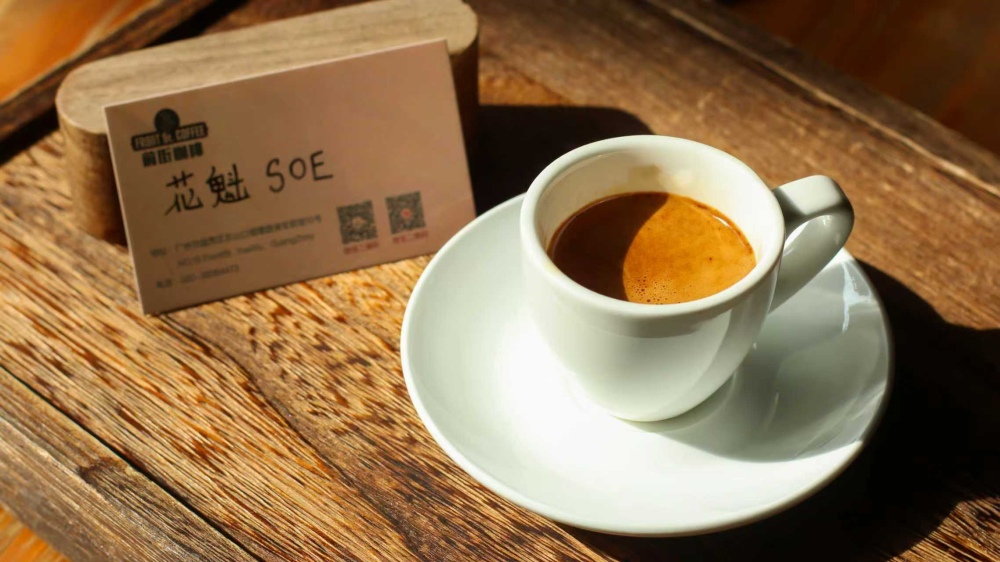
An ideal Espresso should meet the following conditions: the surface is covered with reddish-brown crema, with a strong glossy sheen and faint tiger-stripe patterns, no holes, and no visible liquid underneath. The aroma should be rich and striking. On the palate, it should have acidity, sweetness, and slight bitterness, with a smooth texture and no grittiness. After swallowing, the sweet aftertaste is obvious, and a clear sweetness can be felt in both the throat and on the tongue.
The choice of Front Street espresso blend beans is somewhat related to the living standards of Italians in earlier times. Those with a better life naturally would not choose a bitter blend with too much Robusta, while those with a poorer life who still wanted to drink strong coffee to their heart's content would choose a heavier-flavored blend. Of course, this is only an old living custom; there is still a difference today, but not as great as before. Below, Front Street will give everyone a comprehensive introduction to what authentic Italian coffee is and recommend coffee beans for commercial use.
For more specialty coffee knowledge, please follow: Front Street Coffee (Frontsteet Coffee)
Espresso, namely Espresso, is a small cup of thick, aroma-forward pure black coffee with golden foam floating on the surface, obtained by using steam pressure to quickly force high-temperature hot water through a bed of coffee grounds. Although its name rarely appears directly on café menus, common drinks such as Americano, Latte, and Cappuccino all use it as a base, making it the core of the coffee shop.
What are the characteristics of Italian espresso?
Before the birth of espresso, people mainly brewed coffee by steeping, which required grinding the beans very fine and going through a long extraction process, with a considerable waiting time. In the early nineteenth century, in order to obtain a cup of rich coffee in a short time, Italians tried using steam pressure to force high-temperature, high-pressure water through a puck of coffee grounds, thereby accelerating the original drip extraction efficiency. Through continuous improvement and iteration, it gradually evolved into the semi-automatic and fully automatic espresso machines commonly seen today.
Because espresso is extracted under fine grinding, high water temperature, and high pressure, espresso brings together multiple tastes, and various flavor compounds impact our tongues exponentially. As a crop, coffee changes with climate, soil, and other factors. Even from the same place, the flavor of each batch of coffee beans will differ. Blended coffee beans use the method of making up for each other's shortcomings, helping each extraction show a more balanced and stable aroma and taste. Therefore, Front Street recommends using blend beans specifically for espresso machine extraction. Front Street's bean list includes four espresso blend beans, which are also suitable for brewing with espresso machines and moka pots.
Traditional espresso often uses extremely dark roasting and adds Robusta beans with higher oil content, so the taste is burnt-bitter and intense, suitable for sipping slowly over several mouthfuls. In recent years, with the rise of the specialty coffee wave, bean quality and extraction techniques have both improved, and drinkers have higher demands for flavor and mouthfeel. Today's espresso is no longer limited to a single impression of burnt bitterness.
Friends who prefer floral and fruity notes can try Front Street Strawberry Candy espresso coffee beans, available for order on Taobao or Tmall stores. This bean is based on Front Street Costa Rica Tarrazu, known for its honey processing, and Ethiopia, the birthplace of coffee, and is then blended with Colombian coffee beans. The resulting espresso has low pungency, shows good crema and a dense texture after extraction by the coffee machine, and carries a sweet-and-sour flavor similar to strawberry gummy candy.
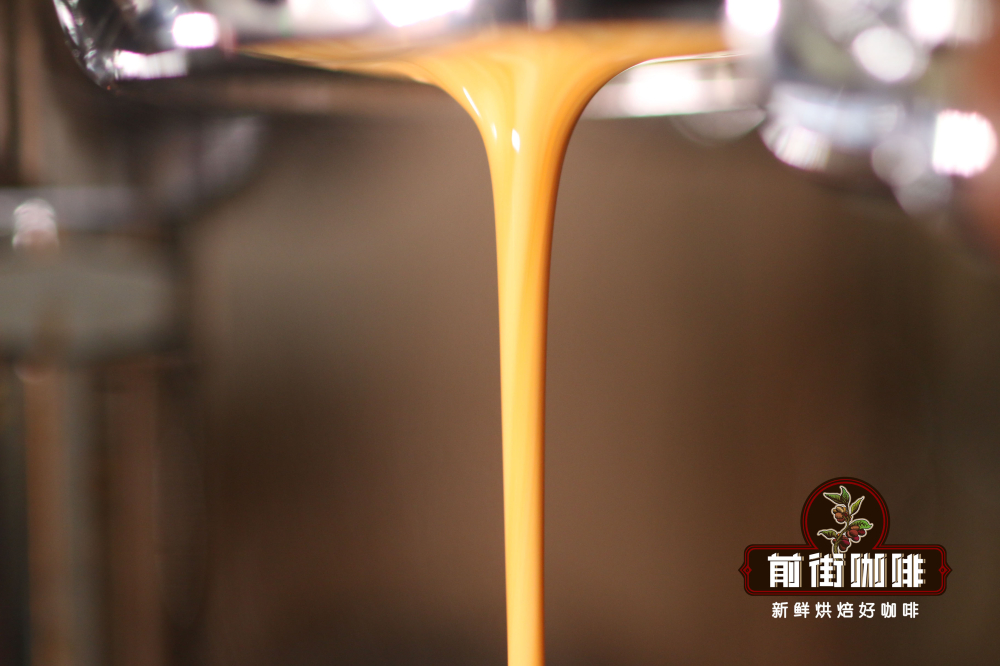
If you want to recreate the same Americano or Latte as in a café, you might as well get Front Street Commercial Blend coffee beans. It is blended from three major producing regions: Brazil, Colombia, and Vietnam. It has a medium-dark roast level, rich crema, and roasting-type aromas. Used to make Americano, it tastes mellow and easy to drink; made into a Latte, it is rich and silky, leaving a lingering fragrance on the lips and teeth after drinking.
Steps for making espresso
The espresso served daily at Front Street stores all uses the self-roasted "Front Street Classic Espresso Blend Coffee Beans." Front Street Coffee (FrontStreet Coffee) baristas adjust the espresso extraction parameters before opening every day, and only then begin official service.
Front Street uses the capacity of a double basket, with a dose of about 18-20 grams. For Front Street's service, 20 grams of coffee powder is used. Front Street's extraction ratio is 1:2, that is, 20 grams of coffee powder extracts 40 grams of coffee liquid. Time is related to the flow rate of the coffee powder. Generally, a single extraction time is controlled at 20-35 seconds, because within 20 seconds the coffee taste tends to be thin, while over 35 seconds it is easy to over-extract and produce a burnt-bitter taste. Most of Front Street's espresso falls within the range of 28-30 seconds.
Before extraction, wipe the basket dry, turn on the grinder, grind the amount for a double dose of coffee powder, and place it on an electronic scale to adjust up or down until it reaches 20 grams. Then use a distribution tool to level the coffee powder, and press the tamper straight down with force to tamp the coffee puck firmly, ensuring more stable coffee extraction.
Then turn on the extraction switch and let water run for 1-2 seconds to wet the group head, while also removing the coffee grounds stuck on it. Place an electronic scale under the cup that will catch the Espresso, and tare the weight to 0. During extraction, place it together under the group head.
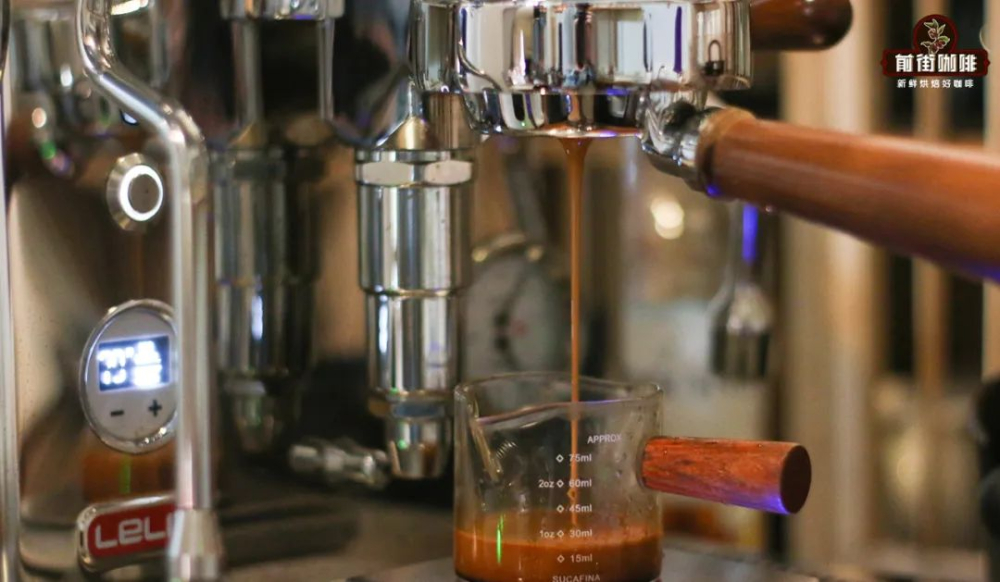
Gently lock the portafilter onto the group head and start the extraction switch. Observe the changes in the extracted liquid. When the electronic scale shows that 40 grams of coffee liquid has been extracted, at about 30 seconds, turn off the extraction switch. The brewing parameters will change subtly according to the daily air humidity and the condition of the coffee beans, so it is necessary to adjust the coffee powder dose, grind setting, and extraction yield up or down.
The extracted Espresso can be drunk directly. Paired with a glass of water to rinse the mouth, you can taste the dense crema foam and the mellow mouthfeel of the coffee liquid below. If you cannot accept the strong bitterness, you can also add water or milk according to your preference to dilute it and soften the intense taste.
Front Street likes iced Americano, so it uses a 300ml coffee cup, first adding 90g of ice cubes + 180ml of cold water, then pouring in 40ml of double espresso, and stirring before tasting. On the palate, you can feel fresh floral notes and strawberry gummy candy flavors, with the sweet-and-sour taste of orange and raisins. It is cool and refreshing, very suitable for drinking in summer.
The above content is compiled by CoffeeHunters, a coffee news website.


