







Are Geisha Coffee Beans Really Worth the Higher Price?
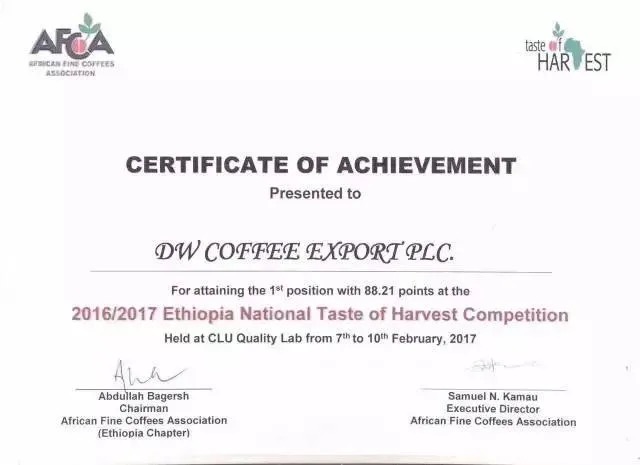
Huakui coffee beans come from the Buku Abel processing station in the Hambela region of Sidama, Ethiopia, and won the 2017 Taste of Harvest natural category with a score of 88.21. Compared with geisha coffee beans, Huakui carries a lower price tag and a strong strawberry-and-cream aroma, which helped it become a daily staple for many drinkers.
The turning point came when barista Li Jianfei used that batch at the World Brewers Cup, beating competitors who chose gesha coffee bean entries. That win, combined with the TOH title, pushed Huakui from a regional champion lot into a widely recognized Ethiopian variety, while geisha lots remained scarce, costly, and harder to source.
Huakui coffee beans are one of the most talked-about Ethiopian bean varieties in China's specialty coffee scene in recent years. It originates from the Buku Abel processing station in the Hambela region of Sidama, and shot to fame thanks to winning the 2017 TOH natural category championship and its outstanding performance at the World Brewers Cup. Compared with the often pricey Geisha, Huakui quickly became the daily staple for many coffee lovers with its affordable price and intense strawberry-and-cream aroma. This article will systematically sort through the origins, regional grading, flavor evolution, and brewing comparisons of this bean, helping readers fully understand why Huakui coffee beans are both cheap and delicious.
For more specialty coffee insights, follow our WeChat official account: Front Street Coffee (FrontStreet Coffee)
Green bean competitions continuously generate buzz for specialty coffee regions, and almost every year new faces burst onto the public radar—especially in African regions, where all kinds of contests come one after another each harvest season. Among the dozen-plus coffee-producing countries in Africa, beans that have been carefully cultivated for a whole year and meticulously processed after ripening often get a chance to shine through these events.
If a barista then achieves great results in a major competition, the influence of that bean becomes incomparable—consumers can directly sense its quality from the competitor's outstanding performance. Looking back at the rise of Huakui coffee beans, it conquered the public's palate in almost textbook fashion and won widespread favor.
Huakui Coffee Beans
The English corresponding to "Huakui" is actually Hambella—literally "Hambela coffee beans" in Chinese. At the 2017 TOH green bean competition (the Taste Of Harvest), a green bean from the Hambela region of Sidama stunned everyone with its intense strawberry and cream aroma, scoring 88.21 to take that year's Ethiopian TOH natural category championship.
But the story didn't end there—TOH produces a champion bean every year. What truly pushed Huakui's fame and value to a new level required other opportunities, such as a barista choosing it as their competition bean and achieving excellent results. That same year, barista Li Jianfei used that batch of beans at the World Brewers Cup, defeating many opponents who chose Geisha, and ultimately won runner-up in the China region.
To understand the rise of Hambela coffee beans in China, we must return to the coffee market context of the time. After 2004, Geisha coffee beans repeatedly broke records, and their outstanding quality made them the top choice for baristas in international competitions—major and minor contests were almost "monopolized" by it, truly a Geisha era, with few beans able to compete. So what exactly is Geisha? According to Front Street, Geisha is actually the name of a coffee variety, written "Gesha/Geisha" in English. Because its pronunciation resembles the Japanese word for "geisha," some people transliterated it as geisha coffee.
Because Geisha was so renowned, when a Beijing green bean merchant introduced this champion batch of beans into China, to make Hambela natural beans easier to promote, they replaced "Hambela" with "Huakui," borrowing the meaning of "chief/leader" to ride on Geisha's popularity. And at the 2017 World Brewers Cup, an originally obscure Ethiopian Hambela natural bean defeated the ever-victorious Geisha, making the name "Huakui" truly deserved. Combined with its very affordable price, it was a solid everyday coffee, and thus became deeply ingrained in people's minds. This high-quality Hambela bean, under the name "Huakui," began to be known across China.
Afterward, the Beijing green bean merchant seized the momentum, importing Hambela coffee beans year after year and using the Huakui X.0 series to distinguish vintages. For example, Huakui 2.0 was launched in 2018, Huakui 3.0 and 3.1 in 2019, and so on. Today, if you visit a Front Street Coffee (FrontStreet Coffee) store, you can still find Huakui 5.0 coffee. Of course, those familiar with Huakui will also notice that starting in 2020, Hambela coffee beans were divided into two categories: Huakui 4.0 and small-bean Huakui. So where did small-bean Huakui come from?
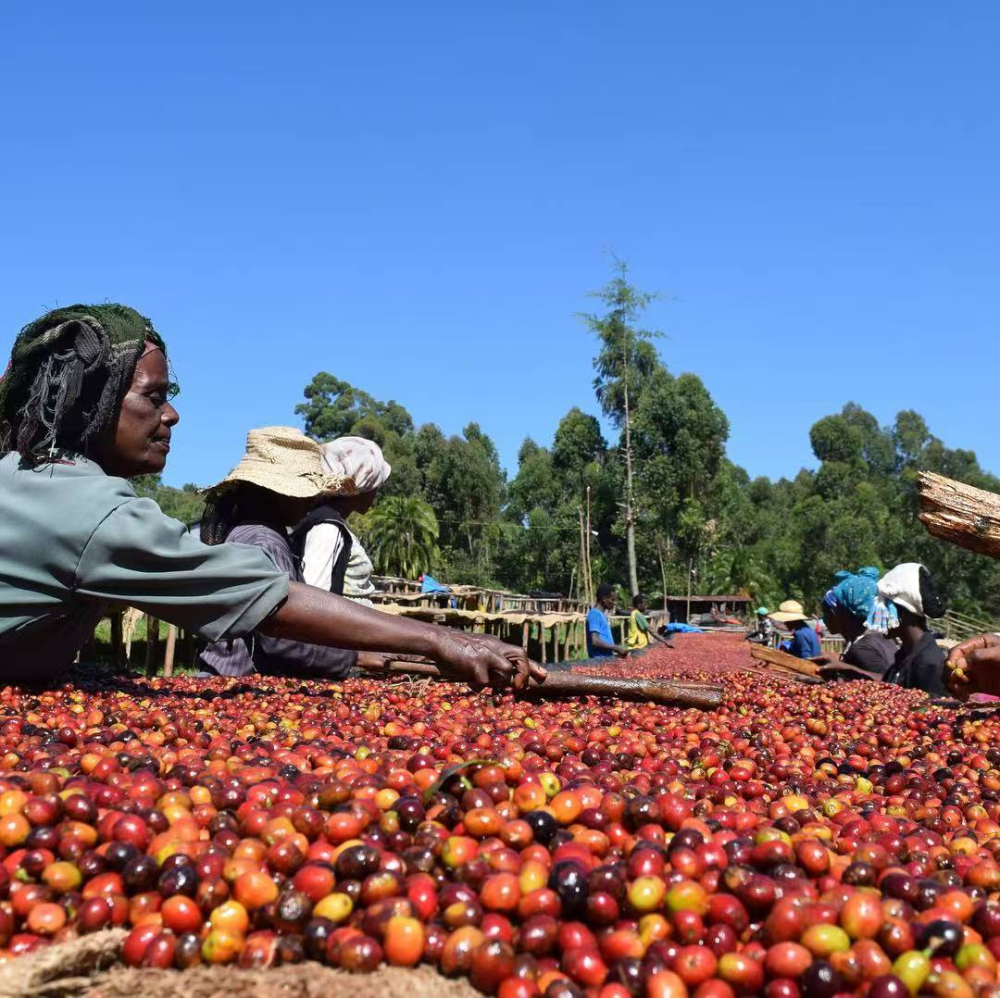
As mentioned earlier, the original Huakui was processed by Buku Abel in the Hambela region, and Buku Abel belongs to the DW company. After winning the championship in 2017, DW company further added processing stations in Dimtu, the core production area of Hambella, to produce Huakui. There are currently 5 coffee processing stations: Buku Abel, Tirtiro Goye, Seke Bokosa, Haro Soresa, and Buku Saysay. Among them, only coffee beans naturally processed by Buku Abel can truly be called Huakui coffee. And coffee, being an agricultural product, will show subtle flavor differences each year due to changes in regional soil, climate, rainfall, and processing methods. Of course, despite these changes, the variety's core flavor profile is still preserved.
Front Street keenly noticed the changes in Huakui. Front Street has long paid attention to regional developments, and after seeing Huakui's rise, naturally would not miss this bean, importing Huakui every year to give back to coffee lovers. In each year's cupping of the new-season Huakui coffee beans, even if there are slight flavor differences, its full berry-juice body, ripe-fruit ferment-like character, and medium yet distinct sweetness are consistently present—this is one reason Front Street favors Huakui coffee beans. At the same time, through cupping, Front Street Coffee (FrontStreet Coffee) also found that Huakui coffee beans with a higher proportion of small beans have flavors and aromas very similar to the 2017 champion Huakui.
At first, Front Street tasted flavors close to the 2017 Huakui in the 2018 and 2019 Huakui, but the body and finish were not as good as 2017. By comparing different batches of Huakui, this phenomenon was more obvious in the 2018 and 2019 Huakui—sometimes a few sacks of similar small beans would be mixed into ten sacks. We realized that the main source of the 2017 Huakui's aroma was precisely those particularly small beans within the Huakui coffee beans.
So in 2019, Front Street confirmed this information and informed the green bean supplier, who subsequently verified it. After that, every year the small-bean Huakui was separated out into its own category. The Hambela natural coffee beans from the 20/21 crop year were divided into Huakui coffee beans and Huakui 5.0 coffee beans. Although both are called Huakui, their flavors still differ—how exactly, you'll only know after drinking.
We brewed the 20/21 crop year Huakui and Huakui 5.0 as examples to compare the differences between these two coffee beans in detail. First, we must clarify the brewing approach—actual extraction plus equipment preparation takes no more than 10 minutes. But without a clear brewing approach, it's hard to be as smooth as a store barista; fumbling during brewing will only turn into a "disaster" scene.
Usually when we get a coffee bean, it comes with detailed bean information, including region, variety, flavor, etc. Front Street Coffee (FrontStreet Coffee), for instance, not only publishes bean information and reduces the difficulty of selection through flavor descriptions, but also prints a QR code on each bag—scan it with WeChat to get more bean information, including more detailed regional conditions, terroir, post-processing techniques, roasting curves, and brewing parameters that are more practically useful for most people. After all, no matter how beautiful the story is, it's only complete when paired with a cup of coffee you brewed yourself.
Regarding the brewing approach, Front Street suggests referring to the flavor descriptions on the bean packaging. These descriptions are obtained by Front Street Coffee's (FrontStreet Coffee) baristas and roasters through joint cupping after roasting. We can usually judge the roast level of the beans from the flavor descriptions, thereby determining the general brewing direction.
Flavor descriptions of obviously acidic citrus, lemon, berry and other fruity-floral notes belong to light roast; descriptions of prominent sugar notes, nutty chocolate with slight fruit acidity belong to medium roast; descriptions of nutty chocolate and creamy richness belong to dark roast. The flavor descriptions of Huakui and Huakui 5.0 lean acidic with fruity tones—Huakui is passion fruit and fermented wine aroma, while Huakui 5.0 is citrus—so they can be judged as light-roast beans.
Front Street Coffee (FrontStreet Coffee) generally recommends pour-over brewing for light-roast beans, using 15 grams of coffee, a 1:15 coffee-to-water ratio, a Hario V60 dripper, and a higher water temperature controlled between 90–93°C, with a medium-fine grind (which can be judged using the Chinese No. 20 standard sieve, with a sieving rate of 80%).
Then use Front Street's recommended three-stage extraction method for brewing—as the name suggests, water is poured in three stages. First, bloom with water at twice the coffee dose, i.e., 30 grams of water for 30 seconds, then pour in a slow circular stream until reaching 125 grams, pause, and when the water level drops to 1/3, continue pouring until 225 grams and stop. (Timing starts at the beginning of the bloom.) Total extraction time is 2'00".
After extraction, gently swirl, then begin the comparative tasting of these two Huakui beans. Huakui smells of distinct melon and fruit aromas; on the palate, it's a soft fruit acidity, smooth in texture, with flavors of passion fruit, jackfruit, strawberry, and berries. Huakui 5.0 features prominent citrus and berry flavors, accompanied by a slight tropical fruit note, with an obvious juicy character.
The above content is compiled by CoffeeHunters, a coffee news website.


