







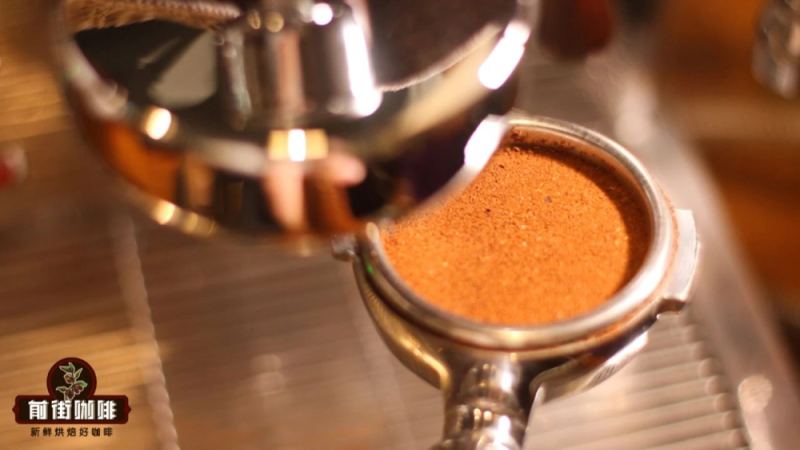
What details matter when pulling a shot of street coffee?
Four details decide whether an espresso shot tastes balanced or muddled: dry the portafilter basket before dosing, distribute the grounds evenly, tamp level, and extract quickly. Each step has its own common mistakes, and each mistake shows up directly in the cup. Front Street Coffee lists these four points as the non-negotiable basics for baristas who pull shots daily.
The article also compares bean choices, noting that Starbucks once released an Espresso Roast blending Latin American and Indonesian arabica beans, prized for rich aroma, soft acidity, and caramel sweetness. Front Street Coffee offers four espresso blends with different roast directions and flavor profiles, so cafes and home baristas can match a bean to their milk drinks or straight shots.
Espresso is the cornerstone of the Italian coffee system. A cup of Espresso may seem simple, but in reality, every step from dosing to extraction holds hidden subtleties. Front Street Coffee, drawing on years of hands-on experience, has identified four core details that cannot be overlooked when making espresso: drying the portafilter basket, distributing the grounds evenly, tamping level, and extracting quickly—along with common mistakes at each stage and corresponding solutions. The article also introduces Starbucks' Espresso Roast blend approach and shares detailed recipes, roast directions, and flavor profiles for four of Front Street's espresso blend beans—Specialty Blend, Commercial Blend, Basic Blend, and Sunflower Warm Sun—helping coffee enthusiasts and café owners choose the right espresso beans for their needs.
Espresso is the foundation of the Italian coffee system. For baristas, pulling a shot is both the most basic skill and the one that best tests their technical proficiency. The reason is simple—any tiny operational deviation can change the final result in the cup. Front Street Coffee has previously published several installments of the [Coffee Cultivation Diary] series on its official account, and reader feedback has been quite positive, which shows that whether out of professional necessity or personal interest, the number of people paying attention to coffee is steadily growing. Today, Front Street Coffee will break down and explain one by one the details to watch out for when making Espresso.
Starbucks once specifically launched an Espresso Roast coffee bean, using a blend of Latin American and Indonesian beans, known for its rich aroma and soft acidity, balanced by a thick caramel sweetness. Front Street Coffee currently offers four espresso blend beans with distinct styles, one of which also uses a combination of Latin American and Indonesian beans. Below, Front Street Coffee will share the actual blend parameters used.
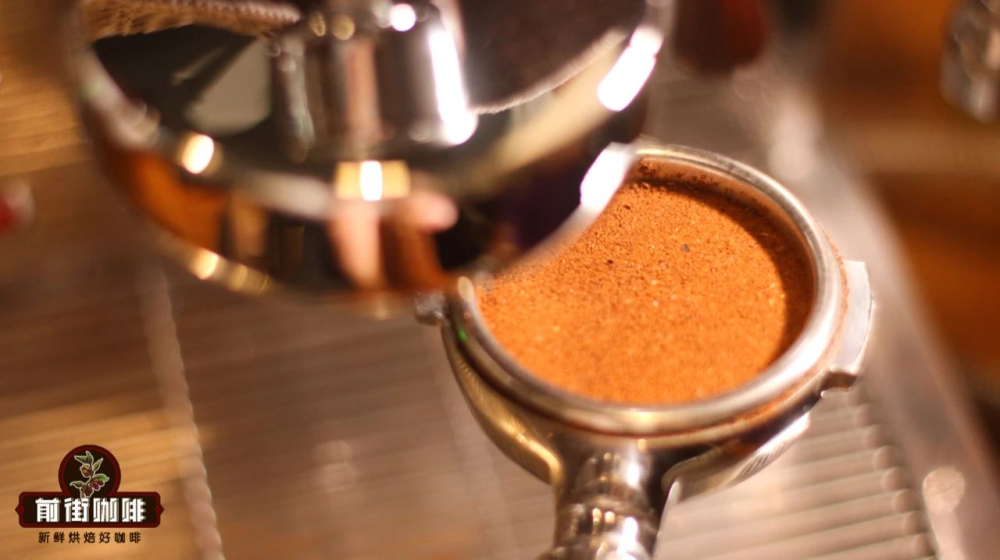
See how Front Street Coffee makes a cup of espresso
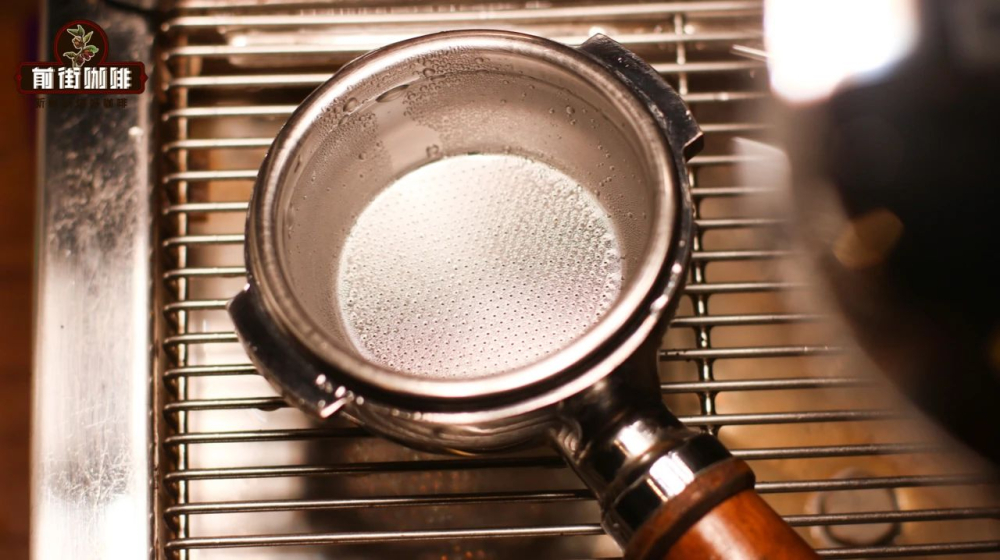
[Detail 1] Dry the portafilter basket before dosing
When removing the portafilter from the group head, water droplets often remain on it. If the basket walls are still wet during dosing, the coffee grounds will get damp, leading to uneven extraction. Therefore, Front Street Coffee always wipes the portafilter clean before dosing.
[Detail 2] Distribution
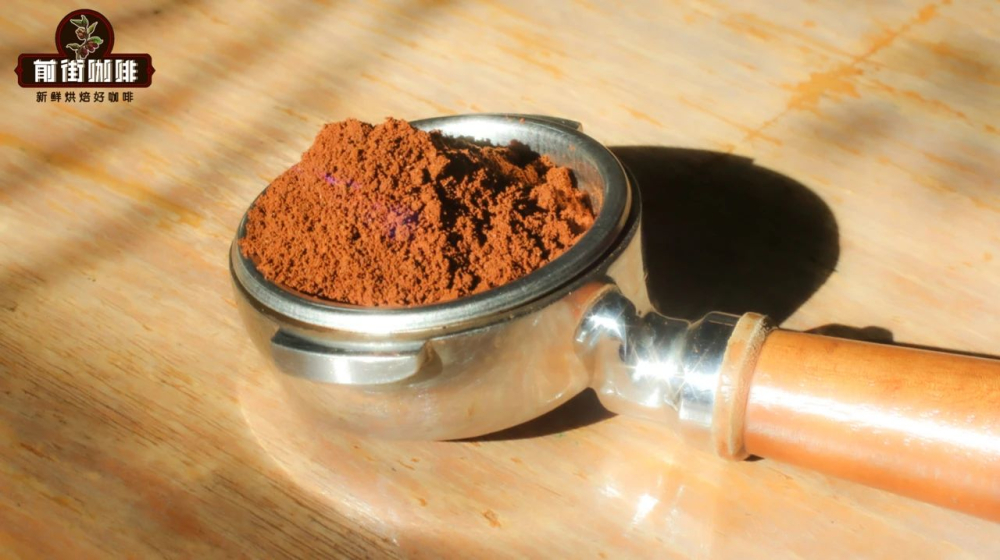
Distribution is the process of dosing the ground coffee into the basket and spreading it evenly. The key at this step is evenness, not merely a level surface.
Distribution serves two main purposes: breaking up clumps and leveling. Electric grinders tend to generate static during grinding, causing coffee grounds to clump together. One task of distribution is to break up those clumps so the gaps between particles become consistent; the other is to level the surface of the coffee bed, laying the groundwork for even tamping.
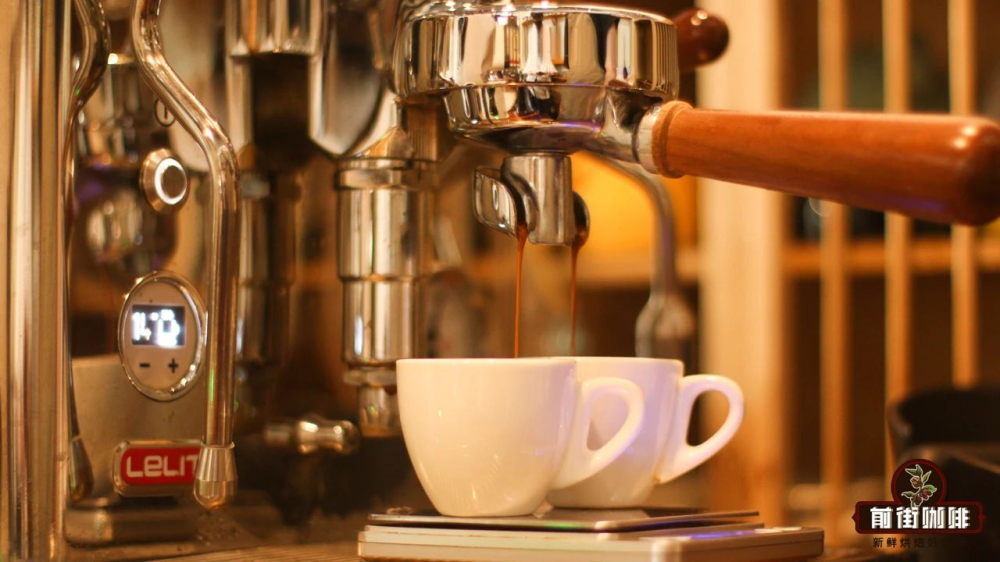
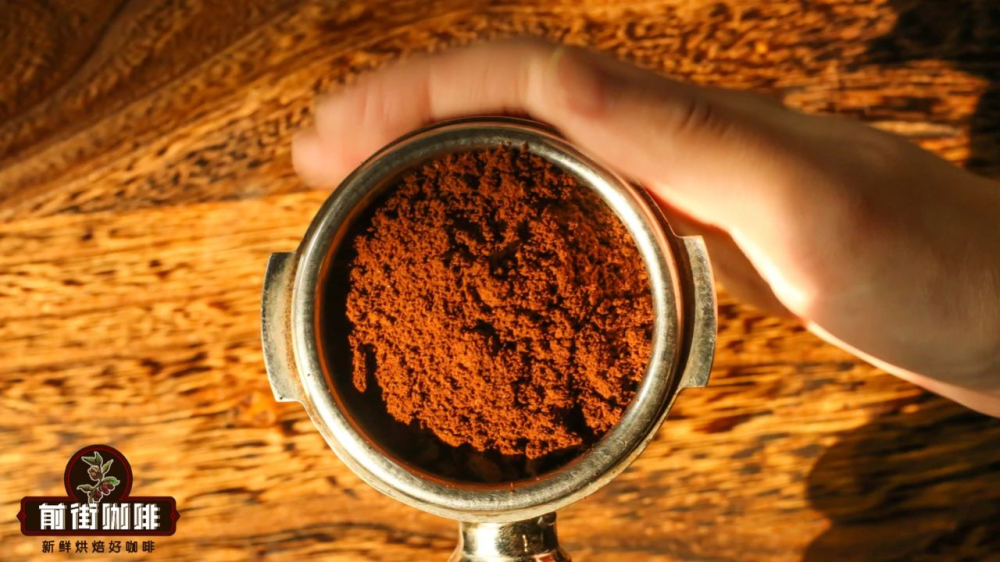
Common distribution methods include finger distribution and using a distribution tool. Finger distribution means gently sweeping your finger back and forth above the basket to level the surface. Front Street Coffee has noticed that some people instinctively press down on the coffee bed when doing finger distribution—this should be avoided. The correct motion is to sweep the fingertip horizontally along the rim of the basket.
A distribution tool can mix the coffee grounds, break up clumps, and evenly distribute particles. But it also has limitations: it causes coffee waste, the tool has a relatively complex structure and requires some skill to operate, the downward pressing motion during distribution may create cracks inside the coffee bed, and sometimes it only smooths the surface without ensuring consistent distribution and depth.
[Detail 3] Tamp level
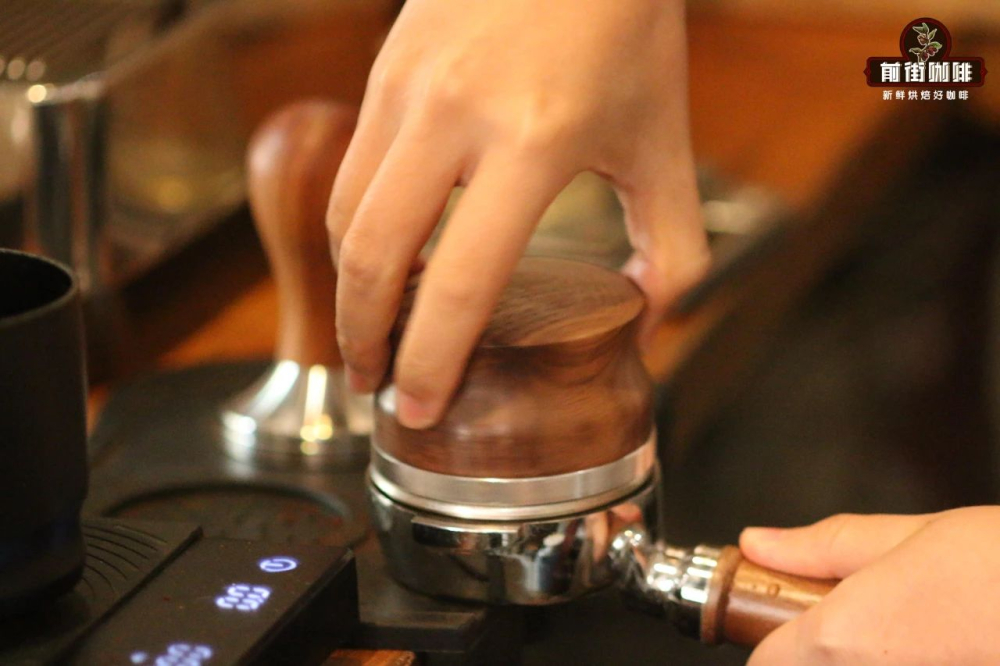
Tamping is the process of using a tamper to compress loose coffee grounds so the puck can offer appropriate resistance against 9 bar of water pressure.
Front Street Coffee has conducted several comparative tests. If the puck is not tamped firmly enough, water passes through too quickly and freely, resulting in an unpleasant watery espresso. Conversely, if the puck is tamped too firmly, resistance is excessive, the time for water to penetrate the puck is prolonged, and the extracted coffee becomes viscous and bitter. The usual approach is to concentrate force in the arm (about 15 to 25 kg) and press down once.
Hold the tamper with a light grip and adjust the handle position until it feels like an extension of your arm. Keep your wrist straight so the bottom of the tamper handle rests comfortably in your palm. This posture minimizes pressure on the wrist.
Keep the tamper level and press down gently once on the coffee bed—no need to rotate or repeat the pressure. The more times you press, the more likely the puck will form layers. Be sure to tamp level, otherwise one side of the coffee bed will be thicker and the other thinner, causing uneven extraction.
After lifting the tamper, a small amount of loose coffee may remain on the basket walls or the surface of the puck. Front Street Coffee reminds you: never knock the portafilter, as this can loosen the seal between the basket walls and the puck, causing channeling. Simply flip the portafilter over and the loose grounds will fall away naturally. Then wipe the rim of the basket to clean off any remaining coffee.
[Detail 4] Extraction
After locking in the portafilter, press the brew button immediately. Front Street Coffee has tested this: the longer the interval between locking in the portafilter and pressing the brew button, the more easily the surface of the puck gets "scorched" by the high temperature of the group head, giving the extracted espresso a burnt, bitter taste.
Press the brew button and start timing. Without pre-infusion, liquid begins to flow after 3 to 5 seconds.
At the 3-to-5-second stage, you can see viscous brown espresso flowing out. If you observe any yellow or sputtering, it means channeling has formed—possibly due to too coarse a grind, or uneven distribution or tamping.
At the 8-to-12-second stage, the flowing liquid carries some orange-brown crema, and the flow rate stabilizes.
In the remaining time, the color of the extracted liquid gradually lightens. The entire extraction process should be completed within 20 to 30 seconds. (Front Street Coffee's espresso extraction ratio is 1:2.)
Four of Front Street Coffee's espresso beans
[Front Street Specialty Espresso Blend] Colombia : Brazil
Flavor profile: Comfortable bittersweetness, extremely smooth on the palate; a faint grassy note, fresh with a slight bitterness; sweet and smooth, with a pleasant finish; medium-dark roast. When pulled as espresso, it has a soft, slight acidity, clean sweetness, and a nutty aftertaste. The overall impression is not too aggressive—balanced and mellow, with medium crema. This specialty espresso bean is suitable for cafés' daily offerings.
[Front Street Commercial Espresso Blend] Colombia : Brazil : Robusta
In terms of individual bean flavor, commercial beans are indeed noticeably inferior to specialty coffee beans. Commercial beans are generally used for blending, and after blending they can still produce quite good coffee, suitable for making lattes, cappuccinos, and other espresso drinks. When Front Street Coffee uses this commercial blend for Espresso, because it contains Robusta beans, the crema is richer, the taste is classic, and it meets the needs of daily café operations.
Flavor profile: Caramel sweetness, nutty and cocoa-like notes, dark chocolate flavors, balanced acidity and sweetness, slightly bittersweet, with a lasting finish.
[Front Street Basic Espresso Blend] Yunnan : Brazil
Flavor profile: Soft fruit acidity, caramel sweetness, nutty and dark chocolate flavors, smooth and viscous, but relatively mild in taste. This basic espresso bean is suitable for café owners and home users who prioritize cost and have modest flavor requirements.
[Front Street Sunflower Warm Sun Espresso Blend] Front Street Honduras : Front Street Yirgacheffe
Flavor profile: Pronounced fruit acidity, a faint berry aroma lingering throughout, rich winey and chocolate flavors, with a comfortable sweet aftertaste.
In fact, Front Street Coffee has found that adding [Robusta beans] to an espresso recipe brings more caffeine and a better balance of crema and flavor. But some people think Robusta is bad—beyond its higher caffeine content, this is largely a fixed impression created by the many articles criticizing Robusta. After multiple ratio adjustments, Front Street Coffee concluded that a Robusta proportion within 10%–20% is more suitable for the overall taste presentation; exceeding this ratio produces a rubbery taste.
In the image below, the left side shows Arabica beans and the right side shows Robusta beans. Robusta has a rounder shape, while Arabica is more elongated. Front Street Coffee often encounters customers who worry they cannot tell whether coffee beans are pure Arabica—actually, they can be clearly distinguished by appearance alone.
The above content is compiled by CoffeeHunters, a coffee news website.


