







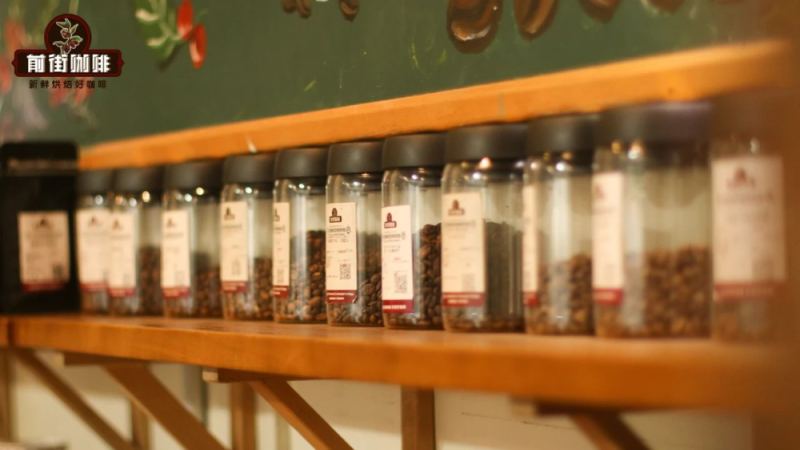
What does golden mandheling coffee taste like?
Sumatra Mandheling delivers a heavy, syrupy body with low, restrained acidity and a long finish. Notes of cedar, cocoa, herbal medicine, and fermented fruit sit under a woody aroma. Front Street Coffee lists five Sumatra Mandheling coffees, each with a different processing method and flavor personality, so drinkers can compare cupping results side by side.
One customer compared Golden Mandheling to a Sumatran tiger advancing through the mouth, a description that captures its dense mouthfeel. PWN Company grades and exports the golden mandheling line, and the wet-hulling process, where parchment is stripped while beans are still moist, gives these coffees their herbal, earthy character. Arabica accounts for roughly a quarter of Indonesian output.
Sumatra Mandheling, with its rich and intense flavor, has always been a classic choice in the hearts of coffee lovers. Some describe the feeling of drinking Golden Mandheling as like a Sumatran tiger slowly advancing through the mouth. Front Street Coffee's bean list currently features five Mandheling coffees from Sumatra, each displaying a different flavor personality. This article will go through these five Mandheling coffees one by one, covering their origins, processing methods, and cupping performance, while also introducing the connection between PWN Company and Golden Mandheling, the characteristics of the wet-hulling process, and brewing parameter recommendations for different roast levels, helping readers gain a comprehensive understanding of the charm of Sumatra Mandheling.
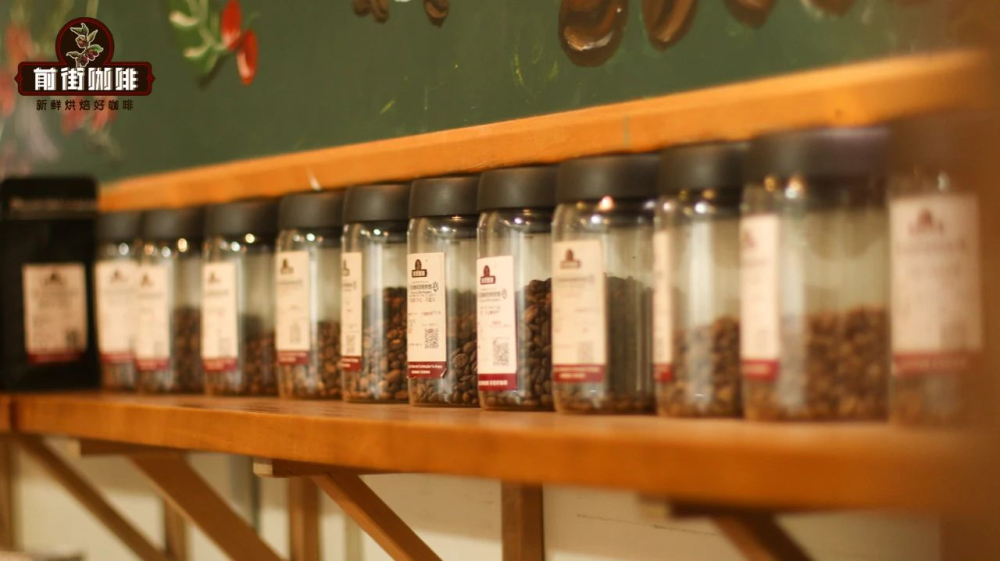
Sumatra Mandheling, with its rich coffee flavor, has firmly held a place in the hearts of seasoned enthusiasts since coffee first became popular. A customer once described Golden Mandheling after tasting it at Front Street: "The feeling of this cup of Golden Mandheling sliding into the mouth is like a Sumatran tiger crawling forward in the mouth." Currently, Front Street Coffee's bean list includes five Sumatra Mandheling coffees, each with distinct flavors, and Front Street will introduce them one by one below.
The coffee nurtured by Sumatra's unique terroir carries a steady, woody aroma and a thick mouthfeel, with restrained flavors, lively but not excessive acidity, and often presents distinctive notes of herbal medicine, cedar, cocoa, and fermented fruit. Among coffee beans produced in Indonesia, Arabica varieties account for only about one quarter, and Sumatra Mandheling is the most representative classic among them. It has an intense, heavy mouthfeel, with body and bitterness fully expressed, yet it does not bring astringency or sharp acidity. On the palate, you can feel a silky texture, accompanied by a faint herbal fragrance, cocoa sweetness, and fruity aroma, with a long finish. Most Mandheling enthusiasts are accustomed to enjoying it as a single-origin coffee, and it is also an indispensable important player in coffee blends.
The name "Mandheling" sounds quite romantic and warm, but those who have actually tasted it probably would not agree. It has a rich aroma, is full-bodied and solid, with sweetness amid the bitterness, and is a variety in the coffee family without acidity, praised as one of the world's most full-bodied coffees. When drinking, the tongue can clearly feel the smooth texture, with low acidity; the slightly lively acidity interweaves with the intense aroma, allowing one to easily experience a touch of vivid vitality within the gentle richness. In addition, this coffee also carries a faint earthy fragrance, which some also describe as the aroma of herbs.
Sumatra Mandheling grows on highland mountainous terrain at an altitude of 750 to 1500 meters and has long been known as the "Caesar of coffee." Today, Indonesia is a major coffee-producing country, with production areas mainly distributed in Java, Sumatra, and Sulawesi. Among these, Robusta varieties account for 90%, while Sumatra Mandheling belongs to the rare Arabica species and is also the most famous branch of Mandheling. When mentioning Mandheling, one cannot help but mention PWN Company.
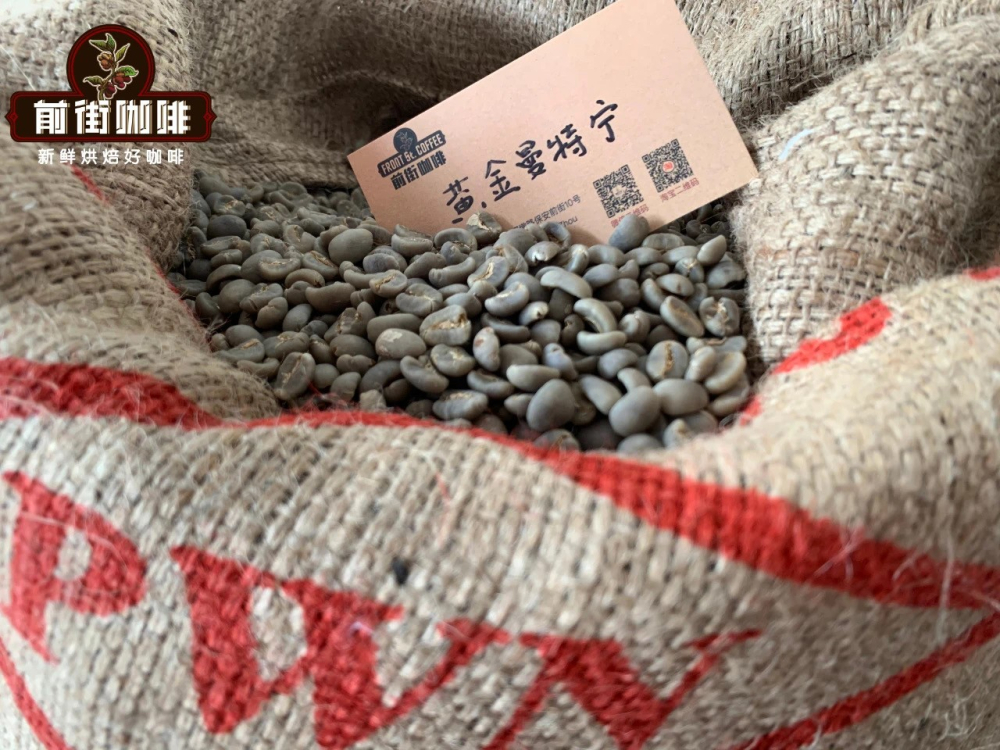
PWN Company's full name is Pwani Coffee Company, a well-known coffee purchasing enterprise locally in Indonesia, mainly focused on purchasing Mandheling coffee. Almost all of Indonesia's finest production areas have been taken in by this company, so most beans produced by PWN have a unique specialty-grade quality. Golden Mandheling is precisely the company's signature product—after the green beans are purchased, they undergo multiple rounds of manual hand sorting, and only plump, flawless beans can ultimately be classified as Golden Mandheling. The Golden Mandheling offered by Front Street comes from PWN Company, and Front Street believes that the quality of Sumatra Golden Mandheling fully deserves the title of top-tier Indonesian Mandheling.
Front Street Coffee: PWN Golden Mandheling coffee beans
Region: Sumatra Aceh Gayo Mountain Altitude: 1100-1600 meters Variety: Ateng Grade: G1, 3 times hand-sorted Processing method: Wet-hulled
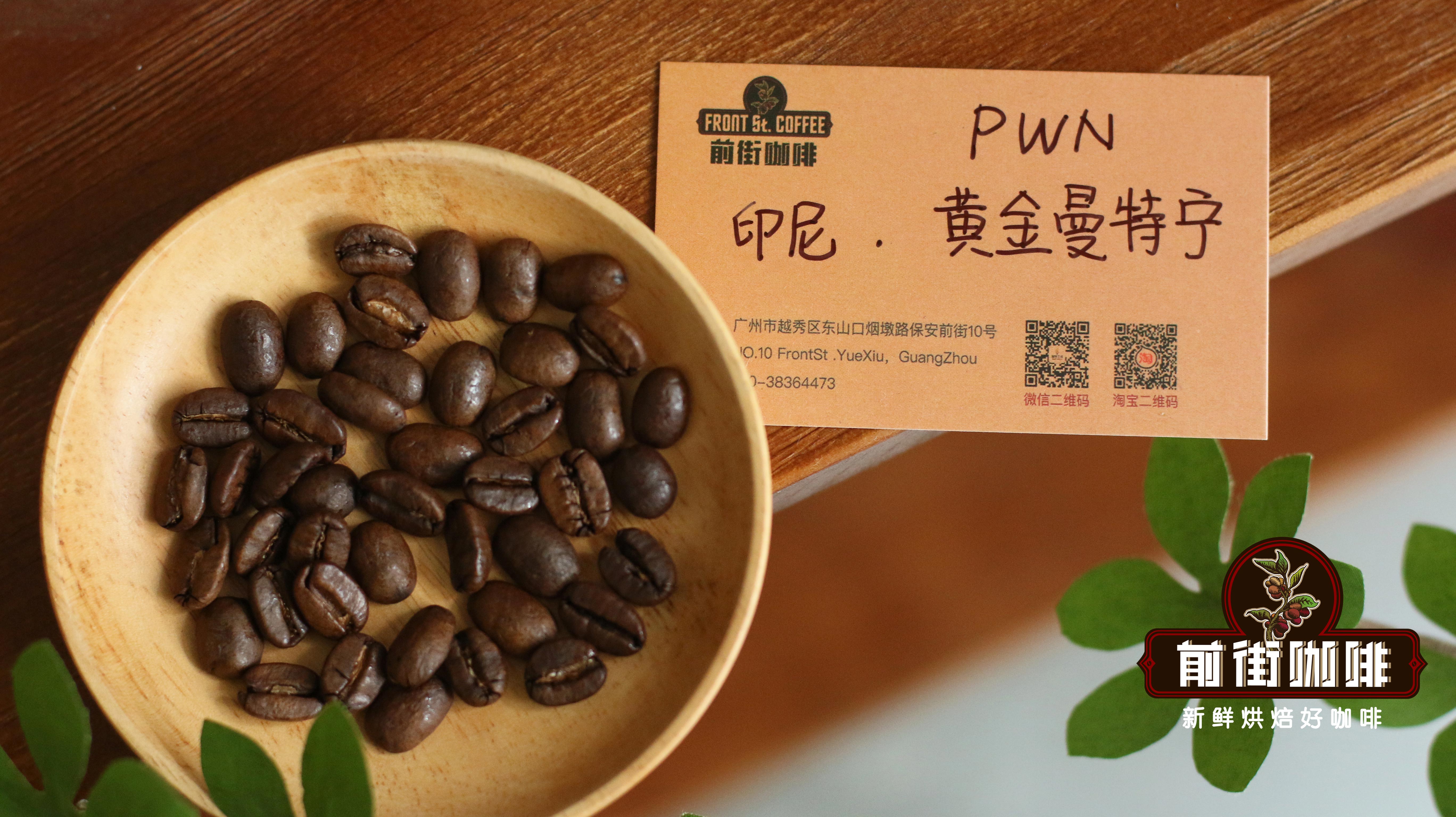
In Front Street's everyday bean series, there is a Mandheling from the Lintong region. Lintong Mandheling comes from the Lintong mountain area in north-central Sumatra, near Lake Toba, and can be understood as the regular version of Sumatra Mandheling. It is also processed using the wet-hulled method, thus possessing the characteristics of low acidity and high body. However, the wet-hulled method also brings about a phenomenon: the semi-hard, semi-soft moist green beans are prone to being squeezed when the parchment layer is removed, causing the bean body to crack into a hoof-like shape, commonly known as "hoof beans." This is not a defective bean; rather, it is a very prominent visual marker of Mandheling. Front Street launched the everyday bean series in the hope that every coffee lover can taste the main flavors of the production area at the most affordable price.
Front Street Coffee: Lintong Mandheling coffee beans
Region: Sumatra Lintong Altitude: 1100-1600 meters Variety: Typica, Caturra Processing method: Wet-hulled
Earlier, Front Street mentioned that a customer described Sumatra Mandheling entering the mouth like a tiger crawling forward, and among the Mandheling coffees offered by Front Street, there happens to be one named after a tiger. Tiger Mandheling is an AA-grade Mandheling selected three times from ordinary Mandheling trees through a 19-mesh screen (that is, strictly filtered with a sieve having 19 mesh openings, with the aim of making each bean's size and diameter as consistent as possible). Therefore, some also use "the tiger of Sumatra" to describe the preciousness and rarity of this 19-mesh selected bean.
In cupping, Tiger Mandheling presents high viscosity, very prominent fruity aroma and sweetness, and a lasting sweet aftertaste on the palate. It is indeed a rare good bean, deeply favored by veteran coffee connoisseurs. Some use "Sumatran tiger" to比喻 this Mandheling's rarity and preciousness, hence calling it "Sumatra Tiger Mandheling," and in China some also call it "Hu Mandheling" or "Tiger Mandheling." In addition, there is another saying: Sumatra has a "Tiger Estate" that specializes in producing Sumatra Mandheling, among which batches specially selected by the estate are named "Tiger Mandheling," also called "Tiger Mandheling."
Front Street Coffee: Tiger Mandheling coffee beans
Region: Sumatra Altitude: 1500 meters Variety: Caturra, Typica, Sidikalong Processing method: Wet-hulled
If the several Mandheling coffees above from Front Street are not full-bodied enough for you, then Front Street's Aged Mandheling will surely satisfy the expectations of body-loving enthusiasts. Indonesia was once a Dutch colony. During the colonial period, Indonesia needed to continuously supply coffee beans to Europe. To ensure that supply was not interrupted, coffee beans would be properly stored. However, due to the long transportation distance and exposure to sea winds, by the time the coffee beans arrived in Europe, another flavor had already formed—this is the origin of aged flavor. Fortunately, the European colonists at the time were amazed by this taste and quickly accepted and promoted this processing method.
Today, the processing technique for Aged Mandheling has become quite mature. The coffee beans first undergo the wet-hulled method (that is, during the regular washed process, they are sun-dried with parchment for 2 to 3 days until moisture content drops to 20-24%, then the parchment is removed and the green beans continue drying until moisture content reaches 12-13%), and are then sealed and stored in warehouses. The warehouse needs to be cool and ventilated, and the beans must be regularly turned to prevent mold, with storage lasting as long as 2 to 3 years. During this period, the coffee beans' acidity gradually weakens and transforms into sugar, and the color also becomes deeper, mostly yellowish-brown or dark brown, making them highly recognizable.
Front Street Coffee: Aged Mandheling coffee beans
Region: Sumatra Altitude: 1500 meters Variety: Caturra, Typica Processing method: Wet-hulled
The above four Mandheling coffees all use the wet-hulled processing method. Because the local weather is mostly cloudy and rainy, with frequent typhoons, it is difficult to meet the good weather required for sun-drying, and the local economic conditions are limited, making it impossible to afford the higher-cost washed method. The combination of these factors gave rise to the highly locally distinctive wet-hulled method (that is, during the regular washed process, the beans are sun-dried with parchment for 2 to 3 days, and when moisture content reaches 20-24%, the parchment is removed). The wet-hulled method processes very quickly, which also leads to a relatively higher defect rate in Mandheling, while Golden Mandheling effectively avoids this shortcoming. Golden Mandheling's specifications are 19 mesh and above, with fewer than 3 defective beans (in a 300-gram green bean sample), belonging to the highest grade G1, with a darker green color and a neat flat-bean shape.
If you want to drink Mandheling but do not want it so full-bodied, is there an option? Yes!
Not long ago, Front Street launched a sun-dried Mandheling, and this bean's flavor is completely different from the Mandheling in people's impressions. Traditional Mandheling leans more toward the deep, resinous aromas of herbs and forest woods, with low acidity, while this sun-dried Mandheling retains the herbal aroma while adding soft fruity acidity. Wahana Estate was established in 2005 and is located near LeaMungkur village in the Sidikalang district of North Sumatra, Indonesia. Sidikalang has been one of Indonesia's famous coffee-producing areas since ancient times. The area where Wahana Estate is located has an altitude between 1200 and 1500 meters, annual rainfall of 2000 to 3000 millimeters, a relatively cool climate, and a day-night temperature difference of more than 10°C. Based on the above conditions, the red cherries produced by Wahana all have a sugar content above 13%, so the coffee beans produced here are relatively sweeter.
Front Street Coffee: Sun-dried Mandheling coffee beans
Region: Sumatra Lake Toba Estate: Wahana Estate Altitude: 1000-1700 meters Variety: Bourbon, Typica Processing method: Sun-dried
How does Front Street brew these five Mandheling coffees? When brewing Mandheling coffee beans, Front Street tries to keep the brewing parameters as consistent as possible. Since the sun-dried Mandheling uses a medium-light roast, while the other four Mandheling coffees use a medium-dark roast, coffee beans of different roast levels will differ in brewing parameters.
Brewing parameters for light-medium roasted coffee beans: V60 dripper, 1:15 coffee-to-water ratio, 15 grams of coffee, 90°C water temperature, grind size (80% passing through a No. 20 standard sieve)
Brewing parameters for medium-dark roasted coffee beans: Kono dripper, 1:15 coffee-to-water ratio, 15 grams of coffee, 88°C water temperature, grind size (70-75% passing through a No. 20 standard sieve)
Front Street uses staged extraction: first bloom with 30 grams of water for 30 seconds, then pour in a small stream in circles until 125 grams for the stage break, and when the water level drops and is about to expose the coffee bed, continue pouring until 225 grams and stop. When the water level drops again and is about to expose the coffee bed, remove the dripper. Timing starts from the beginning of the bloom; the V60 dripper extraction time is 2 minutes 00 seconds, and the Kono dripper is slightly longer at 2 minutes 10 seconds.
Golden Mandheling: Rich and varied layers, full-bodied yet clean, with excellent balance, interwoven with intense nut and caramel aromas, carrying chocolate notes, and a long finish.
Lintong Mandheling: On the palate, it presents herbal and medicinal notes, accompanied by dark chocolate and caramel, with an obvious sweet aftertaste. Tiger Mandheling: Pine and spice aromas, a relatively balanced mouthfeel, with clearly discernible cream, dark chocolate, and nut flavors. Aged Mandheling: Aromas of wood, malt, and caramel rush forward. On the palate, it is a little less wild than traditional Mandheling and a bit more full-bodied and delicate, carrying a mature, steady character, with lower acidity. On the palate there are flavors of ripe pu-erh, caramel, herbs, and chocolate, with plenty of sweetness. Sun-dried Mandheling: Tropical fruit, fermented notes, moderate acidity, smooth mouthfeel, and obvious sweetness.
Professional coffee knowledge exchange. For more coffee bean information, please follow Coffee Workshop (WeChat public account cafe_style)
For more specialty coffee beans, please add the private WeChat of Front Street Coffee, WeChat ID: qjcoffeex
The above content is compiled by CoffeeHunters, a coffee news website.


