








What is in the Starbucks Autumn Blend coffee?
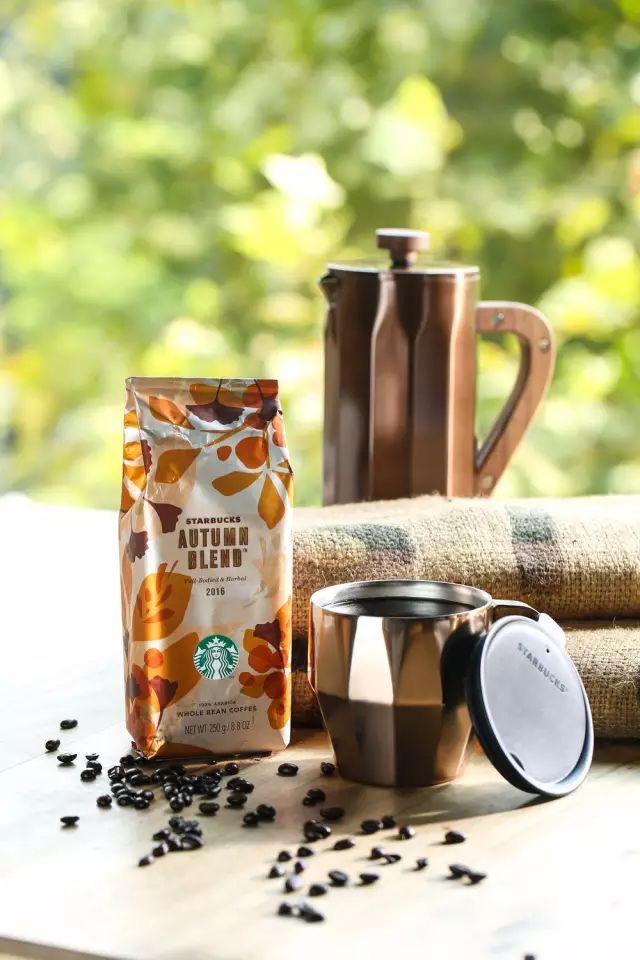
The Starbucks Autumn Blend is a fall release that pairs beans from Sumatra, Indonesia, with beans from Antigua, Guatemala. Sold in maple-orange packaging, it was first launched in 2008 and was called the Thanksgiving Blend from 2008 to 2011. The cup is sweet and smooth with a herbal aroma, built for the autumn season.
Sumatra contributes the heavy body, while Antigua adds soft sweetness. Comparable single-origin examples include a sumatra coffee golden shell such as Golden Mandheling and Antigua Flor del Cafe. Using a Kono dripper with staged extraction helps release the blend's solid body and layered sweetness, which is useful for pour-over beginners as well as experienced brewers.
Autumn brings crisp, refreshing air, and every fall Starbucks releases its Autumn Blend coffee beans in maple-orange packaging. This blend combines the characteristics of two major producing regions—Sumatra, Indonesia, and Antigua, Guatemala—presenting a rich, sweet, smooth flavor with herbal aroma. This article will introduce the background of these coffee beans in detail, the representative beans from the two major regions—Front Street PWN Golden Mandheling and Front Street Antigua Flor del Café—and share how to use a Kono dripper with staged extraction to fully release their solid body and rich layers. Whether you're a coffee enthusiast or a pour-over beginner, you'll gain practical brewing advice from this.
For professional coffee knowledge exchange and more coffee bean information, please follow the Coffee Workshop (WeChat public account: cafe_style).
For more specialty coffee beans, please add the private WeChat of Front Street Coffee (FrontStreet Coffee), WeChat ID: qjcoffeex.
Leaves gradually turn yellow, cool breezes begin to blow, and before we know it, autumn has quietly arrived.
Whenever autumn comes, everyone always thinks of cool weather, scenery in warm tones, and a cup of hot coffee. Every year, Starbucks also launches a blended coffee bean in autumn leaf tones to welcome the arrival of autumn and Thanksgiving.
Starbucks Autumn Blend Introduction
Autumn Blend coffee beans (also known as Thanksgiving Blend coffee beans). In terms of packaging, the designers used orange (maple leaf) as the main color that blends into autumn, immersing you in the artistic mood of autumn days and colorful falling leaves in the autumn wind, letting you experience the feeling of autumn wind brushing across maple leaves. This coffee bean was first released in 2008. From 2008 to 2011, the Autumn Blend coffee beans were called Thanksgiving Blend coffee beans.
Starbucks hopes that when drinking this coffee, people can feel the warmth of nature, and while being grateful to humanity, also be grateful to nature. Therefore, they created a coffee bean that has the taste of nature and the atmosphere of autumn, and at the same time is suitable for pairing with traditional Thanksgiving dishes as well as desserts and pastries.
Therefore, Starbucks selected coffee beans from the Sumatra producing region in Indonesia plus the Guatemala producing region, and blended this coffee bean with a rich, sweet, smooth, and herbal aroma.
Introduction to the Sumatra Producing Region in Indonesia
As a large archipelagic country, Indonesia inherently has an excellent coffee-growing environment and latitude. Each island has different characteristics due to differences in terrain and climate. Among them, Sumatra is the main place in Indonesia where Arabica coffee is grown, and the Mandheling coffee loved by many coffee connoisseurs comes from here. (Note: Mandheling is the name of a coffee, not a producing region. It broadly refers to Arabica coffee grown on the island of Sumatra, and the name originates from the local Mandailing people.)
On the island of Sumatra, there are two main coffee-growing regions: one is the Aceh producing region in northern Sumatra, whose representative coffee bean is "Front Street Coffee (FrontStreet Coffee) Front Street PWN Golden Mandheling Coffee Beans ", and the other is the Lintong producing region around Lake Toba (Danau Toba) in south-central Sumatra, whose representative coffee bean is "Front Street Coffee (FrontStreet Coffee) Daily Selection Lintong Mandheling Coffee Beans ".
The difference between the two is that Front Street PWN Golden Mandheling Coffee Beans undergo at least three rounds of purely manual sorting after harvesting and drying to ensure that the coffee bean size reaches 18 or above. There are fewer than 3 defective beans (in a 300g green bean sample), belonging to the highest grade, G1. PWN beans are darker green in color and are neatly shaped flat beans.
Many beans on the market are not produced by the PWN company but still carry the Golden Mandheling label. In fact, these can only be called specialty Mandheling. Authentic PWN Mandheling coffee beans come with a certification certificate issued by the PWN company.

In terms of flavor, Mandheling coffee from the Lintong producing region has a rich herbal aroma on the palate, along with dark chocolate, caramel, and a sweet aftertaste. Front Street PWN Golden Mandheling Coffee is rich and clean on the palate, with intense nut and caramel aromas, a chocolate note, a long finish, and a high degree of balance.
Introduction to the Antigua Producing Region in Guatemala
The Antigua Valley in Guatemala has always been Guatemala's most prestigious coffee-producing region. The local microclimate provides excellent conditions for growing coffee—a combination of rich volcanic soil, low humidity, ample sunlight, and a strong contrast between day and night temperatures, among other factors, creates the character of coffee from the Antigua producing region.
The active volcanoes within Guatemala bring fertile volcanic soil to the Antigua area, as well as unique volcanic pumice. These cooled materials from volcanic magma after eruption are porous and heat-insulating, making them very suitable for retaining moisture in the soil and precisely compensating for the region's low rainfall. At the same time, combined with the shade trees commonly found in this area, they make it difficult for moisture to be lost while also giving the coffee fruit a more unique flavor.
Coffee grown in Guatemala has soft fruit acidity, nuts, caramel, and a slight smoky flavor. Its representative work is "Front Street Coffee (FrontStreet Coffee) Antigua Flor del Café Coffee Beans." Unlike coffee beans from other areas of Antigua, Flor del Café coffee beans are provided by the famous La Minita estate with professional and rigorous cultivation techniques, showcasing the bright and clean "goddess" presence of Flor del Café coffee.
In terms of flavor, Flor del Café coffee beans have a very pleasant and elegant floral main flavor, with soft acidity and a chocolate-like flavor in the finish, and the overall mouthfeel is clean and bright.
How to brew Starbucks Autumn Blend, Indonesian region, and Antigua region coffee beans?
All three coffee beans have a relatively rich and solid mouthfeel, so Front Street Coffee (FrontStreet Coffee) recommends using a Kono dripper for drip extraction.
Compared with the common V60 dripper, the ribs of the Kono dripper extend from the drip hole to only 1/3 of the dripper wall. When the filter paper fits the dripper, air cannot directly pass through the entire dripper, so it can slow down the speed of water dripping and achieve an immersion effect, helping the coffee's flavor substances release more fully.
In terms of parameters, Front Street Coffee (FrontStreet Coffee) recommends using a medium-coarse grind (coarse granulated sugar size, 70-75%% passing rate with a Chinese No. 20 standard sieve), 88 degrees Celsius water temperature, and a 1:15 coffee-to-water ratio with the KONO dripper.
In terms of brewing technique, Front Street Coffee (FrontStreet Coffee) recommends using staged extraction. The specific brewing method: press the timer. The first pour is 30g of water, then bloom for 30s; next, perform the second stage with a small amount of water poured in circles until the total weight reaches 125g; wait until the water level in the coffee bed drops to half before pouring again, then continue pouring in circles with a small amount of water until the total weight reaches 225g. After all dripping is complete, the total extraction time is about 2 minutes 10 seconds.
The above content is compiled by CoffeeHunters, a coffee news website.


