







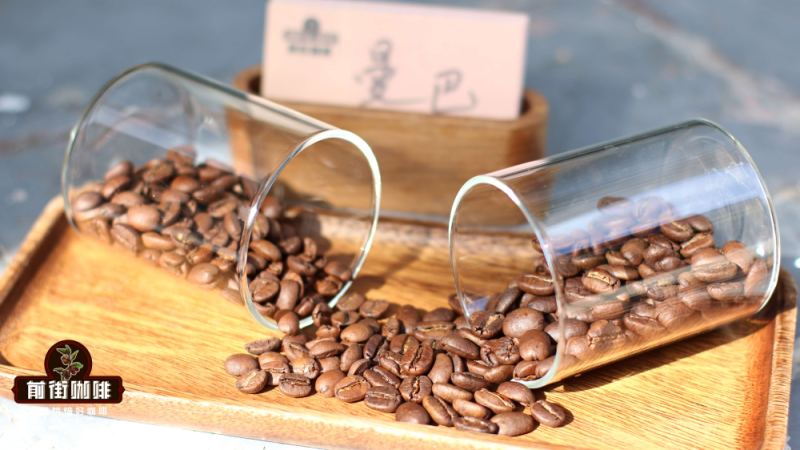
Why does a deep roast suit Mandheling and Brazil?
Mamba coffee is a blend of Mandheling and Brazilian beans, usually at 2 parts Mandheling to 1 part Brazil, or 3 to 1. Mandheling is normally given a deep roast for a substantial body and lingering aroma, while Brazilian beans are roasted medium to keep a mild, subtly acidic smoothness. Together they balance intensity with clean sweetness.
The two origins also differ in processing: Mandheling from Indonesia's Lintong area is wet-hulled, and Brazil's Cerrado beans are pulped natural, which shapes an oily texture with sweet spice and muscovado caramel notes. Front Street Coffee's classic version uses Sumatra G1 Mandheling with Brazil Cerrado Red Bourbon, and each roaster's ratio and coffee processing choices shift the final cup.
Mamba coffee is a classic espresso blend created by the combined forces of Mandheling and Brazilian beans. The deep-roasted Mandheling's rich, lingering aroma meets the mild, subtly acidic, and smooth Brazilian beans; the two complement each other, producing a balanced, easy-drinking espresso experience. This article will go over Mamba's common ratios and roasting variations, and recommend Front Street Coffee's classic blend—an espresso bean made from Sumatra G1 Mandheling paired with Brazil Cerrado Red Bourbon and given a deep roast. At the same time, we'll journey into the two great origins, Indonesia's Lintong and Brazil's Cerrado, to see how wet-hulling and pulped natural processing shape a distinctive flavor abundant in oils, interwoven with sweet spices and muscovado caramel.
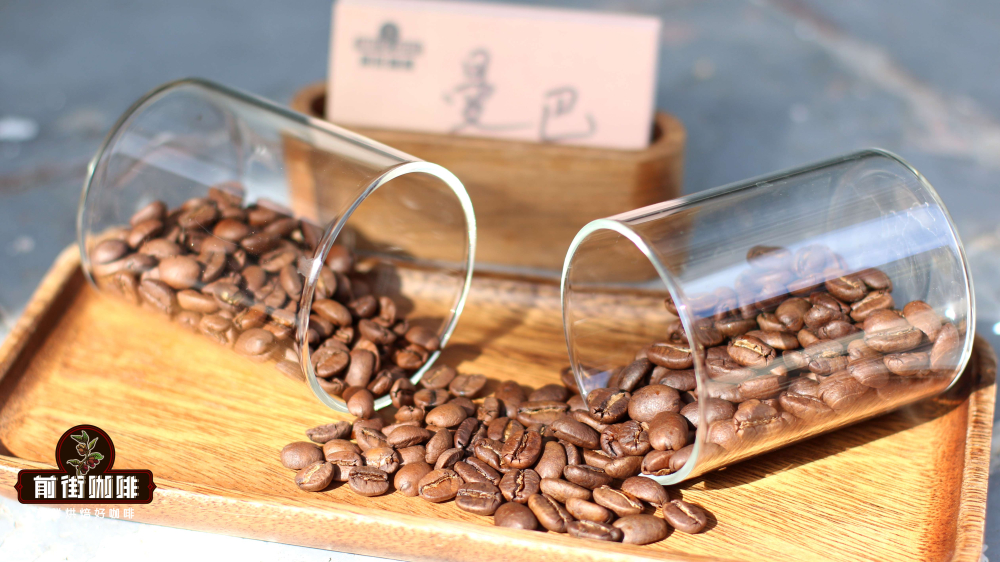
What is Mamba coffee? Is it a pairing of Mandheling and Brazil? What ratio are the two usually blended in? And what does it taste like in terms of flavor and mouthfeel?
So-called Mamba refers precisely to "Mandheling + Brazil"—a blend of Mandheling coffee beans and Brazilian coffee beans, with common ratios of 2 parts Mandheling to 1 part Brazil, or 3 to 1. Mandheling is mostly given a deep roast, with a substantial taste and a lingering aroma; Brazilian beans are given a medium roast, with a neutral flavor and a slight acidity. Blended together, the two types of beans perfectly make up for each other's shortcomings: they retain Mandheling's rich, powerful force while incorporating the clean sweetness and purity of the Brazilian beans.
The essence of this "Mandheling + Brazil" combination lies in blending Mandheling's intensity and heaviness with Brazil's silky sweetness just right. Each roaster's roasting methods and blend ratios differ—a medium-roasted Mamba sheds its heavy bitterness, presenting a delicate bittersweetness and a sweet aftertaste, balanced and harmonious on the palate, warm and smooth going down; the front section reveals a fresh herbal note, while the middle and back sections shift toward spice tones and Brazil's characteristic nutty aroma.
Similar products are hardly rare on the market: some pair deep-roasted Mandheling with medium-roasted Brazil, while others take both through a medium roast—the former has a mellow taste and a solid, roasty fragrance; the latter strikes a balance between acidity and bitterness and is easier to drink. Ratios are likewise all over the place, with 50-50, 6:4, and 7:3 versions all in existence.
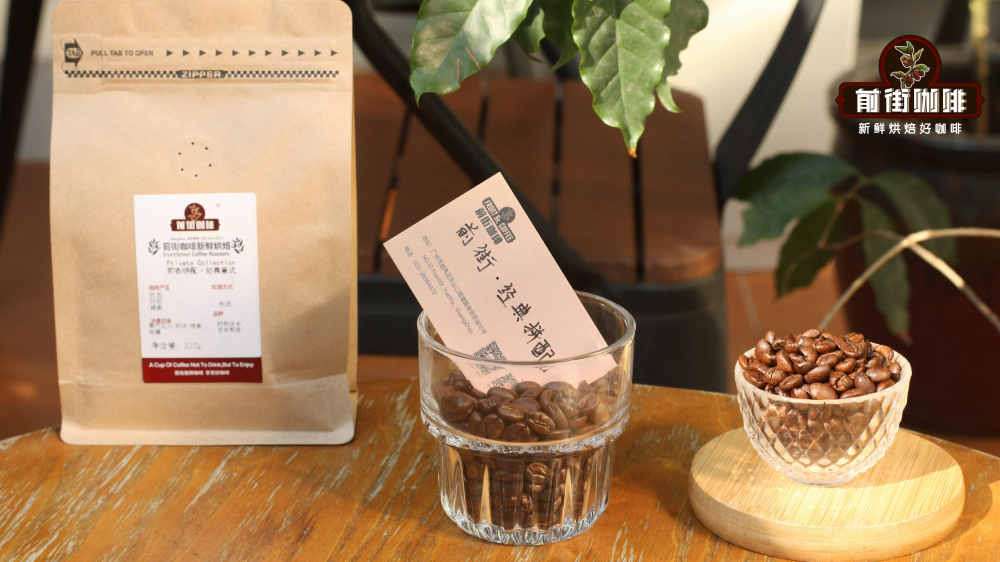
To experience the authentic traditional Mamba style, we recommend picking up Front Street Coffee's classic blend espresso bean. It pairs Sumatra G1-grade Mandheling with Red Bourbon from Brazil's Cerrado—a combination of two high-caliber Arabica beans. Thanks to the deep-roast setting, the extracted espresso has low acidity, a mellow and richly aromatic taste, and gives off the bittersweet notes of dark chocolate, a buttery smoothness, and aromas of caramel and hazelnut.
In Front Street Coffee's view, the flavor code of Mamba is hidden within its two native lands: one is the mysteriously atmospheric Asian coffee-growing country of Indonesia, and the other is Brazil, the coffee giant whose output tops the world.
First, let's look at Indonesia's Lintong region: Sumatra's finest-quality coffee comes from the area near Lake Tawar in Aceh province at the northern end of the island, as well as the highlands by Lake Toba farther south. Local beans commonly follow a unique semi-washed processing method, and coupled with the iron deficiency in the soil, the green beans here display a distinctive bluish luster.
Lake Toba sits in North Sumatra, and its surroundings are precisely the most famous coffee-producing area in this region. By regulation, only beans grown within the Lintong area, rigorously selected, large in size, and with impressive cupping scores are eligible to bear the name Golden Mandheling. Lintong Mandheling generally has low acidity and outstanding body, and showcases a one-of-a-kind flavor through wet-hulling—composed yet lively, it is a highly recognizable Indonesian-style coffee.
In the broad sense, Mandheling refers to coffee from the Sumatra region that has undergone meticulous cultivation and processing, and the aromatic expression of different estates varies as well. In production, the coffee cherries are entirely hand-picked, first given semi-washed processing and then sun-dried, after which they must still go through four rounds of hand sorting; its classic, unique powerful taste and rich, full-bodied aroma rank among the world's finest, and it has been praised by many experts as the world's most outstanding coffee. On the palate it is heavy and full, with a body like fine wine, along with a bold, wild aroma; the flavor is composed and seasoned, the acidity extremely faint, and the aftertaste reaches all the way down the throat, lingering for a long time.
Now let's look at Cerrado: Brazil is home to three core coffee-producing regions—the states of Minas, Bahia, and Sao Paulo—and is also the country with the world's highest coffee output. Brazilian beans are generally considered lively in character and rounded in mouthfeel, so a great many blended beans and espresso beans use them for balancing. The selected Cerrado coffee beans of South America's Brazil are grown at an altitude of about 1,000 meters, with an annual average temperature of only around 20°C, and a gravelly soil layer similar to that of vineyards, which both aids drainage and retains nutrients; combined with a clear division between wet and dry seasons and a cool, pleasant climate, the coffee beans develop a distinctive acidity as they grow.
Cerrado is a well-known producing region within Brazil, and local coffee processing commonly uses the pulped natural method. Because this method sends the beans—skin and pulp still attached, along with the mucilage—straight to drying, it preserves a higher proportion of organic matter and minerals. Beans processed this way have a particularly intense aroma, with a hint of cocoa within the sweetness, low acidity, and a smooth, balanced character that overall gives an elegant impression.
What is the pulped natural processing method? Pulped Natural is essentially the semi-washed processing that Brazil has used for many years: in the green bean processing stage, the "fermentation" step is omitted, allowing the parchment beans with the skin and pulp removed to be sun-dried directly; after the surface mucilage dries, a machine removes the mucilage together with the parchment. Coffee beans processed this way show outstanding body, carry a natural sweetness, and have lower acidity than washed beans.
[Origin] Sumatra Lintong, Brazil Cerrado
[Processing Method] Wet-hulled processing / Pulped Natural
[Features] Breaking the traditional character of Mamba, raising the proportion of Mandheling to make the rich, oily aroma even more prominent, while bringing in Cerrado's spice notes and re-sorting the balance between acidity and bitterness—a classic recipe reborn, a legendary flavor revived!

Flavor: In cupping, the first thing to arrive is the distinctive aroma of sweet spices, which then draws out notes of licorice and vanilla; the moment it enters the mouth it is wrapped in a rich, oily mouthfeel, substantial and richly aromatic, with just the right amount of bittersweetness and an acidity that is nearly undetectable; the nutty aroma lends a delicate texture, and the taste is clean yet still intense; the sweet aromas of muscovado and caramel turn into a long, lingering sweetness in the mouth, with a refined, far-reaching aftertaste, and a sweet imprint of muscovado and caramel lingering in the finish.
This blend reins in Mandheling's intense character and also softens Brazil's acidity, harmonizing the former's rounded, deep bitterness with the latter's faint sweetness into a gentle Mamba that releases a naturally sweet, elegant aroma. If you favor a cup that sits between heavy and mild, it is undoubtedly an ideal choice.
The above content is compiled by CoffeeHunters, a coffee news website.


