







Why Is Jamaica Blue Mountain Among the Famous Coffees?
Jamaica Blue Mountain No. 1 is one of the famous coffees that most often commands a high price, and its value comes from place and rules rather than reputation alone. Jamaica's coffee history starts in the eighteenth century, and the Blue Mountain range in the east sits between 1,000 and 1,700 meters, where only coffee grown inside the legally designated areas may carry the name.
Altitude also splits local coffee into Jamaica Blue Mountain Coffee, High Mountain Coffee and Jamaica Coffee, each at a different price. The CIB grading system and the Typica variety shape the cup, while coffee bean processing, washed or natural at estates such as Clifton, changes the flavor. Cupping data and a brewing recipe help buyers tell genuine No. 1 apart.
When it comes to the world's famous coffees, Jamaica Blue Mountain is sure to be among them, yet many people cannot explain why it commands such a high price. In this article, Front Street Coffee guides you through a systematic understanding of this "Emperor of Coffee": from its eighteenth-century planting origins and the four legally designated producing regions certified by the government, to the CIB's strict grading system and the characteristics of the Typica variety, and then to the differences between the washed and natural processing methods at Clifton Estate. It also includes green bean analysis, roasting records, cupping data, and a complete brewing recipe, helping you understand the value of Blue Mountain coffee and learn to identify genuine Blue Mountain No. 1.
To learn more about specialty coffee, welcome to follow Front Street Coffee's WeChat official account: Front Street Coffee
Nowadays, as coffee enthusiasts grow in number, many people begin trying to brew by hand, and the first choice for beginners is often those renowned beans. If one were to rank the world's most famous coffees, Jamaica Blue Mountain would never be absent from any ranking. So guests often ask Front Street: everyone only knows that "Blue Mountain coffee is expensive," but where exactly does its value lie and how is it manifested?
Taking this opportunity, Front Street will lead you deep into the world of Jamaica Blue Mountain in this article, unveiling the mystery of this "Emperor of Coffee."
The Origins of Jamaica Blue Mountain Coffee
Jamaica's connection with coffee began in the eighteenth century. In 1717, King Louis XV of France decreed the development of coffee cultivation there; by the mid-1720s, the then-Governor Sir Nicholas Lawes introduced Arabica seeds from Martinique and first promoted them in the St. Andrew area. From then on, coffee trees officially took root in Jamaica and were planted on the Blue Mountain range. According to altitude differences, local coffee is further divided into three tiers: Jamaica Blue Mountain Coffee (high altitude), High Mountain Coffee, and Jamaica Coffee. Different grades naturally command vastly different prices.
The Officially Certified Blue Mountain Producing Regions of Jamaica
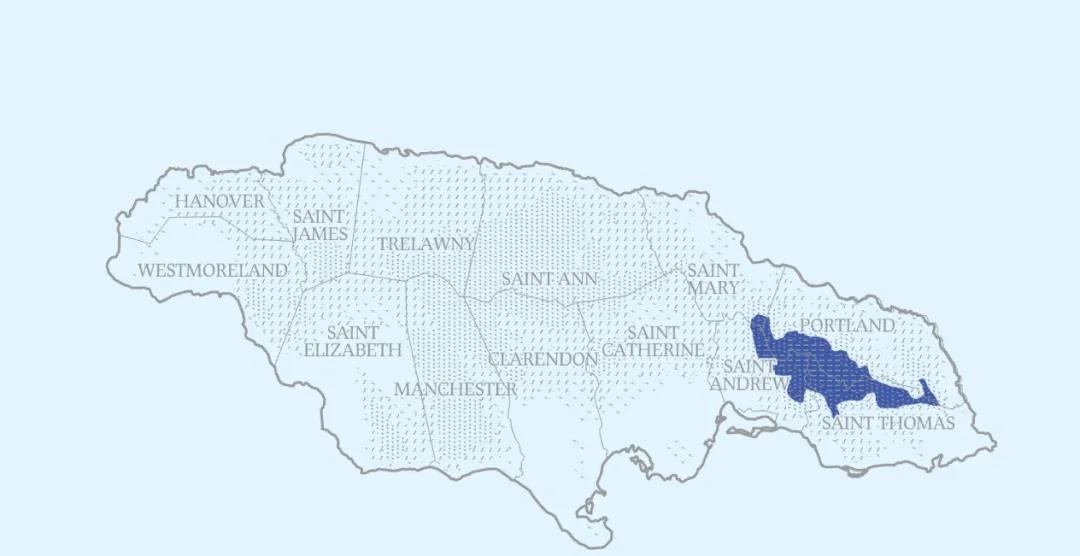
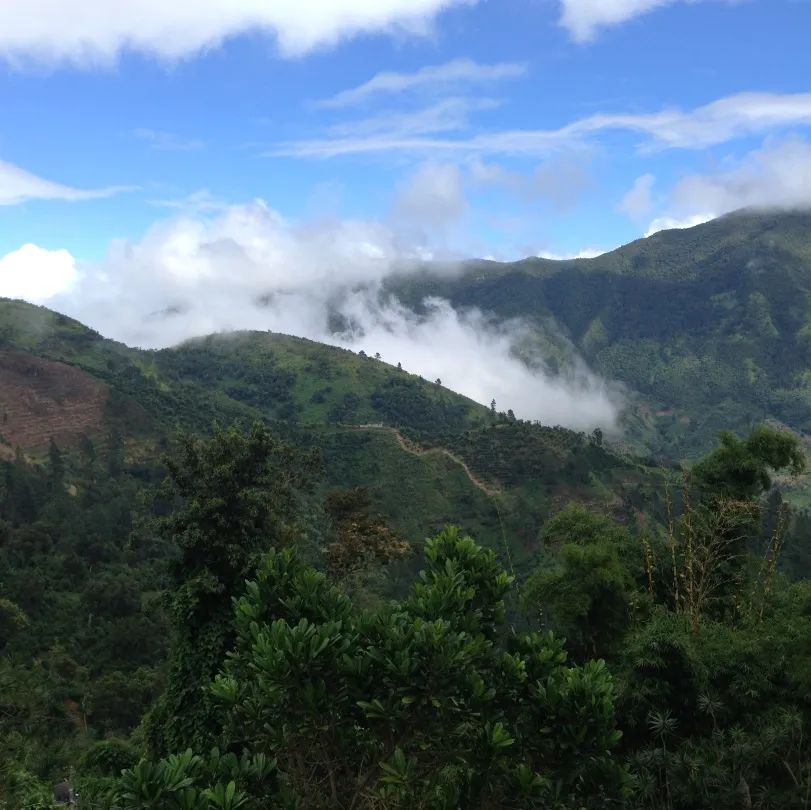
The Blue Mountain range sits in the eastern part of Jamaica, at an elevation between 1,000 and 1,700 meters. Only coffee from this area qualifies to be called authentic Blue Mountain. As for the origin of the name, it is because the range is surrounded by the Caribbean Sea; on clear days when sunlight falls on the azure sea, the peaks reflect the shimmering blue glow of the seawater, hence the name "Blue Mountain."
The Blue Mountains lie right on the global coffee belt, with fertile, deep volcanic soil, clean and pollution-free air, year-round mist, and abundant rainfall (average annual precipitation of about 1,980 mm, average temperature around 27 degrees). It is precisely this terroir that nurtures the world-famous Jamaica Blue Mountain. The legally designated Blue Mountain producing regions certified by the Jamaican government cover four eastern administrative districts: St. Andrew, St. Thomas, St. Mary, and Portland. The Front Street Washed Blue Mountain and Front Street Natural Blue Mountain sold by Front Street both come from Clifton Estate within the certified producing region—the only estate in the entire Blue Mountain growing area to hold Rainforest Alliance certification. Rainforest certification means farming with traditional methods under the shade of native forest trees, which helps maintain the ecosystem; a portion of the certification alliance's revenue is also used to protect tropical rainforest animal habitats and improve workers' living conditions.
The Altitude of Blue Mountain Coffee Cultivation
The highest point of the Blue Mountains reaches 2,256 meters, the highest in the entire Caribbean region. This area is also within the coffee belt, with nutrient-rich volcanic soil, fresh and pure air, and a humid, misty, rain-abundant environment (average annual precipitation of about 1,980 mm, average temperature of about 27 degrees). This not only produces Front Street's world-renowned Jamaica Blue Mountain coffee but also creates the world's highest coffee prices. According to regulations, only coffee grown in designated areas at altitudes between 1,000 and 1,700 meters can bear the officially certified Blue Mountain label.
Why Did Japan Once Hold Priority Purchasing Rights for Blue Mountain?
In 1950, the Jamaican government established the Jamaica Coffee Industry Board to set quality standards for local coffee and oversee their implementation, thereby ensuring overall quality; all exported green beans and roasted beans must bear the special official seal issued by the Board. Back then, Jamaica used Japanese loans to improve production standards, and Blue Mountain's market outlet was thereby secured, giving Japan long-term priority purchasing rights. This situation only came to an end in 2009; in April 2011, the first batch of Jamaica Blue Mountain No. 1 coffee arrived in mainland China.
Jamaica Coffee Industry Board (CIB)
Among coffee-producing countries worldwide, Jamaica is the only one with a government-level coffee management body—the Jamaica Coffee Industry Board (CIB). It is under the Ministry of Agriculture and Fisheries, and its scope covers cultivation technical guidance, processing training, fair trade, and quality supervision. All matters related to Jamaica Blue Mountain's quality and brand fall within its purview. The board members are all Jamaican estate owners of considerable scale (due to industry changes, newly certified Blue Mountain estates must now be at least 50 hectares).
According to CIB regulations, only coffee beans grown in the Blue Mountain producing region at altitudes above 2,200 feet deserve the name "Jamaica Blue Mountain"; grades range from No. 1 to No. 3 by bean size, plus hand-selected PB. Taking No. 1 as an example, the Blue Mountain green beans purchased by Front Street must meet several basic conditions: bean size of 17 screen or above, defect rate not exceeding 3%, moisture content around 13%, etc. Currently, all Blue Mountain coffee exported on the market must hold a certificate issued by the CIB.
Grading of Jamaica Blue Mountain Green Beans
Ranked by quality from high to low: No. 1, No. 2, No. 3, and PB, where PB means Peaberry. According to CIB standards, only coffee grown at altitudes of 1,000 to 1,700 meters can bear the name Jamaica Blue Mountain. This type of coffee has scarce production, large beans, outstanding quality, and a balanced, rounded taste, with appropriate acidity, bitterness, sweetness, aroma, and body—none absent. It is globally recognized as a top-tier product. It is precisely for this reason that Blue Mountain No. 1, a national treasure, commands the highest price in the entire Blue Mountain family.
(1) No. 1: bean size 17/18 screen, defective beans not exceeding 2%. (2) No. 2: bean size 16/17 screen, defective beans not exceeding 2%. (3) No. 3: bean size 15/16 screen, defective beans not exceeding 2%. (4) Peaberry: 10MS, defective beans not exceeding 2%.
The Variety of Jamaica Blue Mountain Coffee
The variety used in Front Street's Jamaica Blue Mountain is Typica. In the 1720s, Typica was introduced from Martinique to Jamaica's Blue Mountains. After more than two centuries of evolution, the local Typica developed stronger disease resistance, particularly against coffee berry disease, surpassing ordinary Typica. However, once removed from Jamaica's soil and climate, Blue Mountain Typica can hardly reproduce that clear, sweet, delicate aroma. Typica's new tip leaves are bronze-colored; its beans are oval or somewhat slender and pointed; the plant is tall, with branches growing at a slight angle of 50 to 70 degrees from the trunk. It has elegant flavor, but the tree is weak with poor disease resistance, and the yield per plant is quite limited.
How to Distinguish Real from Fake Front Street Jamaica Blue Mountain
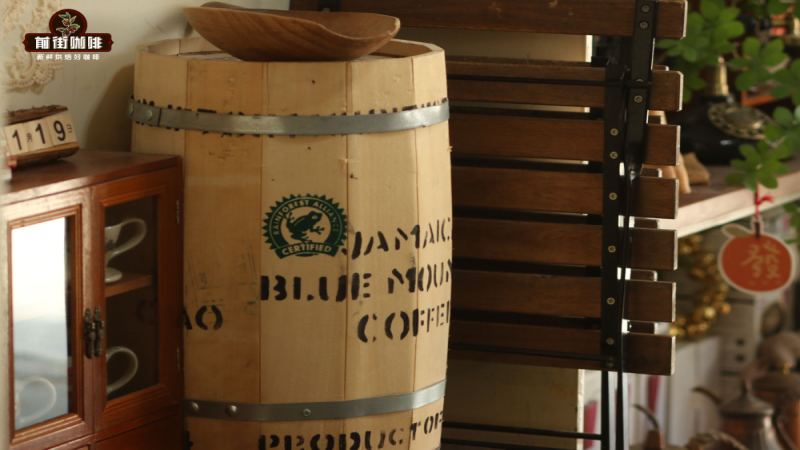
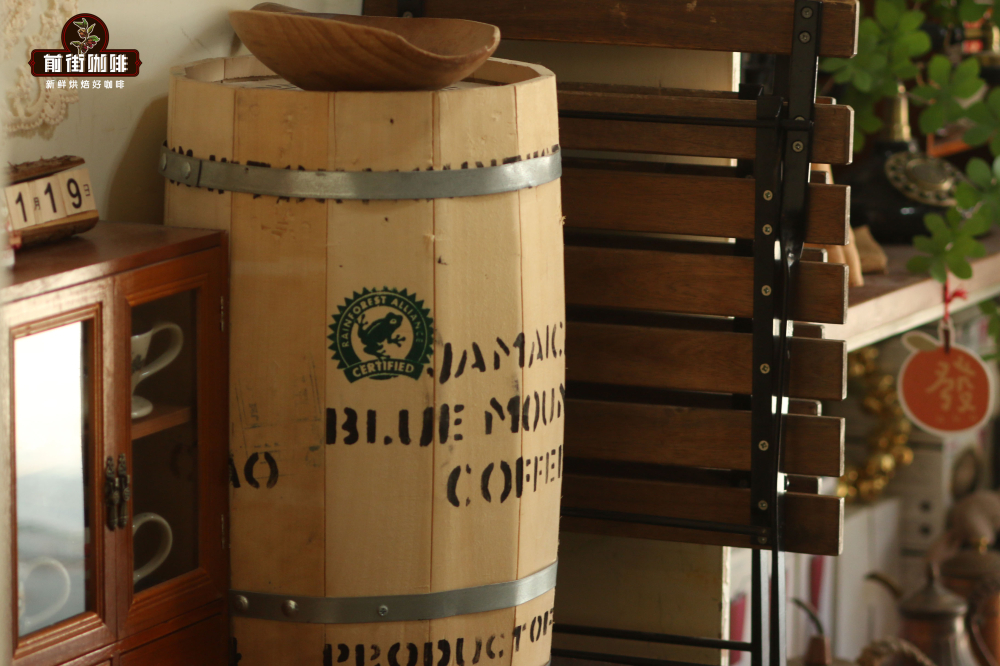
Remember two clues: first, check whether it is an export company designated by the Coffee Industry Board; second, check whether the green beans are packed in wooden barrels—Blue Mountain is the only producing region in the world that still uses wooden barrels for packaging green beans. Front Street especially reminds you here to beware of the following two common misconceptions when buying Jamaica Blue Mountain:
The first is that some merchants lightly dark-roast beans from other regions or blends to erase their individual character, bringing the taste closer to Blue Mountain, then package and sell them as so-called Blue Mountain flavor coffee. Because Blue Mountain is so famous, counterfeit products flood the market endlessly: "Blue Mountain Style Coffee," "Blue Mountain Blend Coffee," and even products directly named Blue Mountain Coffee. But these products are all blends created by businesses imitating Blue Mountain's taste by mixing various beans themselves—there may not even be a single genuine Jamaica Blue Mountain bean in them.
The second stems from some industry practitioners' outdated understanding—their impression remains stuck more than a decade ago, insisting that all authentic Blue Mountain is bought up by Japan and that what's sold domestically cannot possibly be genuine. In reality, with the tremendous growth of Chinese market demand, Blue Mountain has been imported through legitimate channels for many years. In recent years, Blue Mountain coffee estate owners have even visited China in person to introduce their estate's beans to local consumers. The Blue Mountain on the Chinese market is far from being flooded with fakes with genuine beans extinct. Today the Blue Mountain producing region is larger than before, and coupled with Japan's weakened consumption power in recent years, authentic Jamaica Blue Mountain is fully available on the Chinese market. As long as you master the identification methods, buying the genuine article is not difficult.
Blue Mountain Coffee Bean Processing Methods: Washed and Natural
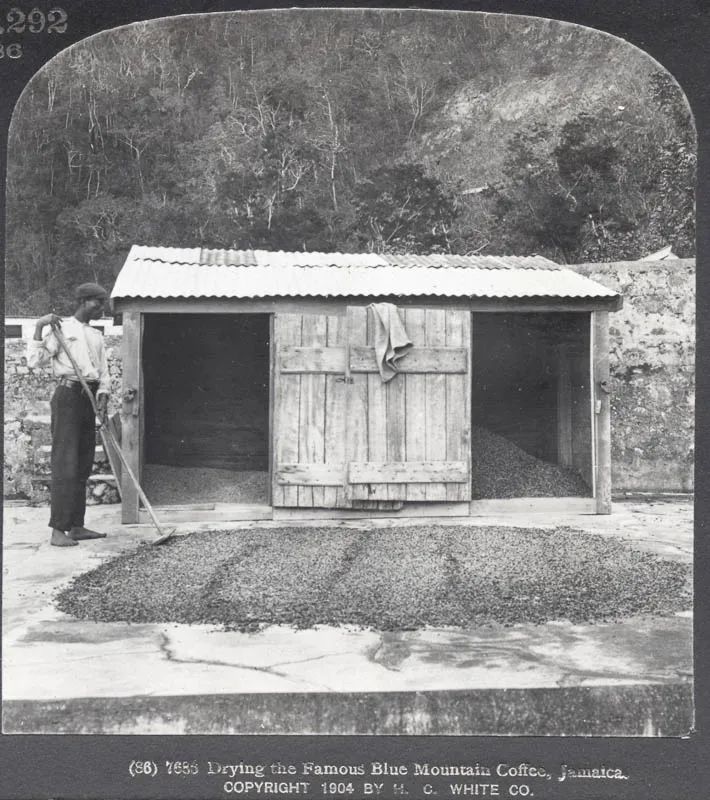
Before 2019, Clifton Farm always processed Blue Mountain green beans using the washed method. The specific process: first remove the skin and pulp, then ferment for 12 to 18 hours; after fermentation, move the beans into a pool and push them back and forth, using the friction between beans and the flowing water to wash the coffee beans smooth and clean. At the end of washing, the beans are still wrapped in the mucilage, with moisture content as high as 50%, and must be immediately spread out to dry, reducing moisture content to 12%–14%, otherwise the beans will continue to ferment and then mold and rot. After that, they undergo a screening process and are stored in dedicated warehouses.
In the 2020 new crop season, Clifton Estate tried natural processing of Blue Mountain beans for the first time—an exceptional move. Jamaica has a tropical rainforest climate, with rainy seasons from May to June and September to November each year, and particularly heavy showers in January and May; Blue Mountain coffee's harvest and processing period is concentrated from February to June each year, overlapping with the rainy season for nearly half the time, making natural processing clearly impractical. Furthermore, traditional natural processing yields highly variable quality, with the outcome almost entirely dependent on the weather; to produce top-quality natural beans requires far more labor than washed methods—while coffee cherries dry on the drying beds, workers must turn them every few hours to ensure ventilation, reduce mold, and ensure even drying. This labor-intensive yet not necessarily rewarding processing method was naturally even harder to promote in Jamaica at the time.
Front Street Blue Mountain Green Bean Analysis
Let's first examine Front Street Blue Mountain's green beans: whether natural or washed batches, the beans are quite plump, uniform in screen size, with slightly upturned ends, overall oval-shaped, and somewhat flat and thin when viewed from the side—characteristic of pure Typica. The differences between the two appear in color and silver skin: natural beans are yellow-green with more silver skin on the surface; washed beans are blue-green with noticeably less silver skin. The reason is that during washed processing, the beans must soak for a long time, causing the silver skin to separate from the bean; the final step of removing the parchment also carries away the outer silver skin, leaving very little silver skin on the surface of washed green beans.
Front Street Coffee Roasting Record
Front Street Washed Blue Mountain roasting record: charge when the drum temperature rises to 170°C, with the airflow damper at 3; after 1 minute, adjust the heat to 140°C, keeping the damper unchanged. At 5'10", the temperature gauge reads 153°C, the beans turn yellow and the grassy scent completely dissipates, marking the end of the dehydration phase; at this point reduce heat to 115°C and adjust the damper to 4. At 8'00", wrinkles and dark patches appear on the bean surface, and the toast aroma noticeably gives way to coffee aroma, which can be regarded as a sign of first crack approaching; at this moment you must listen carefully for the sound of first crack. At 8'12", first crack begins; immediately reduce heat to 90°C and fully open the damper (be extremely careful when reducing heat—do not reduce it so much that you cannot hear the cracking sounds), and finally drop the beans at 201.3°C.
Front Street Coffee Cupping Data
Front Street Coffee's cupping is conducted within 8 to 24 hours after the sample beans are roasted. The roasters habitually use 200ml ceramic cupping bowls with two scale lines marked at 150ml and 200ml. According to SCAA standards, water TDS is controlled around 150ppm—TDS too low tends to cause over-extraction, too high affects the taste and easily causes under-extraction; cupping water temperature is set at 94°C. Grind size also follows SCAA cupping standards: using a No. 20 standard sieve (0.85mm aperture), the pass-through rate is maintained at 70%–75%. The coffee-to-water ratio is 11 grams of coffee grounds to 200ml of hot water, i.e., 1:18.18, so that the extracted concentration falls exactly within the golden cup standard of 1.15%–1.35%, with a steeping time of 4 minutes.
Front Street Washed Blue Mountain Cupping Results Dry aroma: roasted peanut, hazelnut, melon, chocolate Wet aroma: oolong tea, caramel, honey, chocolate, almond Flavor: roasted nuts, chocolate, almond, melon, honey, with sweetness, acidity, and bitterness in balance
Front Street Coffee Brewing Recipe Dripper: Kono dripper Dose: 15g Coffee-to-water ratio: 1:15 Grind size: medium-coarse (75% pass-through on No. 20 sieve)
Front Street's staged pouring technique: first bloom with 30 grams of water for 30 seconds, then pour 100 grams in a slow, small stream in circles from the center outward, with the scale reading 130 grams; when the coffee bed drops to half its height, switch to a larger stream and pour another 65 grams, bringing the total water to 195 grams. After all the coffee liquid in the dripper has dripped into the server, remove the dripper to finish extraction, with a total time of 1 minute 50 seconds.
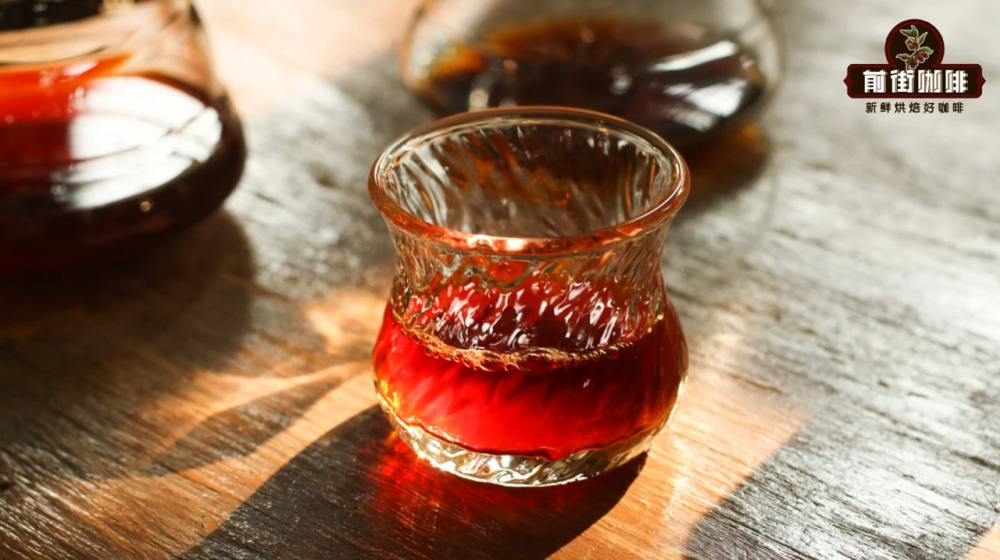
[Front Street Washed Jamaica Blue Mountain] The entry reveals dark chocolate and nutty flavors; the cup has very high cleanliness, quite bright acidity, and impressive body, with sweetness, acidity, and bitterness in harmonious balance.
The above content is compiled by CoffeeHunters, a coffee news website.


