







What Does SOE Coffee Mean in a Cafe?
SOE stands for Single Origin Espresso, meaning a shot pulled from beans of one origin rather than a blend. It extends into SOE Americano, SOE Latte and SOE Dirty, and it usually costs a little more because the single-origin character is the point. Cafes flag it on the menu so drinkers know the shot is not their standard house blend.
Blends exist to be stable and forgiving; SOE exists to show a specific place. Roasters pick soe coffee beans that hold up as espresso while keeping their origin notes readable, which is why roast level matters so much. A Brazilian bean, for example, can be pulled as an SOE and built into a Dirty at home with set parameters.
When you walk into a café to order and the barista asks, "Would you like an SOE?", many customers are momentarily confused. SOE stands for Single Origin Espresso, meaning espresso made from single-origin coffee beans, which can be extended into SOE Americano, SOE Latte, SOE Dirty, and many other ways of drinking. This article will start from the development of specialty coffee, clarify the differences between SOE and blended coffee, and analyze the approach to choosing acidic and bitter beans. Finally, using Front Street Brazil Cerrado coffee beans as an example, it will share the complete extraction parameters and Dirty-making steps, so you can make an excellent cup of SOE at home.
For more specialty coffee information, welcome to follow our WeChat official account: Front Street Coffee (FrontStreet Coffee)
Many coffee lovers are already familiar with concepts such as espresso and single-origin, but the term SOE has only gradually entered the public eye in recent years. Have you ever had this experience: when you walk into a café to order, the barista enthusiastically asks if you would like an SOE? First-timers are often baffled—what exactly does this string of letters mean? After a quick look, they discover that SOE is usually a little more expensive than regular options, and its flavor description is richer, making people want to order a cup and try it. Today Front Street will help everyone understand what this industry term SOE means, and also talk about whether SOE coffee actually tastes good.
SOE is the abbreviation of the English term Single Origin Espresso, meaning espresso extracted from coffee beans of a single origin. This type of bean can also be used to make lattes, Americanos, and various other espresso drinks. For example, if you choose Front Street Golden Mandheling coffee beans to extract an Americano, it can be called "Golden Mandheling SOE Americano"; if you use Front Street Brazil Queen's Estate coffee beans to make a latte, it is a "Brazil SOE Latte"; similarly, if you use Front Street Sun-Dried Huakui coffee beans to make a Dirty, what you get is a "Huakui SOE Dirty." Isn't that clear at a glance?
The reason cafés specifically point out SOE is that there is another more common category on the market—blended coffee. So-called blended beans are coffee beans artificially mixed from two or more origins (generally by producing country) for cost control, consistency of output, and flavor considerations. Blended beans also have espresso and pour-over versions, but mainly serve espresso machines. Here are a few recommendations: Front Street Classic Blend coffee beans, suitable for espresso and moka pots and focused on a rich, full-bodied aroma; Front Street Specialty Blend espresso coffee; and Front Street Black Cocoa Blend coffee beans, highly recommended by many baristas and suitable for both espresso and moka pots. These products are compatible with common coffee machines and moka pots on the market, and can easily extract dense crema and a rich coffee aroma.
Back to today's SOE topic. In Front Street's view, the rise of single-origin coffee should be discussed starting from the concept of specialty coffee. In short, it is a group of important figures in the coffee industry trying to improve the uneven quality of coffee from the source: by establishing a series of standards, teaching coffee farmers scientific cultivation methods, and purchasing high-quality green beans at high prices, they encourage farmers in producing regions to cultivate with care. In this way, the quality of coffee beans is improved, and the brewed flavor naturally rises to a higher level.
In the past, people's impression of espresso was nothing more than a balanced-tasting black coffee with bitterness, which seemed palatable only after adding milk. This was actually not caused by the extraction method, but by the coffee beans used. Because espresso cannot be priced too high and uses a considerable amount of coffee, when selecting beans, cost was put first, stability second, and flavor last.
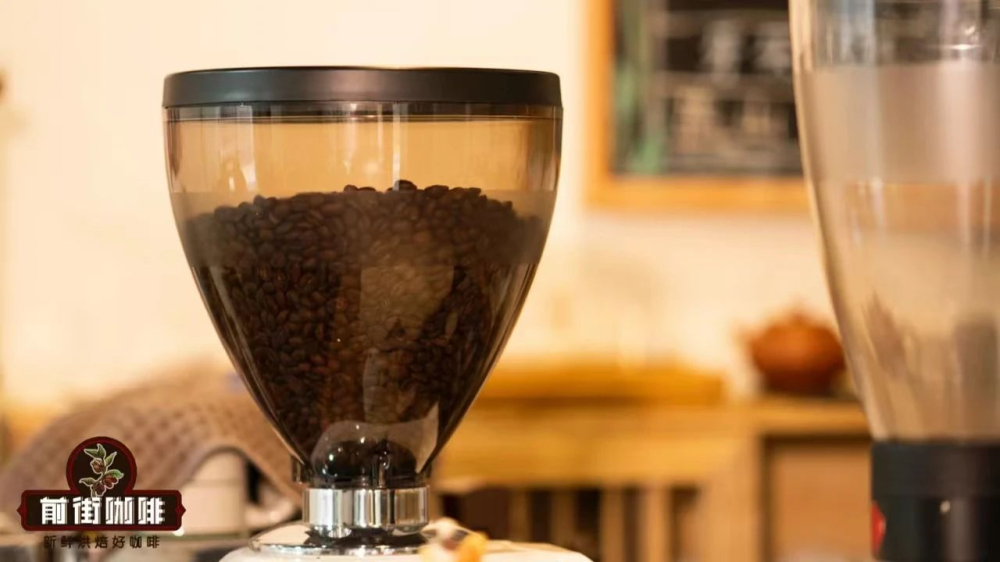
Blending therefore became the safest choice. Its raw beans had to have sufficient yield and stable supply, and the range that could be selected was basically limited to the ten major coffee-producing countries. As for flavor orientation, it was mostly fixed among nuts, caramel, cocoa, and cream. In order to balance the compatibility of mouthfeel among different beans, uniformly roasting the coffee beans darker was the easiest approach (of course, market taste demands were also an important driving force). Traceability in that era was relatively poor, and consumers could only judge by whose roaster or shop produced coffee that suited their taste better.
Single-origin coffee, by contrast, focuses on presenting the flavor of the coffee-producing region and the traceability story behind it. It first achieved success in extraction methods such as pour-over and siphon, and then was gradually introduced into the espresso field—this is the origin of SOE.
Good-tasting coffee is premised on excellent bean quality, and SOE should naturally use high-quality single-origin coffee beans. Front Street has always adhered to the principle of "freshly roasted good coffee," hoping to let every customer enjoy fresh and aromatic coffee at home—every batch of beans sent out is shipped within 5 days after roasting.
In addition to freshness, to extract a delicious cup of SOE, you must also pay attention to the flavor profile of the beans themselves. In other words, you should choose SOE coffee beans according to personal preference. If divided by taste, coffee beans can roughly be split into two major directions: "bitter" and "acidic."
If you favor SOE coffee with fruity acidity and floral aroma, it is recommended to give priority to Front Street Huakui SOE coffee beans, Front Street Red Cherry SOE coffee beans, and Front Street Gesha Village Chaka SOE coffee beans;
Conversely, if you do not like acidity and prefer a rich, full-bodied taste, then it is recommended to extract the three single-origin options: Front Street Huilan coffee beans, Front Street Golden Mandheling coffee beans, and Front Street Queen's Estate coffee beans.
Next, I will teach you step by step how to use Front Street Brazil Cerrado coffee beans to make a Brazil-style SOE Dirty. Front Street's store is equipped with the commercial single-group coffee machine "Lelit Bianca," which can control extraction by adjusting pressure, with a maximum pressure of up to 11 bar; a home machine only needs to provide 9 bar of pressure to complete extraction and steam milk foam, paired with an espresso grinder.
SOE coffee extraction parameters:
Coffee beans—Front Street Cerrado coffee beans
Coffee powder dose—20g
Coffee liquid yield—40g
Powder-to-liquid ratio—1:2
Extraction time—26–33 seconds
Grind setting—Galileo 2.0
Front Street uses a double basket specification, with the dose controlled at about 18–20 grams; in actual production, 20 grams of coffee powder is weighed.
Generally speaking, the ratio of powder to coffee liquid mostly falls within the range of 1:1.5 to 1:2.5. Front Street uses 1:2, that is, extracting 40 grams of coffee liquid from 20 grams of powder. Extraction time is closely related to the flow rate of the powder, and a single extraction is preferably 20–35 seconds—under 20 seconds, the coffee tends to taste thin; once it exceeds 35 seconds, it is prone to over-extraction and a burnt bitterness. Most espressos produced by Front Street fall within the range of 28–30 seconds.
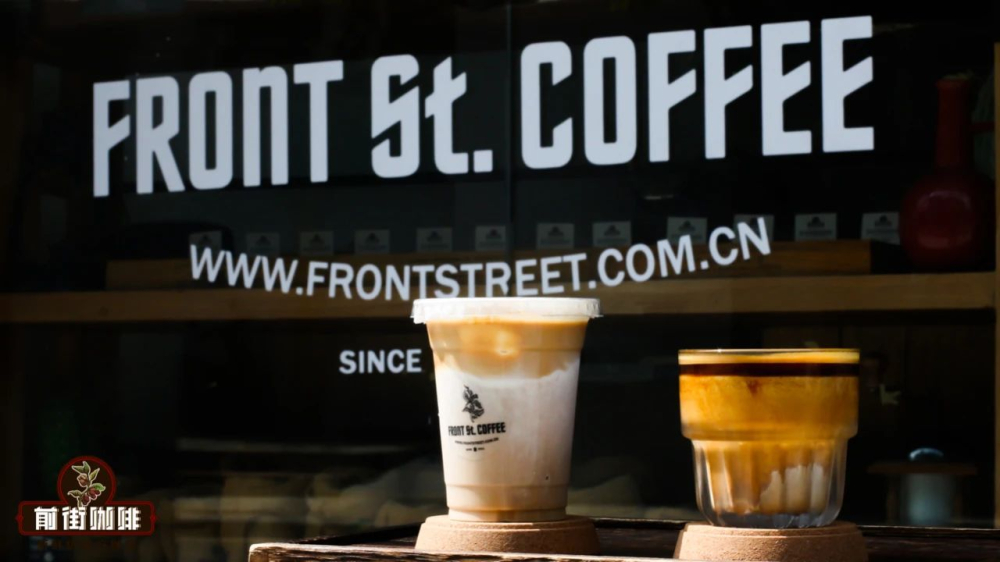
Before official production, first take a transparent glass cup with a capacity of 200ml and pour in 160ml of fresh milk for later use.
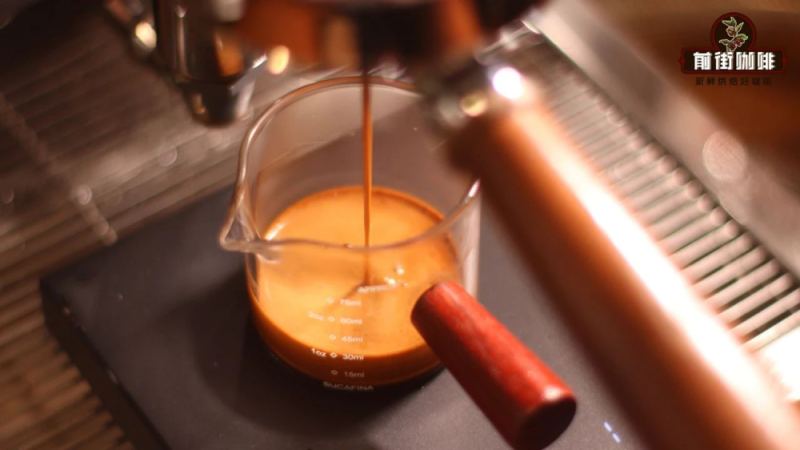
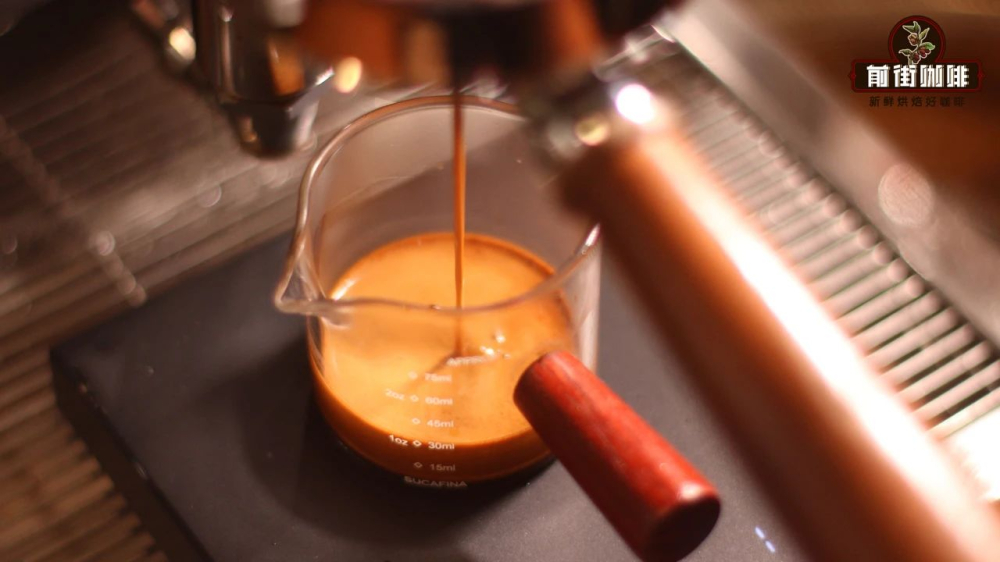
Front Street's operating procedure is as follows: first wipe the basket dry, start the grinder, grind a double dose of coffee powder, place it on the electronic scale and weigh it, adjusting by adding or removing until it reaches exactly 20 grams. Then use a distribution tool to spread the powder evenly, and tamp the puck flat and level to ensure more stable extraction. Next, press the extraction switch to start the water flow, which both wets the group head and carries away coffee residue attached to it. After that, lock the portafilter steadily onto the group head, place the prepared fresh milk below the portafilter, and begin extraction.
When the reading on the electronic scale reaches 40 grams of coffee liquid and the time taken is about 28–33 seconds, turn off the extraction switch, and this cup of Brazil SOE Dirty is complete.
In a Brazil SOE Dirty made this way, the first sip reveals nutty aromas such as almond and caramel peanut, with a creamy, smooth texture. The top layer of espresso is warm, while the fresh milk at the bottom is icy cold; one bitter and one sweet blend with each other, creating a quite unique mouthfeel and a very satisfying drink.
The above content is compiled by CoffeeHunters, a coffee news website.


