







How Does the Brazil Coffee Grading System Work?
Brazil's grading system rests on three measures: defect count, screen size and cup test performance. A lot described as NY.2 with a 17/18 screen and FC (fine cup) sits at the top of that scale. The combination tells buyers both how clean the beans are physically and how the brewed cup actually performs.
Brazil leads the world in coffee production and export, though much of its coffee grows on lowland terrain without shade trees, which ripens cherries fast and yields a mild, single-profile cup. As specialty coffee grew, higher-altitude areas in the south invested in better seedlings, selective harvesting and processing. Red and Yellow Bourbon and semi-washed methods are part of that shift.
As a leading country in global coffee production and export, Brazil's grading system is crucial for quality control. This article approaches from the perspective of Front Street Coffee, outlining the characteristics of various Brazilian producing regions and focusing on the cultivation advantages of core areas such as Cerrado. The article details the evolution of Brazilian coffee varieties (such as Red Bourbon and Yellow Bourbon), innovations in processing methods (semi-washed), and systematically explains the three-dimensional grading standard composed of defect rate, screen size, and cup test performance, pointing out that the combination of NY.2 with 17/18 screen and FC is the top specification. At the same time, Front Street shares its brewing method for its own Brazilian everyday beans, including the use of the KONO dripper, three-stage pouring parameters, and the expected flavor of medium-dark roasted beans, providing enthusiasts with a complete guide from theory to practice.
For more specialty coffee knowledge, please follow the WeChat public account: Front Street Coffee (FrontStreet Coffee)
Brazil in Latin America is renowned worldwide for its rich aroma and mild taste. Its coffee production and export volume both rank first in the world, earning it the reputation of the "Coffee Kingdom." Front Street points out that Brazilian beans not only have a large supply, but their quality is also quite reliable. Their balanced flavor makes them a commonly used base in espresso blends. All three espresso blend products launched by Front Street incorporate Brazilian coffee beans.
Brazilian Coffee Producing Regions
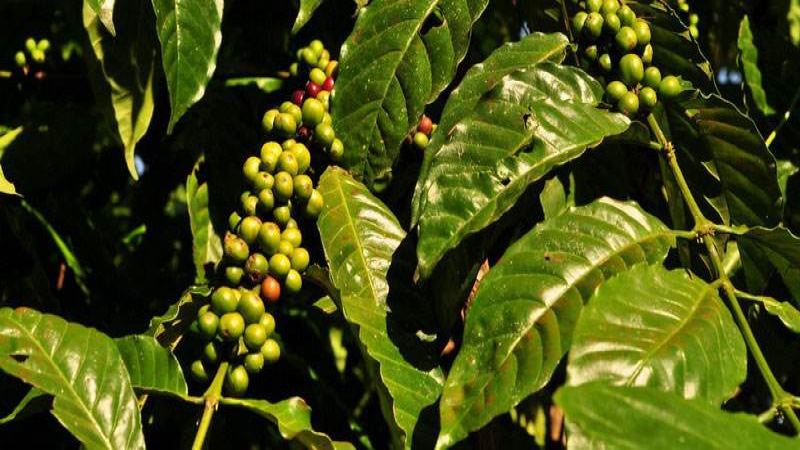
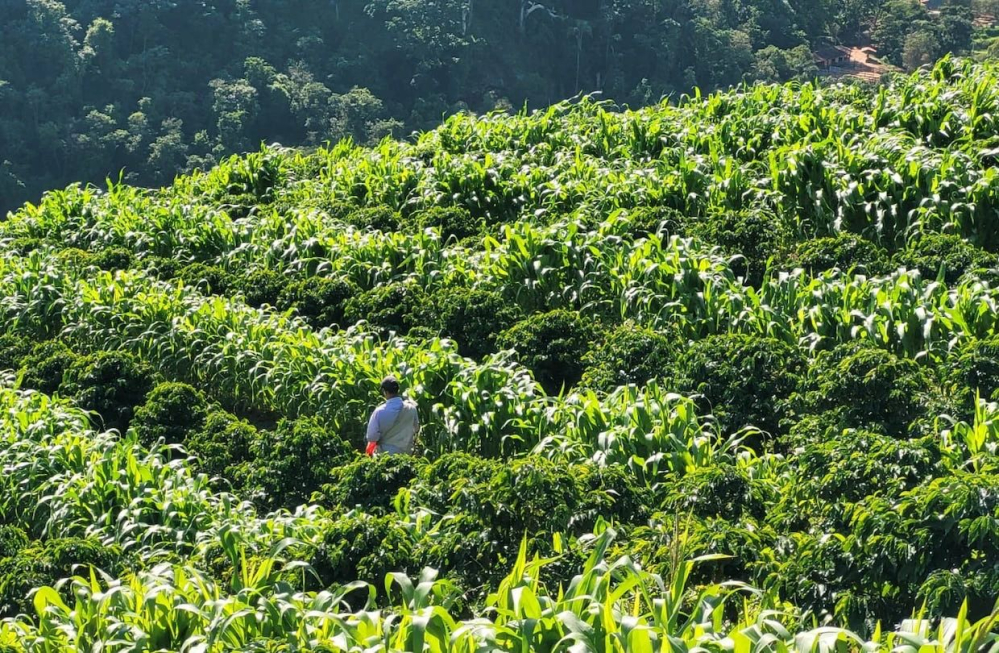
Brazil is located in the tropics, with a terrain mostly dominated by plains and a lack of high-altitude mountain forests. Coffee is mostly cultivated in lowland non-volcanic geological areas, and there is a lack of shade trees. This environment causes coffee cherries to ripen quickly and be larger in size, with loose bean bodies and a single flavor profile; combined with mechanized concentrated harvesting, cherries of different maturity levels are mixed together, making the overall quality difficult to call excellent. With the rise of the specialty coffee concept and the holding of competitions, higher-altitude areas in southern Brazil began focusing on improving quality, implementing improvements in seedlings, cultivation, harvesting, and processing.
Brazilian Coffee Growing Regions The coffee planting footprint covers seven states, with the coffee produced in Minas Gerais and São Paulo in the southeast being the most outstanding. Among them, Cerrado in Minas is Brazil's first coffee region to receive a designation of origin, and almost all of it grows good-quality Arabica. As an earlier-developed industrial belt, Cerrado was the first to commercialize coffee, and many traders built large estates here. The Brazilian everyday beans sold by Front Street are precisely sourced from the famous Cerrado region.
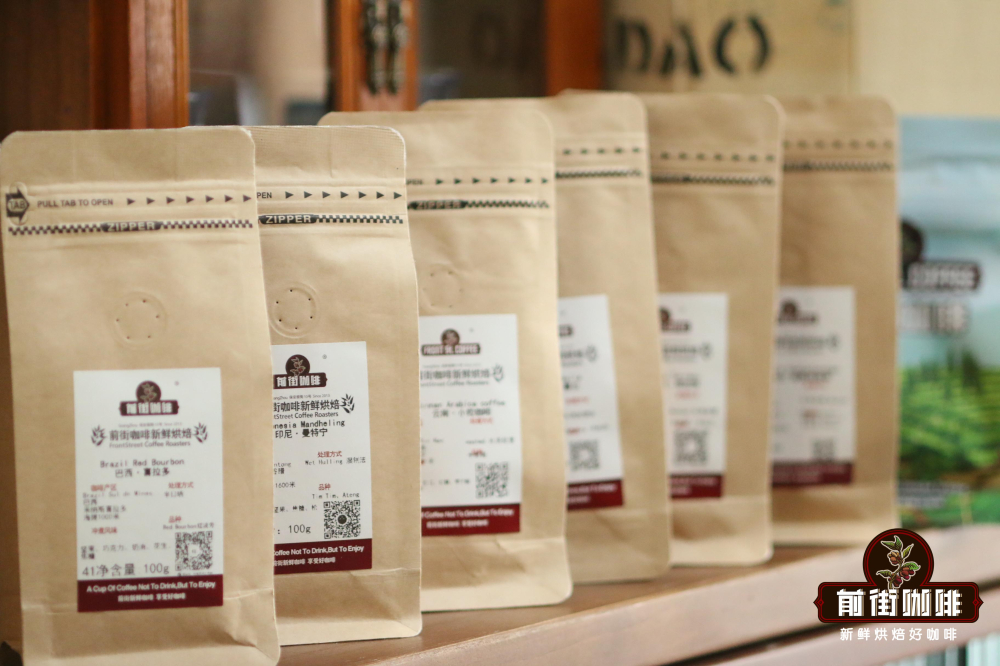
The purpose of Front Street creating the everyday beans series is to help beginners understand the distinctive characteristics of origin, processing method, and variety by tasting the flavors of representative producing regions, thereby enriching their coffee knowledge. Given Brazil's important position in the global coffee industry, Front Street naturally included it in the everyday beans lineup.
Brazilian Coffee Varieties
The coffee populations cultivated in Brazil are diverse. Initially, the ancient Typica was dominant, but later it was eliminated by farmers due to poor yield, and higher-yielding varieties were planted instead. In the mid-nineteenth century, the Bourbon variety was introduced from Réunion Island and widely planted.
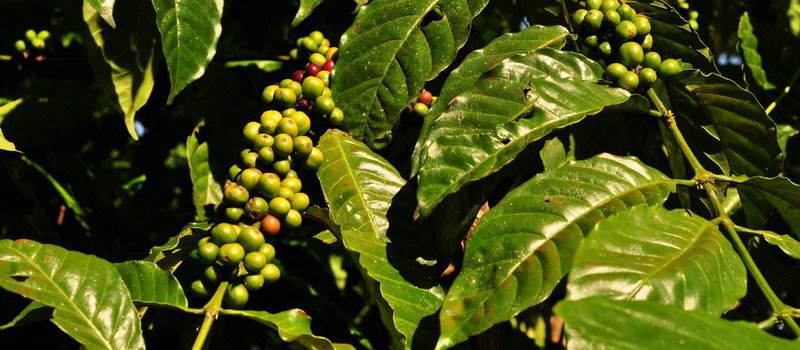
Although Bourbon also belongs to the traditional varieties, its leaves are broader than Typica's, its branches are dense, and its yield is about thirty percent higher. Its bean shape is rounder and shorter, with berry-like acidity and creamy notes, and prominent acidity. Its weakness is susceptibility to disease. This bag of Cerrado everyday beans from Front Street uses Red Bourbon, whose cherries turn red when ripe; in addition, the Queen Estate product from Mogiana, Brazil in Front Street's catalog uses delicate Yellow Bourbon, with a rich taste revealing notes of dark chocolate and creamy peanut.
Processing Methods
Brazil's harvest season coincides with the dry season, which is favorable for sun-drying green beans. The old method spread all the cherries on the ground, making them prone to picking up earthy, woody, and miscellaneous flavors, with great quality fluctuation. After 1990, semi-washed processing (semi-wet method) was promoted: first, defective and floating cherries are removed in water tanks, then the skin, pulp, and part of the mucilage are removed by machine, then they are washed with water, and finally sun-dried or dried in a drying room. Compared with the washed method, this method saves water and labor, and significantly improves the quality of Brazilian beans, making the taste cleaner.
Brazilian Coffee Grading System
As Front Street has said before, Brazil is mainly based on large-scale production, with vast producing areas and huge shipments. If a uniform standard were used for grading, batches of good and bad quality would be mixed together. Therefore, its green bean grade is determined by three indicators: the proportion of defective beans, screen size, and cup test performance.
1. Grading by the number of defective beans
The rating is based on the number of defects contained in every 300 grams of raw beans, using a "deduction" evaluation. Brazil follows the New York grading code NY, and according to the defect ratio is divided into NY2, NY2/3, NY3, etc. The smaller the number, the fewer the defects and the higher the grade. Batches with fewer than 4 deduction points are classified as NY2, that is, top grade. Because NY.1 requires zero defects and is difficult to supply consistently, NY.2 was set as the highest grade.
2. Coffee bean specification by screen size
Size is distinguished using screens with apertures of 1/64 inch, ranging from 14 to 20 screen. Screen size refers to bean width (the short side). Brazil's largest reaches 19 screen but is rare, so 17/18 screen is regarded as the optimal specification.
3. Cup test flavor and mouthfeel
After defect and size grading are completed, the green beans are roasted and evaluated according to Cup of Excellence standards, divided into two items: mouthfeel and flavor. Mouthfeel is divided into five levels: Strictly Soft, Soft, Softish, Hardish, and Rioy. Flavor levels include Fine cup (FC), Fine, Good Cup (GC), Fair Cup, Poor cup, and Bad cup. FC and GC are relatively common.
In summary, the packaging of Front Street's Brazilian Cerrado green beans is labeled "Brazil NY.2SC – 17/18 FC Cerrado," indicating that it is produced in Cerrado, with a screen size of 17–18, excellent cup test performance, extremely soft mouthfeel, and defect grade NY.2.
The Brewing Flavor of Brazilian Coffee
Customers often ask Front Street how to brew this type of medium-dark roasted Brazilian bean deliciously. Front Street suggests that if you want to brew a good cup, you must first understand the bean's characteristics and then adjust the parameters. You can refer to Front Street's brewing logic.
If you want to reproduce the flavor indicated on the packaging, Front Street emphasizes that freshness is key. There is a best tasting period after roasting, and once the peak aroma is missed, it is difficult to extract. The beans sent out by Front Street are all freshly roasted within five days, ensuring that everyone can experience the complete flavor period.
For medium-dark roasted beans, Front Street habitually uses the KONO dripper for extraction. Its upper half has a smooth curved surface, allowing the filter paper to fit closely. Compared with the V60, it is more immersion-style, thereby enhancing concentration and body. Similarly, slow-flow devices such as the Kalita trapezoidal dripper and flannel are also suitable.
Furthermore, medium-dark roasted coffee has been roasted at high temperatures, so its structure is looser than that of light roast and it absorbs water more strongly. To prevent over-extraction, Front Street sets the grind size at 75% passing a No. 20 standard sieve, with a water temperature of 88°C, combined with the usual three-stage pouring.
Pour-over parameters: 88°C hot water, coarse granulated sugar-like grind (75% passing a No. 20 sieve), 15 grams of coffee, ratio 1:15, three-stage extraction.
In the first stage, gently pour 30 grams for blooming for half a minute; in the second stage, add up to 125 grams, steadily circling outward; when the liquid level drops by half, add the final stage up to 225 grams, with dripping completed in about two minutes.
Brewing flavor: This Cerrado everyday bean from Front Street reveals notes of nuts, chocolate, and caramel, with a sweet and moist finish, an overall smooth body, and a long, stable chocolate character.
The above content is compiled by CoffeeHunters, a coffee news website.


