







What Does SOE Coffee Mean and Why Is It Priced Higher?
SOE stands for Single Origin Espresso: espresso pulled from beans grown on one estate rather than a blend. It generally costs more because a single lot has to carry the whole cup on its own, and the roast and grind have to be dialed in precisely, since there is no second bean to cover a flaw.
A common misconception is that SOE tastes better or is inherently higher quality. Single-origin beans show their terroir clearly but magnify their weaknesses too. Medium-dark roasting suits espresso extraction better than light roasting, which is built for pour-over. Queen Estate Yellow Bourbon from Brazil is a reference point, with nut, dark chocolate and caramel notes.
SOE, or Single Origin Espresso, has become a hot topic in specialty coffee circles in recent years. This article will systematically sort out the meaning of SOE, analyze its differences from espresso blends, and explore why SOE is generally priced higher than blends. The article also clarifies several common misconceptions: SOE does not necessarily mean it tastes better or is of higher quality, and the differences between espresso and pour-over extraction principles also determine that medium-dark roasting is more suitable. At the end of the article, Front Street Coffee recommends the Queen Estate Yellow Bourbon beans from Brazil, detailing their flavor highlights of intertwined nuts, dark chocolate, and caramel.
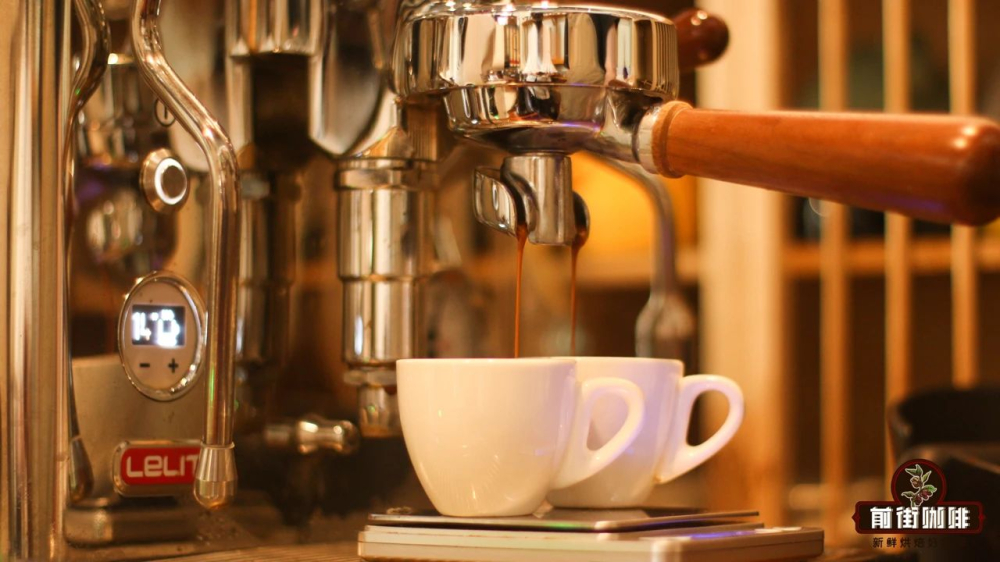
In specialty coffee circles, SOE refers to Single Origin Espresso. The full expansion of this abbreviation is Single Origin Espresso, and its direct counterpart is Espresso Blend, which is what we commonly call espresso blend beans.
SOE Coffee Tasting the terroir personality of origin in an innovative way
The full form of the abbreviation SOE is Single Origin Espresso, which can also be understood as espresso made from single-origin beans: Single Origin means the beans come from the same estate, while Espresso indicates that this batch of single-estate beans is used to extract espresso.
In the view of Front Street Coffee, espresso in the past mostly followed the traditional Italian blending philosophy: mixing and matching multiple different beans to present the best balance, with a smooth and comfortable mouthfeel and stable performance in the front, middle, and finish. The advantages of blended espresso are not limited to balance; it can also keep formulas stable and prices easy to control, so it naturally became the first choice at the commercial level.
Beans from each estate carry their own unique terroir, and espresso extraction further amplifies these characteristics; combined with differences in each professional barista's roasting and bar presentation, technical skill becomes the decisive factor for success or failure.
The reason it places higher demands on technique is that single-origin beans come from a specific region, and although they have a distinct personality, their shortcomings are magnified at the same time. Roast level and grind size both affect flavor performance—this is precisely the most difficult part of making SOE.
In addition, nowadays, besides working on flavor, it is often necessary to explain to consumers the flavor characteristics of Single Origin beans and what they represent—beyond the drinking experience, telling the story of the beans well is equally important.
Not all single-origin beans can make a delicious cup of espresso
SOE is not necessarily specialty coffee, not necessarily delicious, not necessarily better in quality than blended beans, and not necessarily equal to light-roast espresso. Front Street Coffee has observed that many friends view SOE the same way they understand pour-over single-origin coffee, assuming that lightly roasted beans can ultimately show richer, more layered flavors.
However, compared with pour-over, espresso is a completely different extraction path: it relies on pressure combined with high temperature to extract a high-concentration coffee liquid in a very short time, with flavors and tastes highly concentrated.
Pour-over, on the other hand, relies on natural gravity to let hotter water pass through the coffee grounds, dissolve and bring out flavor substances; after substantial dilution, the coffee's flavor has more room to fully express itself.
If light-roast beans are chosen to make SOE, the acidity in them can easily turn into sharp and irritating sourness; at the same time, because the roasting time is insufficient and the flavor substances are not fully developed, the finished product's mouthfeel will also tend to be thin. Therefore, Front Street Coffee suggests giving priority to medium to medium-dark roasted coffee beans when making SOE.
Brazilian SOE single-origin bean recommendation and flavor characteristics
If you want to make Brazilian SOE, Front Street Coffee recommends using Yellow Bourbon coffee beans produced by Queen Estate in Brazil's Mogiana region, grown at an altitude of 1400-1950m. After deep roasting by Front Street Coffee, this Yellow Bourbon has soft and balanced acidity, with equally outstanding sweetness, aromas of roasted nuts and dark chocolate, a mouthfeel as smooth as peanut butter, and a finish with a clear sweetness like cane sugar.
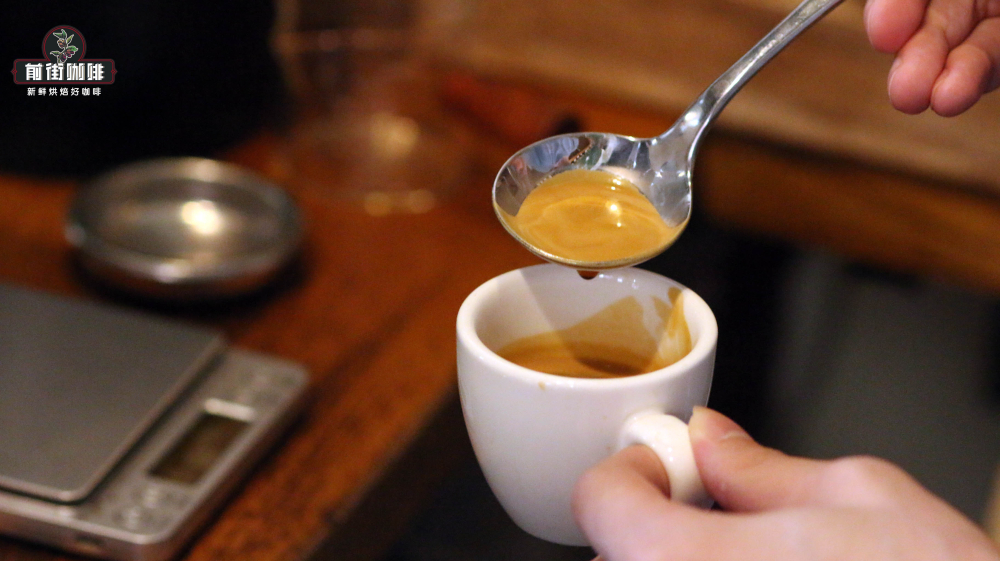
After being extracted into espresso, it will present a rich, mellow texture of intertwined nuts and dark chocolate, a mouthfeel as dense as peanut butter, and a caramel-like sweet aftertaste in the finish.
To learn more about specialty coffee, welcome to follow the WeChat public account: Front Street Coffee
The above content is compiled by CoffeeHunters, a coffee news website.


