







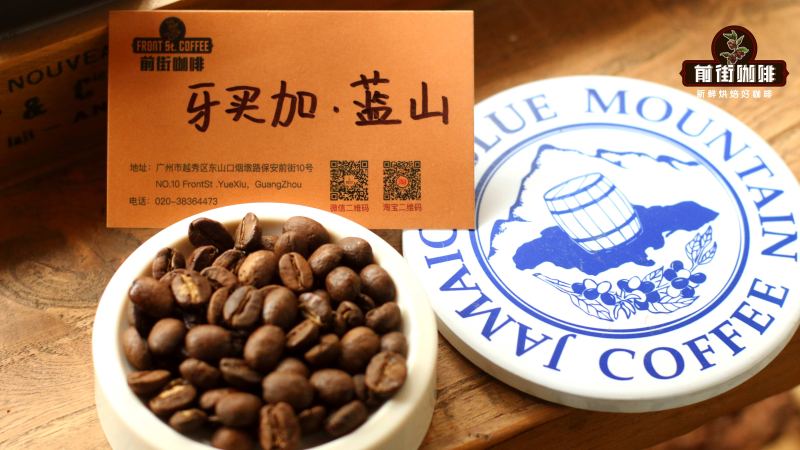
Is Jamaican Coffee the Same as Jamaica Blue Mountain?
Jamaican coffee and Jamaica Blue Mountain are not the same thing. "Blue Mountain flavor" only means the cup resembles Blue Mountain and may contain none of it. "Jamaica coffee" comes from the island but can be grown outside the Blue Mountain range. Only beans from the designated Blue Mountain region, graded top quality, are the genuine article.
Coffee reached Jamaica in 1728, and the industry grew to 686 estates before hurricanes and government land sales cut it back. The CIB was created to regulate the trade, and Wallenford kept state ownership while enforcing quality control. Growing zones are classified at roughly 1500, 3000 and 5000 feet, and certification trademarks guard against counterfeits.
When it comes to legendary coffee, Jamaica Blue Mountain is invariably among the top names, but not every bean stamped with "Blue Mountain" is the real deal. This article uses a specialty Blue Mountain recommended by Front Street Coffee as an entry point to clarify the hierarchical differences between "Blue Mountain flavor," "Jamaica coffee," and "Jamaica Blue Mountain No.1," explain the origin of the Blue Mountain name and the three-tier growing region classification of 1500, 3000, and 5000 feet, and trace the industry's rise and fall after coffee first arrived in Jamaica in 1728: from the peak of 686 estates, to the devastation of hurricanes, the government's sale of estates, the establishment of the CIB, the enactment of legislation, and how Wallenford—the only estate that retained state-owned status—guards its national-treasure reputation through rigorous quality control. The article also explains the certification trademark system and anti-counterfeiting measures to help you identify an authentic cup of Blue Mountain.
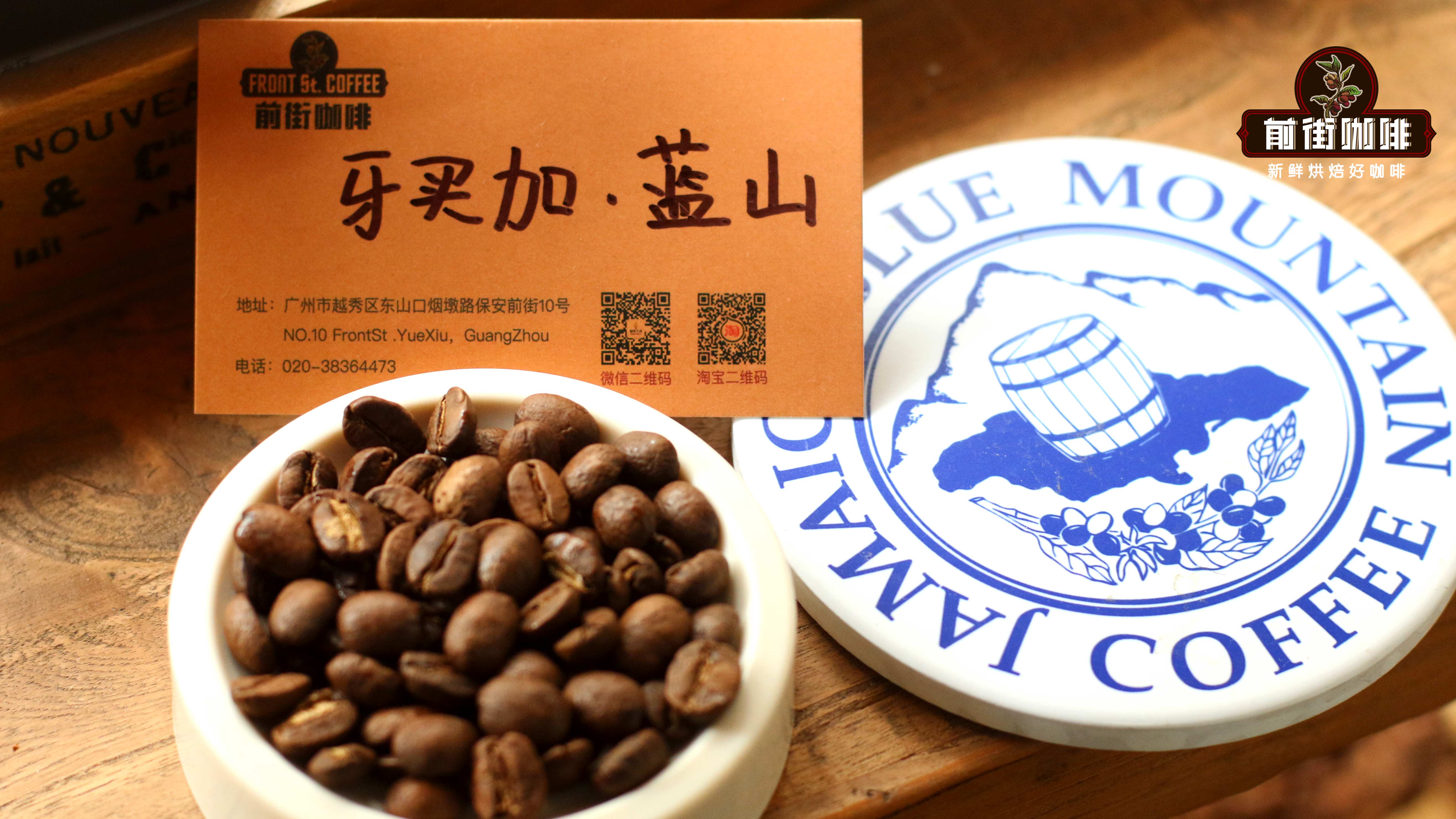
Pour-over single-origin coffee recommendation — Front Street Specialty Coffee Beans: Jamaica Blue Mountain No.1
Product Name: Jamaica Blue Mountain Clifton Estate No.1 Blue Mountain Clifton No.1
Roast Level: Medium-Dark Roast ●●○○○
Processing Method: Washed
Origin: Jamaica
Region: Blue Mountain
Estate: Clifton Estate
Altitude: 1310 meters
Variety: Typica
Grade: No.1
Flavor Notes: Caramel, Cream, Toffee, Chocolate, Nuts
Front Street Blue Mountain Coffee —
Most people who drink coffee regularly have heard of the fame of Blue Mountain coffee and know just how outstanding Jamaica Blue Mountain's quality is. But is the "Blue Mountain" we drink every day really the genuine article?
"Blue Mountain flavor" — these words merely mean the cup tastes similar to Blue Mountain (it may not even resemble it), and there may not be a single genuine Blue Mountain bean in the bag.
"Jamaica coffee" — this Front Street Blue Mountain comes from Jamaica, but coffee produced in Jamaica does not automatically equal Blue Mountain coffee.
"Jamaica Blue Mountain coffee" — this is what truly constitutes Jamaica Blue Mountain. And to earn the title of Jamaica Blue Mountain No.1, even more conditions must be met.
The Origin of the Name "Blue Mountain"
The Blue Mountain range sits in the eastern part of the island of Jamaica, nestled against the Caribbean Sea. On clear days, sunlight pours over the azure sea, and the peaks reflect the shimmering blue of the water—hence the name "Blue Mountain." This area boasts fertile volcanic soil, fresh and pleasant air, a humid climate, and year-round mist and abundant rainfall. This exceptional environment nurtures the world-famous Blue Mountain coffee treasure and has also created the highest price among the world's coffees.
Coffee produced in the Blue Mountain range is divided into three tiers: Jamaica High Mountain, Jamaica Low Mountain (or Jamaica Supreme), and Jamaica Blue Mountain. Beans grown below 1500 feet are classified as Jamaica coffee; those between 1500 and 3000 feet are called High Mountain coffee; and only beans grown between 3000 and 5000 feet are eligible to be named Blue Mountain coffee. In terms of price, Blue Mountain coffee can reach several times that of High Mountain coffee. Blue Mountain coffee is further subdivided into No.2 and No.1, with No.1 being the highest grade.
The estates currently capable of producing top-tier Jamaica Blue Mountain No.1 mainly include Wallenford, Mavis Bank, Old Tavern, RSW Estate, and a few others. Among them, Wallenford is the only one with the special status of a Jamaican state-owned processing facility. The legal growing range for Blue Mountain coffee is limited to 3000 to 5000 feet, and Wallenford Estate selects only Blue Mountain beans grown above 4000 feet for processing. Its Blue Mountain coffee has earned the reputation of "Superior Quality." In horizontal comparisons of Jamaican Blue Mountain estates by seasoned coffee enthusiasts worldwide, Wallenford Estate consistently ranks first in quality control, consistency, fame, and flavor.
What does Wallenford Blue Mountain No.1 actually taste like? The general consensus is: slight acidity, sweet aftertaste, rich aroma without bitterness, outstanding quality, and a lingering finish that stays with you long after drinking.
Wallenford Estate No.1 Jamaica Blue Mountain Coffee (Wallenford estate jamaica blue mountain coffee)
This Front Street Jamaica Blue Mountain exudes a faint, delicate sweetness, with a mellow, wine-like body that has long won the favor of Japanese coffee connoisseurs. Its production is scarce, making it an iconic representative of specialty coffee and one of the world's most expensive coffees. However, not every coffee produced in Jamaica can bear the Blue Mountain label—it must be certified by the Jamaican coffee authority, come from a designated Blue Mountain administrative region, and reach the specified altitude to obtain Blue Mountain certification. This lot comes from the long-established Wallenford washed processing facility and displays the typical elegant, delicate sweetness of Blue Mountain. (Barrel-aged Blue Mountain, with a medium-light roast, shows near-flawless perfect balance, a crisp and clean entry, and a long, lingering finish)
In 1728, coffee was first introduced to Jamaica for cultivation. Thanks to the local soil, climate, and sunlight conditions, the coffee here was exceptionally outstanding in quality, and the growing area subsequently expanded from the St. Andrews area to more regions.
By 1737, Jamaica's annual coffee production had climbed to 83,000 pounds.
Over the following roughly 40 years, large numbers of private estate owners emerged one after another; by 1800, the number of estates engaged in coffee cultivation in Jamaica had reached 686.
However, the slave trade drove labor costs up sharply, and estate owners could no longer bear the burden. By 1850, the number of coffee estates had shrunk to 186.
Around 1900, the Jamaican government introduced its first coffee quality standard, but it was resisted by a large number of private estate owners and ultimately failed to be implemented.
Afterward, lacking the constraint of quality standards, the export quality of Blue Mountain coffee varied widely, and its international reputation suffered greatly. By 1943, Canada, an important importer of Blue Mountain coffee, simply announced it would refuse imports.
In 1944, the Jamaican government finally realized that the Blue Mountain coffee industry had to be regulated, and accordingly put forward three industry regulation proposals:
1. Implement centralized processing of Blue Mountain coffee beans;
2. Establish quality standards for Blue Mountain coffee;
3. Form the CIB, specifically responsible for market organization, industry management, and export supervision.
In 1948, the renowned Jamaica Coffee Industry Board (CIB) was officially established, and the Jamaican government simultaneously passed the "Jamaica Blue Mountain Coffee Industry Management Act." The CIB's core mission was to enhance the quality of Blue Mountain coffee through management and supervision, restoring its global reputation.
It was precisely in this act that the definition of Blue Mountain coffee was strictly defined:
1. Authorize four legal coffee estates, including Wallenford, to uniformly and centrally process Blue Mountain coffee beans to ensure quality;
2. It may only be grown in the Blue Mountain region at altitudes between 3000 and 5000 feet;
3. At export, it is graded: No.1 / No.2 / No.3 / Peaberry.
Since 1960, some management functions were delegated to the oldest and only state-owned Blue Mountain coffee estate—Wallenford Estate. Wallenford Estate has since become synonymous with the CIB, undertaking multiple missions including improving Blue Mountain coffee quality, issuing management rules, and driving industry innovation, with the estate's director also appointed by government departments. All Blue Mountain coffee exported from Jamaica is uniformly named: Wallenford Estate Jamaica Blue Mountain Coffee—this is precisely the highest grade of Blue Mountain coffee.
In the eyes of seasoned coffee lovers worldwide, Wallenford Estate, dating back to 1827, has nearly 300 years of history and is the oldest Blue Mountain coffee estate in Jamaica. The very first to cultivate Blue Mountain coffee in Jamaica was this Wallenford Estate, which has been granted the national-treasure title—Wallenford Blue Mountain Coffee—representing the highest grade of Blue Mountain coffee. Its production is limited, and it has historically been selected mostly by royalty and nobility, commanding a high price. Today's Wallenford is Jamaica's most stable and reassuring Blue Mountain coffee processing estate, renowned worldwide for its extremely outstanding Blue Mountain coffee quality.
Jamaica is world-famous for producing Blue Mountain coffee, yet it is located on the shores of the Caribbean and repeatedly battered by hurricanes. Several hurricanes in the 1940s and 1950s caused devastating damage to the vast majority of Jamaica's Blue Mountain estates; the losses to coffee trees, estate equipment, and roads far exceeded what estate owners could bear. To revive Blue Mountain coffee production, the government decided to support and sell Blue Mountain estates, and coffee investors from Japan, the UK, and other countries fortunately acquired operating rights to most Jamaican Blue Mountain estates. Even so, the Jamaican government did not completely give up its reserved power over this national-treasure industry—while most estates were sold and privatized, only WALLENFORD ESTATE was retained and placed under the direct operation and management of the Jamaican government. Its quality control process is the most rigorous; it does not blindly pursue commercial operations but regards safeguarding the reputation of Blue Mountain coffee as its own duty.
1. The official registered logo of the Jamaica Coffee Industry Board, responsible for certification and inspection of exported Jamaica Blue Mountain coffee;
2. The BLUE MOUNTAIN COFFEE? trademark registered by the Jamaica Coffee Industry Board (CIB), used to mark the packaging of authentic Blue Mountain coffee;
3. The registered trademark of WALLENFORD COFFEE COMPANY, appearing on the packaging of WALLENFORD Blue Mountain coffee.
As Jamaica Blue Mountain coffee became world-famous, countries everywhere introduced and cultivated this bean variety, and a large number of counterfeit "Blue Mountain flavor" coffees flooded the market, seriously undermining the outstanding reputation of authentic Blue Mountain. In recent years, the Jamaican government has strongly advocated that Blue Mountain coffee be roasted locally and exported in its original packaging rather than as green beans, in order to fend off counterfeiters. The key significance of this measure is that the Jamaica Coffee Industry Board can monitor all stages of Blue Mountain coffee exports, ensuring its purity and high quality.
WALLENFORD's unique Jamaican state-owned background has led the government to assign it more missions, including:
1. Managing and regulating the quality of Jamaica Blue Mountain coffee together with the CIB (Coffee Industry Board);
2. Driving management-level innovation across all Blue Mountain estates in Jamaica.
In fact, part of the Blue Mountain coffee quality supervision function that the CIB houses within WALLENFORD includes precisely this. For example, there is an industry consensus: obtaining WALLENFORD's Blue Mountain No.1 import quota is equivalent to the quota allocation the CIB grants to the corresponding country or enterprise.
Wallenford Estate selects only the finest-quality Blue Mountain coffee cherries for processing, and its quality control process is notably strict. In evaluations of all Jamaican Blue Mountain estates by coffee connoisseurs, Wallenford ranks at the top in quality control, consistency, fame, and flavor level.
In the Blue Mountain area, the legal production region for Blue Mountain coffee is 3000 to 5000 feet, while Wallenford uses only coffee cherries grown above 4000 feet. Even more noteworthy is that among Jamaica's only four legal Blue Mountain coffee processing facilities, Wallenford, together with Mavis Bank, Silver Hill, and Moy Hall, accounts for 90% of Jamaica's Blue Mountain coffee exports. Among them, the Blue Mountain coffee produced by Wallenford and Moy Hall has been honored with the title "Superior Quality."
The above content is compiled by CoffeeHunters, a coffee news website.


