







Why does Central American coffee from Costa Rica taste so sweet?
Costa Rica was the first country in Central America to plant coffee, and its volcanic soils, high altitude, and distinct wet and dry seasons give the beans a honey-like sweetness. The Mirazu Estate Geisha blend from Front Street Coffee is a raisin honey-processed lot, cupped to SCAA standards and roasted medium-light for pour-over.
The Central Plateau spans 1,200 to 1,600 meters with a harvest from November to March, and volcanoes such as Irazu, Barva, and Poas feed the surrounding soil. The country has eight coffee regions, and most specialty output comes from Tarrazu, south of San José, where limited lots like La Minita Tarrazu are grown. Processing and terroir together shape the cup.
Costa Rican coffee has always won over many enthusiasts with its honey-like sweetness. This article centers on the newly acquired Costa Rican Mirazu Estate Geisha blend from FrontStreet Coffee, starting from the region's terroir and the estate's story, through the varietal composition, explaining in detail the key points of the raisin honey process, and includes a medium-light roast profile, SCAA standard cupping data, and a complete set of pour-over parameters. Whether you want to delve into the charm of the Tarrazu region or find a brewing reference you can follow directly, this article has the answers.
Want more specialty coffee news? Welcome to follow: Front Street Coffee (Frontsteet Coffee)
When it comes to coffee with outstanding sweetness, many seasoned enthusiasts first think of Costa Rica. At FrontStreet Coffee's stores, guests often ask the barista which pour-over has sweetness, and the barista will bring out beans from Costa Rica and explain them one by one. Why does this Central American coffee have honey-like sweetness? Next, Front Street will take you to get to know Costa Rican coffee beans in depth.
Costa Rican Coffee Regions
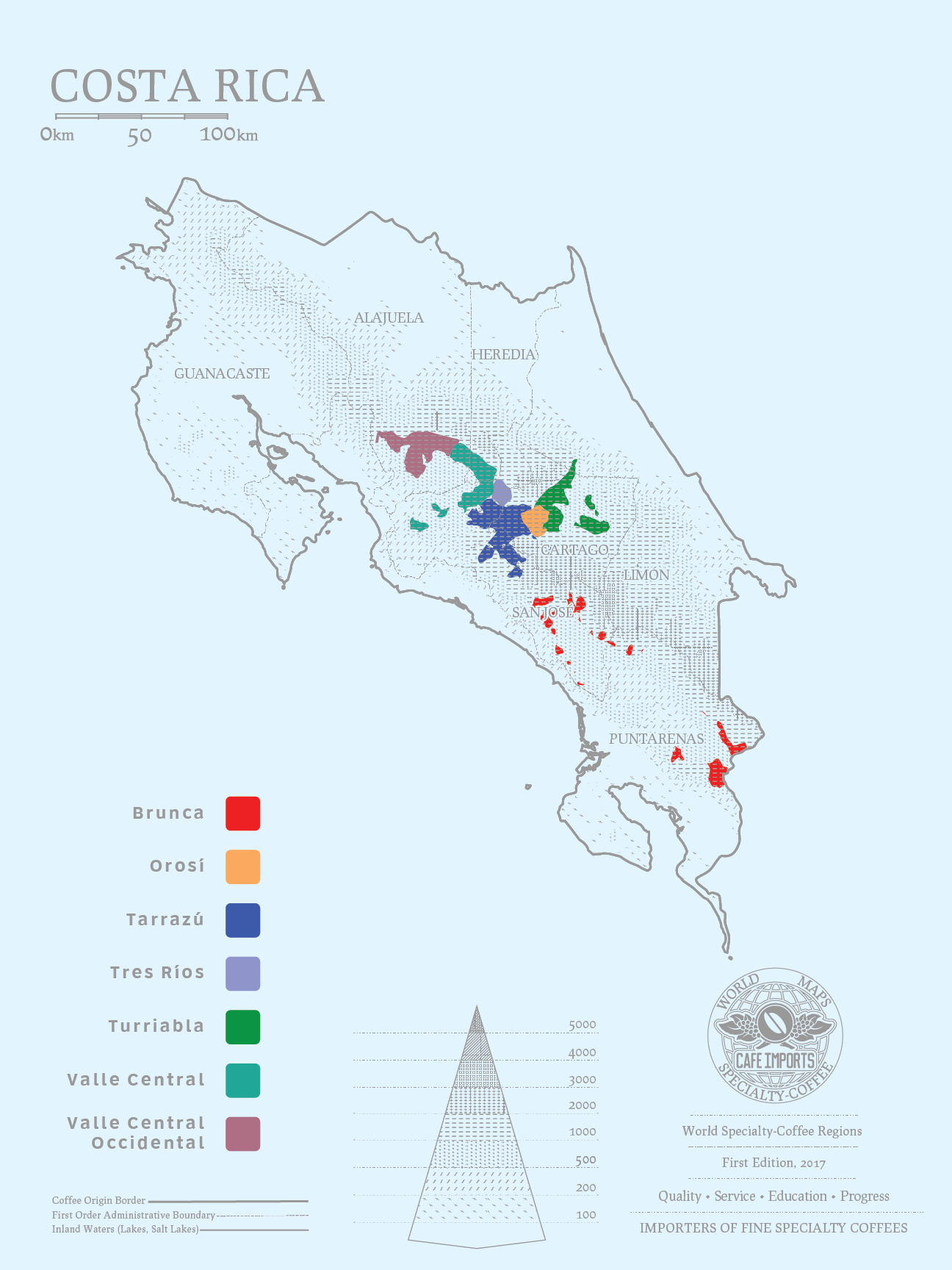
Costa Rica is located in Central America and was the first country in the region to introduce coffee cultivation, with a deep historical heritage. The local volcanic soil is rich in nutrients and also has excellent drainage. Take the Central Plateau as an example: it spans an altitude of 1,200-1,600 meters, with the harvest period lasting from November to March of the following year, and it includes three sub-regions: Alajuela, San José, and Heredia. The area is also home to Irazu Volcano, Barva Volcano, and Poas Volcano, which continuously supply nutrients to the surrounding coffee trees. The unique microclimate combined with fertile volcanic soil gives the beans of this region outstanding characteristics, such as chocolate and cocoa flavors, bright fruit acidity, and elegant aroma.
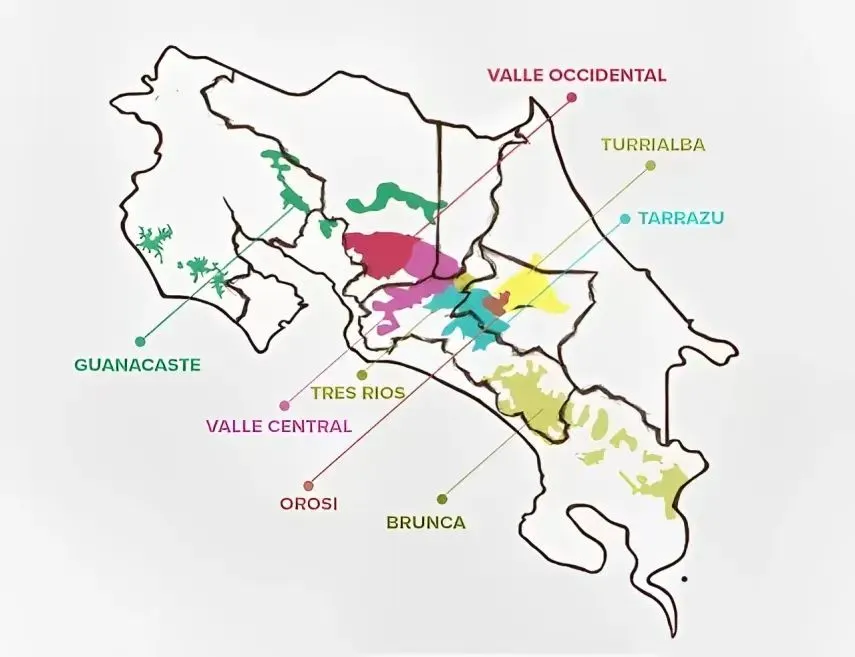
The country has eight major coffee regions, including: Valley Central Occidental, Valley Central, Tarrazu, Tres Rios, Orosi, Brunca, and Turrialba. And the vast majority of Costa Rica's specialty coffee comes from Tarrazu.
Tarrazu is located south of the capital San José and is one of the country's most highly regarded coffee-growing areas. The local specialty "La Minita Tarrazu" coffee is quite limited in quantity, with an annual output of about 72,600 kilograms, produced from a piece of land called "La Minita," now owned by the McAlpine family of the UK for nearly three generations. Their La Minita Estate in the Tarrazu region has an annual output of only 160,000 pounds. In fact, this land could originally produce more than 450 tons of coffee each year, but La Minita Tarrazu neither applies artificial fertilizers nor sprays pesticides during cultivation, and harvesting and sorting are all done by hand, in order to prevent the air-jet sorting method from causing some damage to the coffee beans.
Balanced flavor, strong chocolate character, and a smooth mouthfeel are the deeply ingrained labels of Costa Rican coffee. Front Street believes that Tarrazu coffee beans are large and plump, with a thick BODY, smooth on the palate, exuding rich chocolate and nut aromas, with just the right acidity and a very alluring fragrance.
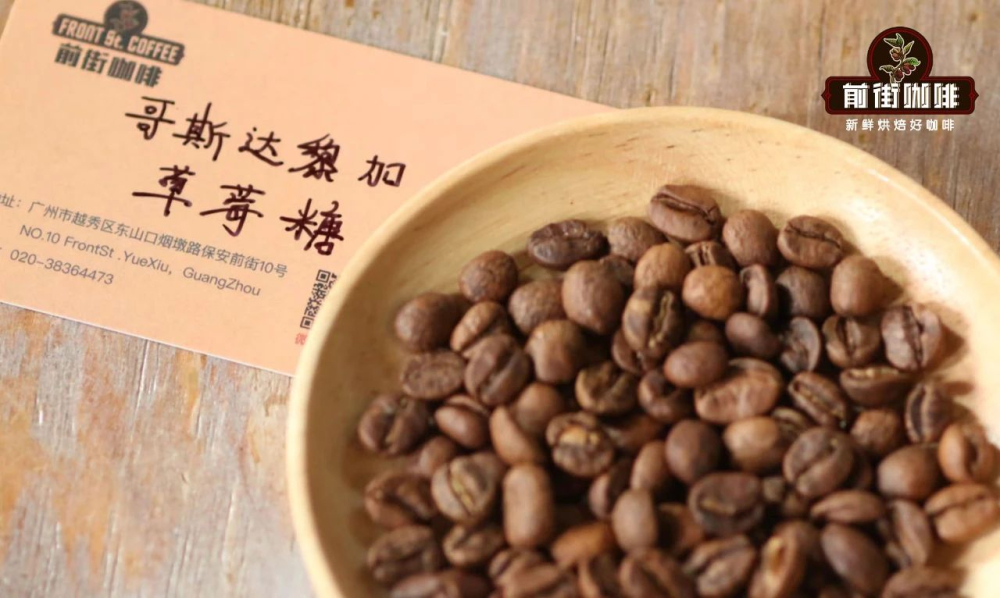
FrontStreet Coffee's representative Costa Rican bean — Mirazu Estate Geisha blend coffee beans.
Producing Country: Costa Rica Estate: Milazu Estate Growing Altitude: 1700m Processing Method: Raisin Honey Process Varietal Composition: Geisha, ET47, SL28, MAICO
Mirazu Estate
Mirazu Estate is very small, and everything inside and outside the estate is handled together by Esteban and his family. Esteban Sanches originally came from the family of the neighboring Little Candle Estate. Out of his dedication to coffee bean quality, he chose to strike out on his own and single-handedly founded Mirazu Estate. Even the small wet-processing machine at the processing plant was entirely designed and assembled by Sanches himself.
In the coffee farm, Sanches once said this: The quality of coffee must start with the trees themselves. Machines can certainly separate good beans from bad, but if all the beans grown are of passing quality, then there is no need at all for machines to distinguish superior from inferior. He also said that heaven has given us such a beautiful environment, so we care for the coffee beans with love, and this is precisely a kind of giving back and sharing; he is grateful for everyone's help along the way, which allowed him to realize his dream, and he is also happy to share his experience and results with more farmers, helping everyone's beautiful coffee dreams come true.
Coffee Bean Varieties
This Costa Rican Geisha blend bean purchased by FrontStreet Coffee this time is composed of 50% Geisha beans and 50% a mixture of ET47, SL28, and MAICO. All varieties are planted on the same estate and then blended afterward, making it a single-origin coffee bean.
Here it is especially worth discussing the two varieties ET47 and SL28. ET47 comes from Ethiopian native varieties. In the 1990s, the Costa Rican Coffee Institute introduced many such tree species as research materials for resistance to leaf rust and gave them to farmers around Tarrazu to cultivate. SL28 was originally bred with the goal of developing coffee beans that were both high-yielding and high-quality, with resistance to pests and diseases; in some regions, however, breeding focused only on high yield and did not take disease resistance into consideration. Thanks to its Bourbon lineage, although SL28's later yield fell short of expectations, its bronze-colored leaves and fava-bean-shaped fruit brought excellent sweetness, balance, and complex, varied flavors, with citrus and dark plum characteristics especially prominent.
Since it is a Geisha blend, is this bean still considered single-origin coffee?
Front Street's answer is yes. Because all the varieties included in this bean come from Mirazu Estate and belong to the same single origin, it is still a single-origin coffee bean. Why say this? Front Street will give an example: Ethiopian local coffee varieties are extremely diverse, and coffee trees are mostly planted and harvested in mixed form, which also explains why Ethiopian beans are often uneven in size. In other words, as long as they are grown within the same producing region, whether a single variety or multiple varieties mixed together, they can all be called single-origin coffee beans. Ethiopian beans of this kind are equivalent to a naturally formed blend, while this Geisha blend belongs to a later artificial blend.
Coffee Bean Processing Methods
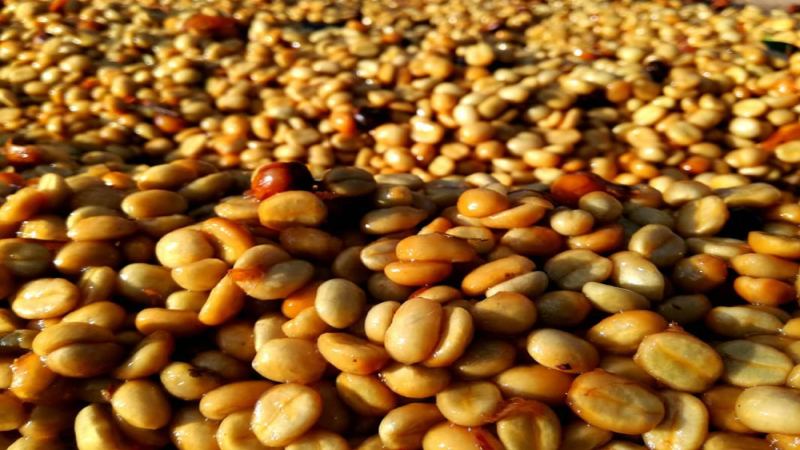
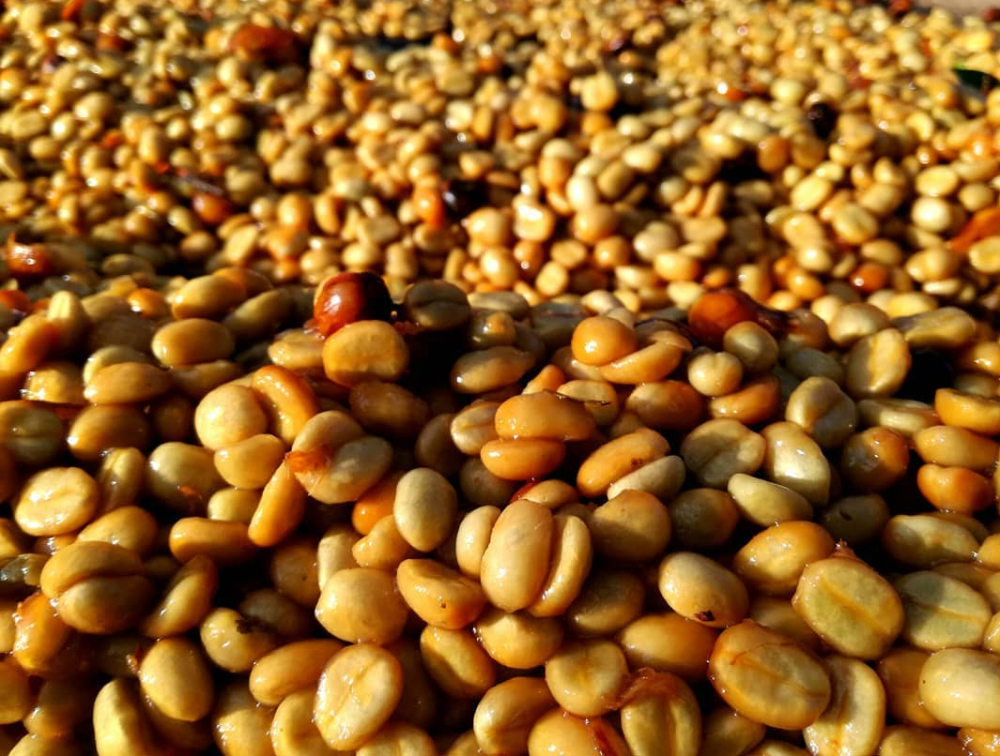
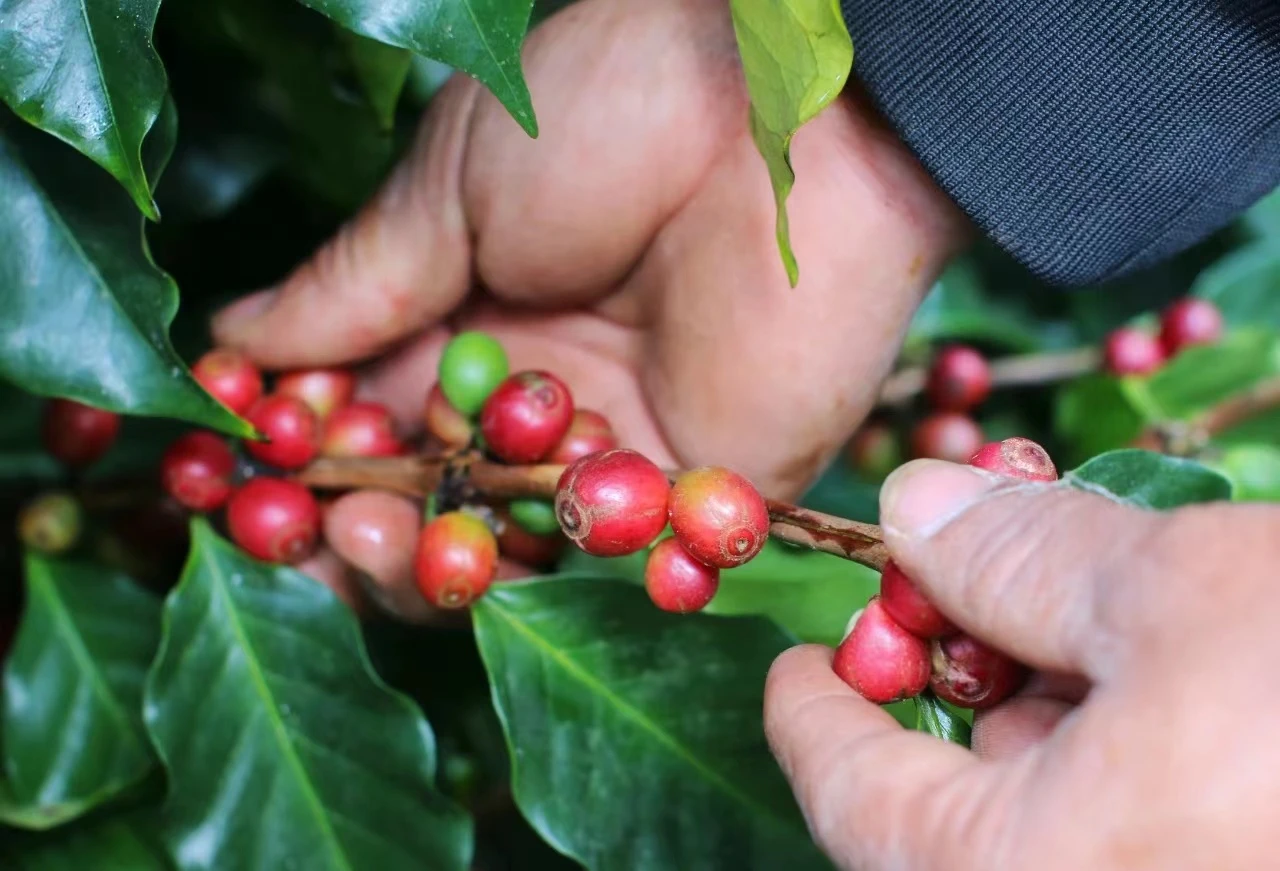
The core of the raisin honey process is retaining 100% of the mucilage and using zero-water processing, which further increases the difficulty of honey processing and places extremely strict demands on timing control. On the day the coffee cherries are harvested, all the harvested fruit must be poured into a large water tank: ripe, plump ones sink to the bottom; underdeveloped or overripe fruits float on the surface, and these floating beans must be removed. After screening, the coffee cherries are spread on raised beds to dry for no less than three days, after which the cherry skin is removed and drying continues with the mucilage still attached.
At this stage, climatic conditions determine the success or failure of honey processing. During drying, these coffee cherries must be constantly turned to keep the degree of drying uniform, but the turning frequency also needs to be judged carefully — the drying speed should be slow so that the coffee can fully complete fermentation, yet not too slow, to avoid over-fermentation. Front Street believes that this sweetness-rich raisin honey process can give the coffee a white-wine-like mouthfeel and balanced acidity, with particularly prominent fermentation aromas.
Front Street Green Bean Analysis
This batch of Costa Rican Tarrazu Geisha coffee purchased by FrontStreet Coffee this time is composed of 50% Geisha together with ET47, SL28, and MAICO. Among them, Geisha contributes the jasmine aroma to this bean, while the other varieties add richer strawberry and berry flavors; the raisin honey processing method further layers on sweetness. In order to highlight the floral aroma and fermentation sweetness, Front Street's roaster ultimately chose a medium-light roast to complete this bean.
Front Street Roasting Recommendations
Use a Yangjia 800N semi-direct-fire roaster, with 300g of beans per batch.
Preheat the drum temperature to 200°C, and when it drops to 175°C, drop the beans. Set the firepower to 120, open the airflow to 3, with a turning point at 1'32", then maintain the firepower; after the temperature reaches 114°C, keep the firepower the same and raise the airflow to 4. At 6'15" the beans turn yellow, the grassy smell fades, and the dehydration stage begins; when the temperature reaches 140°C, lower the firepower to 100 and maintain airflow at 4. At 9'00" dehydration ends, wrinkles and dark spots appear on the bean surface, and the smell transitions from toast to coffee aroma — this is the prelude to first crack, and at this moment pay close attention to the sound of first crack. At 10'25" first crack begins, open the airflow fully to 5, and keep the firepower unchanged. After first crack, develop for 1'30", and drop the beans at 193.5°C.
Front Street's Cupping Report
FrontStreet Coffee conducts cupping within 8-24 hours after the sample beans are roasted. The staff usually use ceramic cupping bowls with a capacity of 200 ml, marked with two scale lines at 150 ml and 200 ml. According to SCAA standards, the TDS of the cupping water should be controlled at around 150 ppm — too low a TDS easily causes over-extraction, while too high a TDS affects the mouthfeel and causes under-extraction; the water temperature is set at 94°C. The grind size follows SCAA cupping standards, based on a 70%-75% pass rate through a No. 20 standard sieve (aperture 0.85 mm). The coffee-to-water ratio is 11 grams of coffee grounds to 200 ml of hot water, which converts to 1:18.18, resulting in an extraction concentration precisely within the golden cup range of 1.15%-1.35%, with a steeping time of 4 minutes.
Dry aroma: dried fruit and berry notes Wet aroma: floral intertwined with berry notes Flavor: raisin, berry, nuts, with a creamy mouthfeel in the finish
Front Street's Brewing Recommendations and Insights
Brewing water temperature: 90-91°C
Grind size: 10 on the EK43s (similar to fine granulated sugar particles)
Coffee-to-water ratio: 1:15
Single dose: 15 grams *Regarding the determination of grind size, Front Street uses sieving to measure it: first refer to the grinding guidelines proposed by the SCA (Specialty Coffee Association of America) for pour-over coffee, then repeatedly verify it in daily brewing. Front Street has found that different grind sizes produce quite obvious differences in the final cup, and each bean has its own suitable grind size — this is precisely the value of sieving. If there is no sieve at home, FrontStreet Coffee suggests using the flow rate as a supplementary judgment: a faster flow rate means the grind is too coarse, while a slower flow rate means the grind is too fine.
The brewing method used by Front Street is as follows: first pour 30 grams of water for a 30-second bloom; then pour 95 grams of water (about 125 grams on the scale), finishing within about 1 minute; when the water level drops to two-thirds of the coffee bed, pour the remaining 100 grams (about 225 grams on the scale), finishing all pouring by about 1 minute 40 seconds. At 1'55''-2'00'' the dripping ends, remove the dripper, and extraction is complete.
Final flavor: jasmine aroma rushes forward, with strawberry and raisin on the palate, leaving a finish of strawberry candy and nut notes, and a creamy, smooth mouthfeel.
The above content is compiled by CoffeeHunters, a coffee news website.


