







Why Americano Is Bitter Compared with a Latte
An Americano is espresso diluted with hot water; a latte is espresso with steamed milk. Both start from the same concentrated base, but milk softens and rounds the flavor while water leaves the coffee's own character exposed. That is the main reason an Americano reads as bitter to drinkers who find a latte mild. Espresso itself is brewed by forcing water at over 9 bar through finely ground coffee.
Not all bitterness signals a fault. Some belongs to the normal range of a well-extracted shot, while sharp or harsh bitterness usually points to over-extraction, and a thin, sour cup suggests the opposite. Adjusting grind, dose and extraction time is the usual response. Most cafés build their espresso from blend beans for cost and consistency, though single-origin options are becoming more common.
Standing at a café counter, beginners are often overwhelmed by drinks with similar names on the menu: a latte and an Americano may seem to share the same origin, one infused with milk and the other diluted with water, yet their flavors are worlds apart. Starting from what Front Street Coffee serves in its stores, this article clarifies the definition of espresso and the logic behind its extraction, compares the differences between a latte and an Americano in method and taste, shares the flavor profile and specific extraction parameters of the Warm Sun blend beans, and explains why Americano tastes bitter—which bitterness falls within the normal range, which bitterness signals a problem with extraction, and the corresponding adjustment approaches.
For friends who don't frequent cafés, ordering is no easy task. The menu is filled with drinks bearing all sorts of names that leave one dazzled: what exactly is the difference between them? Is Americano really the coffee Americans love most? And how does it differ from a latte? In this installment, Front Street Coffee (FrontStreet Coffee) will walk you through the differences between these two drinks.
What Exactly Is the Difference Between a Latte and an Americano?
In fact, both a latte and an Americano are beverages extended from espresso as their base. The core difference between the two is this: a latte is made by pouring milk into the espresso, while an Americano is made by adding plain water. In other words, a latte can be considered the most representative member of the milk coffee camp, while an Americano is the iconic drink of the black coffee family.
What Is Espresso?
Espresso can be roughly understood as a coffee liquid of extremely high concentration but very small volume. To make an authentic espresso, a coffee machine with pressurized extraction capability is required, forcing hot water at a sealed high pressure of over 9 bar to pass rapidly through very finely ground coffee powder, ultimately yielding a cup of intensely flavored coffee liquid.
Most espresso on the market is made from blend beans—first, because the cost is lower, and second, because the stability of flavor and quality is better guaranteed. However, as consumers' pursuit of flavor complexity continues to rise, some cafés today have begun trying to make espresso from single-origin coffee beans (i.e., single-origin beans). This type of product is also known as SOE (Single Origin Espresso).
All espresso products at Front Street Coffee stores are made from blend beans, specifically the "Sunflower Warm Sun Espresso Blend Coffee Beans"—a medium-dark roast blend recipe consisting of 30% Ethiopian Yirgacheffe sun-dried Red Cherry coffee beans paired with 70% Honduran Sherry coffee beans. The insistence on blending is out of a desire for every espresso product to maintain stable performance over a long period, so that customers can enjoy a consistent taste no matter when they visit.
Because coffee machine and grinder models vary, espresso extraction parameters must be flexibly set according to the equipment. Here, Front Street offers a set of initial reference data: take 20 grams of coffee powder, extract at a 1:2 coffee-to-liquid ratio and 9 bar pressure, aiming for 40 grams of coffee liquid, with the time controlled at 25 to 30 seconds. After extraction is complete, make corresponding fine adjustments to the parameters based on the flavor the coffee actually presents.
The current equipment combination at Front Street stores is a Q18 grinder paired with a lelit brand coffee machine. The daily extraction recipe is roughly: 19.8 to 20 grams of very finely ground coffee powder, extracting 35 to 38 grams of coffee liquid in about 27 to 30 seconds. The espresso made with the Warm Sun blend exudes a rich fermented wine aroma, carries the sweet-tartness of berries, enters the mouth as smooth as vanilla cream, and finishes with notes of nuts and caramel.
What Is a Latte?
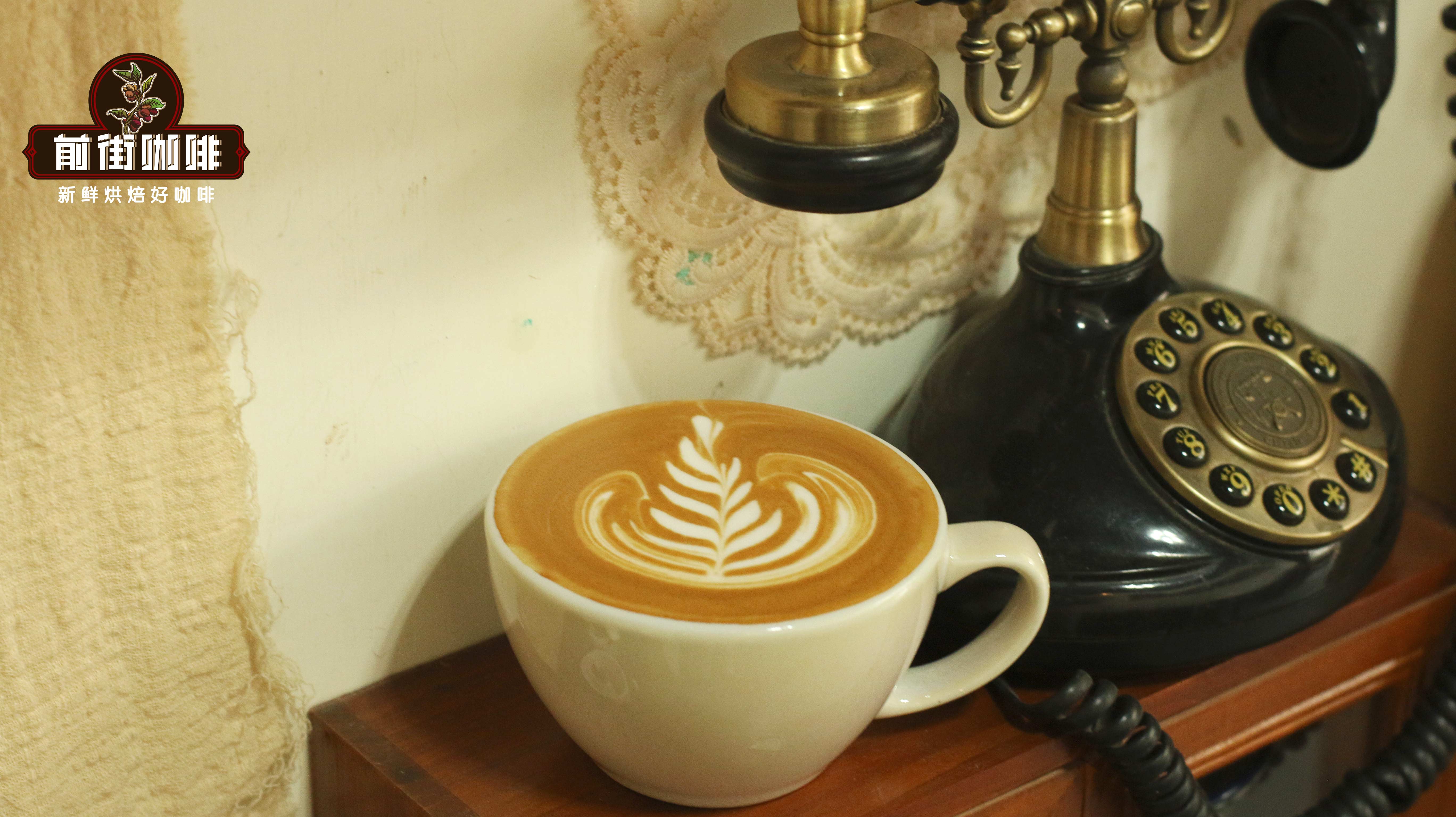
Simply put, a latte is coffee with milk added. Its method is not complicated: heat and froth the milk until fine microfoam forms, then pour it into the extracted espresso, which also allows you to create various patterns in the cup.
With espresso from Front Street's Warm Sun blend as the base, adding hot milk makes the sweetness especially prominent, accompanied by a soft fermented wine aroma, with a texture as soft and silky as vanilla cream, leaving a hazelnut chocolate aftertaste at the finish; if cold milk is used instead, this latte reveals the smoothness and aroma of vanilla cream fused with whiskey, with a gentle, non-irritating berry acidity, and nuts and caramel in the aftertaste.
What Is an Americano?
An Americano can be seen as espresso diluted with water: add hot or ice water to the extracted espresso to bring the concentration down to a palatable range. How much water to add is entirely up to personal taste.
In daily store offerings, Front Street adds a mixture of hot or ice water to Warm Sun blend coffee beans at a 1:5 water ratio. The hot Americano presents vanilla cream aroma, a fermented-like flavor, and a faint berry acidity, with a caramel and dark chocolate aftertaste at the end; the iced Americano carries a whiskey-like wine aroma and gentle berry acidity, with hints of hazelnut chocolate in the aftertaste.
Why Does Americano Taste Bitter?
The final flavor expression of an Americano depends on the taste of the espresso itself. Espresso is inherently intense and heavy in style, and since individuals vary in their sensitivity to bitterness, as long as the bitterness is not unpleasant, it falls within the normal range.
If the bitterness has reached an unbearable level, it most likely indicates a deviation in espresso extraction. In that case, first try increasing the water ratio to soften the mouthfeel; if it still feels unpleasant after adjustment, then it's time to go back and reset the espresso extraction parameters.
The above content is compiled by CoffeeHunters, a coffee news website.


