







How does golden mandheling differ from regular Mandheling?
Mandheling is Indonesia's signature coffee, named after a local tribe and later applied to beans from the Lake Toba highlands and Lintong area of Sumatra. Golden Mandheling goes through stricter screening than standard Mandheling, which is why it shows stronger sweetness and a cleaner aroma while keeping the deep, earthy body Sumatra is known for.
The wet-hulling process common in Sumatra and a medium-dark roast curve shape the cup. Market labels such as Lintong, Tiger and Aged often confuse buyers, so the article compares PWN Golden Mandheling with regular Mandheling on screening standards and flavor, then gives KONO dripper pour-over parameters and producing region details for the PWN lot.
Mandheling is Indonesia's most iconic coffee, yet Lintong, Tiger, Aged, and Golden Mandheling often confuse enthusiasts in the market. From the perspective of Front Street Coffee, this article sorts out the origin of the Mandheling name, the division of producing regions and grades, with a focus on comparing PWN Golden Mandheling and regular Mandheling in terms of screening standards and flavor performance. It also includes the producing region information, wet-hulling process, medium-dark roast curve, and KONO dripper pour-over parameters for Front Street PWN Golden Mandheling. After reading, you will be able to clearly distinguish the taste characteristics of different Mandhelings and understand why Golden Mandheling has stronger sweetness and a cleaner aroma.
For more specialty coffee knowledge, welcome to follow our WeChat official account: Front Street Coffee
Indonesia is an important coffee-producing country globally, and the mellow depth unique to its coffee is difficult to replicate in other origins. Among Indonesian coffees, the most famous is undoubtedly Mandheling. Many friends are confused about the differences among various Indonesian Mandhelings. Today, Front Street Coffee will help sort out the relevant knowledge about Mandheling coffee.
The Origin of Mandheling
Mandheling was originally the name of a local Indonesian tribe. As for when it became synonymous with coffee beans, it is related to a widely circulated story. It is said that after the end of Japanese colonial rule in Indonesia, Japanese soldiers returned to Japan but always missed that delicious cup of local coffee. Through their trade partners, they asked locals to collect high-quality coffee beans on their behalf. The Japanese loved this bean very much, but due to a pronunciation deviation, what the locals called "Mandailing" was pronounced by the Japanese as "Mandheling." And so, by a twist of fate, Mandheling became the name of a coffee bean.
Mandheling coffee is also called "Sumatra coffee." What is produced in North Sumatra is mostly Gayo, with Ateng as the main variety; the Tawar Lake producing area at the northern tip can be called Aceh coffee or Tawar Lake coffee; what is produced in the Lintong area of South Sumatra and around Toba Lake can be called Mandheling coffee. Mandheling comes from the mountains around Lake Toba, a high-altitude freshwater lake located north of Medan, the provincial capital of Sumatra, with an average altitude of about 900 meters. What is usually called Mandheling refers to Typica or its variants grown in the mountainous areas around Lake Toba.
[Lintong Mandheling]
Lintong Mandheling comes from the Lintong mountains in north-central Sumatra, near Lake Toba, and belongs to the regular version of Mandheling. It also uses the conventional wet-hulling method, resulting in low acidity and high body. But wet hulling also brings about a phenomenon: semi-hard, semi-soft moist raw beans are easily crushed when the parchment layer is removed, and the beans crack open, resembling a goat's hoof, commonly known as goat hoof beans. This is not a defective bean; rather, it can be said to be a distinctive feature of Mandheling.
[Tiger Mandheling]
In Aceh, coffee is the region's second-largest export cash crop. There are about 60,000 small-scale coffee growers locally, each with about 1 to 2 hectares of coffee planting area. Indonesia's traditional coffee trade uses a multi-link chain approach, starting from farmers and going through layers of middlemen before gradually gathering large export shipments. In Indonesia's coffee trade system, direct trade in which a single window purchases from farmers and then arranges exports is quite rare locally.
The requirement for Tiger Mandheling is a taste with Chinese herbal medicine aroma, and only Mandheling with screen size 17 and above and a defect rate below 4% can be called "Tiger."
[Aged Mandheling]
Raw beans are naturally aged by extending storage time (usually 2 to 3 years). These changes include reduced acidity, color change, and thicker bean quality. The storage environment must be cool and well ventilated. Because the storage environment is relatively dark and the time is long, aged coffee often cannot escape musty odors, or what are commonly called complex smells such as burlap sack and leather. The special processing method of Aged Mandheling makes its flavor rounder and deeper, as intoxicating as Pu'er tea.
[Golden Mandheling]
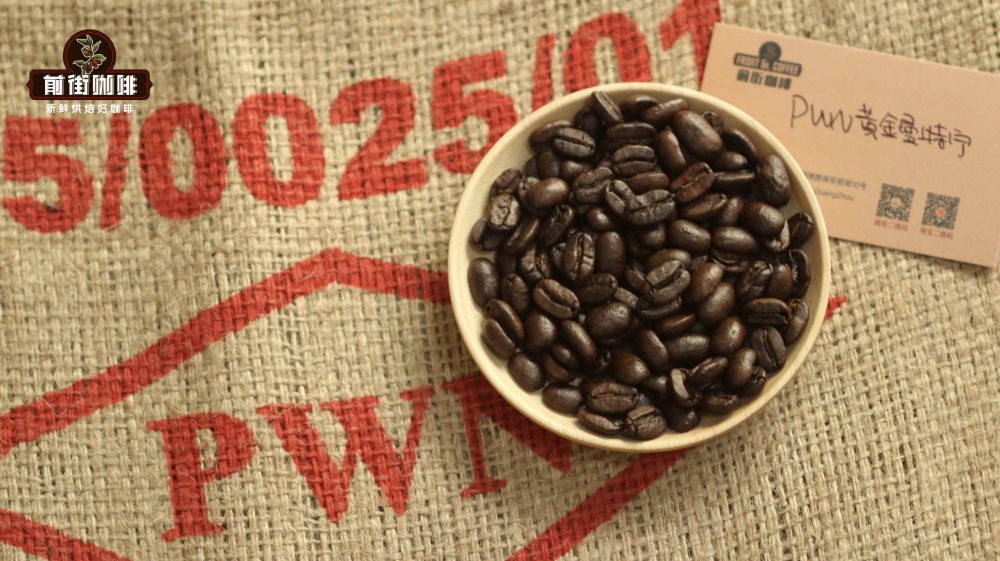
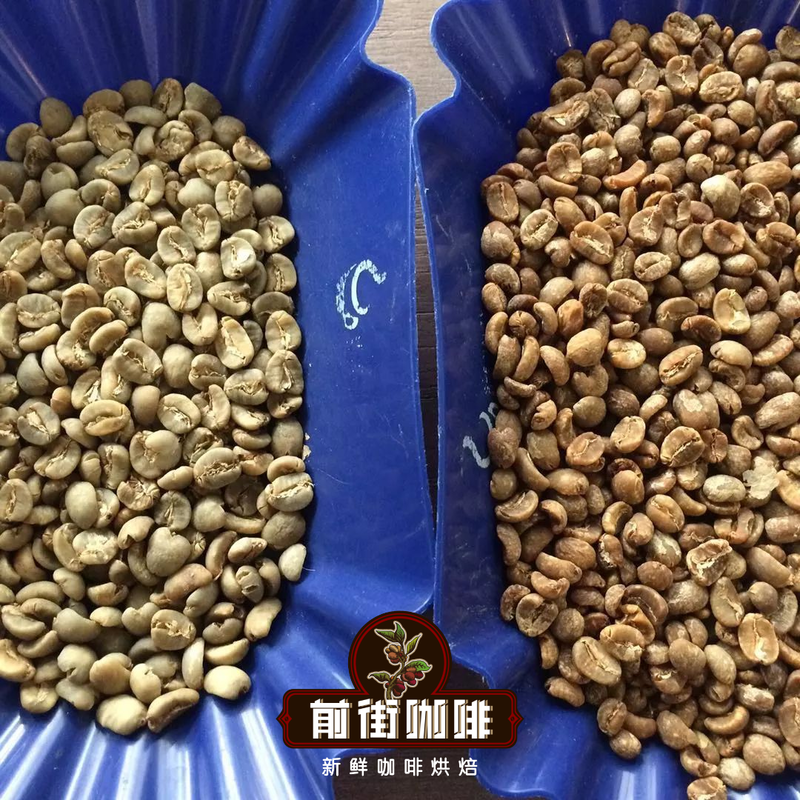
Since the Japanese discovered Mandheling, they have always paid considerable attention to this coffee bean. In the process of cooperating with local green bean merchants, they established a strict screening system. The processed green beans undergo density and color sorting, as well as multiple rounds of manual bean selection, ultimately presenting Mandheling with uniform color and uniform bean shape. It is said that during green bean processing, Mandheling under sunlight gives off a golden luster, hence the name Golden Mandheling.
The specification for Golden Mandheling is screen size 18 and above, with fewer than 3 defective beans (in a 300g green bean sample). It belongs to the highest grade G1, is darker green in color, and has a neat flat bean shape. After strict screening, Golden Mandheling not only removes the earthy miscellaneous flavors unique to regular Mandheling, but also tastes cleaner and more transparent, with a stronger sweet aroma.
However, it was not a Japanese company that registered Golden Mandheling as a trademark, but rather the local Indonesian company that cooperated with Japanese companies in exporting Mandheling coffee beans in the early days—PWN (Pwani Coffee Company). The Japanese company registered "Gold Top Mandheling." The flavor differences between the two are actually not great, but due to different brands and different merchant marketing strategies, it is possible that public opinion has shifted as a result. So which of the two Golden Mandhelings is better is a matter of individual opinion.
Due to the severe impact of the pandemic, shipping space from Indonesia to China in 2020 was quite tight compared with previous years. The new-crop Front Street PWN Golden Mandheling originally scheduled to arrive at port in October arrived a full month late.
The difference between Golden Mandheling and Mandheling is that Golden Mandheling has stronger sweetness and sugarcane aroma. Although everyone knows that only PWN's Mandheling is called Golden Mandheling, in reality PWN's annual output is not large, so a significant portion of large-bean selected Golden Mandheling does not come from PWN. If you are not sure, you might ask the seller to provide the PWN green bean burlap sack or the certificate accompanying the beans, and then you will know whether it is what we call Front Street PWN Golden Mandheling.
Front Street Coffee Indonesia Front Street PWN Golden Mandheling Region: Gayo Mountain, Aceh, Sumatra Altitude: 1100-1600 meters Variety: Ateng Grade: G1, 3 times hand-sorted Processing method: Wet-hulled
Processing Method
Mandheling mostly uses Sumatra's unique coffee bean processing method—wet hulling. Because the local weather is mostly rainy, with constant typhoons, it cannot achieve the good weather required for natural sun-drying, and the local economic conditions are poor, making it difficult to afford the relatively expensive washed method. Thus, the wet-hulled method with strong local characteristics emerged. Today, Indonesia's coffee development is no longer the impoverished scene it once was, and many estates and companies with sufficient conditions can use the washed method. But why has wet hulling not been abandoned? Front Street Coffee believes that wet hulling is the factor that made Mandheling coffee known to the world. At the mention of Mandheling coffee, one thinks of wet hulling, so the two have become mutually reinforcing.
The specific steps of wet hulling can be divided into the following two stages: In the first stage, the skin and pulp are removed with a wooden pulper, followed by 3 hours of fermentation and then drying, reducing the moisture content to a semi-dry, semi-wet 30-50%.
In the second stage, the mucilage and parchment layer are removed, and drying continues in the later stage. The drying process takes 2-4 days, and the moisture content drops to 12-13%.
Front Street Coffee Roasting Analysis In order to roast out the mellow, sweet, and clean flavor of Golden Mandheling, Front Street Coffee's roaster used a medium-dark roast.
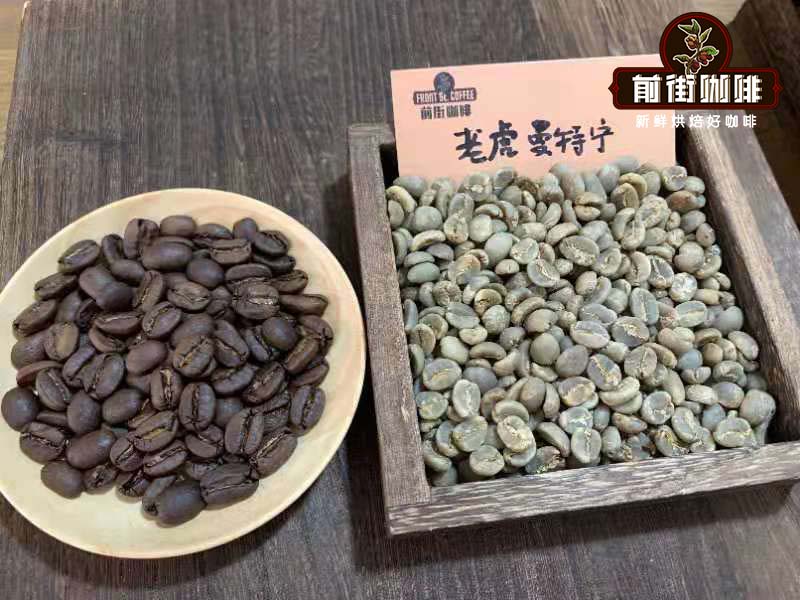
Charge when the drum temperature reaches 200°C, set the damper to 3, adjust the heat to 160°C after 1 minute, keep the damper unchanged, and roast until 5'40'', at 148°C, when the bean surface turns yellow, the grassy smell completely disappears, and dehydration is complete. Adjust the heat to 140°C and change the damper to 4;
At 9'40'', ugly wrinkles and dark streaks appear on the bean surface, and the toast aroma clearly turns into coffee aroma, which can be defined as the prelude to first crack. At this time, you need to listen clearly for the sound of the first crack. At 9'54'', first crack begins. Reduce the heat to 60°C and fully open the damper (be very careful when adjusting the heat; do not reduce it so much that there is no cracking sound). Drop the beans at 204.5°C.
Front Street Coffee Brewing Recommendation This brewing highlights the mellow, clean, and aromatic characteristics of Golden Mandheling, using the KONO dripper (this dripper was invented to mimic the rich coffee produced by flannel). For medium-dark roasted coffee, choose a medium-coarse grind. Use a 1:15 coffee-to-water ratio, 15 grams of coffee powder, and a water temperature of 88°C. Friendly reminder: lowering the coffee-to-water ratio can push the coffee toward a richer taste.
Brewing process: Slowly add the coffee powder, and try to keep it as level as possible while pouring, avoiding shaking the dripper (because shaking will reduce the spacing between coffee grounds, which is not conducive to blooming and degassing). In the first stage, pour 40g of water in a small circular motion around the center and bloom for 30 seconds; the coffee bed will slowly expand and puff up into a "hamburger."
In the second stage, pour 120g of water in circles from the center outward, keeping the pouring height as close to the coffee bed as possible, moving slowly, and avoiding excessive agitation. In the final stage, pour 100g, and wait for all the coffee liquid in the dripper to flow into the server to end extraction. Extraction time is 2 minutes.
Flavor characteristics of Mandheling coffee: [Lintong Mandheling] Herbal, chocolate, caramel, relatively balanced overall; [Tiger Mandheling] Nuts, cream, dark chocolate, caramel, Chinese herbal medicine, obvious sweetness, relatively clean and clear flavor; [Aged Mandheling] Ripe Pu'er, caramel, herbs, chocolate, relatively low acidity. [Golden Mandheling] Nuts, spices, herbs, licorice, chocolate, caramel, clean and soft flavor;
For more specialty coffee beans, please add the private WeChat of Front Street Coffee, WeChat ID: kaixinguoguo0925
The above content is compiled by CoffeeHunters, a coffee news website.


