







Why is Catimor the main variety of Yunnan coffee?
Yunnan's small-bean coffee is almost entirely Arabica, and Catimor dominates because it resists leaf rust, the disease that wiped out many older Typica trees after large outbreaks. Coffee began in 1904, when a French missionary planted seeds in a valley in Binchuan County, and the crop later expanded to supply the Soviet Union in the mid-1950s.
From the 1990s, Nestlé promoted Catimor around Pu'er as global demand rose, and washed and natural processing now shape the flavor differently. The article also covers the washed Catimor daily-drinking lots from Baoshan and the Typica variety grown in Lincang, plus pour-over parameters for home brewing.
Yunnan coffee has risen rapidly in China's specialty coffee wave in recent years, with major chain brands launching related products one after another. But do you know why Catimor is the main variety of Yunnan small-bean coffee? From the Arabica seeds brought in by a French missionary in 1904 to Nestlé's promotion of Catimor in Pu'er, the variety evolution of Yunnan coffee has gone through more than a century. This article will sort out the varietal origins of Yunnan small-bean coffee, the genetic characteristics of Catimor, common post-processing methods, and the effects of washed and natural processing on flavor. It will also introduce the washed Catimor daily-drinking beans selected by Front Street Coffee in Baoshan, as well as the Typica variety "Front Street 2013" cultivated in Lincang, and include pour-over parameter suggestions to help you fully understand the flavor spectrum and current situation of Yunnan coffee.
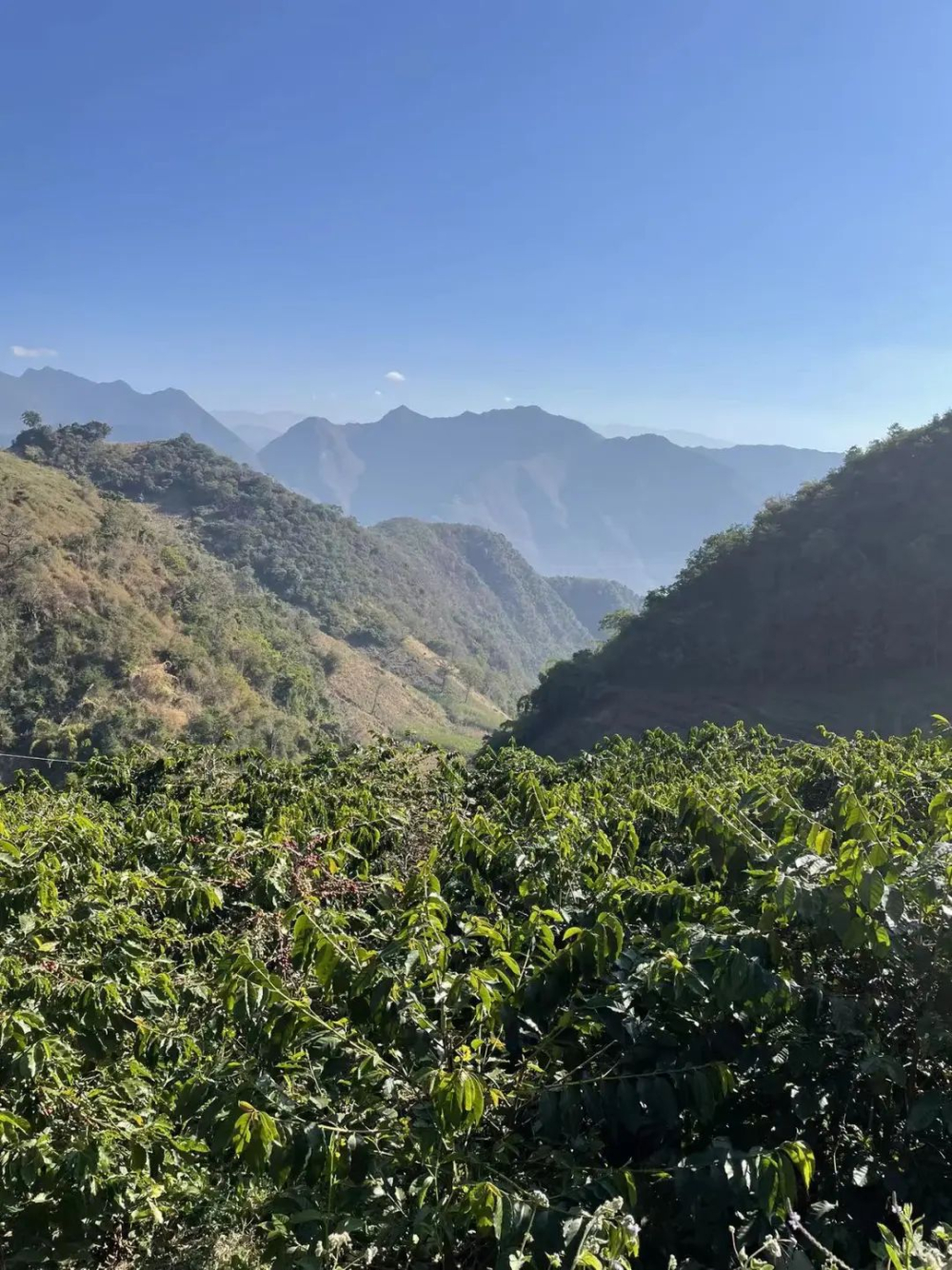
At present, the enthusiasm of young people in China for drinking coffee continues to heat up, and the options in coffee shops are becoming increasingly rich. Driven by the specialty coffee trend, the visibility of Yunnan coffee has risen rapidly, and many chain brands have successively launched coffee products from Yunnan production areas, which is enough to show that Yunnan coffee is in a stage of rapid development.
Why are most Yunnan small-bean varieties Catimor?
In 1904, a French missionary brought coffee seeds to a valley in Binchuan County, Yunnan, and planted the earliest batch of Arabica coffee trees, which is also regarded as the starting point of coffee cultivation in Yunnan. What Yunnan coffee farmers call "small-bean coffee" refers to Arabica varieties, used to distinguish them from the Robusta medium-bean varieties grown in Hainan.
In the mid-1950s, in order to supply coffee beans to the Soviet Union, Yunnan began to further expand its planting area. According to research, the most widely distributed variety at that time was the ancient Typica. In the decades that followed, many cities in Yunnan gradually expanded their planting range, but a large-scale outbreak of leaf rust caused a large number of coffee trees to die, and many farmers switched to growing other crops.
By the 1990s, global coffee consumption was growing sharply, and the international coffee giant Nestlé began looking for new coffee origins, eventually settling on Pu'er in Yunnan, which is located in the coffee belt. Nestlé set up a branch locally and supported Yunnan's coffee industry from multiple aspects. On the one hand, it introduced high-yield, disease-resistant varieties such as Catimor; on the other hand, it promised to purchase Yunnan coffee beans as raw materials at the then-current U.S. futures price. These measures not only expanded the scale of coffee cultivation in Yunnan but also increased the enthusiasm of coffee farmers, while establishing Catimor's position in replacing the ancient Typica and making it the main variety of Yunnan coffee.
What variety does Catimor belong to?
Although Catimor is classified as Arabica, from a genetic perspective it is a combination of Arabica and Robusta, carrying about 25% Robusta genes.
Catimor has inherited some characteristics of Robusta, with strong disease resistance and high yield. The surface of the roasted coffee beans is rich in oil, but at the same time it also carries the "devil's flavor" of Robusta. In cupping, its flavor performance is often inferior to that of pure Arabica varieties at the same altitude, such as Caturra and Bourbon. If Yunnan wants to improve the overall quality of its coffee, variety renewal is an unavoidable path, and in recent years new varieties such as Geisha have gradually appeared in Yunnan. However, Front Street Coffee would like to remind you that changing varieties is not something that can be achieved overnight. A new variety needs 3 to 4 years to flower and bear fruit, 4 to 5 years to reach mass production, and 2 to 3 generations of adaptation to integrate into a new environment, with the whole process taking about 15 to 20 years.
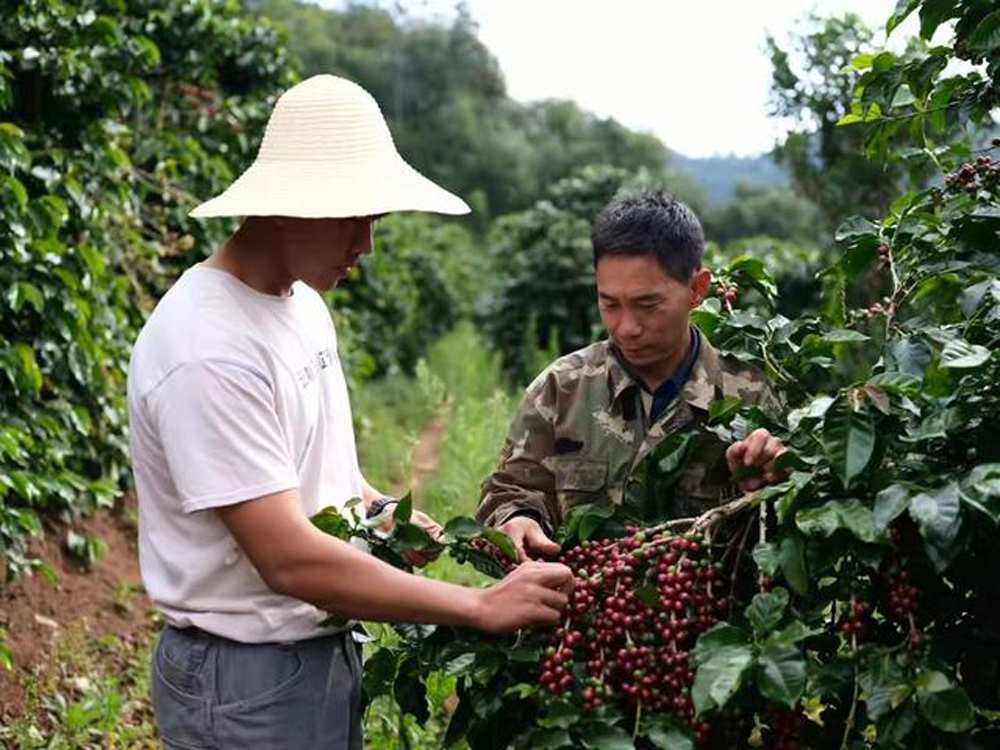
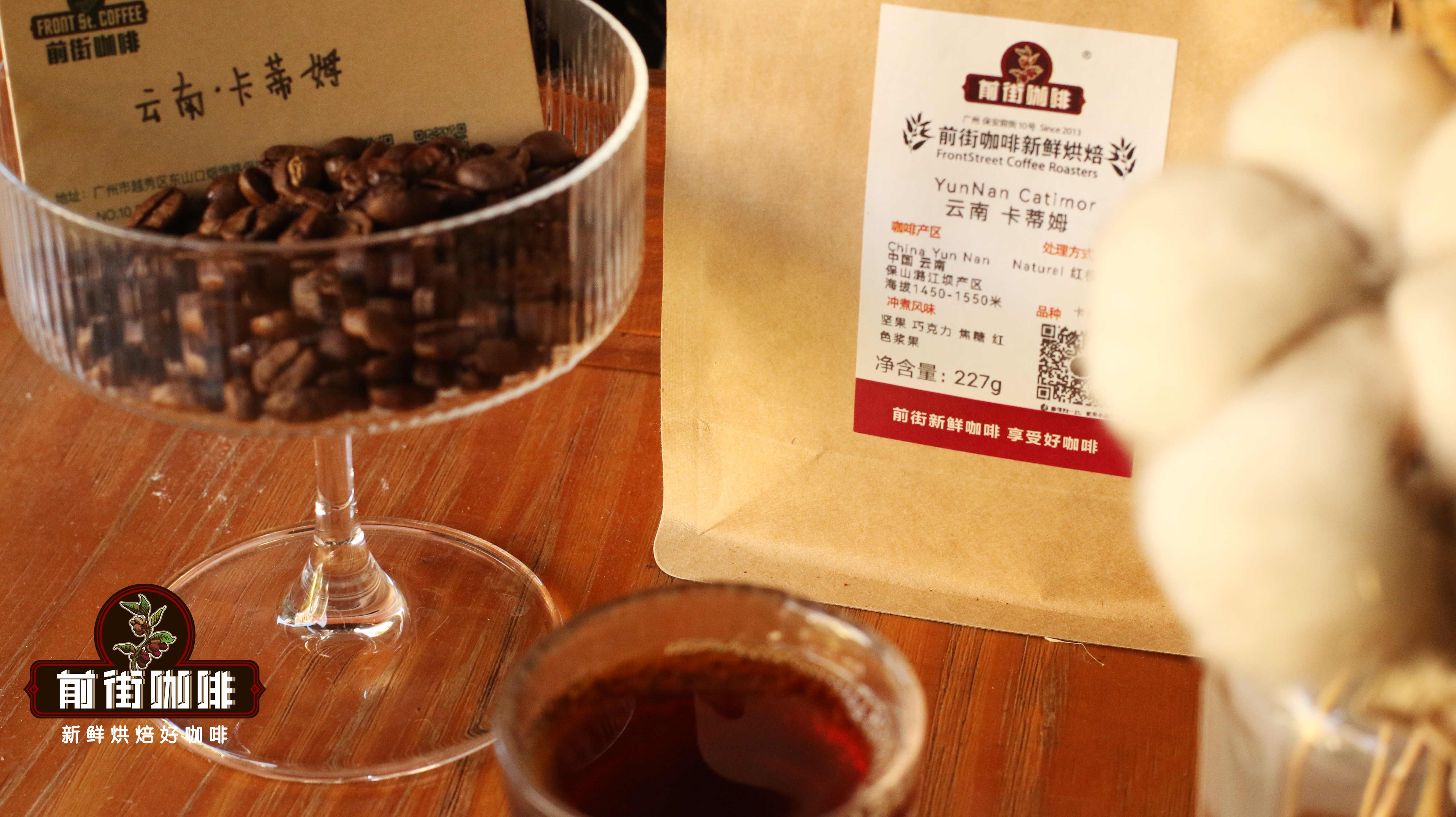
Front Street Coffee believes that to understand Yunnan coffee, one should first recognize the flavor characteristics endowed by the production area. Therefore, the representative Yunnan coffee launched by Front Street Coffee is selected from the Catimor variety in the Baoshan production area, processed by the washed method, and launched in 100g small packaging to make it convenient for everyone to taste the "taste of Yunnan." Front Street Coffee believes that the Catimor coffee grown in Yunnan has a balanced flavor profile of nuts, brown sugar, and plum.
So now, besides Catimor, does Yunnan grow other varieties? Of course it does. The coffee trees selected and bred by Front Street Coffee in Lincang, Yunnan, in 2013 are all the ancient variety Typica. After 5 to 6 years of cultivation, Front Street Coffee finally harvested the first batch of results in 2020 and processed them by the natural method, naming them "Front Street 2013."
What are the most common post-processing methods for Yunnan coffee?
From the fruit on the tree to the coffee in the cup, it needs to go through multiple stages such as picking, post-processing, grading and classification, purchasing, roasting, and brewing. In addition to variety, the post-processing method determines the flavor direction of coffee to a large extent.
At present, some novel flavor-enhancing processing methods have appeared on the market to cover up the defects of Yunnan beans themselves and add a large amount of aroma to them in order to raise prices. Front Street Coffee believes that doing so neither truly preserves the taste of Yunnan coffee nor avoids misleading consumers. Some friends, after tasting Yunnan coffee beans processed by special methods, felt that the aroma was particularly prominent and therefore thought that this was the mainstream processing method for Yunnan coffee. In fact, most Yunnan coffee farmers work under difficult conditions and do not have expensive processing equipment, so the vast majority of Yunnan coffee beans can only be processed by natural methods, namely washed and natural.
Washed processing is to first remove the peel and pulp of the picked coffee fruit with a machine, then put the peeled coffee beans into a fermentation tank to ferment, using fermentation to decompose the pectin layer, after that repeatedly washing off the decomposed pectin with clean water, and finally drying the coffee beans for 1 to 2 weeks. Washed Yunnan coffee not only reduces the defect rate, but the resulting quality is also more stable and the cleanliness is higher, and the most original flavor of Yunnan coffee can be felt more in the cup. This is also the reason why Front Street Coffee gives priority to washed batches when launching its "representative face of Yunnan" daily-drinking beans.
How does Yunnan coffee taste?
When Front Street Coffee talks about the flavor characteristics of Yunnan coffee, some friends describe it as chocolate, some say it is like sweet potato, and still others think it is like Sanhua plum. Front Street Coffee believes that the flavor of Yunnan small-bean coffee belongs to a balanced and harmonious profile, that is, having both acidity, sweetness, and bitterness. Therefore, Front Street Coffee's Yunnan coffees all use medium roasting, highlighting the roasted aromas of chocolate and nuts while retaining some acidity. From cupping, Front Street Coffee tastes that the washed Yunnan small-bean daily-drinking beans present herbal, nutty, caramel, chocolate, and brown sugar aromas, the sweetness of melons and fruits, and the acidity of plums, with a balanced mouthfeel.
After many customers bought Yunnan coffee beans, they asked Front Street Coffee: what method should be used to brew them? What are the recommended brewing parameters? If you want to experience the flavor spectrum of Yunnan coffee, Front Street Coffee recommends tasting it best as pour-over black coffee.
Front Street Coffee's pour-over parameters:
Dripper: hario v60
Dose: 15g
Water temperature: 90 degrees Celsius
Grind size: 75% passing through a No. 20 sieve
Water-to-coffee ratio: 1:15
Grind size and water temperature: precisely because the flavor attribute of Yunnan coffee is balanced and harmonious, excessively high water temperature and too fine a grind size can easily lead to over-extraction, with too many bitter large-molecule flavor substances released; while too low a water temperature and too coarse a grind size will lead to under-extraction, and the coffee can easily taste bland. Therefore, Front Street Coffee chooses a medium water temperature and grind size, extracting with 90 degrees Celsius hot water, with the coffee powder coarseness at a 70% passing rate through the China standard No. 20 sieve, and in-store EK43s setting 10.5.
Three-stage pouring: wet the coffee bed with twice the amount of water as the coffee powder to form a dome and let it bloom for 30s, then pour in a small stream in a circular motion from the inside out until 125g, pause, wait for the coffee bed to drop to half the height of the dripper, continue pouring the third stage with the same fine stream until 225g, and once all the coffee liquid has finished filtering, remove the dripper. The time is about 2 minutes.
For professional coffee knowledge exchange and more coffee bean information, please follow Coffee Workshop (WeChat public account cafe_style)
For more specialty coffee beans, please add the private WeChat of Front Street Coffee, WeChat ID: qjcoffeex
The above content is compiled by CoffeeHunters, a coffee news website.


