








What do Tanzanian AA green coffee beans taste like?
Tanzanian AA coffee comes from the northern highlands around the Kilimanjaro volcanic area, grown at 1300 to 2000 meters with the Bourbon variety and washed processing. Tanzania uses the same size-based grading as Kenya, where AA marks the largest screen. Expect citrus, berries, honey and tea-like notes in the cup.
Altitude, climate and volcanic soil shape the flavor, while variety and green coffee bean processing decide much of the rest. The article explains how the washed method and AA grading work, then gives pour-over parameters. Tanzania is often overlooked next to Ethiopia and Kenya, yet its coffee holds up well.
In the African coffee landscape, Tanzania is often overshadowed by the halos of Ethiopia and Kenya, but its coffee strength is equally not to be underestimated. In this article, Front Street Coffee will take you deep into Tanzanian AA coffee beans—from the growing conditions of the Kilimanjaro volcanic region, the origins of the Bourbon variety, to the washed processing method and grading system, and then to specific pour-over recommendations and flavor performance. Whether you are a beginner just getting into African beans or a veteran looking for citrus and berry notes, this article can help you fully understand this underrated high-quality coffee.
When it comes to African coffee, most people immediately think of beans from Ethiopia and Kenya and praise their excellent flavors, yet few actively talk about Tanzania. So, how good are Tanzanian coffee beans really?
According to Front Street Coffee's understanding, Tanzania and Kenya use the same grading system, both judging by coffee bean size, and the highest grade is likewise named AA. So when you look for Front Street Tanzanian AA grade coffee beans among African beans, you basically can't go wrong. Next, through this article, Front Street Coffee will sort out in detail the flavor characteristics of this Tanzanian AA coffee bean and the story behind it.
Front Street Tanzanian Kilimanjaro AA Coffee Beans
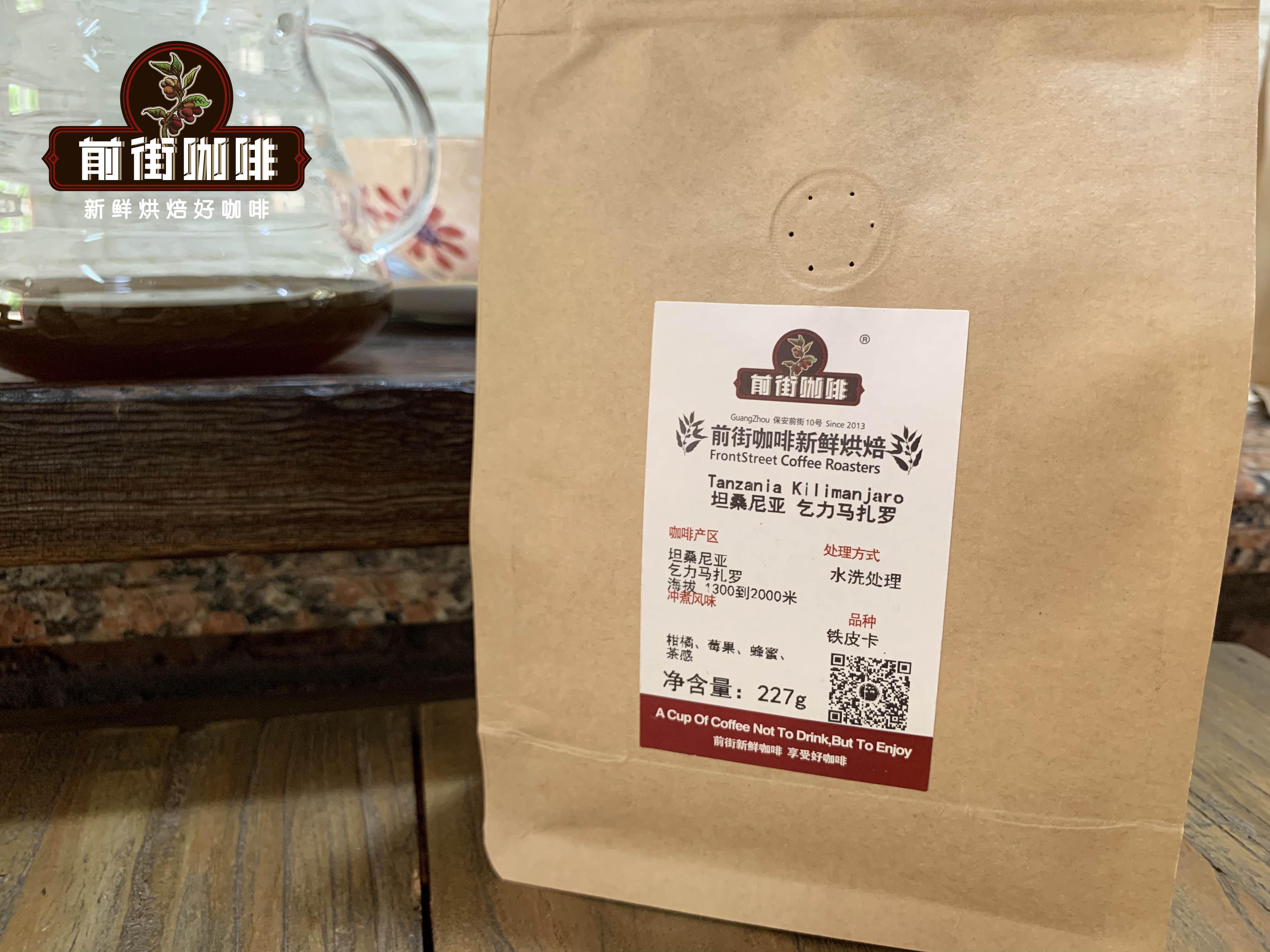
Country: Tanzania Region: Northern Highlands, Kilimanjaro volcanic area Altitude: 1300-2000m Variety: Bourbon Grade: AA Processing method: Washed Flavor: Citrus, berries, honey, tea-like
As shown above, this bean comes from the Kilimanjaro volcanic area. Coffee, as an agricultural product, has a flavor performance inseparable from the growing environment of its region—altitude, climate conditions, soil composition, and other geographical factors all directly change the final flavor of coffee beans. In addition, the coffee variety and green bean processing method also play a decisive role in flavor. Below, Front Street Coffee will analyze how the flavor of this Tanzanian coffee bean is formed from these three dimensions.
Tanzanian Coffee Bean Growing Conditions
Tanzania is geographically close to Ethiopia and borders Kenya, so some parts of the country have deep historical and cultural connections with coffee. However, commercial coffee cultivation in Tanzania started relatively late and did not truly begin until the early 20th century. At that time, German colonists forced local farmers to cultivate Arabica coffee as a cash crop, promoting this plant throughout Tanzania and establishing related industries around Mount Kilimanjaro.
Front Street Coffee (FrontStreet Coffee) also learned that although Tanzanian coffee is less famous than Kenyan beans, its annual output is actually roughly comparable to Kenya's, reaching about 50,000 tons. The earliest Arabica seeds were introduced from the French island of Réunion and were first planted in the Bayamoyo and Mogoro regions. In 1893, coffee planted on the slopes of Kilimanjaro achieved the most notable success. Later, in the 1950s, other varieties were successively introduced from neighboring Burundi and planted in western Tanzania. At present, Tanzanian coffee is mainly grown in high-altitude areas, accounting for about 75%, while local wild coffee varieties are still being continuously discovered.
So what unique features does the Kilimanjaro coffee region have?
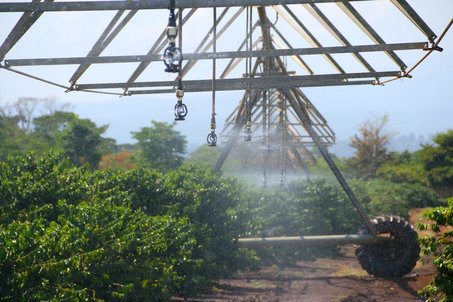
Mount Kilimanjaro is the highest peak on the African continent, and most coffee beans in this region are grown on slopes between 1,300 and 2,000 meters above sea level. The mountain has fertile volcanic soil, providing ideal conditions for the growth of high-quality Arabica coffee. At the same time, Kilimanjaro is Tanzania's largest coffee-producing region, and Kilimanjaro coffee is also an important pillar of the country's economy.
Tanzanian Coffee Bean Varieties
As mentioned earlier, this Kilimanjaro coffee bean belongs to the Bourbon variety, and Bourbon is also the most widely planted coffee variety in Tanzania. Bourbon coffee beans were introduced to Tanzania's Kilimanjaro region by Catholic missionaries in 1898, and the Kent variety was later introduced in 1920. Therefore, to this day, Tanzanian coffee is still mainly based on the two varieties Bourbon and Kent. So what is unique about the flavor of Bourbon coffee beans?
Bourbon Coffee Beans:
Bourbon is an ancient variety as famous as Typica, and both belong to the Arabica species. Bourbon coffee was first planted on Réunion, which was called Île Bourbon (le Bourbon) before 1789, and the coffee variety was named after it.
Front Street Coffee (FrontStreet Coffee) observed that although Bourbon and Typica are both old varieties, there are clear differences between them: Bourbon leaves are broader than Typica's, the plant grows more densely, and its yield is about 30% higher than Typica's. Bourbon beans are rounder and shorter, with thick berry-like acidity, prominent creaminess and aroma, bright acidity, and obvious fruity tartness, but they also share the shortcoming of weaker disease resistance.
Simply put, Bourbon is a branch under the Arabica species, usually bearing red fruit and called Red Bourbon, and there are also variants such as Yellow Bourbon and Pink Bourbon.
Tanzanian Coffee Bean Processing Method
As mentioned above, this coffee bean uses the washed processing method, and washing is also the most commonly used processing method by Tanzanian coffee farmers. The greatest advantage of the washed processing method is that it can make the coffee bean's original flavor fresher and brighter, and the mouthfeel especially clean.
Specific steps of the washed processing method:
1. Screen and remove impurities mixed in with the coffee cherries. 2. Remove the coffee pulp and outer skin. 3. Send to fermentation tanks and ferment for 18 to 36 hours to decompose and remove the pectin layer attached to the parchment. 4. Clean thoroughly and then dry.
Tanzanian Coffee Grading
As Front Street Coffee (FrontStreet Coffee) mentioned above, Tanzania's coffee grading method is consistent with Kenya's, both classified according to coffee bean size. During screening, green coffee beans are passed through screens with fixed-size holes; the larger the screen number, the larger the green bean.
AA grade: Screen Size between 17 and 18 (7.20mm screen) AB grade: Screen Size between 15 and 16 (6.8mm~6.2mm screen) PB grade: round green beans, accounting for about 10% of all coffee beans C grade: Screen Size between 12 and 14 (4.8mm~5.6mm screen)
The Tanzanian coffee bean introduced by Front Street Coffee (FrontStreet Coffee) is AA grade, the highest grade of coffee beans in the country. So how does it perform in pour-over brewing? Below, Front Street Coffee (FrontStreet Coffee) will share the pour-over parameters and flavor of this bean.
Front Street Coffee (FrontStreet Coffee) Tanzanian Kilimanjaro Coffee Bean Pour-Over Recommendation
Front Street recommends using a V60 conical dripper. The V60 has a larger opening, and together with its unique spiral curved rib design, it allows air to escape more easily, thereby improving extraction quality. Although the mouthfeel may not be thick enough, the sweetness, acidity, and bright aroma unique to Kilimanjaro brought by its high concentration are exactly one of its highlights.
Water temperature: 90-91°C Grind size: fine sugar size / No. 20 sieve bowl sifting to 80% Coffee-to-water ratio: 1:15 Dose: 15g
Brewing method: staged extraction.
First, bloom with 30g of water for 30 seconds. For the second pour, pour in a slow circular stream until 125g and stop. After the water level drops, pour slowly again, keeping the speed even and the water level not too high. Pour again until 225g and stop. Extraction time is 2 minutes 03 seconds (including bloom time).
Brewing flavor: Berry aroma, soft citrus acidity on entry, nuts in the middle, honey-like finish.
The above is what Front Street Coffee (FrontStreet Coffee) has compiled regarding the flavor characteristics and story of Tanzanian AA coffee beans. It is also hoped that this article can help coffee lovers gain a deeper understanding of Tanzanian coffee-related knowledge, so that in the future they can choose coffee beans that suit their own taste.
The above content is compiled by CoffeeHunters, a coffee news website.


