







How Does Coffee Blending Actually Work?
Coffee blending is a planned craft rather than a casual mix of beans. Blenders define the purpose first: lowering cost, holding flavor steady across harvests, or building a taste no single-origin bean can deliver. From there they set a target flavor, decide whether to blend before or after roasting, and lock the ratio through pre-confirmation and final cupping.
A worked example is the Warm Sun blend, which uses Honduras Sherry Barrel as the base note combined with Natural Yirgacheffe Red Cherry Project. The two components are roasted separately and then combined, balancing winey aroma against fruity acidity and berry notes. Blending coffee beans this way also protects brand experience and product information.
Blending coffee beans is not a simple mix, but a technical craft that combines experience, inspiration, and calculation. This article systematically outlines the complete blending process: from clarifying the purpose of blending (reducing costs, stabilizing flavor, creating tastes that a single-origin bean cannot achieve), to determining the target flavor, choosing between pre-roast or post-roast blending, and then locking in the blend ratio through pre-confirmation cupping and final confirmation. Using the Warm Sun blend as an example, it explains how to use Honduras Sherry Barrel as the base note, combine it with Natural Yirgacheffe Red Cherry Project, roast them separately and then combine, balancing winey aroma with fruity acidity and berry notes, while preserving the brand experience and product information of Front Street Coffee.
For professional coffee knowledge exchange and more coffee bean information, please follow Coffee Workshop (WeChat public account: cafe_style)
For more specialty coffee beans, please add the private WeChat of Front Street Coffee (FrontStreet Coffee), WeChat ID: qjcoffeex
The work of a blender is somewhat like a painter mixing pigments on a palette—using different coffee beans to create an ideal flavor. It is not an exaggeration to say that blending is an art: it relies on both experience and inspiration, and also requires rational calculation. A good blend is not achieved by chance, but is the result of long-term practice.
Although making an excellent blend sounds difficult, it is not impossible to try. Front Street Coffee (FrontStreet Coffee) roughly breaks the blending process into several steps to help everyone understand Front Street Coffee's (FrontStreet Coffee) blending approach.
Part One - Clarify the purpose of blending
1. Reduce costs
Some cafes mix lower-quality coffee beans into better beans to lower costs and increase sales profits.
2. Create long-term stable flavor
It must be admitted that coffee is an agricultural product. The same producing region may taste different in different harvest seasons, or even in different batches of the same year. This is precisely the shortcoming of single-origin coffee: it is hard to be sure that next year you can still drink the single-origin coffee you found delicious this year (beans whose flavor is dominated by processing method are another matter; in addition, other links between the origin and the cafe may also cause the beans you buy to differ in taste from before).
Therefore, one goal of blending is to create a product that can be supplied long-term with long-term stable flavor. When a certain bean's quality in a new harvest season fails to meet requirements or changes, similar beans can be found as substitutes to maintain stability.
3. Create flavors that a single coffee bean cannot produce
Sometimes a single-origin coffee bean is like a person, with strengths and weaknesses; blending is more like building a team, using each one's strengths to make up for each other's weaknesses and achieve a complementary effect.
For example, using a sweeter bean to blend with a more acidic bean to achieve a balance of sweetness and acidity; or adding a certain proportion of Brazilian beans to improve the overall body, etc. These are all purposes of blending.
Part Two - Determine the target flavor
After the purpose is clear, the next step is to determine the target flavor of the blend. Only when the goal is clear do you know where to start. This step also greatly tests the blender's familiarity with the available coffee beans and the flavors of various coffee-producing regions.
When Front Street Coffee (FrontStreet Coffee) first blended Warm Sun blend coffee beans, it was very clear that it wanted to make a blend with winey aroma , so it quickly included Honduras Sherry Barrel , Honduras Lychee Orchid , and Colombia San Jose , these three barrel-fermented coffee beans with obvious winey aroma, on the candidate list.
After many attempts and considering factors such as cost-effectiveness, it was finally decided to use Honduras Sherry Barrel as the main base note of the Warm Sun blend coffee beans.
Part Three - Determine the blending type
Usually, "blending first and then roasting" is called "pre-roast blending," and "roasting first and then blending" is called "post-roast blending." The two types each have advantages and disadvantages, and there is no distinction of superiority or inferiority. You can choose the method more suitable for you according to its characteristics.
Advantages of pre-roast blending: the same roast degree can make the coffee more stable and uniform; secondly, it can reduce the number of roasts, completing the roast in one go and improving efficiency; the same roast degree can also greatly reduce the difficulty of quality control (for the same roast, only one rest date needs to be tracked, whereas post-roast blending easily leads to inconsistent roast dates among several blended beans, causing flavor differences).
At the same time, the disadvantages of pre-roast blending are also obvious: it is very limited. Pre-roast blending is generally more suitable for several beans with relatively similar density. If a bean suitable for light roasting and a bean suitable for dark roasting are mixed together and roasted to the same degree, it is easy for 1+1<1的情况,既赔了夫人又折兵,得不偿失。
Advantages of post-roast blending: each bean can be roasted separately according to its most suitable roast degree, maximizing each bean's characteristics. Front Street Coffee (FrontStreet Coffee) uses post-roast blending when roasting the Warm Sun blend, separately roasting the Honduras Sherry Barrel coffee beans and the Natural Yirgacheffe Red Cherry Project, to maximize the winey aroma of the Sherry Barrel coffee beans while preserving as much as possible the fruity acidity and citrus-berry aroma of the other Natural Yirgacheffe. The adjusted Agtron value of the Natural Yirgacheffe is 58.4, and the Agtron value of the Sherry Barrel blend beans is 50.8.
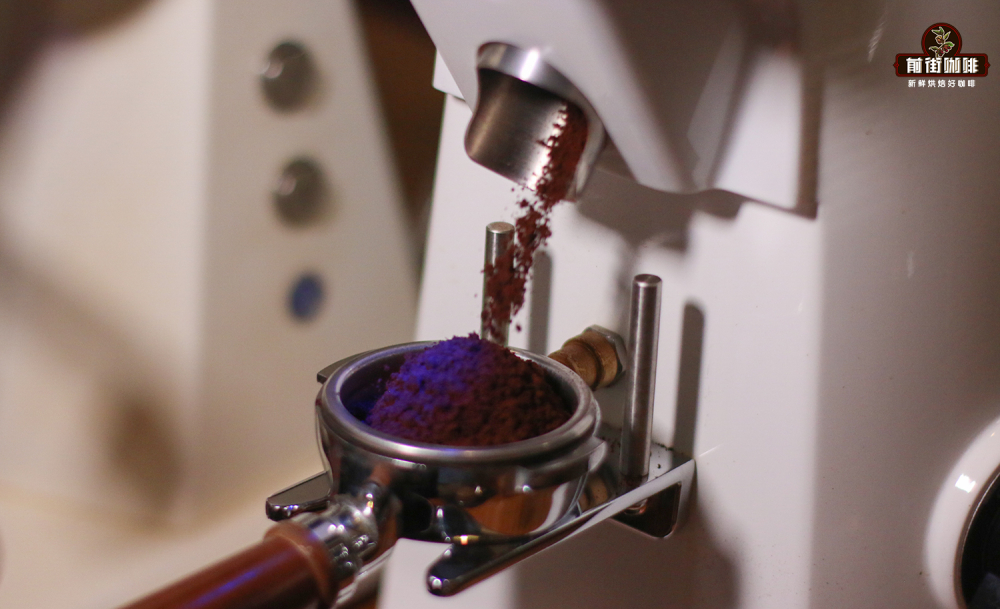
But the disadvantages of post-roast blending are also as mentioned earlier: daily quality control and management are more difficult. Inconsistent roast dates mean more rest periods need to be tracked. Imagine using 4 to 5 coffee beans for post-roast blending; this product would require attention to 4 to 5 roast dates.
Part Four - Determine the blending ratio
Finally, blending also requires determining the ratio, which is also a very critical step. Front Street Coffee (FrontStreet Coffee) suggests dividing this part into two steps: first, pre-confirmation, and second, final confirmation.
Pre-confirmation uses cupping. The candidate coffee beans are extracted separately, with two purposes:
First, confirm the flavor and quality of the candidate coffee beans for blending. Before blending, it is first necessary to confirm whether the coffee quality is qualified and whether there are differences in flavor. This step is very important for blending a specialty-grade coffee bean.
Second, pre-confirm the ratio. After extraction is completed, take liquid from the coffee and mix it in different ratios, design several schemes with different ratios, and confirm an optimal range value by slurping.
Final confirmation means taking the range value obtained from pre-confirmation, roasting according to the blending type determined in Part Three (pre-roast blending or post-roast blending), and tasting directly using the extraction method for which the product is positioned. For example, when Front Street Coffee (FrontStreet Coffee) blends Warm Sun blend coffee beans, the target is for espresso use, so it tastes them by extracting espresso, separately making espresso, Americano, and milk coffee to finally confirm the performance of the blend beans.
Similarly, if the purpose of the blend is for pour-over coffee, then use the pour-over coffee method to confirm the performance of the blend beans.
The above content is compiled by CoffeeHunters, a coffee news website.


