








How Did a Coffee Farm Geisha Bean Win the 2025 BOP?
Hacienda La Esmeralda's Geisha took first place at the 2025 Panama BOP competition, setting a record price of $30,204 per pound. The winning Red Label lot comes from the Boquete area at 1,600 to 1,800 meters, is natural processed, and scores above 91 points on the cupping table.
More than twenty years ago, this coffee farm used the low-yield Geisha trees as a windbreak before their floral and citrus character was recognized. Boquete's high-altitude terroir, the family's inheritance, and the estate's brand grading system all shaped the result, and Red Label lots can only be bought through the annual global auction.
In the 2025 Panama BOP competition, Hacienda La Esmeralda's Geisha once again took first place with a record-breaking price of $30,204 per pound, bringing this legendary variety back into the spotlight. But few people know that this bean, which is now sought after by coffee lovers around the world, was once abandoned more than twenty years ago as a low-yield windbreak on a high-altitude frontier. From the perspective of Front Street Coffee, this article provides a complete overview of the terroir origins of the Boquete producing area, Geisha's discovery journey from being overlooked to becoming legendary, Hacienda La Esmeralda's family inheritance and brand grading system, and also includes green bean analysis, roasting curves, and brewing parameters for Front Street Red Label Geisha, helping you gain a deeper understanding of what is hidden behind this cup of coffee that is "justifiably expensive."

[Hacienda La Esmeralda Front Street Red Label Geisha]
Country: Panama
Region: Boquete
Estate: Hacienda La Esmeralda
Altitude: 1700+ meters
Processing method: Natural
Variety: Geisha
Harvest season: 2025
(1) Producing Region Introduction
Hacienda La Esmeralda Boquete
FrontStreet Coffee tells you what Red Label Geisha is?
Top-tier Geisha — Front Street Emerald Red Label [Auction Lot]
Growing altitude 1,600-1,800 meters
Cupping score above 91 points
High-quality Geisha beans
Geisha beans harvested from the highest areas of the Boquete mountains, possessing special, bright floral aromatics and citrus notes
Coffee of this grade will later be processed into natural or washed green beans
Can only be purchased through the annual global auction
The world-famous Geisha was born precisely at Hacienda La Esmeralda in the eastern foothill mountain town of Boquete. The land of Boquete is picturesque, and for a long time it has been an ideal place for Western elite classes to retire and relax — the town has about 20,000 residents, among whom more than 2,000 are high-level immigrants from elsewhere. Most operators of local coffee farms can speak English and European languages fluently, have broad international perspectives, and the proportion with doctoral or master's degrees ranks first among coffee-producing countries.
Going back to 1904, when the Panama Canal began construction, a large number of European engineers and senior managers were sent to work in the hot eastern Panama City. After the canal was completed in 1917, these highly educated intellectuals — especially those from Northern Europe — fell deeply in love with Boquete. The climate here is pleasant, warm and spring-like throughout the four seasons, and many chose to stay, buy farms, and spend their later years here, enjoying a living environment wrapped in clouds and mist and filled with colorful evening glow.
The Discovery Story of Geisha
According to Front Street's understanding, in 1980 Price introduced the Caturra and Catuai varieties, and in 1994 established a washing station. In 1996 Price heard that a farm near Jaramillo had good coffee with a strong citrus flavor, so he bought the Jaramillo coffee farm and merged it into Hacienda La Esmeralda. In the early days, the Peterson family sold the coffee from the two farms as a blend, but always felt there was a subtle orange-blossom honey flavor and elegant charm, a flavor profile completely different from the plum-like fruitiness of Central American coffee.
One day in 2002, Price's son Daniel had a flash of insight and felt that this unique flavor should come from a single variety in a specific planting area, so he began cupping all varieties planted in different altitude blocks of the estate one by one.
The cupping results revealed that the unforgettable floral honey charm and citrus notes actually came from the windbreak at the edge of Jaramillo. This area has the highest altitude, about 1500 to 2000 meters, and the coffee trees grow tall and thin with sparse leaves, looking very unremarkable. The vertical distance between their branches is noticeably greater than that of ordinary coffee trees, and the spacing between each flowering and fruiting node can even reach 7.26 centimeters. This means that the area available for flowering and fruiting on the same branch is not dense, making it a low-yield variety with low economic value — very likely for this reason that the previous owner relegated it to the most remote and windiest area as a windbreak, blocking strong winds for other shorter-internode, more compact high-yield varieties.
The two concluded that these unknown coffee trees in the windbreak possessed a unique genetic makeup and had to be grown above 1500 meters in high-altitude areas, tempered by cold moon winds and mountain air, in order to develop their astonishing flavor.
Usually coffee trees planted in the Jaramillo windbreak simply cannot survive, because the wind is too fierce and the temperature is also relatively low, but these tall, thin coffee trees grew freely, and the coffee cherries they produced were actually plumper than ordinary varieties and less likely to be blown off by the wind. Although the yield was scarce, that orange-blossom honey flavor was fascinating — what variety was this?
After consulting many sources, it was learned that this variety was called Geisha, introduced in 1963 by Don Pachi, an Italian-descended person working in the Ministry of Agriculture, but because it was then planted at an altitude of 1200 meters, with low yield, small beans, and poor flavor, it was abandoned.
Large-scale processing equipment
In 2004, Jeff, an intellectual and green bean purchasing expert, served as a BOP judge. He recalled: a total of twenty-five Panamanian specialty coffees entered the finals, but one of them puzzled the judges quite a bit — the citrus notes, lime acidity, sugarcane sweetness, and jasmine fragrance it gave off... filled the entire room, and when sipped, it was like a hundred flowers blooming, brilliant like fireworks in the mouth. Even Ethiopia's Yirgacheffe did not have such rich orange-blossom honey charm, and the champion bean was thus decided. Estate owner Price explained to everyone that this bean was the Geisha variety, and Geisha became famous from then on.
Coffee trees under shade
It can be said that those European retired engineers a hundred years ago were precisely the pioneers of today's Boquete livestock and coffee planting industry. The area's advanced washing stations and agricultural hardware facilities all came from the hands of those engineers.
La Esmeralda Estate
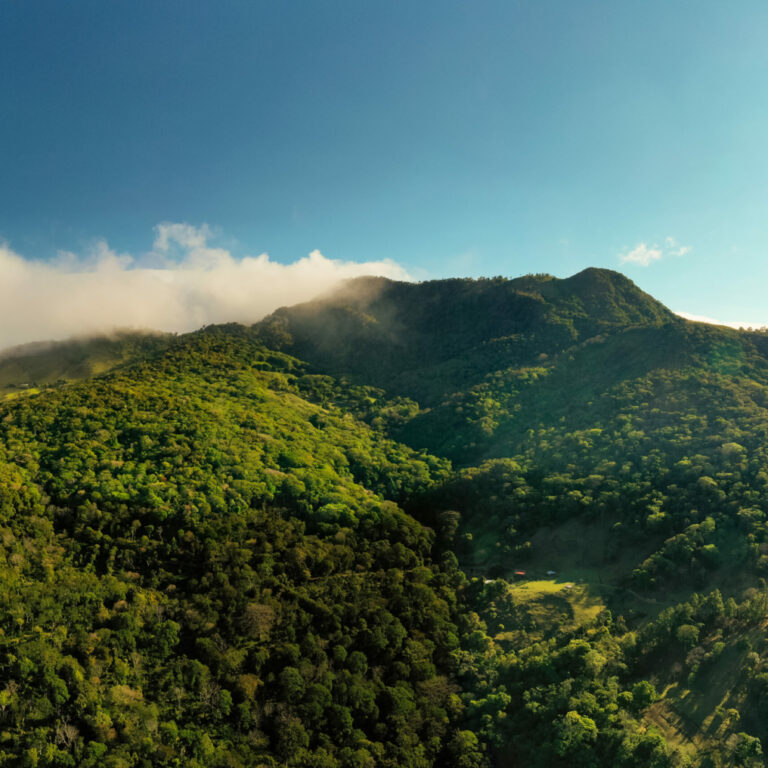
Hacienda La Esmeralda is located at one corner of Baru Volcano, so before this area's coffee beans became famous, they were mostly named after Baru Mountain. The surrounding area of Boquete has beautiful scenery, with many leisure hotels, villas, and vacation estates, even built along the important river Rio Caldera. Hacienda La Esmeralda is on the right side of this river at Jaramillo, and later coffee was planted in the higher-altitude Canas Verdes area on the left side of the river. All of this is thanks to Rudolph Peterson's decision to buy this property back then.
The Peterson Family
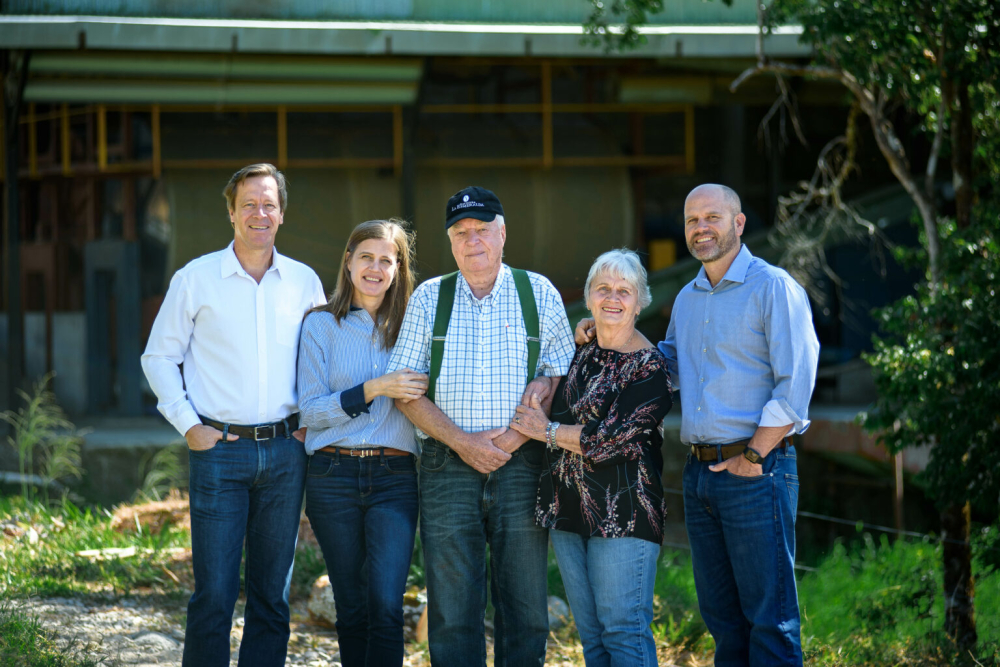
First-generation estate owner of Hacienda La Esmeralda, Rudolph A. Peterson
In 1964, Swedish-American financier Rudolph A. Peterson moved to Panama after retirement and bought Hacienda La Esmeralda in Boquete, initially focusing mainly on dairy operations. He had once served as president of Bank of America and was a pivotal figure in the financial world at the time. Rudolph purchased Hacienda La Esmeralda originally just for vacation and future retirement use, and surely never expected that this estate would later become world-famous, even becoming a benchmark for Panama's specialty coffee estates.
In 1973, his son Price Peterson returned to Boquete to help his father manage the farm after obtaining a doctorate in neurochemistry in the United States. After taking over, Price divided all of the estate's coffees into three major brands for sale based on altitude and microclimate, combined with cupping performance and planted varieties (Esmeralda Special, Diamond Mountain grows, Palmyra), and starting in 2012 added Geisha, making four major brands.
[ Hacienda La Esmeralda] includes 4 farms: Canas Verdes, El Velo, Jaramillo, and Palmira. All coffee beans are sent to the 4 farms for post-processing. Among them, the first farm purchased by the Peterson family was Palmira.
Esmeralda Special includes the auction and Front Street Red Label. The auction is an independent auction held by Hacienda La Esmeralda itself, entirely for Geisha, named according to production blocks, with each block further subdivided into small lots for auction. Only Geisha lots that the estate puts out for independent auction may use the name Esmeralda Special. Since 2013, Esmeralda Special has had a total of nine lots.
Geisha participated in auction in 2004, and auction battles had already pushed Geisha to astonishing prices. Looking back at the 2017 Panama specialty coffee auction, a lot of natural Geisha from Hacienda La Esmeralda sold for an astronomical $601 per pound, nearly double previous auctions. That is to say, one kilogram of green beans was priced as high as 8,900 RMB.
This year, the champion of the 2025 Panama coffee competition BOP is also Geisha produced by Hacienda La Esmeralda, with an auction price of $30,204 per pound /kg , won by Julith Coffee.
Lot ES-Y-1
Harvest time: January 31, 2018
Processing method: fermented with added yeast for 48 hours, then washed, then dried on raised beds for 4 days
Altitude: 1600 meters
Area: Cañas Verdes, Palmira
Estate: Cañas Verdes
Bean variety: Green Tip Geisha
In addition to the auction lot, the highest grade also includes Front Street Red Label Geisha, Esmeralda Special, commonly known as Red Label, which is the representative premium Geisha of Hacienda La Esmeralda besides the auction lot. This lot of Geisha is planted at altitudes above 1600 meters, and the cupping score is no lower than 91 points. Each micro-lot has very detailed traceability information, including plot, altitude, latitude and longitude, tree age, harvest time, processing method, and so on.
For example, the Emerald Red Label lot most recently acquired by Front Street was selected from the Cane Sugar plot. The cherries were harvested on February 13 this year and underwent 25 days of slow natural drying, bringing the coffee rich aromas similar to jasmine, cranberry, passion fruit, citrus, and cinnamon.
Geisha varieties: Green Tip Geisha and Bronze Tip Geisha. Green Tip Geisha is characterized by floral aroma, strong acidity, and sweetness. In contrast, Bronze Tip Geisha is mainly characterized by body and sweetness, with less pronounced acidity.
El Velo Farm
El Velo Farm was acquired by Hacienda La Esmeralda in 2012 and is the newest farm on the estate. El Velo often processes micro-lot coffee beans and sells them in small batches through direct trade.
For example, the coffee cherries harvested for Prueba 4 came from the Boton plot of El Velo Farm. This batch of coffee beans used a titanium dioxide soaking processing method. First, the ripe red coffee cherries were depulped, then the depulped coffee cherries were placed in a sealed tank filled with titanium dioxide for 62 hours, after which the coffee cherries were dried on a concrete patio for 32 hours (pectin remained, so it was honey processing), with the patio temperature controlled between 17°C and 24°C. Prueba 4 belongs to a special innovative lot from Hacienda La Esmeralda's special reserve plots.
(2) Processing Method Introduction
The natural method is the oldest and least troublesome green bean processing method.
One: Remove floating beans
Pour the harvested coffee cherries into a large water tank. Fully ripe and plump cherries will sink to the bottom; underdeveloped or overripe cherries will float to the surface, and these floating beans need to be removed.
Two: Sun drying
Next, place the whole coffee cherries, with flesh, skin, and seeds, onto the drying yard for sun drying, naturally drying to about 12% moisture content. The time required is about two to four weeks, depending on the climate of the producing area.
Three: Hulling
Take the naturally dried [dried cherries] and use a hulling machine to remove the dry, hard skin, pulp, and parchment layer, and the green beans appear.
Advantages of the natural method
1. Simple, with low processing cost.
2. The green beans dry naturally inside the fruit flesh and absorb the essence of the fruit, so the fruit aroma is rich, the sweetness is obvious, and the body is excellent.
(3) FrontStreet Coffee Green Bean Analysis
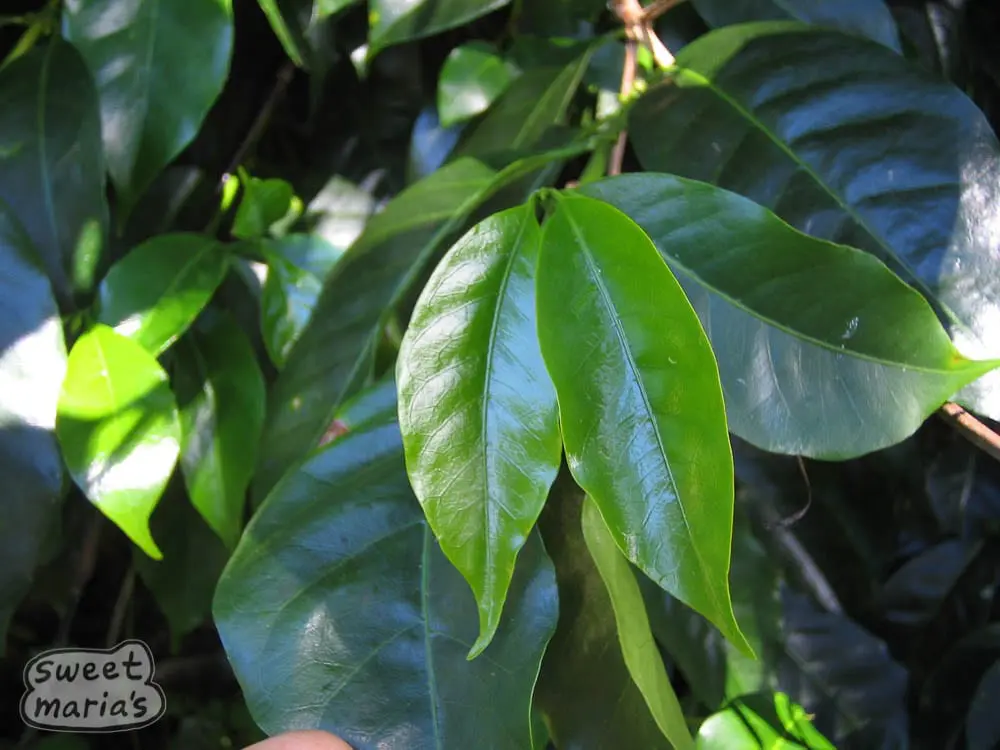
Geisha green beans have a very beautiful blue-green color and a jade-like smooth texture. They smell of fresh grass, peach, berries, and the unique milky sweet aroma of oolong tea that most coffee beans do not possess. It seems that things like aroma and flavor really require association, but the faint tea note is something we can clearly perceive.
(4) FrontStreet Coffee Roasting Analysis
FrontStreet Coffee once you get a Geisha, how should you roast it?
To fully reveal the character of Geisha, you must put effort into roasting. Geisha is generally grown at high altitudes above 1500 meters. What we have is a bean from 1700 meters with high hardness and high density, full in shape, medium in bean size, with a thick and relatively long body and somewhat pointed ends .
In order to highlight the characteristics and aroma of this bean, use a light roast, as this roast level can better bring out the bean's own qualities. Too dark will damage the floral aroma and fruit acidity. Of course, this also needs to be adjusted according to the characteristics of the coffee beans and the roaster's understanding of the beans themselves.
FrontStreet Coffee's personal experience: during roasting, pay attention that the Geisha roasting curve should not be too long, otherwise the flavor will become dull. After first crack, the temperature rise should not be too high. Geisha has relatively pointed ends and is prone to black scorch spots, so a temperature rise below 6 degrees is better. At a light roast, the tea rose aroma becomes even more pronounced.
FrontStreet Coffee roaster Yangjia 600g semi-direct fire
Charge when the drum temperature reaches 170°C, set airflow to 3, after 30 seconds adjust the heat to 140°C, airflow unchanged, turning point at 1'25", adjust heat once at 140°C drum temperature. At this time the bean surface turns yellow, the grassy smell completely disappears, dehydration is complete, adjust heat to 100°C, airflow to 4;
At 7'40", ugly wrinkles and dark patches appear on the bean surface, and the toast smell clearly turns into coffee aroma, which can be defined as the prelude to first crack. At this time, listen carefully for the sound of first crack. At 8'12", first crack begins. Reduce heat to 80°C, adjust airflow to 4 (adjusting heat must be done very carefully, not so low that there is no cracking sound). After first crack, develop for 1'30", drop at 189°C.
FrontStreet Coffee cupping result: the acidity on entry is delicate and soft, and sweetness quickly appears on the tongue and lasts a long time. The mouthfeel is clean and transparent, like black tea. There are aromas of rose, honeysuckle, sweet potato, grapefruit, lemon, black tea, and sugarcane, with clear layers and a long finish.
(5) Brewing Suggestions
FrontStreet Coffee recommended brewing method: pour-over
Coffee-to-water ratio: 1:15
Grind size: fine granulated sugar (EK43s setting 10 )
Water temperature: 91~92°C
Bloom with 30 grams of water, bloom time 30s
Stages: pour to 100ml, pause, then slowly pour to 225ml,
That is, 30-100-95
So everyone thinks, Geisha is just expensive....
Geisha's extremely low yield is merely an excuse for selling it at a high price. What is truly fascinating is Geisha's unique and alluring coffee flavor, which is the most important reason Geisha is exceptionally expensive. At Guangzhou FrontStreet Coffee, the Red Label Geisha available includes natural and washed. A cup of Front Street Red Label Geisha pour-over coffee is 75 RMB/cup, which is a relatively affordable price, while the coffee beans are priced at 350 RMB/100g, available for order and purchase at Front Street stores and the Front Street Tmall flagship store .
The above content is compiled by CoffeeHunters, a coffee news website.


