







What Sets the Arabica Coffee Bean Apart From Robusta?
Arabica coffee accounts for roughly 70 to 80 percent of global coffee production and is grown mostly on volcanic slopes and plateaus between 500 and 1,500 meters. Its oval, slender beans carry balanced acidity and bitterness with a mild aroma. Caffeine content sits around 0.9 to 1.2 percent, lower than Robusta, while fat content is about 60 percent higher.
Arabica is not one variety but a family that includes Typica, Bourbon, Maragogype, Pacamara, and Geisha, each differing in bean shape and flavor. Its sugar content is roughly twice that of Robusta and chlorogenic acid lower at about 5.5 to 8 percent, so it tastes sweeter and smoother but is more vulnerable to pests, disease, and climate shifts, with lower yields and slower maturation.
Arabica coffee accounts for 70-80% of global coffee production and is recognized as the coffee species with superior flavor expression. But Arabica is not a single variety; it encompasses many branches such as Typica, Bourbon, Geisha, and others, each with clear differences in bean shape, flavor, and growing characteristics. From the perspective of Front Street Coffee, this article systematically sorts out Arabica coffee's origin and distribution, caffeine and sugar content characteristics, and its core differences from Robusta in price, flavor, disease resistance, and other aspects, and introduces one by one the appearance characteristics and flavor trends of subdivided varieties such as Typica, Maragogype, Pacamara, the Bourbon line, and Geisha, helping coffee enthusiasts build a complete framework of variety knowledge.
Coffee advertisements often boast that they use 100% Arabica beans. Indeed, if judged only from a price perspective, Arabica beans are of a higher grade, with market prices usually about twice those of Robusta. So how do the various branch varieties under Arabica each perform? Today, Front Street Coffee (FrontStreet Coffee) will introduce you to Arabica coffee.
Arabica Coffee
Arabica refers to the Arabica coffee species. About 70-80% of the world's coffee production comes from it, and its growing areas are mostly concentrated on volcanic slopes or plateau areas above 500 to 1,500 meters in elevation. The bean shape is oval, relatively slender and flat, with a more balanced acidity and bitterness and a mild aroma. At present, the largest producer of Arabica is Brazil, while Colombia grows only Arabica.
Arabica's caffeine content is relatively low, at about 0.9% to 1.2%; its fat content is 60% higher than Robusta's; and its sugar content is twice that of Robusta. Because of this, Arabica tastes sweeter, smoother, and also has a fruit-like acidity. In addition, Arabica's chlorogenic acid content is lower, at about 5.5% to 8%, while chlorogenic acid is both an antioxidant and an important component for resisting pests, so Arabica is more susceptible to pests and diseases and is also more sensitive to climate conditions. It usually needs to be planted at higher elevations, has lower fruit yield, and a longer maturation cycle.
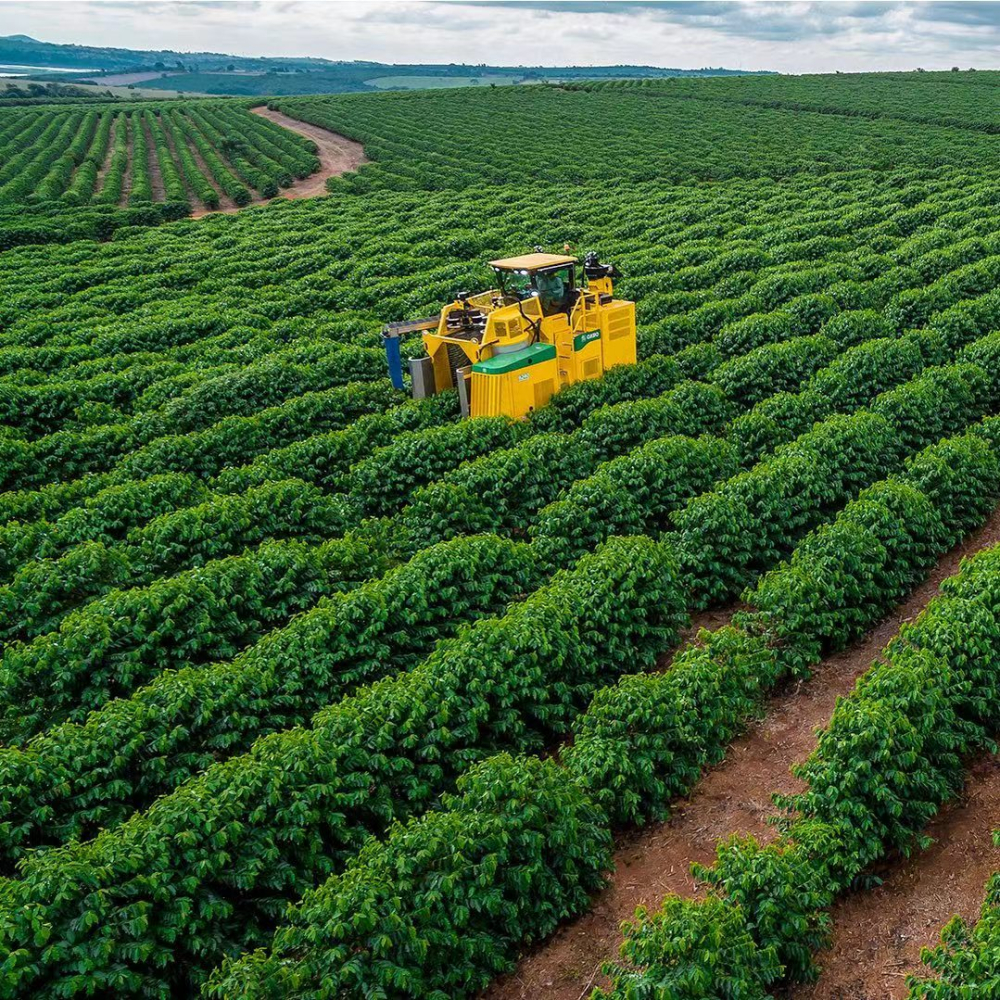
Since Arabica beans account for 70% of the world's coffee production and are recognized as coffee beans with better flavor, what exactly do they look like?
A quick search online will show the comparative characteristics of Arabica beans, Robusta, and Liberica beans. Among them, Arabica is usually described as follows: oval bean shape, relatively slender and flat, with the center line in an "S" shape.
Generally, one Arabica cherry contains two coffee beans, so one side of an Arabica bean is flat. Of course, there are exceptions—some cherries grow only one bean, and this kind of bean is round and plump in appearance, instead somewhat resembling a Robusta bean. This type of bean is called a peaberry, and it is usually smaller than a flat bean. Normal flat beans are about 17-18 screen size, while peaberries are mostly around 14-15.
Do not think Front Street has finished explaining everything here; in fact, it has only just begun. You should know that the Arabica species is a large variety category, and under it there are still many subdivided varieties, such as Typica, Bourbon, Geisha, and others, all of which have subtle differences in bean appearance.
Typica Coffee
Typica is the oldest coffee variety. Its body characteristics are often used as the typical model of the Arabica species, and in Central America it is called Arabigo or criollo. It is closest to the original species, with an oval bean shape, slender and flat, and the center line in an "S" shape, like a stretched egg. Front Street notes that the illustrations used in many textbooks are precisely Typica. In flavor, it has clean citric acidity and a sweet aftertaste, but it has weak resistance to leaf rust, is difficult to manage, has low plant yield, and, combined with a long harvest cycle (only harvested once every two years), its overall production is relatively low.
Of course, sometimes special processing methods also change the appearance of coffee beans. For example, the wet-hulling method commonly used in Indonesia has a key step in which, after washing, the parchment is first removed before drying. When the parchment is hulled by machine, the beans are easily compressed and cracked, forming a goat-hoof-like shape.
Maragogype/Pacamara Coffee
Maragogype is a natural mutation of Typica, named for its enormous size. The bean body is long and rectangular, flat in shape, and its large size is its most notable characteristic. Ordinary Typica is about 17-18 screen size, while Maragogype can usually reach 20 or above, and it can be understood as an enlarged version of Typica.
Pacamara is the offspring of a artificial cross between Pacas and Maragogype. It inherits both Pacas's high yield capacity and adaptability, and also retains Maragogype's size and excellent acidity. Normal Pacamara can generally maintain about 70% of Maragogype's size.
Bourbon Line Coffee
Bourbon is a natural mutation of Typica. The biggest change in its coffee beans is from a long body to a round body, that is, the commonly called round-bodied Bourbon, with bean size close to Typica's.
Some coffee experts think Bourbon is merely a natural mutation of Typica and has nothing special. But this is not the case. Bourbon has its own characteristics, and its mouthfeel is equally high quality, with acidity similar to red wine and a sweet aftertaste. Typica and Bourbon can be distinguished by leaves and bean appearance: Bourbon's leaves are broader and larger, and the coffee cherries it bears are smaller and denser, so its bean appearance is smaller and rounder than Typica's.
Its direct single-gene mutant varieties, such as Yellow Bourbon, Pink Bourbon, Caturra, Pacas, and Villa Sarchi, all inherit Bourbon's bean appearance characteristics very well (some Caturra, Pacas, and Villa Sarchi, after multiple generations of artificial selection, have bean shapes that are slightly more elongated). In terms of plant characteristics, their biggest difference from Bourbon is that they are smaller in size and can grow normally under direct sunlight without needing shade trees, so they are also called sun-grown coffee.
Bourbon also has a mutation with a shorter plant and a bean body different from traditional Bourbon, shaped pointed and long, with caffeine content only half that of ordinary Arabica. It is called pointed Bourbon or natural low-caffeine coffee.
Geisha Coffee
The Geisha variety was discovered in 1931 in the Geisha forest of Ethiopia. After that, Geisha was sent to the Kenya Coffee Research Institute, introduced to Uganda and Tanzania in 1936, to Costa Rica in 1953, and to Panama in 1970. At first, Geisha did not attract much attention, until Panama Geisha Hacienda La Esmeralda separated it from other varieties in 2003 and won the BOP competition championship in 2004, and only then did the Geisha variety formally enter the public eye.
The appearance characteristics of Geisha coffee must be discussed in two parts: first, American Geisha, represented by Panama's Hacienda La Esmeralda; second, African Geisha, represented by Ethiopia's Gesha Village.
Hacienda La Esmeralda is famous for Geisha, and the most prominent appearance characteristic of its Geisha coffee is that it is slender, pointed at both ends, and plump and full in the middle. Some high-quality Geisha can even reach a size like Pacamara (18-19 screen size), with very high recognizability. At present, Front Street believes that if you are tasting the Geisha variety for the first time, it is recommended to start with its debut stage—Panama's Boquete producing region, such as the Front Street Panama Boquete Washed Geisha launched by Front Street. The reason is simple: since this place gave birth to the famous Geisha and produced many well-known excellent estates, its terroir and climate must be excellent, and the Geisha produced there is naturally the most representative.
As for the Geisha varieties of Gesha Village, such as Gori Geisha (found in the Gori Geisha forest) and Geisha 1931 (selected from diverse forest populations similar to Panama Geisha), their bean bodies are relatively long in appearance, and compared with Panama Geisha they are smaller and finer, with less obvious characteristics.
Geisha coffee's flavor is also quite outstanding. Taking the Front Street Panama Hacienda La Esmeralda Blue Label that Front Street previously acquired as an example, this bean has a very typical washed Geisha recognizability. The dry aroma smells of faint floral notes, while the wet aroma after brewing presents obvious fruit and floral notes. On the palate there is clear citrus acidity, moderate tea-like body, and overall it is like a cup of jasmine tea.
The above content is compiled by CoffeeHunters, a coffee news website.


