








Why does front street coffee favor espresso blends over single-origin beans?
Espresso usually uses blends rather than single-origin beans because one origin rarely delivers acidity, body, and sweetness together. Blending lets roasters combine a bright Latin American bean with a heavier Indonesian one, then roast slightly darker so caramel sweetness appears. This also keeps flavor consistent across chain locations.
Front Street Coffee outlines four espresso blends: Specialty, Commercial, Black Cocoa, and Sunflower Warm Sun. Extraction depends on six variables: water pressure, water temperature, grind size, dose, extraction time, and yield. Adjust one at a time, since changing grind alone can shift the shot by several seconds.
Walk into any independent coffee shop and you'll find that the choice of espresso beans often follows its own logic, yet chain brands manage to keep their flavors consistent—and that's precisely where blending and roasting come into play. Why doesn't espresso use single-origin beans? What problem does blending actually solve? What role does dark roasting play? Drawing on the hands-on experience of Front Street Coffee, this article outlines the definition and advantages of espresso blends, introduces four Front Street espresso blend recipes—Specialty Blend, Commercial Blend, Black Cocoa Blend, and Sunflower Warm Sun—and breaks down the six key variables of water pressure, water temperature, grind size, dose, extraction time, and yield, helping coffee lovers understand the logic behind a balanced shot of espresso.
Independent coffee shops tend to have their own approaches and their own bean preferences. But large chain brands like Starbucks use essentially the same recipe for espresso, so no matter which location you walk into, the flavor you taste stays consistent.
Starbucks has a signature blend that combines Latin American beans with Indonesian beans, and it reportedly took months to dial in. The Latin American beans bring gentle acidity, while the Indonesian beans contribute body and a touch of spice; after a slightly darker roast, caramel-like sweetness emerges. This is exactly the dividing line between blended beans and single-origin beans—espresso blending is all about using each bean's strengths to craft the flavor you want.
What Are Espresso Blend Beans?
Before learning about espresso blends with Front Street, we first need to clarify the concept of single-origin coffee beans. Single-origin coffee refers to beans from a single producing region—Yirgacheffe, Colombia, and the like all fall into this category. So why not use single-origin beans to make espresso?
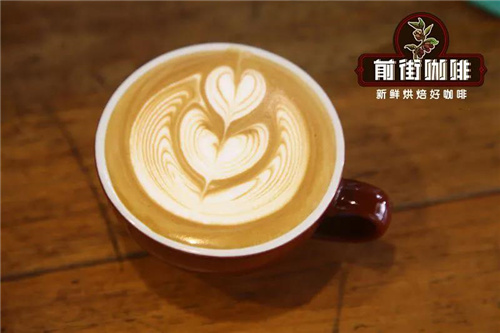
Take Front Street Coffee as an example: its single-origin beans cover more than 50 producing regions. With so many options on hand, why go to the trouble of blending and separately roasting an espresso bean? The reason is that single-origin beans are usually roasted lighter and are mostly used for pour-over; if you use pour-over beans directly for espresso, the flavors get magnified many times over. If a bean is sharply acidic with weak bitterness, most people would probably find it hard to accept as espresso. That's when you need a bean with low acidity and relatively prominent bitterness to pair with it, bringing acid and bitter back into balance. If both beans lack sweetness, then add another sweeter bean into the mix.
Blending means combining two or more different varieties of coffee, or coffees of the same variety roasted to different degrees, with the goal of creating an entirely new flavor that meets expectations.
Front Street believes this is where the value of blending lies: a good blend, beyond balancing acidity, sweetness, and bitterness, also delivers better body while reducing or avoiding defect flavors. Espresso blends generally don't exceed 5 beans, because the more beans there are, the more variables you have to consider—each bean's origin flavors, processing method, and so on all place enormous demands on the barista's expertise. The blender, relying on a unique understanding of flavor, lets different beans complement each other and ultimately harmonizes them into an ideal blend. When blending espresso beans, Front Street Coffee usually doesn't use more than 3 beans.
What Coffee Beans Are Used for Espresso?
The ultimate goal of blending is to extract a delicious shot of espresso. So what beans should you choose for espresso? Front Street shares its own experience.
Front Street Coffee currently offers four espresso blends, each using a different combination of beans to achieve the flavor direction Front Street wants.
First, Front Street's Specialty Blend pairs Colombian beans with Brazilian beans in a 3:7 ratio. Colombia's distinctive nutty and chocolate notes meet Brazil's rich peanut and creamy flavors; the overall expression is very smooth and balanced, with abundant crema, a silky mouthfeel, and a clean aroma carrying the mild bitterness characteristic of American beans.
Another is the Commercial Blend espresso bean, with a recipe of Colombian beans : Brazilian beans : Robusta beans in a 3:6:1 ratio. It presents caramel sweetness with notes of nuts, cocoa, and dark chocolate, balanced acidity and sweetness, a touch of bittersweetness, and a long finish. Baristas often blend multiple beans to create the flavor they want, and they sometimes add Robusta too. There's no need to look down on a recipe just because it contains Robusta—this kind of combination can sometimes produce unexpectedly good results.
The third is an espresso moka pot bean recommended by many baristas—Front Street's Black Cocoa Blend, with a recipe of Yunnan beans : Brazilian beans in a 3:7 ratio. The resulting espresso has soft fruit acidity, caramel sweetness, and notes of nuts and dark chocolate, with a smooth, syrupy mouthfeel, though the overall flavor is on the lighter side.
The last is the Sunflower Warm Sun espresso bean, a blend of Honduran beans and Yirgacheffe Red Cherry beans, which is also the one Front Street Coffee is currently using. The resulting espresso has clear fruit acidity, a faint berry aroma lingering around it, full-bodied winey and chocolate flavors, and a comfortable, long-lasting sweet aftertaste.
Once you've chosen the right espresso blend, you can start extracting. Although espresso relies on a coffee machine and the steps aren't as laborious as pour-over, Front Street Coffee believes that pulling a shot is likewise a meticulous task with quite a few variables to watch.
What Factors Affect Espresso Extraction?
(1) Water Pressure Modern espresso machines control water flow and pressure via a pump. The ideal water pressure for espresso is generally around 9 BAR, which is also the industry-recognized optimal pressure.
(2) Water Temperature Water temperature depends on the specific needs of the beans. Based on most baristas' experience, 90 to 92 degrees Celsius is the commonly used range, and each barista can flexibly fine-tune it according to their own judgment.
(3) Espresso Bean Grind Size
Espresso uses an extremely fine grind. The finer the grind, the slower the water passes through the coffee bed; the coarser the grind, the faster the flow. Adjusting the grind size allows you to change the extraction time while keeping the yield consistent. Imagine a scenario: 20g of coffee dosed to yield 40g of espresso in 25 seconds—everything looks perfect, but one sip reveals a thin body and sharp acidity. Clearly, this shot is under-extracted and too weak. Grinding the beans finer at this point can solve both the under-extraction and the low concentration, while also softening the sharp acidity and boosting body.
(4) Dose Front Street Coffee uses 12–14 grams for a single espresso and 20–22 grams for a double.
(5) Extraction Time The golden rule gives an extraction time of 25–28 seconds, but time is actually a combined reflection of tamping, dose, and grind size, and baristas need to adjust it based on their own understanding.
(6) Yield Front Street Coffee extracts 20–21g of liquid for a single and 40g for a double. Combined with the dose, this is the key to the espresso brew ratio.
Set the above parameters according to your own needs, and you can make a delicious cup of espresso. If there's anything still unclear, you're also welcome to follow the Front Street Coffee official account to exchange and learn together.
The above content is compiled by CoffeeHunters, a coffee news website.


