







Which Jamaican Coffee Producing Regions Count as Blue Mountain?
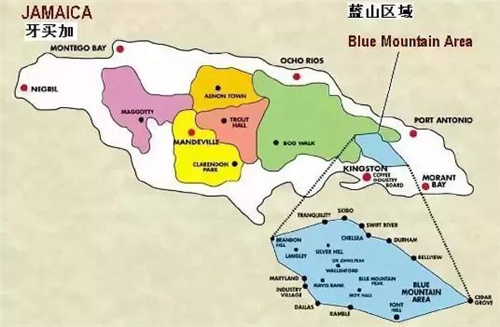
Only coffee grown in Jamaica's Blue Mountain range, in the eastern part of the island, can be sold as true Jamaican Blue Mountain coffee. Four production regions fall inside the designated area, and the CIB grades the crop by bean size, with Blue Mountain No. 1 at the top. The Typica variety grown there gives a balanced, sweet, mellow cup.
The name comes from the range itself: ringed by the Caribbean Sea, the peaks reflect a blue glow when sunlight strikes the water below. Jamaican High Mountain coffee and Jamaican coffee carry lower grade designations, so not every Blue Mountain labeled bag is genuine. Washed Blue Mountain, such as Clifton Farm Blue Mountain No. 1, is usually brewed as a single-origin coffee.
Blue Mountain coffee is renowned worldwide for its balanced, sweet, and mellow taste, and Front Street's washed Blue Mountain is a favorite among many coffee lovers. However, the market is flooded with coffees bearing the Blue Mountain name, making it hard to tell authentic from fake. What exactly qualifies as true Jamaican Blue Mountain? This article will guide you through the geography of the Blue Mountain range, the strict grading standards of the CIB, the distribution of the four major production regions, and the unique evolution of the Typica variety in the Blue Mountains. We will also take an in-depth look at the Clifton Farm Blue Mountain No. 1 introduced by Front Street, covering everything from green bean standards to brewing parameters, fully presenting the flavor charm of this classic coffee.
Blue Mountain coffee has always been remembered for its fragrant and mellow taste, because its flavor is not like coffee but like a cup of milk tea. Why is that? Coffee generally gives the impression of being either sour or bitter, but Blue Mountain coffee possesses all the characteristics of a good coffee—not only is it rich and mellow, but because its sweetness, acidity, and bitterness are perfectly balanced, it has no bitterness at all, only a moderate and perfect acidity. At Front Street, washed Blue Mountain coffee has always been the most popular. Blue Mountain coffee is usually enjoyed as a single-origin brew, but due to its extremely limited production, the price is exceedingly high. High-quality fresh Blue Mountain coffee has a particularly long-lasting flavor, no wonder drinkers say Blue Mountain coffee has such an endless aftertaste.
Although it is now easier to buy authentic Blue Mountain coffee than before, there are still many products on the market labeled as Blue Mountain coffee that are not genuine. Blue Mountain coffee comes in many types: Jamaican Blue Mountain coffee, Jamaican High Mountain coffee, and Jamaican coffee. Only coffee grown in Jamaica's Blue Mountain range is true Jamaican Blue Mountain coffee.
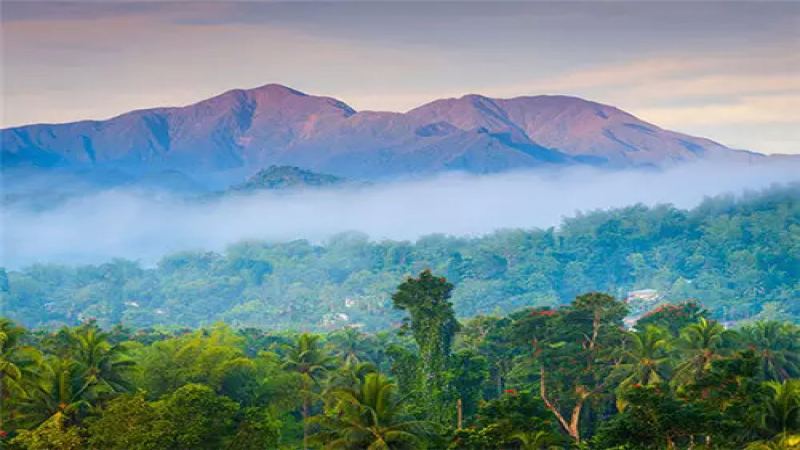
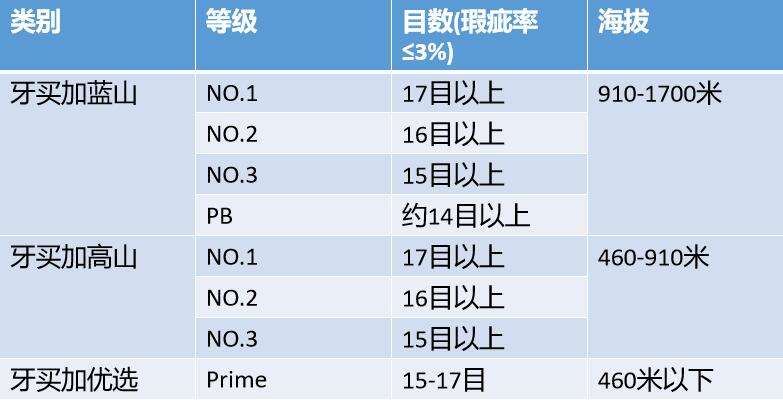
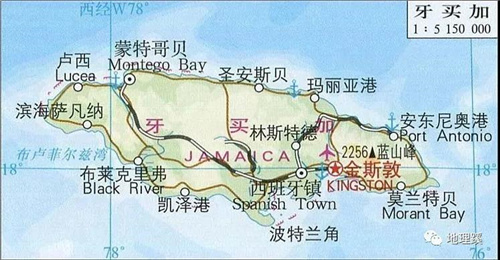
Blue Mountain coffee comes from Jamaica's Blue Mountain range, located in the eastern part of the island of Jamaica. Because the mountains are surrounded by the Caribbean Sea, on clear days when the sun shines directly on the azure sea, the peaks reflect a brilliant blue glow from the water—hence the name. But not every coffee tree grown in the Blue Mountain region produces superior Blue Mountain coffee beans. The Jamaica Coffee Industry Board (CIB) has established strict production standards: only Arabica coffee grown at altitudes between 910 and 1700 meters can be called Jamaica Blue Mountain Coffee, while coffee from lower elevations is classified as Jamaica High Mountain coffee or Jamaica Prime coffee.
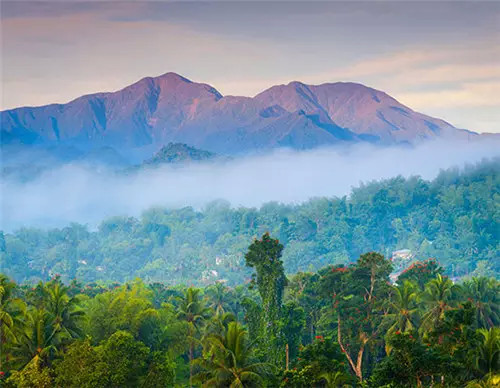
The air here is fresh and pollution-free, the climate is humid with temperatures around 27°C, and it is often shrouded in mist and clouds, which provides shade for the coffee trees. All the coffee trees grow on rugged mountain slopes, making the harvesting process extremely difficult—only skilled local female workers can handle it. It is crucial to pick coffee cherries at just the right stage of ripeness during harvesting; underripe or overripe cherries will affect the coffee's quality. Combined with the fertile volcanic soil, this creates exceptionally high-quality Blue Mountain coffee beans.
Blue Mountain coffee on the market is divided into several types:
It is precisely because Blue Mountain coffee has low production and a high price that there are many coffees on the market labeled as Blue Mountain coffee. Based on the altitude at which the coffee is grown, Jamaica classifies coffee from the Blue Mountain range into Jamaican Blue Mountain coffee, Jamaican High Mountain coffee, and Jamaican coffee. Only Arabica Typica coffee from production areas at altitudes of 910–1700 meters—including St. Andrew, St. Mary, St. Thomas, and Portland—can be called Jamaica Blue Mountain. Coffee grown between 460 and 910 meters is called Jamaican High Mountain coffee, and below 460 meters it is Jamaican Prime coffee. Among these, Jamaican Blue Mountain is further divided into four grades, from highest to lowest quality: NO.1, NO.2, NO.3, and PB. PB (peaberry) refers to round beans. The basic standards for the Blue Mountain No. 1 green beans that Front Street sources are: beans of 17 mesh or larger, defect rate below 2%, moisture content around 13%, etc. They appear plump, uniform in size, and blue-green in color. In terms of flavor, they combine a pleasant acidity, sweetness, bitterness, aroma, and full body.
Introduction to Blue Mountain Coffee Production Regions
Jamaican Blue Mountain coffee has four major production regions: St. Mary, St. Thomas, St. Andrew, and Portland. The total area of the four regions is about 6,000 hectares, accounting for one-third of the entire Blue Mountain growing area, with another 1,200 hectares used for growing Jamaican High Mountain coffee and Jamaican Prime coffee. In recent years, less than 15% of the coffee beans produced in Jamaica can carry the Blue Mountain coffee label.
Today, the St. Andrew region remains one of the three major Blue Mountain coffee production regions, alongside Portland and St. Thomas. Some small estates also grow Blue Mountain coffee, such as Wallenford Estate, Silver Hill Estate, and J. Martinez's Atlanta Estate. Even the largest estate owners in the region are considered small-scale growers by international standards, and many of them are small landholders whose families have worked this land for two centuries.
Currently, the markers that can represent authentic Blue Mountain coffee origins include six types: M.B.C.E (Mavis Bank Central Factory), M.H.C.C.T. (Blue Mountain Coffee Cooperative Factory), P.X.X.S.H. (Portland Blue Mountain Coffee Cooperative Factory), Coffee Industry Association (Wallenford), Coffee Industry Association (St. John's Peak), and J.A.S (Blue Ridge), among others. Some estate-level markings are also noted on the wooden barrels.
The Blue Mountain No. 1 coffee introduced by Front Street Coffee comes from Clifton Farm. Clifton Farm is the largest estate in the region, though by international standards it is still considered small-scale, with many estate owners being small landholders whose families have worked this land for two centuries. Through comparison, Front Street Coffee believes that Clifton Farm's Blue Mountain No. 1 performs exceptionally well and can serve as one of the outstanding representatives of Blue Mountain coffee.
Clifton Estate
Clifton Estate is the oldest estate in Jamaica, having begun cultivating and producing coffee in the mid-18th century. By 1900, it had developed into the largest estate in Jamaica. In 1978, the Sharp family took over the management of Clifton Estate, improving the coffee-growing environment within the estate, introducing advanced equipment, and establishing BMCP, currently Jamaica's largest coffee processing plant.
Clifton Estate is one of the estates certified by the Rainforest Alliance. Throughout its entire coffee production process, it adheres to the environmental philosophy of sustainable development, minimizing all forms of pollution, and the water used in the processing plant is recycled. When Front Street receives Blue Mountain green beans, the wooden barrels are marked with the green Rainforest Water Frog logo. This means that among all green coffee beans, only Blue Mountain coffee beans are packed in wooden barrels, and the barrels bear the green Rainforest Water Frog logo on the outside.
Blue Mountain Coffee Variety
Jamaican Blue Mountain coffee is the ancient Typica variety, which has the longest history. The reason Typica is no longer widely planted is its weak constitution, poor disease resistance, and very low yield per plant. Typica was introduced to the Blue Mountains for cultivation in the 18th century and has been grown there for over two hundred years. The Typica in the Blue Mountains has adapted to the local island-type terroir and evolved relatively good disease resistance, being much stronger than ordinary Typica against coffee berry disease in particular.
Typica trees have a distinctive feature at the tips of their leaves—a copper-red color—which is why they are called red-tip coffee. The opposite leaves are elongated ovals with smooth surfaces. The branches at the ends are very long with few lateral branches. The flowers are white and bloom at the base of the leaf stalks where they join the branches. However, the plant is weak with poor disease resistance, and each tree produces very few coffee cherries. Ripe coffee cherries resemble cherries in appearance and are bright red.
Blue Mountain Coffee Bean Processing Methods
Previously, Blue Mountain coffee was only washed. But with the advancement of specialty coffee, in 2019 Clifton Farm attempted for the first time to release a naturally processed Blue Mountain batch. Washed processing: After harvesting, the cherries must first undergo flotation screening to remove the skin and pulp, then be fermented for 8–12 hours. The fermented beans are then placed in channels and pushed back and forth, using the friction of the beans and the force of flowing water to wash the coffee beans until they are smooth and clean. The washed green beans are then dried until the moisture content reaches 12–14%. After drying, the green beans undergo another strict screening before finally being packed and stored in warehouses.
Although Blue Mountain coffee has experimented with releasing small batches of naturally processed beans in response to the growing diversity of the coffee market, the washed Blue Mountain flavor remains the most classic representation. Front Street believes that washed Blue Mountain coffee has a rich aroma, a clean taste, and balanced acidity, sweetness, and bitterness, making it the best representative of Jamaica's high-quality specialty coffee.
Front Street Coffee offers both naturally processed and washed Blue Mountain coffee.
Front Street Brewing Suggestions:
Some may ask how to brew such an excellent coffee bean to bring out its flavor. Actually, when it comes to brewing coffee, Front Street has always believed that the freshness of the coffee beans is a very important factor—fresh coffee beans allow you to experience the richest flavors to the greatest extent. The coffee beans shipped by Front Street Coffee are all within 5 days of the roast date, because Front Street deeply understands the huge impact of freshness on flavor. Front Street's roasting philosophy is "freshly roasted good coffee," ensuring that every customer receives the freshest coffee possible. The resting period for coffee beans is about 4–7 days, so by the time customers receive them, the flavor is at its peak.
Of course, some customers need Front Street to grind the coffee for them, and that's fine too. But Front Street must remind you: once coffee beans are pre-ground, there is no need for further resting, because during transport, the pressure from carbon dioxide inside the packaging also helps round out the coffee's flavor. So once you receive the ground coffee, you can immediately brew a cup. However, ground coffee needs to be brewed promptly, because after contact with air it oxidizes relatively quickly—meaning the coffee's flavor will dissipate faster and won't be as good. Therefore, Front Street recommends buying whole beans and grinding fresh for each brew, so you can better enjoy the coffee's flavor.
Front Street Blue Mountain Coffee Brewing Parameters:
Front Street believes that the fine flavor of Blue Mountain coffee lies in its balance of acidity, sweetness, and bitterness, high body, and full aroma. For roasting, Front Street has chosen a medium-dark roast, which highlights the coffee beans' nutty and cocoa aromas. Using a KONO dripper provides better body.
First, wet the KONO dripper so the filter paper adheres better to the dripper. Discard the water in the server, then add 15g of coffee grounds. Bloom with 30g of water for 30 seconds, then begin pouring in a slow, small stream in a circular motion from the center. When the water reaches 125g, begin the second stage: wait until the coffee bed drops to the halfway point of the dripper, then pour the second stage using the same technique until reaching 225g. Once all the water has dripped through, remove the dripper. Timing from the start of pouring, the extraction time is 2'00". Then pick up the entire cup, swirl it to mix evenly, and pour into cups for tasting.
[Front Street Natural Blue Mountain Coffee] Mild berry acidity, reminiscent of dried plums and mulberries. Overall well-balanced with rich dark chocolate and nutty flavors, and a slight fermented note.
[Front Street Washed Blue Mountain Coffee] Rich dark chocolate and nutty flavors, creamy smooth mouthfeel, balanced acidity, sweetness, and bitterness.
Blue Mountain coffee has a very balanced, smooth, and fragrant flavor, but not everyone necessarily likes it—after all, everyone's taste is different. Front Street's daily drink beans come from representative coffee beans of different producing countries, offering excellent value for money. You can taste the coffee flavors of various origins to determine what kind of taste you prefer. Then, further selecting single-origin coffees from specific regions may be the best path for a beginner.
For professional coffee knowledge exchange and more coffee bean information, please follow Coffee Workshop (WeChat public account: cafe_style)
For more specialty coffee beans, please add the personal WeChat of Front Street Coffee: qjcoffeex
The above content is compiled by CoffeeHunters, a coffee news website.


