







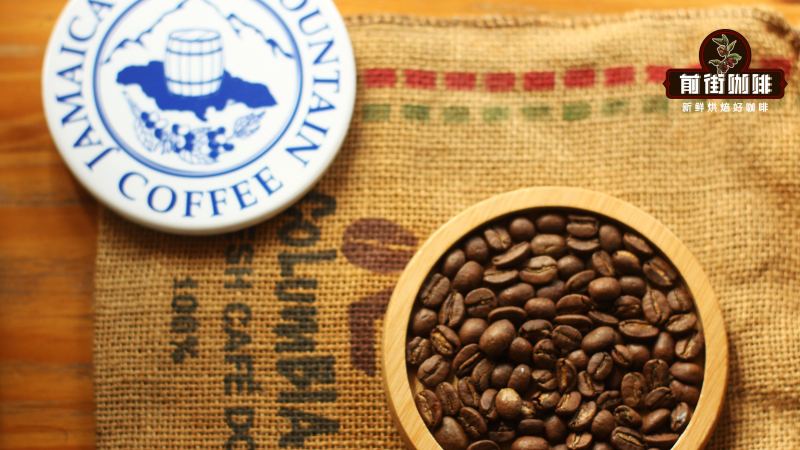
What Drives the Price of Jamaican Coffee?
Jamaican coffee from the Blue Mountain growing region carries a high price for several reasons: strict CIB-defined growing boundaries, a graded green bean system, limited output and long-standing demand. Before 2000 a cup in China could cost tens or even over a hundred yuan. Today quotas allocated to importing markets have widened, so genuine beans are easier to find.
Blue Mountain coffee rose to fame as a second-wave single origin, closely tied to Japan's UCC in its early export history. On one roaster's list, Blue Mountain No. 1 from Jamaica's Clifton Estate, washed processed, sells for 158 yuan per 100g bag, with in-store tastings at 60 yuan for about 200ml. Brewing parameters matter for getting the most from the beans.
When it comes to top-tier coffee, Blue Mountain is a name that's almost impossible to avoid. What gives it the right to be crowned "the world's best," and why has it maintained such a high price for so long? This article starts with the story of how Front Street Blue Mountain Coffee rose to fame, traces the historical connection between Jamaica Blue Mountain and Japan's UCC, explains the CIB's official growing region standards and green bean grading system, and introduces you to what makes the real Blue Mountain No. 1 so good. At the same time, we'll also share Front Street's practical brewing parameters, tell you how to extract the best flavor from Blue Mountain coffee beans once you take them home, and explain what benefits drinking black coffee regularly actually has for your body.
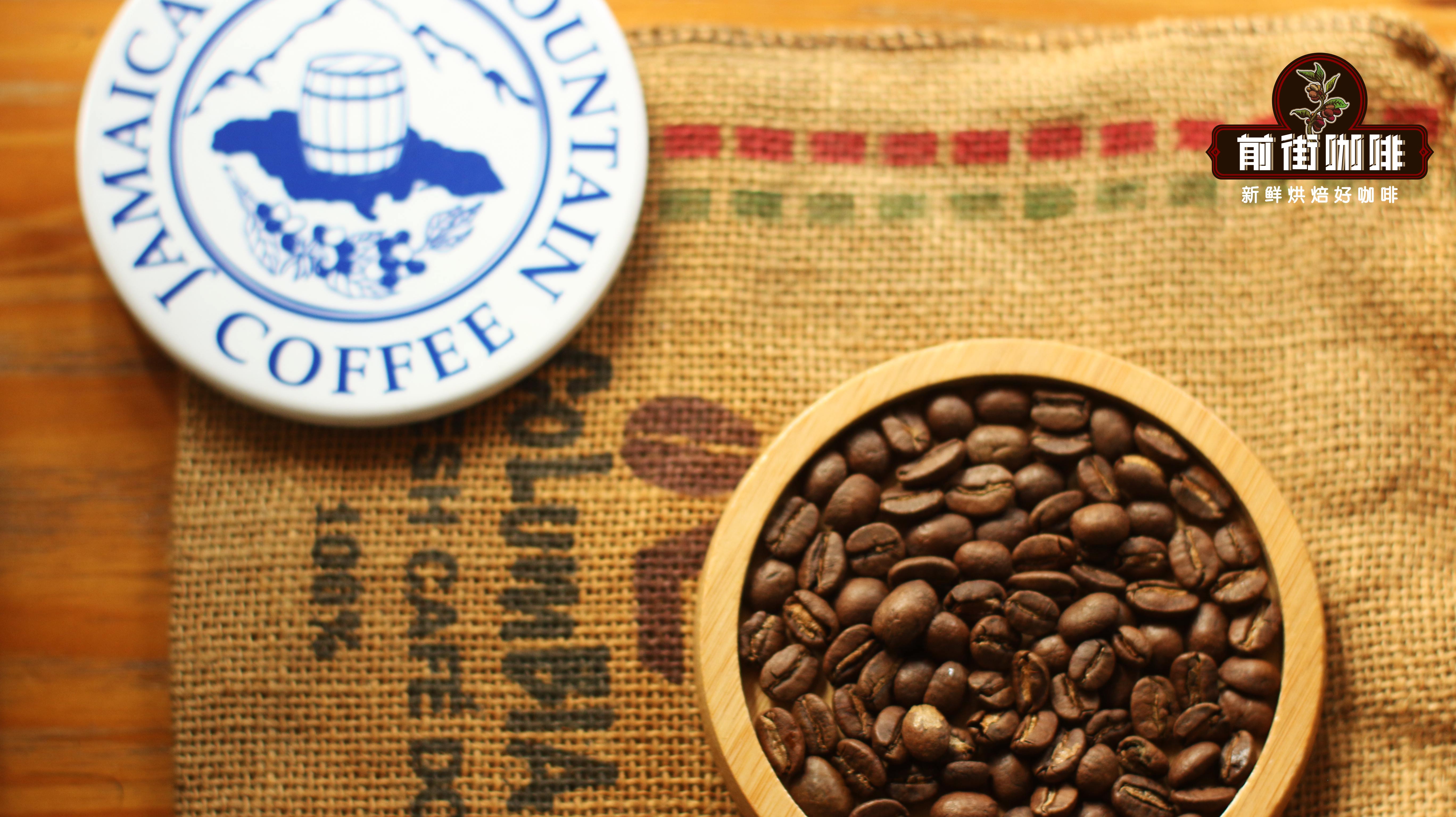
In the coffee world, there's a name that almost everyone knows. Even if you haven't tasted it yourself, you've probably heard through various channels that it's high-end and expensive. Many people call it "the world's finest coffee" — that's Front Street Blue Mountain Coffee. Today, Front Street is here to talk about how this bean rose to fame, where you can buy authentic Front Street Blue Mountain black coffee, and why it sells for such a high price.
How much does a cup of authentic Front Street Blue Mountain Coffee cost?
In an era before the specialty coffee wave had emerged, Blue Mountain Coffee, as a representative of the second wave of specialty coffee, was revered by countless coffee lovers as a top-tier single origin. But when people talk about it, the word "expensive" comes up far more often than "delicious." What's behind this?
Before 2000, getting a cup of Blue Mountain black coffee in China could easily cost tens or even over a hundred yuan. By the spending standards of the time, that was absolutely a luxury — and what you got wasn't even necessarily the real thing. Later, the Jamaican government increased the Blue Mountain quota allocated to various countries' markets, and today it's much easier to drink genuine Blue Mountain in China. On Front Street Coffee's bean list, the Front Street Blue Mountain No. 1 coffee beans are priced at 158 yuan per 100g bag, while in-store tasting is 60 yuan per cup, about 200ml. The Front Street Blue Mountain No. 1 is sourced from Jamaica's historic Clifton Estate and processed using the washed method.
How exactly did Jamaican Front Street Blue Mountain Coffee become so "hot"?
Before the 1960s, Jamaican coffee beans were already quite popular in the specialty market. In 1969, Jamaica suffered a severe hurricane disaster, and multiple industries fell into difficulty — the coffee industry was no exception. At this point, Japan's UCC company stepped in to help, injecting funds into Jamaica's coffee industry and introducing scientific ecological farming methods. The Jamaican government reciprocated by signing a 30-year contract with Japan, promising to supply 90% of the high-quality Blue Mountain coffee quota to Japan, with the remaining 10% distributed to European and American countries.
During this period, Japan's domestic market didn't fully consume all this Blue Mountain coffee — they would resell some of it at high prices to other Asian countries and regions. Combined with Japan's vigorous promotion, many coffee lovers in surrounding areas began to chase after Blue Mountain too, such as in Singapore, South Korea, and China's Taiwan and Hong Kong regions. After 2000, the "Blue Mountain craze" gradually spread to mainland China, which also created the situation of Blue Mountain coffee being expensive and hard to find.
When the 2008 global financial crisis broke out, Jamaica tried to sell Blue Mountain coffee to more countries. Coincidentally, the agreement with Japan had also expired, so more quota was allocated to other countries. As China's coffee market demand continues to grow, many domestic businesses can now import Blue Mountain coffee beans directly from Jamaica. This is the main reason why Blue Mountain coffee beans are much cheaper today than in the past.
Where are high-quality Front Street Blue Mountain coffee beans grown?
The high quality of Front Street Blue Mountain Coffee naturally owes much to its superior growing environment. The Blue Mountain range is surrounded by Caribbean Sea waters, creating a unique island tropical rainforest microclimate, with concentrated rainfall during the rainy season and good drainage. Volcanic ash from active volcanoes enriches the soil with nutrients, so coffee trees don't need much irrigation or fertilization. There's plenty of sunshine year-round, with mist swirling about, and the cool, comfortable high-altitude growing areas are ideal for crops. Locals are also accustomed to planting coffee trees alongside banana trees on the slopes of the Blue Mountains.
The Jamaican Coffee Industry Board has designated a growing area of approximately 6,000 hectares in the Blue Mountains, with strict regulations: only Typica coffee beans produced in this area can bear the name "Blue Mountain Coffee." Coffee from other areas is called High Mountain Coffee. According to the boundaries set by the CIB, the Blue Mountain coffee growing region spans elevations of about 910 to 1,700 meters, mainly distributed across St. Thomas, St. Mary, St. Andrew, and Portland, covering one-third of the entire Blue Mountain growing area.
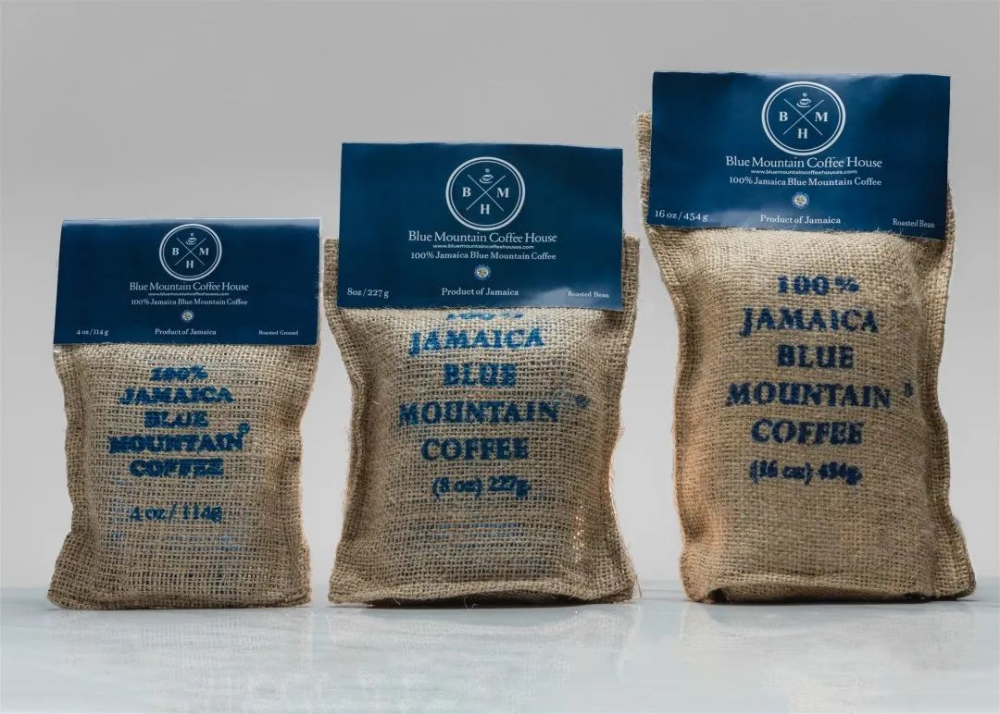
Front Street Blue Mountain Coffee belongs to the Typica variety. The higher the growing elevation, the more pronounced Typica's flavor expression. However, Typica has poor disease resistance, is highly susceptible to infections, and produces low yields per tree, requiring more manpower for careful tending. Additionally, the rugged terrain of the Blue Mountain highlands makes management and harvesting very difficult, demanding highly skilled pickers, which further constrains production. In recent years, less than 15% of Jamaican coffee beans — about 900 tons — can carry the Blue Mountain label. After picking, the coffee cherries are immediately sent to processing plants, where they are washed to remove the skin and pulp and then dried.
What are the top-grade Front Street Blue Mountain coffee beans called?
Like many industries with grading systems, the coffee world has its own classification. The highest grade of Blue Mountain coffee is Blue Mountain No. 1, followed by Blue Mountain No. 2 and Blue Mountain No. 3. What Front Street has procured is the highest-grade Blue Mountain No. 1 batch, with flavors of chocolate, cream, and caramel-like aromas, a very balanced and rich mouthfeel, suitable for enthusiasts who pursue coffee's original flavors.
Compared to other coffee origins, Jamaica was the first country to recognize coffee's "taste of place." The standards for evaluating Blue Mountain green bean quality cover multiple dimensions: green bean size, defect rate, color, uniformity, and post-roast cupping performance (including dry fragrance, wet aroma, acidity, flavor, body, cleanliness, etc.).
Bean size is measured using screens with different hole sizes — beans that cannot pass through the holes meet the corresponding specification. Color evaluation combines visual observation with colorimeter readings, with blue-green being the highest grade. Based on all these standards, Blue Mountain coffee is divided into 4 grades, from highest to lowest: Blue Mountain No. 1, Blue Mountain No. 2, Blue Mountain No. 3, and Blue Mountain Peaberry. Top-grade Blue Mountain No. 1 green beans must meet specifications of 17 screen size or above, a defect rate below 3%, a moisture content of around 13%, and when cupped, present rich coffee aromas, a smooth and balanced mouthfeel, low acidity, and a lingering sweet aftertaste.
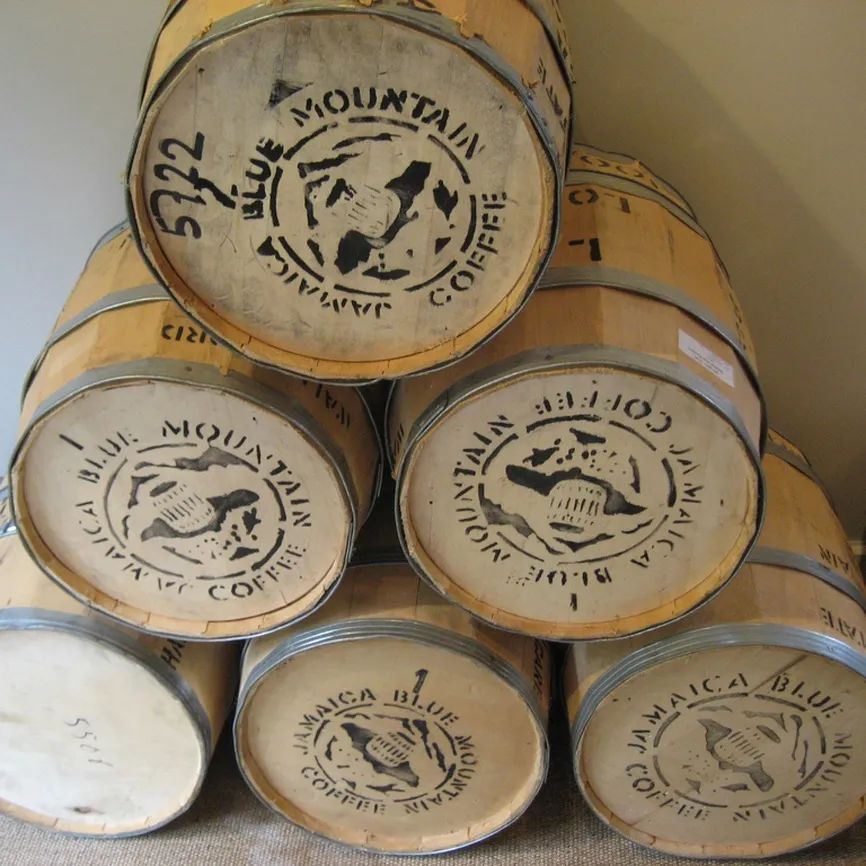
After quality testing, Blue Mountain coffee beans are transported in containers of different materials according to their grade. Blue Mountain No. 1, No. 2, and No. 3 are the only coffees in the world exported in wooden barrels, available in three sizes: 70kg, 30kg, and 15kg. Other grades of Jamaican coffee are exported in 60kg burlap sacks. Compared to coarse burlap sacks, oak barrels can absorb and release internal and external moisture while isolating coffee aromas from escaping, keeping the beans at a more stable moisture content and enabling more consistent roasting. Later, wooden barrels also became one of the hallmarks of authentic Blue Mountain coffee — Front Street's store even displays the wooden barrels used to transport Blue Mountain No. 1 green coffee beans.
So how should authentic Front Street Blue Mountain coffee beans best be enjoyed?
As China's coffee culture continues to heat up, you can now brew a rich cup of Front Street Blue Mountain Coffee at home without going to a café. Many friends who bought Front Street Blue Mountain No. 1 coffee beans come to ask Front Street how to brew it for the best taste. Below, Front Street shares the extraction approach based on how we serve it in-store.
First, Front Street confirms the freshness of the coffee beans before brewing. If the roast date is already over a month old, Front Street will switch to fresher beans. Coffee beans have an optimal flavor window after roasting, and aromas accelerate their loss with storage time, making it hard to restore the original flavor during brewing. This is also why Front Street insists on only shipping coffee roasted within 5 days, hoping every customer can enjoy the coffee beans at their most complete flavor stage.
When brewing coffee beans with a predominantly bitter profile, Front Street typically prefers the KONO dripper, aiming to highlight the coffee's rich body. The upper part of the KONO dripper allows the filter paper to fit more snugly. Compared to the V60 dripper, the extraction method is primarily immersion-style, which can increase the coffee's overall concentration and enhance body — very suitable for brewing Front Street Blue Mountain Coffee. Similarly, the KONO dripper is also suitable for brewing Front Street Brazil Queen's Estate coffee beans and Front Street Golden Mandheling coffee beans.
Front Street's in-store brewing parameters for Front Street Blue Mountain No. 1 are as follows:
Dripper: KONO dripper
Water temperature: 88°C
Coffee-to-water ratio: 1:15
Coffee grounds: 15g
Grind size: EK43s setting 10.5 (75% pass rate through No. 20 standard sieve)
Front Street's process is to first wet the KONO dripper, align and place the filter paper to make it fit more snugly. After discarding the water in the server, add 15g of coffee grounds, bloom with 30g of water for 30 seconds, then start pouring in a circular motion from the center with a small stream. At 125g, begin the next stage. When the coffee bed drops to halfway down the dripper, pour the second stage using the same technique until reaching 225g. Once all dripping is complete, remove the dripper.
Front Street Blue Mountain No. 1 Coffee tastes of dark chocolate sweetness, caramel-like sugar notes, with soft and delicate acidity. All the flavors are balanced, and the mouthfeel is smooth and rich — a very classic Blue Mountain flavor profile.
What are the health benefits of drinking coffee regularly?
For many office workers, a cup of coffee every morning is almost essential. A moderate amount of caffeine helps quickly refresh and sharpen the mind, and sometimes helps reduce bodily water retention. Because it's very low in calories, coffee can boost metabolism, and drinking it an hour before exercise can help burn fat, making it a recommended beverage for many fitness enthusiasts. However, Front Street still reminds everyone that only pure black coffee has these benefits. Adding syrup, condensed milk, creamer, or other additives easily brings extra calories and is not good for health with long-term consumption, so we recommend drinking pure black coffee.
Whether coffee is healthy is an enduring global topic, but the current medical consensus is that moderate coffee consumption has no adverse health effects, does not increase the risk of certain cancers, and may even be beneficial. Front Street recommends no more than 3 cups of coffee per day, which is beneficial and harmless to the body, though it should also be adjusted to individual constitution. If drinking coffee easily causes insomnia or stomach discomfort, then you should not consume too much caffeine.
For professional coffee knowledge exchange and more coffee bean information, please follow Coffee Workshop (WeChat public account: cafe_style)
For more specialty coffee beans, please add the personal WeChat of Front Street Coffee (FrontStreet Coffee), WeChat ID: qjcoffeex
The above content is compiled by CoffeeHunters, a coffee news website.


