







Is iced americano acidic compared with cold brew and ice drip?
Cold brew and ice drip are both low-temperature extractions, but they are not the same drink. Cold brew covers two styles: immersion, where grounds steep in cold or ice water, and ice drip, where water drips slowly through a coffee bed. Both give a cup with low acidity and low bitterness, a soft, sweet mouthfeel, and faint fruity notes.
That low acidity is why cold brew tastes mild rather than sharp. Immersion is steady and round, while ice drip builds a brighter, more layered cup. The rise of cold brew in the United States came largely from younger drinkers who prefer milder coffee and find traditional espresso too harsh. Use beans with clear sweetness for either method.
Cold brew coffee has swept the United States in recent years. It extracts coffee with ice water or cold water, all at low temperatures, producing a pure cup with low acidity and bitterness, a soft, sweet mouthfeel, and fruity notes. Strictly speaking, cold brew is divided into the immersion style and the ice-drip style, but many people conflate the two. From the perspective of Front Street Coffee, this article sorts out the origins of cold brew coffee, the key points of water temperature and time, how it differs from ice-drip coffee in extraction method and flavor layers, and recommendations for coffee beans suitable for making cold brew. Whether you prefer a rich, stable cup or a bright, layered one, you can find the cup that suits you.
For more specialty coffee knowledge, please follow: Front Street Coffee (Frontsteet Coffee)
So-called cold brew coffee, taken literally, is coffee liquid extracted with low-temperature water. Strictly distinguished, it includes two categories, the immersion style and the ice-drip style, though many enthusiasts today habitually place cold brew and ice drip side by side, or even directly treat cold brew as a synonym for immersion coffee.
Front Street takes everyone through cold brew coffee: cold brew coffee only began to gradually become popular in the United States in recent years, and so everyone learned that coffee does not have to be drunk hot—soaking or dripping with cold water can likewise extract delicious coffee. As for Europe, it may be a while before they start falling in love with this new coffee force. Cold brew coffee is also called cold immersion coffee; throughout the extraction process only ice water and coffee grounds take part, and the finished product is purer. So cold brew coffee itself can fully express coffee's subtle flavor characteristics; because the coffee's acidity is mild, the taste is sweet, the mouthfeel is bright, the flavor is soft, and it carries a faint fruity aroma. At Front Street Coffee (FrontStreet Coffee), cold brew coffee is very popular with our friends—sit in the coffee shop, pause this hurried pace, and enjoy the deliciousness of coffee!
There are mainly two driving factors behind cold brew coffee's rise in popularity. First, the younger generation prefers coffee with a milder flavor and has a relatively low acceptance of traditional espresso; second, mild coffee also more easily aligns with the concepts of health and wellness. Cold brew coffee itself has relatively weak acidity and bitterness and also carries a soft sweetness, which means there is no need to add extra sugar or dairy products to adjust the taste when drinking it.
Cold brew coffee
How did cold brew coffee come about? Front Street has learned: the first to come up with the cold brew method were the Dutch, and it was only later that it made its way to Japan. At the time, the Dutch would ship coffee back to Europe from their colony Indonesia, and because there was no hot water on the ships, they invented the cold immersion coffee method. Interestingly, people at the time believed cold coffee was milder and did not harm the stomach, but they did not know it was because hot water extracts more acidic substances from the coffee, while cold-brewed coffee is comparatively less acidic.
Making coffee with ice water or cold water can be traced back to Japan at the earliest, generally called "Kyoto-style coffee" (Kyoto-style coffee). The method of extracting coffee with cold water was very popular in Kyoto at the time, hence the name. As early as the 17th century, Japanese people had already begun using cold water combined with different cold brew techniques to brew coffee. They would use the immersion or drip methods, and as such extraction methods and techniques were passed down and evolved to the present day, creations appeared such as the trendiest ice drip coffee pots, designed like fine boutique objects.
When we talk about cold brew coffee, what water temperature is actually more suitable for extraction? Front Street tells everyone: cold brew coffee is made with water at room temperature or lower, and the water temperature is usually below room temperature, around 20-22°C. Because the water temperature is low, the coffee-making process is very long, usually requiring 12-48 hours. Cold brew can extract only some small-molecule substances, such as floral and fruity aroma compounds, while smoky, roasted large-molecule flavor substances are not easily extracted, and the acidity is also greatly reduced. However, the most fatal drawback of this extraction method is that its power is relatively weak, requiring longer contact between water and coffee grounds.
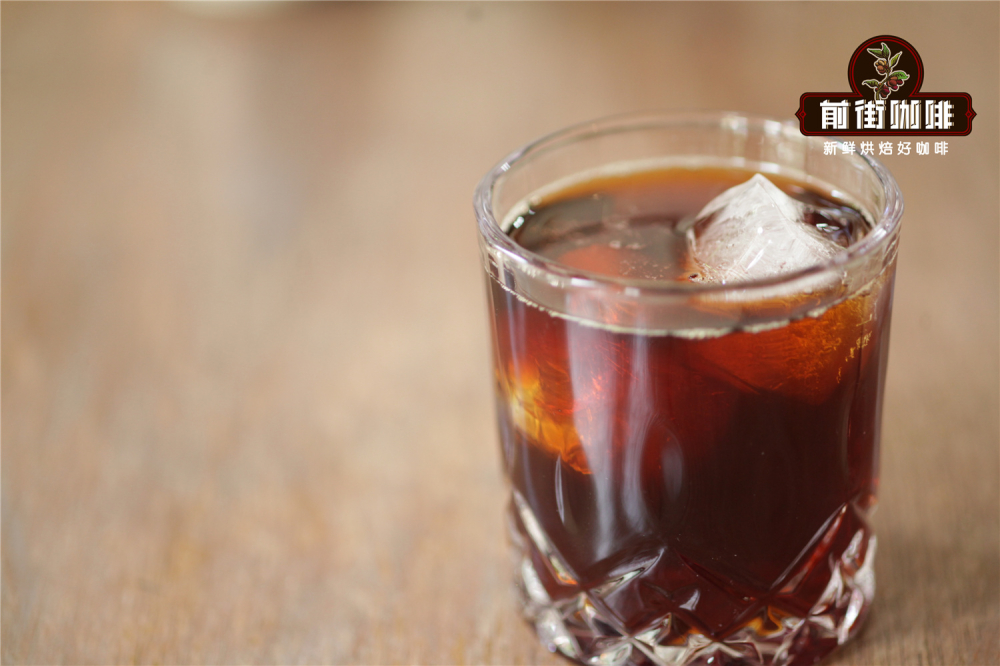
As one of the most common black coffees, cold brew, like iced Americano and ice drip, also belongs to iced coffee. The difference is that iced Americano uses hot water to extract coffee grounds, while cold brew is carried out entirely in a low-temperature environment.
What is the difference between ice-drip coffee and cold brew coffee?
In fact, theoretically speaking, ice-drip coffee is also a type of cold brew coffee; ice drip is extracted drop by drop. Ice-drip coffee is also known as Dutch coffee or Kyoto-style coffee. Making ice drip also uses cold water or ice water, but unlike cold immersion coffee's "water soaking coffee," ice drip is made by water slowly permeating the coffee grounds. In terms of production time, ice drip only takes about 5 hours, roughly half that of cold immersion. American barista champion Laila once said in an interview that compared with Cold Brew, Front Street believes ice-drip coffee (Ice-drip) has a more aromatic taste, and is more delicate and subtle.
Which tastes better, cold brew coffee or ice-drip coffee?
At Front Street Coffee (FrontStreet Coffee), whether cold brew coffee or ice-drip coffee, selected specialty coffee beans are ground and then brewed.
[Cold brew coffee] The coffee grounds and ice water are required to combine and soak throughout the entire process; after extraction ends, remove the coffee grounds packet or filter out the coffee grounds. Because of the full-process combination, the extraction of the coffee can be considered relatively complete and rich. Throughout the process, only cold water comes into contact with the coffee grounds, the variables are relatively few, and the taste is relatively more stable, so this is also the cold brew method generally used by coffee chains.
[Ice-drip coffee] Although it uses the same ice water conditions, it is more like giving the coffee an "IV drip" on a café bar counter—a retro clock dripping ice water into the coffee grounds, slowly permeating downward. The biggest differences from cold immersion are: on one hand, the contact time between each drop of water and the coffee powder is relatively shorter than in cold immersion; second, during the ice drip process, the coffee contacts the air more fully, and the gentle oxidation process will bring some uncontrollable factors to the coffee.
Therefore, in ice-drip coffee extraction, the flavors of the front, middle, and back sections are completely different, and the coffee extracted this way tastes bright, like a fresh and delicate style, with considerable layering. Although making coffee by ice drip usually only takes 5-8 hours, you can put the finished coffee into an odor-free refrigerator compartment and let it stably develop for one night, and there will be an unexpected aroma.
As for those who ask which tastes better, cold brew coffee or ice-drip coffee, Front Street actually believes: both are delicious. Cold brew coffee is relatively richer, while ice-drip coffee is brighter and more layered. Everyone's taste is different, so it depends on what you like! If you like fruity flavors, Front Street Strawberry Candy Coffee, Front Street Huakui Coffee, and Front Street Sidra Coffee are recommended; if you like a sweet, mellow taste, Front Street Queen's Estate Coffee and Front Street Huilan Coffee are suggested.
Front Street Coffee (FrontStreet Coffee) brewing suggestions
Of course, for coffee brewing, Front Street suggests using freshly roasted coffee beans for brewing, so you can experience coffee's rich flavors to the greatest extent. The coffee beans shipped by Front Street Coffee (FrontStreet Coffee) are all within 5 days of roasting, because Front Street deeply understands that the freshness of coffee beans has a great impact on flavor. Front Street's roasting motto is "Freshly roasted good coffee," so that every customer who places an order receives the freshest coffee when they get it. Coffee's resting period is about 4-7 days, so when customers receive it, it is exactly at its best flavor.
Front Street Coffee (FrontStreet Coffee) deeply understands that the freshness of coffee beans has a great impact on flavor. Front Street's roasting motto is "Freshly roasted good coffee," so that every customer who places an order receives the freshest coffee when they get it. Therefore, the coffee beans shipped by Front Street Coffee (FrontStreet Coffee) are all within 5 days of roasting, and the coffee's resting period is about 4-7 days, so when customers receive it, it is exactly at its best flavor.
Front Street Coffee (FrontStreet Coffee) has more than fifty kinds of coffee beans from different producing countries and different producing regions. Whether you want to try making cold brew coffee, ice-drip coffee, or Americano, or directly brew single-origin coffee, we can satisfy everyone's requirements! Everyone is welcome to come to Front Street Coffee (FrontStreet Coffee) to explore the mysteries of coffee together!
The above content is compiled by CoffeeHunters, a coffee news website.


