







What gives Kenya coffee its cherry tomato acidity?
Kenya coffee is known for a distinctive cherry tomato and prune-like acidity that stands apart from the citrus-lemon profile of Ethiopian beans. Starbucks sold a Kenya coffee whose packaging carried an African elephant, a design tied to the country's image and launched around 1971. Flavor in Kenyan beans comes mainly from growing region, variety, and processing method.
Kenyan lots are typically washed with the K72 process and graded by screen size, with AA being the largest common grade. Roast profiles and brew recipes differ between AA and PB lots, so water temperature and grind should follow the bean. This is why Kenya coffee can stand alongside Yirgacheffe in representing African coffee.
For those new to Kenyan coffee, its distinctive notes of cherry tomato and prune-like acidity are often unforgettable at first sip. Starbucks once launched a classic Kenya coffee, and the elephant design on its packaging has long become an icon. From the perspective of Front Street Coffee, this article systematically reviews Kenya's growing regions, variety characteristics, the K72 washing process, and the green bean grading system, and shares in detail the roasting parameters and brewing suggestions for two Kenyan coffee beans at Front Street Coffee—Asalia AA and Sachini Estate PB—to guide you through the full charm of Kenyan coffee.
For professional coffee knowledge exchange and more coffee bean information, please follow Coffee Review (WeChat public account: cafe_style)
Most people tasting Kenyan coffee for the first time are drawn in by its signature cherry tomato and prune-like acidity; this flavor is extremely unique and the quality is superb. Starbucks also has a Kenya coffee from Kenya, so what exactly makes this coffee special? Next, Front Street Coffee will analyze it one by one for everyone.
Starbucks Kenya Coffee Story Introduction
As is well known, Kenya is located on the African continent, and when people think of Africa, they often picture vast savannas and herds of elephants. For this reason, the packaging of Starbucks Kenya coffee features the highly symbolic African elephant. The launch of this coffee can be traced back to 1971, and over the years the elephant image on the packaging has become closely tied to Kenyan coffee and a signature symbol of it.
For this reason, many people like to use the African elephant as a metaphor for the flavor of Kenyan coffee beans—that powerful and full-bodied acidity, completely different from the citrus-lemon acidity of Ethiopian coffee. This is also one of the important reasons why Kenyan coffee can stand alongside Ethiopia's Yirgacheffe in representing African coffee. So what exactly creates such an excellent flavor in Kenyan coffee? Front Street Coffee will reveal it next.
Growing Conditions in Kenyan Coffee Regions
Front Street Coffee has mentioned many times in previous articles that the flavor performance of a coffee bean mainly depends on three major factors: growing region conditions, coffee bean variety, and processing method. Among these, region and variety are the innate foundation that determines the direction of flavor, while processing is the further elevation of flavor. Below, Front Street Coffee will analyze the reasons behind the flavor characteristics of Kenyan coffee around these three points.
Kenya is located in eastern Africa, with the equator crossing its center and the East African Rift Valley running north to south. It borders Somalia to the east, Tanzania to the south, Uganda to the west, Ethiopia and Sudan to the north, and faces the Indian Ocean to the southeast. The country is dominated by plateaus, with an average elevation of about 1,500 meters. Mount Kirinyaga (Mount Kenya) in the center has an elevation of 5,199 meters and is snow-capped year-round, making it the second-highest peak in Africa. Because the equator runs through the country, Kenya lies within 10 degrees north and south latitude, a tropical production area with two rainy seasons each year, so it can harvest coffee twice a year: about 60% is concentrated from October to December, and the remaining 40% from June to August.
According to Front Street Coffee, Kenyan coffee is mostly grown on the plateaus north and east of Nairobi, where the soil is fertile, loose, acidic volcanic red soil. These areas have abundant sunlight, good drainage, and elevations between 1,400 and 2,000 meters. The higher the elevation, the greater the temperature difference between day and night, and the longer the ripening cycle of the coffee fruit, thus producing coffee beans with higher density and richer flavor.
From the above information, it can be seen that Kenya's coffee-growing regions indeed possess exceptional growing conditions, and the quality of the coffee beans produced is naturally outstanding. Kenya mainly cultivates Arabica, a variety considered one of the highest-quality coffee varieties in the world. One of its characteristics is that the higher the growing elevation, the richer the acidity, which also explains why the acidity of Kenyan coffee beans is so pleasant. Kenyan Coffee Varieties
In Kenya, common cultivated varieties include SL28, SL34, Batian, and Ruiru11, all independently developed by the Kenyan coffee laboratory, which shows the degree of importance the government attaches to the coffee industry. This is also one of the reasons why Kenyan coffee is so distinct in acidity and flavor from the coffee of neighboring countries.
SL28
According to historical records, a senior coffee official at the Scott Laboratories (A.D. Trench) once discovered a coffee variety in the Moduli area of Tanzania that appeared tolerant to drought, disease, and pests. After the seeds were brought back to the Scott Laboratories, their drought resistance was verified.
In recent years, genetic testing has confirmed that SL28 belongs to the Bourbon genetic group, so its coffee beans are also similar in shape to the Bourbon variety, round and plump. Through the SL28 variety, Front Street has observed a flavor profile of complex and varied acidity along with excellent sweetness.
SL34
SL34 was originally selected from the "French Missionary" (Bourbon) at the Loresho estate in Kabit. However, according to information reviewed by Front Street Coffee, genetic testing of this variety has confirmed that it contains the Typica genetic group, and its plant performance characteristics are also similar to Typica. Therefore, it is believed that SL34 was selected from Typica. Because it is close to the Typica variety, SL34 coffee beans are slender and oval, appearing relatively flat from the side.
Ruiru11
Ruiru11 appeared after SL28 and SL34. According to Front Street's understanding, in the 1970s the Ruiru station began trying to breed different CBD- and rust-resistant varieties, and the final result was Ruiru11, released in the 1980s. It has high yield and possesses both CBD and rust resistance, and at the time seemed able to solve all the problems of Kenyan coffee production in one stroke.
Batian
The Batian variety was released by the Coffee Research Institute (CRI) on September 8, 2010, and is currently Kenya's newest variety. It is the result of further experimentation based on the lessons learned from Ruiru11. From a genetic perspective, it is essentially selected from backcrosses of SL28 and SL34, and is closer to SL28 than Ruiru11. This also eliminates problematic Robusta elements, thereby improving cup quality.
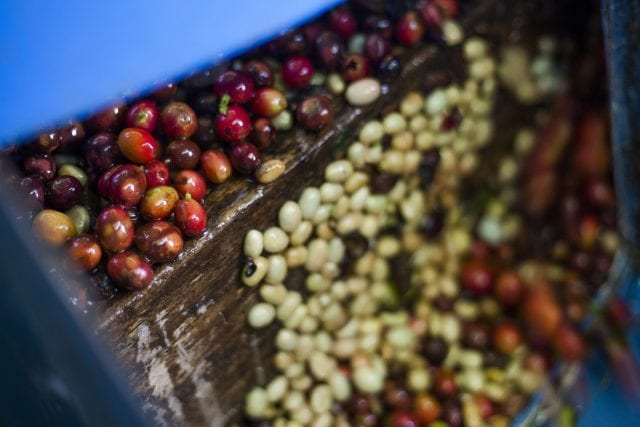
Kenyan Coffee Processing Method--- K72 Washing Process In addition, Kenya is also highly ingenious in green coffee processing, using the domestically developed K72 washing process. The process is as follows: after washing and pulping ripe, fully mature coffee cherries, they undergo dry fermentation for 24 hours, then are washed, then dry-fermented again for 24 hours, then washed again, then dry-fermented again for 24 hours, repeating this cycle for a total of 72 hours of intensive fermentation. After that, they are washed and soaked in clean water tanks overnight, then moved to drying beds early the next morning for drying. Because the fermentation time is as long as 72 hours, it is named K72.
Kenyan Coffee Bean Grading System From the above introduction by Front Street Coffee, coffee lovers have already learned about Kenya's emphasis on the coffee industry. Precisely because of this, Kenya also pursues extremely high coffee quality and has implemented a coffee bean grading system. For example, the AA grade is regarded as the highest-quality level. However, although there is a "grading" system, is AA grade necessarily better tasting than AB grade? Exactly what standards is this grading system based on?
According to Front Street Coffee, Kenya's grading standard is mainly based on coffee bean size. The difference between AA and AB lies only in bean size. As for taste quality, Front Street Coffee's conclusion from cupping is that whether AA or AB grade Kenyan coffee beans, they are all very delicious coffees. Differences in flavor among regions may come more from factors such as region, elevation, and growing conditions. But what is certain is that AA and AB grade Kenyan coffees both offer the most assured quality.
In summary, these grades are merely distinctions in bean size. The most famous processing method for Kenyan coffee beans is the K72 washing process, so Kenya's finest coffee beans are basically washed. Washed coffee is roughly divided into eight grades:
E: Elephant Bean, also called Elephant ear, flat beans with a screen size above 19.
AA: Screen size 17 to 18
AB: Screen size 15 to 16, accounting for the majority of production
TT: Lighter beans blown out from AA and AB grade beans by an airflow sorter
C: Screen Size smaller than AB/14 and below, too small in size to be classified as specialty grade.
T: Lighter beans blown out from C grade beans (14 and below) by an airflow sorter, meaning both size and density are too small to be classified as specialty grade.
PB: Peaberry, meaning round bean, classified not by size but by shape, unrelated to flavor or weight, accounting for about 10% of total production
UG: Those not meeting the above standards
In addition, there is a lower-quality natural sun-dried coffee bean grade, which because of its poorer quality is not given Kenyan-style washing and is generally used for Kenya's domestic market. This bean grade is called M'buni. In addition, one point Front Street Coffee needs to emphasize is that this "green bean grading system," still in use today, was issued by a government department in 1938, even 40 years earlier than the birth of the concept of "specialty coffee." Therefore, Kenya today already has new concepts for coffee bean grading standards, but the size-based grading standard is still the more common one at present.
Below is Kenya's current new coffee grading standard:
According to Front Street Coffee, when assessing coffee quality, Kenyan coffee research institutions and the local industry customarily use a coffee bean quality grading procedure formulated by the Kenya coffee research institution, comprehensively grading based on three aspects: green bean quality, roasted bean quality, and cupping quality.
Green bean quality: The judging items are further divided into green bean appearance and size, green bean color, and defects. Roasted bean quality: Subdivided into center cut condition, roasted bean condition, and defective beans. Cupping quality: Scoring is based on acidity, body/texture, flavor, and negative defects.
Combining the scores from the three aspects, coffee beans are divided into grades 1 to 10, with grade 1 being the best and grade 10 the worst.
From this it can be seen that the difference between AA grade coffee beans and AB grade and PB grade coffee beans lies only in size. But overall, coffee beans with larger screen sizes also tend to have a lower defect rate, so their flavor is naturally cleaner and their price is also higher.
The above is the relevant information on Kenyan coffee beans compiled by Front Street Coffee. Front Street Coffee has also introduced two Kenyan coffee beans, one AA grade and one PB grade, which are shared with you below.
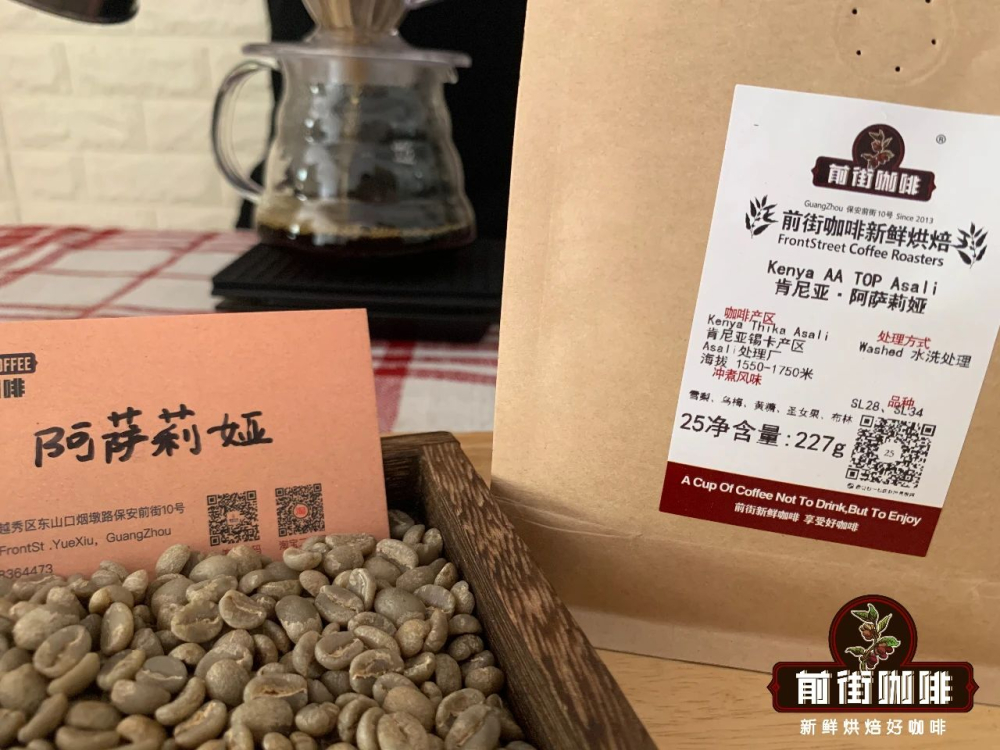
Front Street Coffee Kenyan Asalia Coffee Beans
Country: Kenya
Region: Asali (Honey Processing Station)
Elevation: 1550-1750m
Variety: SL28, SL34
Processing Method: 72-hour washed processing
Flavor: Snow pear, smoked plum, yellow sugar, cherry tomato, plum
Front Street Coffee Kenyan Sachini Estate PB Coffee Beans
Country: Kenya
Region: Sachini Estate
Elevation: 1680m
Variety: SL28, SL24, riuru
Processing Method: 72-hour washed processing
Flavor: Cherry tomato, almond, smoked plum, honey, grape
Front Street Coffee Roasting Parameters Sharing
Kenyan Asalia Coffee Beans: These beans are plump and round. In order to fully bring out their bright and full-bodied acidity, Front Street Coffee uses a light roast level.
Yangjia 800N semi-direct fire, charge amount 480g: charge when the drum temperature reaches 160°C, air damper set to 3, heat 120. Turning point: 1'28". When the temperature rises to 130°C, set the air damper to 4. Roast until 6'00'', temperature 154.6°C, the bean surface turns yellow, the grassy smell completely disappears, and dehydration is complete. When ugly wrinkles and dark spots appear on the bean surface and the toasted bread aroma clearly turns into coffee aroma, this can be defined as the prelude to first crack. At this time, listen carefully for the sound of the first crack. At 9'28'' first crack begins, the air damper remains unchanged, first crack development time is 2'20'', and the beans are dropped at 193.8°C.
Kenyan Sachini PB Coffee Beans: Because this rich coffee bean comes from a higher elevation, its bean quality is harder. At the beginning it climbs with a relatively high rate of temperature rise, with the turning-yellow point at around 5 minutes, then the heat is lowered to enter the Maillard reaction. At 166°C the heat is lowered again to extend the Maillard reaction time. When first crack begins, heat absorption is stronger, so it is recommended to maintain heat at this stage to prevent stalling. First crack development takes a relatively long time, which helps reduce acidity and develop flavor.
Roaster Yangjia 800N (roasting amount 300g), charge when the drum temperature reaches 170°C, heat 100, air damper set to 3; turning point 1'42", when the drum temperature reaches 140°C open the air damper to 3.5 and keep the heat unchanged; when the drum temperature reaches 149°C the bean surface turns yellow, the grassy smell completely disappears, and it enters the dehydration stage; at 7'14'' dehydration is complete, heat and air damper remain unchanged, at 7'30'' wrinkles and dark spots appear on the bean surface, and the toasted bread aroma turns into coffee aroma, which is the prelude to first crack. At this time pay attention to listening for the sound of first crack. At 8'20'' first crack begins, open the air damper to 4, and lower the heat to 50. After first crack, development time is 1'50''; at 188°C lower the heat to 30 to flatten the rate of temperature rise, and drop the beans at 193.3°C.
Front Street Coffee Brewing Suggestions
Dripper: V60 or cake cup
Water temperature: 91-92°C
Coffee-to-water ratio: 1:15
Grind size: fine grind (80% passing through China standard No. 20 sieve)
Brewing method: staged extraction. Use 30g of water for a 30-second bloom, then pour in a small stream in circles until 124g for the stage break. When the water level drops and is about to expose the coffee bed, continue pouring until 228g and stop pouring. When the water level drops and is about to expose the coffee bed, remove the dripper. (Start timing from the beginning of the bloom.) Extraction time is 1'55".
Asalia Coffee Bean Flavor: The wet aroma has ripe tomato and floral notes. On the palate there are flavors of cherry tomato and smoked plum, with bright acidity, a clean and rich mouthfeel, a prominent sweetness in the middle, and a juicy quality. The finish has berry aroma and yellow sugar sweetness, along with green tea aroma.
Sachini Coffee Bean Flavor: It smells floral, and on the palate has an acidity of cherry tomato, citrus, and nuts. The middle has creamy aroma and a brown sugar sweetness returning. The finish has cocoa and oolong tea tea-like notes. The flavor layers are relatively rich, with obvious floral notes.
The above are the flavor characteristics of these two coffee beans at Front Street Coffee. We hope this can help everyone understand Kenyan coffee-related knowledge more deeply, so that in the future when choosing coffee beans from different regions, you can avoid pitfalls.
For more specialty coffee beans, please add the private WeChat of Front Street Coffee, WeChat ID: kaixinguoguo0925
The above content is compiled by CoffeeHunters, a coffee news website.


