







How is type of arabica coffee classified by variety?
More than 500 coffee tree species are known, and counting variants the total runs past 6,000, but the coffee drunk daily is almost always Arabica. Within that species, Typica is the oldest member among existing varieties, first established in Martinique, and it carries a faint sweetness that shifts with where it is grown.
Robusta is mostly used commercially, such as in instant coffee, while Liberica has become rare on the market. Varieties such as Bourbon, Pacas and Catimor sit under the Arabica umbrella, and Typica planted in Indonesia mutated over time into what is now recognized as Mandheling coffee.
Faced with a dazzling array of coffee beans on the market, understanding variety classification is the first step for beginners. There are over 500 known coffee tree species worldwide, and with variants included, the total exceeds six thousand. From the perspective of Front Street, this article systematically sorts out the origins and flavor characteristics of common varieties under the Arabica species, such as Typica, Bourbon, Pacas, and Catimor, and intersperses introductions to the actual performance of several corresponding Front Street products, helping coffee enthusiasts build a clear framework of variety cognition when purchasing and tasting.
Today, the variety of coffee beans on the market is increasingly rich and dazzling. There are more than 500 known coffee tree species alone, and if all kinds of variants are included, the total is at least over 6,000. Today, Front Street will sort out several common coffee varieties for everyone.
The coffee we drink daily basically belongs to one of the three major varieties—Arabica. Robusta is mostly used in the commercial coffee field, such as in the production of instant coffee. As for Liberica, it has become extremely rare on the market.
Front Street will first introduce everyone to the common coffee varieties under the Arabica species. When talking about coffee, we usually start from the source. As far as we know, Typica is the oldest member among existing coffee varieties. Typica first took root in the area of Martinique. Typica coffee beans carry a faint sweetness. Of course, not all Typica has the same flavor.
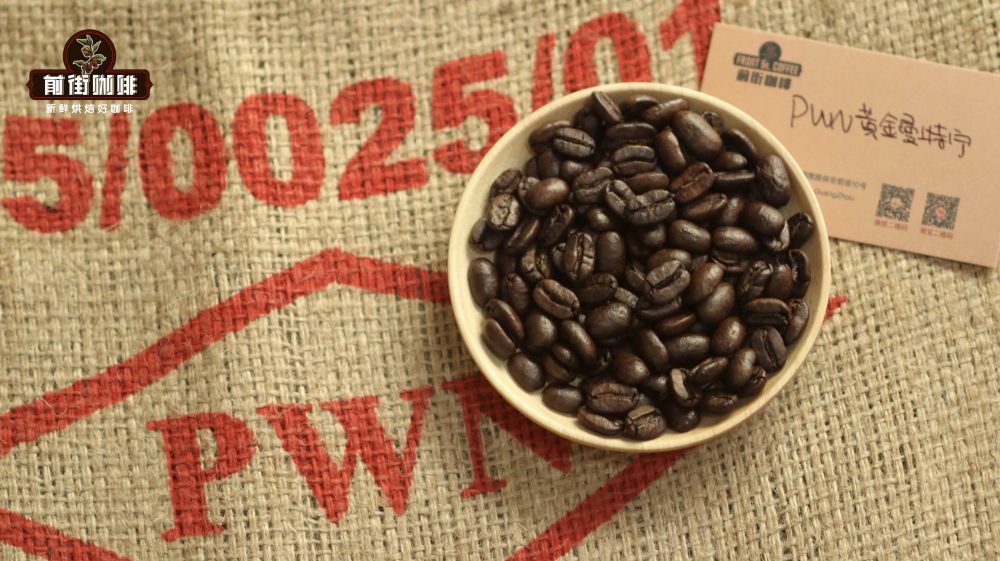
These coffee varieties are like a huge family, and they are all more or less related by blood. For example, Typica planted in Indonesia has already undergone genetic mutation and gradually evolved into the highly local Mandheling coffee. Among the five Mandheling coffees launched by Front Street (Lintong Mandheling, Golden Mandheling, Tiger Mandheling, Aged Mandheling, and Sun-Dried Mandheling), the most famous is PWN's Golden Mandheling, which is hailed as the coffee with the most outstanding body in the world. Front Street's Golden Mandheling has a rich flavor, sweet aroma, and mellow mouthfeel, with a little sweetness and slight acidity, complex yet very distinct in layers.
There is another coffee variety that, like Typica coffee beans, also belongs to the oldest existing coffee varieties, and that is Bourbon. There is a certain connection between Bourbon and Typica; in other words, Bourbon is a genetic variant produced after Typica mutated. When we usually mention Bourbon, we generally mean Red Bourbon. Among the beans launched by Front Street, one Brazil Red Fruit coffee is exactly of the Red Bourbon variety. This Brazil Red Fruit presents rich nutty and chocolate flavors when drunk, and smells of peanut and creamy sweetness.
Many coffee tree species in Brazil belong to the Bourbon variety, and a Yellow Bourbon variety was also discovered previously, currently mainly grown in Brazil. Front Street has learned that Yellow Bourbon is quite excellent in quality and can adapt to high-altitude environments. After sun-drying, the flavor of Yellow Bourbon retains Bourbon's own nutty tone, with balanced acidity and slight bitterness. The Brazil Queen Estate Yellow Bourbon coffee launched by Front Street is a perfect presentation of Yellow Bourbon's flavor.
Perhaps by chance, Red Bourbon and Yellow Bourbon combined and were crossed to cultivate a new variety. Because its coffee cherries are a romantic pink color, everyone calls it Pink Bourbon. This rare Pink Bourbon variety was first planted in the Huila region, initially mixed with other Bourbon and Caturra, and only later was it harvested and processed separately. Among the many coffee types launched by Front Street, the one of the Pink Bourbon variety is Isabela coffee from Colombia's Huila region. It has the fruity aroma of berries and cherry tomatoes on the palate, and after cooling it presents honey-like sweetness, with a smooth and clean mouthfeel.
Following the timeline further, a natural hybrid of Bourbon was discovered in the El Salvador region and named the Pacas variety, after which Pacas was transplanted to Honduras. In terms of coffee flavor, the Pacas variety has bright floral characteristics and a mellow mouthfeel.
Take Front Street Honduras Sherry coffee beans as an example. This coffee is a very classic Honduran coffee. Its variety is not only Pacas, but also contains a small amount of Caturra and Catuai. The three coffee varieties together create the high popularity of this Sherry coffee. In addition, it uses unique whiskey sherry cask fermentation, so besides vanilla, cream, nut, and cocoa flavors, it also carries the aroma of whiskey.
Now that we have talked about Honduras coffee varieties, Front Street will also tell everyone about Catimor. Catimor is exactly the hybrid variant of Caturra and Timor mentioned earlier in Front Street Honduras Sherry, and it belongs to a cross between Arabica and Robusta. Therefore, the Catimor variety has both the high-quality aroma of Arabica varieties and Robusta's strong adaptability, disease resistance, and high yield.
Take Yunnan coffee, which has become very well known in recent years, as an example. The main variety of Yunnan coffee is Catimor. Yunnan Catimor coffee has a mellow quality and aroma, strong but not bitter, with a slight fruity note. This type of coffee bean presents different flavors under different processing methods. If red cherry sun-dried processing is used, like the sun-dried Catimor launched by Front Street, it will have nut, chocolate, and spice flavors. If washed processing is used, the sweetness of brown sugar may be more prominent, similar to the flavor of Front Street's daily bean Yunnan small-batch coffee.
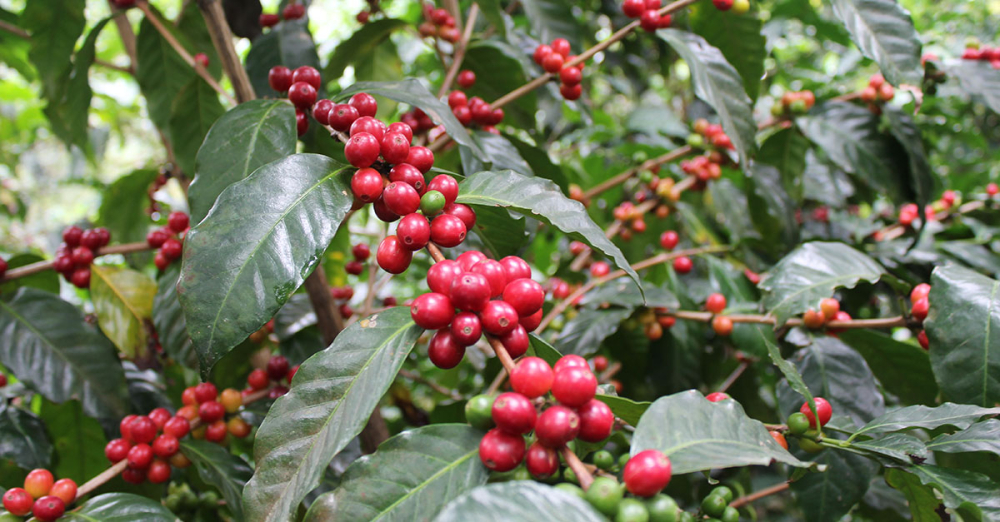
If one were to exhaust all the types of coffee, probably three days and three nights would not be enough to finish. If you want to learn more about coffee knowledge, welcome to follow Front Street's official account. We share coffee-related knowledge in the official account every day.
For more specialty coffee beans, please add the private WeChat Front Street Coffee (FrontStreet Coffee), WeChat ID: kaixinguoguo0925
The above content is compiled by CoffeeHunters, a coffee news website.


