







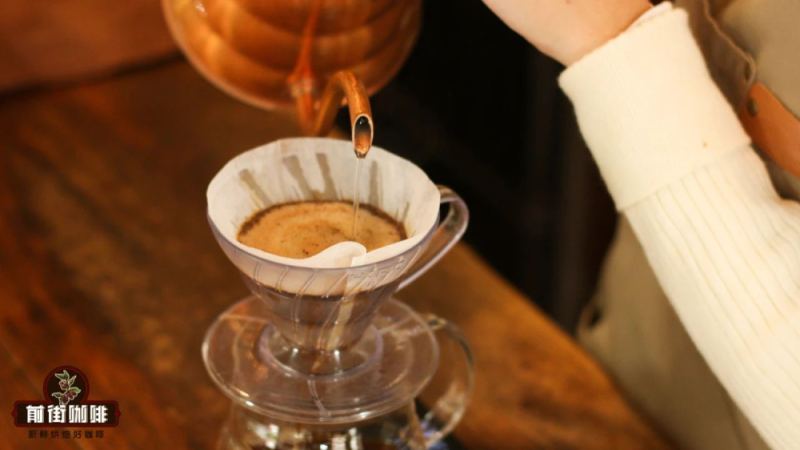
How does water distribution change pour-over coffee particles?
Pour-over results depend on how water is distributed through the coffee particles, not just on dose, ratio, temperature, grind size, and brewer. A single continuous pour after blooming raises the water level and shortens extraction, giving a cleaner but thinner cup. Splitting the remaining water into three pours takes longer and yields a more complex, fuller-bodied cup with the same total water.
The pour itself adds several variables worth controlling: blooming, circling speed, pouring height, flow rate, and circling range all steer flavor direction. With light-roast coffee, an uneven share of water across stages shifts the result noticeably, even when every objective parameter stays fixed. Practicing on three distinctive single-origin beans helps calibrate the hand before dialing in daily brews.
Front Street has previously discussed many factors that influence coffee flavor, starting from five objective conditions: coffee dose, coffee-to-water ratio, water temperature, grind size, and brewing device. This time, we turn our attention to an easily overlooked subjective variable—your hand, which is the pouring method during brewing. This article will break down two major sections: water distribution and pouring technique. First, we'll compare the extraction differences between a single-pour and a three-pour method, then analyze item by item how blooming, circling speed, pouring height, flow rate, and circling range affect the flavor direction. At the end, Front Street has also selected three single-origin beans with high regional distinctiveness for reference during daily brewing practice.
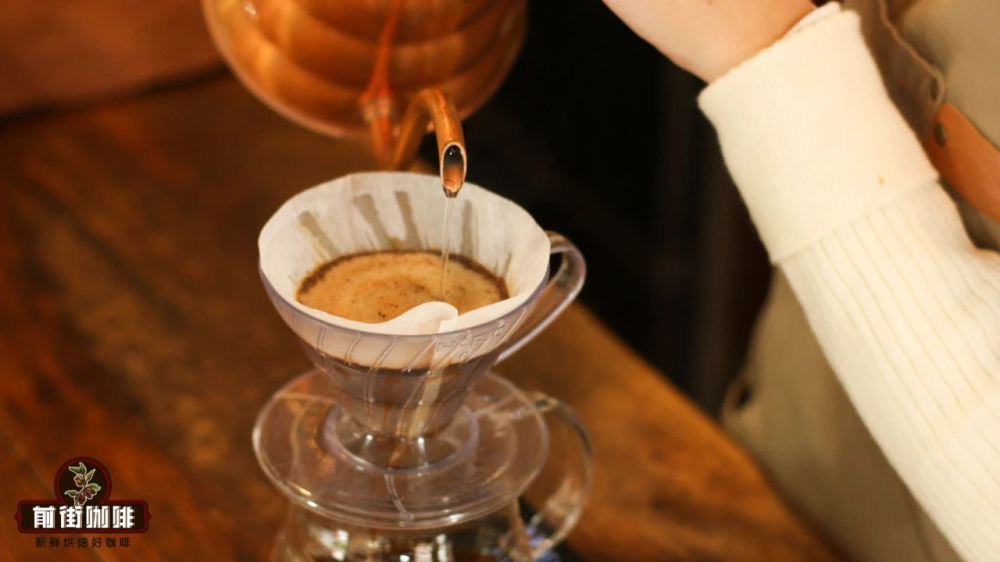
Front Street has talked about many variables that affect coffee taste in the past. Apart from the five objective conditions of coffee dose, coffee-to-water ratio, water temperature, grind size, and brewing device, there is another subjective factor that is equally crucial: the brewer's own technique. This content revolves around the techniques to pay attention to during brewing.
At its core, brewing coffee is the process of pouring water into coffee grounds, and a brewing recipe solves the problem of how to pour water reasonably to make the final cup taste better. Breaking it down, it mainly involves two parts: [water distribution, pouring technique].
Water Distribution
When all other objective parameters are fixed, how the water is distributed often becomes the most obvious difference between brewing recipes. The commonly heard single-pour and three-pour methods essentially refer to water distribution methods.
Single-pour: After blooming, pour the remaining water in one continuous pour. Three-pour: After blooming, divide the remaining water into three pours.
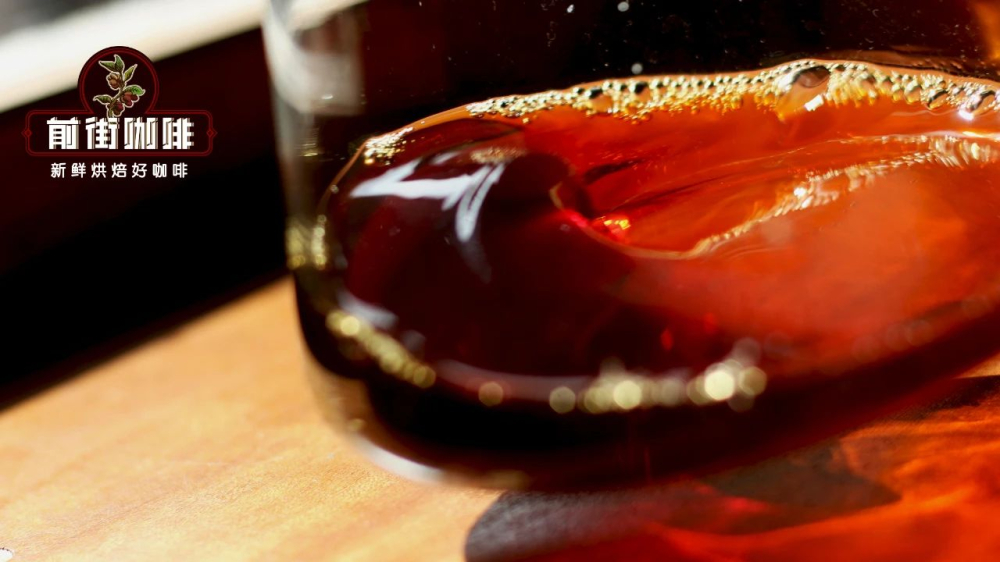
Taking single-pour and three-pour as examples, both have the same total water amount, but the difference is that single-pour pushes the water level higher, directly resulting in a shorter extraction time than three-pour. Therefore, in comparison, the former tends to produce a cleaner, thinner cup, while the latter is more complex and full-bodied.
In multi-stage brewing, if the water in each stage is not evenly distributed, the result will also change. Take light-roast coffee as an example: a higher proportion of water in the early stage makes the cup more sour and less sweet; a higher proportion in the later stage makes it sweeter and less sour, and improper operation may also bring out bitterness.
Pouring Technique
Pouring technique covers quite a few variables, including blooming technique, circling speed, pouring height, flow rate, circling range, etc.
Blooming Technique
Blooming can be called a key step in whether coffee brewing succeeds. The most basic operation is to wet all the coffee grounds and allow them to degas smoothly. Once the coffee bed absorbs water unevenly, degassing will naturally be uneven as well, and then extraction inside the bed is almost left to luck, with some areas over-extracted and some under-extracted; it is no surprise that astringency appears in the end.
Regarding blooming water amount and time, the widely circulated saying is twice the water amount and a 30-second bloom. If you are at the beginner stage, just follow it; but since we are talking about advancing, it is necessary to explain the reasoning. Simply put, coffee grounds need about twice their own weight in water to reach saturated absorption, and most beans within their peak flavor period can expel active gases in about 30 seconds after contact with water.
However, note that due to the influence of grind size, larger coffee particles cannot fully reach saturated absorption during the short blooming pour. So if you quickly finish pouring twice the water amount, some water will drip from the dripper. Therefore, those confident in their water control may try blooming with 1.5 times the water amount. What if the blooming water exceeds twice the amount? The answer is that the final cup will be more sour than normal. The reason is not complicated: too much water falls into the server before the coffee substances have been fully extracted, lowering the overall extraction yield, and the liquid dripping in the early stage is precisely rich in small-molecule acidic substances.
If the blooming time is too short, the gases may not be fully released, dragging down subsequent extraction efficiency; if the blooming time is too long, the later water more easily carries out coffee substances along with it, including large-molecule bitter components.
As for circling speed, pouring height, flow rate, and circling range, Front Street has also conducted several comparative experiments.
Circling Speed
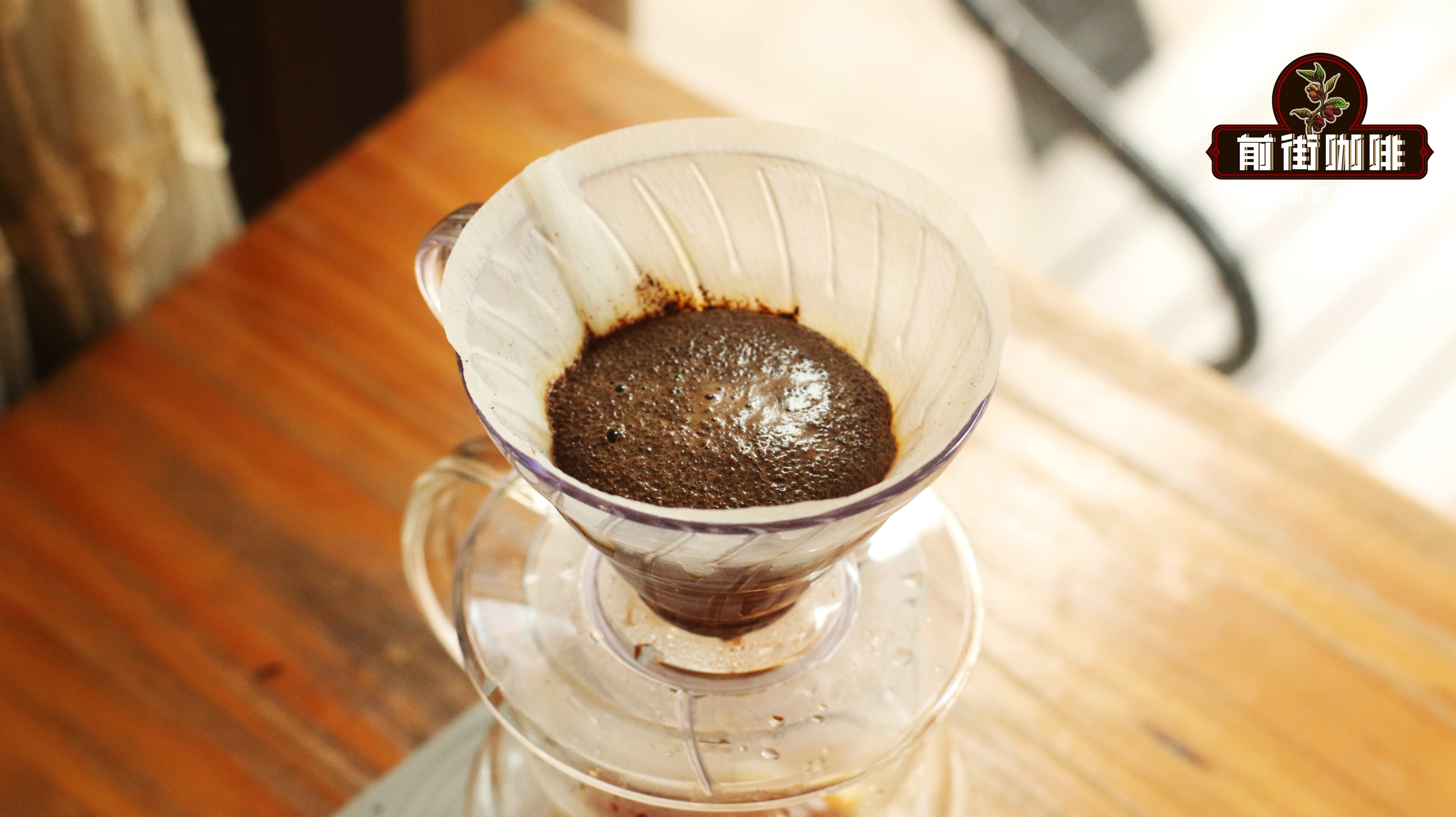
Fast circling and stirring enhances water fluidity, allowing the coffee grounds to tumble as much as possible, thereby increasing the extraction yield; the cup is fuller and more aromatic, and aroma retention is also relatively sufficient, but there is likewise a risk of over-extraction;
When pouring slowly in circles, only the force of the water stream itself washes the coffee bed, and some coffee grounds are not turned over and remain static the whole time, so the extraction yield is relatively low; the final cup's mouthfeel and aroma are slightly lacking, and the overall style is more balanced and gentle.
Pouring Height
A high water stream has a lower extraction yield than a low water stream. It is usually recommended to keep the pouring height at 6-7 cm during brewing.
Flow Rate
When the pouring flow is large, the liquid level is raised; once it rises to the position of the short ribs, more water flows down along the edge ribs, and its contact time with the coffee grounds is shortened accordingly. When pouring with a small flow, the liquid level will not rise too high, the coffee bed is relatively thicker, and the contact time between water and coffee grounds is slightly longer.
When using a large flow for a fast brew, the brewing time is short and the aroma is more prominent, but the flavor tends to be simpler and cleaner. Switching to a small flow for a slow brew and extending the extraction time can fully extract the coffee flavor and is superior in richness and layering, though there is also a risk of over-extraction.
Circling Range
Circling in a small range can make the coffee flavor more concentrated, highlight the sweetness of light-roast beans, and give a more solid mouthfeel. If you only circle in a large range, the flavor will be more sour and the mouthfeel tends toward fresh and thin. In fact, when brewing with a conical dripper, circling the outer ring may seem not to wash the filter paper, but the water stream has impact force, so it may still hit the ribs at the edge of the coffee bed, and water will flow down along the ribs, causing incomplete extraction.
Of course, these techniques all require a great deal of practice to settle into brewing experience. Front Street shares several single-origin coffee beans with obvious regional distinctiveness, which are very helpful for training brewing.
Pour-over coffee beans — Front Street. Washed Yirgacheffe Country: Ethiopia Region: Yirgacheffe Altitude: 1800-2000 m Variety: Local heirloom Processing: Washed Flavor: Jasmine, berries, lemon, citrus
Yirgacheffe is a small town in Ethiopia at an altitude of 1700-2100 meters. It is one of the highest coffee-producing regions in the world and also synonymous with Ethiopian specialty coffee. Lake Turkana, Lake Abaya, and Lake Chamo bring abundant moisture here. In the rift valley represented by Misty Valley, fog lingers all year round, it is like spring in all four seasons, with gentle breezes, cool and humid; thousands of coffee trees thrive and multiply, nurturing Yirgacheffe's unique terroir with intertwined floral and fruity aromas and an unpredictably changing character. The so-called Yirgacheffe flavor refers to rich citrus and lemon acidity, a strong jasmine floral aroma, a light and elegant mouthfeel with tea-like notes, drinking like refreshing, clean lemon tea.
Front Street Brewing Recommendation Water temperature: 90-91°C Grind size: EK43s grinder 10 setting (caster sugar size / 80% passing a No. 20 sieve) Coffee-to-water ratio: 1:15 Coffee dose: 15 g
Front Street brewing method: In the first stage, pour 30 g of water for a 30-second bloom, then pour 95 g (the scale shows about 125 g), finishing the pour in about 1 minute. When the water level drops to 2/3 of the coffee bed, pour the remaining 100 g (the scale shows about 225 g), finishing the pour in about 1 minute 40 seconds. Dripping is completed at 1'55''-2'00'', remove the dripper, and extraction is complete.
Brewed flavor: jasmine aroma, berry juice-like character, lemon and citrus acidity, overall bright, clean, and fresh.
Pour-over coffee beans — Front Street. Costa Rica Tarrazu Country: Costa Rica Region: Tarrazu Altitude: 1500 m Variety: Caturra, Catuai Processing: Washed Flavor: Sweet orange, honey, toffee, nuts
Costa Rican coffee has always been famous for balanced flavor, rich chocolate notes, and a smooth mouthfeel. Tarrazu is located south of the capital San Jose and is one of Costa Rica's most valued coffee-growing areas. Tarrazu coffee beans are plump, with a rich body, smooth mouthfeel, rich chocolate and nut aromas, moderate acidity, and an enticing fragrance.
Front Street Brewing Recommendation Water temperature: 90-91°C Grind size: EK43s grinder 10 setting (caster sugar size / 80% passing a No. 20 sieve) Coffee-to-water ratio: 1:15 Coffee dose: 15 g
Front Street brewing method In the first stage, pour 30 g of water for a 30-second bloom, then pour 95 g (the scale shows about 125 g), finishing the pour in about 1 minute. When the water level drops to 2/3 of the coffee bed, pour the remaining 100 g (the scale shows about 225 g), finishing the pour in about 1 minute 40 seconds. Dripping is completed at 2 minutes 3 seconds, remove the dripper, and extraction is complete.
Brewed flavor: on the palate, the sweet-and-sour note of sweet orange; in the middle, nut and chocolate flavors are obvious; caramel sweetness returns persistently, along with some cedar aroma; overall balanced.
Pour-over coffee beans — Front Street. Indonesia Lintong Mandheling Country: Indonesia Region: Sumatra Lintong Altitude: 1100-1600 m Variety: Typica, Caturra Processing: Wet-hulled Flavor: Toasted bread, nuts, caramel, pine, herbs
Mandheling is not actually a specific coffee bean variety, nor the name of a coffee-producing region, but the name of a tribe. It was mistakenly thought by Japanese people to be the name of a coffee bean and has been used that way ever since.
Lintong Mandheling comes from the Lintong mountainous area in north-central Sumatra, near Lake Toba. It uses the local conventional wet-hulling method; because the parchment is removed while the beans are in a semi-dry, semi-wet state and exposed to the air, they absorb moisture, thus creating its unique flavors of herbs, wood, and spices. To restore the most classic Mandheling flavor, we use a medium-dark roast to maximize Mandheling's caramelized aroma while weakening acidity, resulting in a higher body.
Front Street Brewing Recommendation
Front Street uses a Kono dripper when brewing Mandheling coffee. Kono's ribs do not reach halfway up the dripper's height. This design is actually intended to ensure that the filter paper clings tightly to the dripper wall after wetting, limiting airflow. This increases the water absorption time of the coffee particles, so the extracted coffee is overall more uniform and the full-bodied mouthfeel is enhanced. The grooved skeleton at the bottom of the Kono dripper is also a key design for producing a siphon effect during subsequent brewing.
Recommended water temperature: 87-88°C Grind size: EK43s grinder 11 setting (coarse sugar size) Coffee-to-water ratio: 1:15 Coffee dose: 15 g
Front Street brewing method: Use 30 g of water for a 30-second bloom, pour in circles with a small flow until 125 g, then pause; when the water level drops and is about to expose the coffee bed, continue pouring until 225 g and stop pouring. When the water level drops and is about to expose the coffee bed, remove the dripper. (Timing starts at the beginning of blooming.) Extraction time is 2'00''.
Brewed flavor: on the palate, herbal and medicinal notes, dark chocolate, caramel, and a sweet aftertaste.
The above content is compiled by CoffeeHunters, a coffee news website.


