







Why Do SL28 and SL34 Define Kenya Coffee Quality?
Kenya coffee stands out in Africa for bright, pleasant acidity, and much of that consistency traces back to two varieties: SL28 and SL34. Both were selected by Scott Laboratories, a research body set up in the 1930s when the Kenyan government pushed to find varieties with better yield, quality, and disease resistance than the old Typica.
Between 1935 and 1939, the laboratory evaluated forty-two individual coffee plants for yield, quality, drought resistance, and disease resistance, naming the selections with the initials SL. Later varieties such as Ruiru11 and Batian followed, and Kenya's green bean grading has shifted from screen size alone toward a broader scoring system.
Kenyan coffee stands out in Africa's specialty producing regions with its bright and pleasant acidity, and the core supporting its stable quality is precisely the two unique varieties, SL28 and SL34. From the perspective of Front Street Coffee, this article reviews the breeding history, genetic background, and flavor differences of SL28 and SL34, and further introduces subsequent varieties such as Ruiru11 and Batian, as well as the evolution of Kenya's green bean grading system from the traditional screen size standard to the new comprehensive scoring system. At the end of the article, the roasting parameters and brewing suggestions for two beans, Front Street Kenya Little Tomato and Sachini PB, are attached for coffee lovers' reference.
For more specialty coffee knowledge, please follow: Front Street Coffee
Front Street Kenya coffee beans occupy an important position in Africa's specialty coffee landscape with their pleasant acidity. Kenya's coffee growing history is not particularly long compared with other producing regions, but the bean quality has remained stable over the long term. Front Street Coffee believes that this is inseparable from Kenya's unique two major varieties, SL28 and SL34. Below, Front Street Coffee will introduce these iconic Kenyan coffee varieties.
What are the characteristics of the Front Street Kenya SL28 coffee variety?
The birth of SL28 was due to the Kenyan government's emphasis on the coffee industry. In the 1930s, the Kenyan government established a dedicated laboratory responsible for selecting superior varieties for future coffee cultivation. At that time, the old Typica variety had weak resistance to pests and diseases and was difficult to cultivate, while Kenya's coffee growing history was short, so variety selection work was especially critical—only by selecting good varieties could they be promoted from the top down to coffee farmers nationwide and help them avoid losses caused by pests and diseases.
This laboratory was the later famous "Scott Laboratories." Between 1935 and 1939, the laboratory selected forty-two coffee individual plants from different sources, systematically evaluated their yield, quality, drought resistance, and disease resistance, and named these selections with the initials "SL" from the laboratory's English name.
According to Front Street Coffee's understanding, SL28 was first selected in 1935 from a drought-resistant tree originating from Tanganyika. Historical records show that in 1931, AD Trench, a breeder at Scott Laboratories, discovered a variety in the Moduli area while investigating Tanganyika (present-day Tanzania) that appeared able to tolerate drought and pests and diseases, so he collected seeds and brought them back to the laboratory. After confirming its drought resistance, the variety was widely planted until it was replaced by its descendant SL28.
To this day, SL28 is still one of Africa's most famous and respected varieties. After being selected in Kenya in the 1930s, it gradually spread to other parts of Africa (especially Uganda's Arabica growing areas), and now it has also spread to Latin America. SL28 is suitable for medium to high altitudes and has drought resistance, but it is relatively susceptible to major coffee diseases. SL28 can be seen in many places in Kenya, and even at 60 to 80 years of age, the trees still maintain considerable yields.
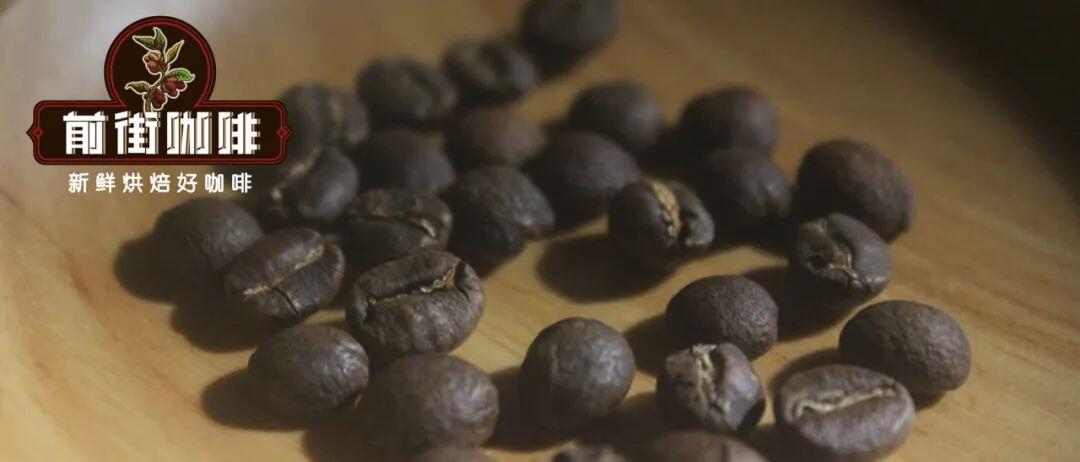
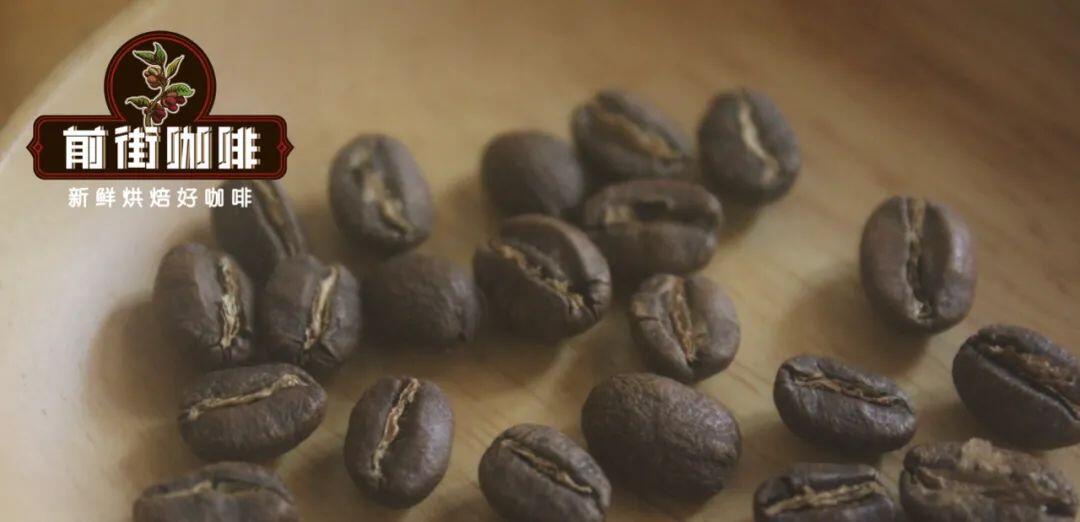
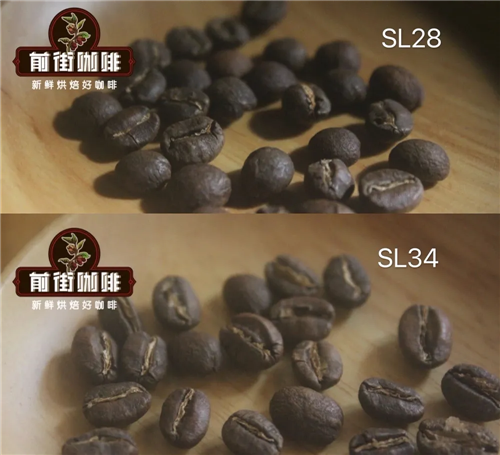
Also, according to Front Street Coffee's understanding, genetic testing in recent years has confirmed that SL28 belongs to the Bourbon genetic group. Therefore, SL28's bean appearance is close to that of Bourbon varieties, with round, plump beans and a dense texture. (As shown in the picture)
What are the characteristics of the Kenyan SL34 coffee variety?
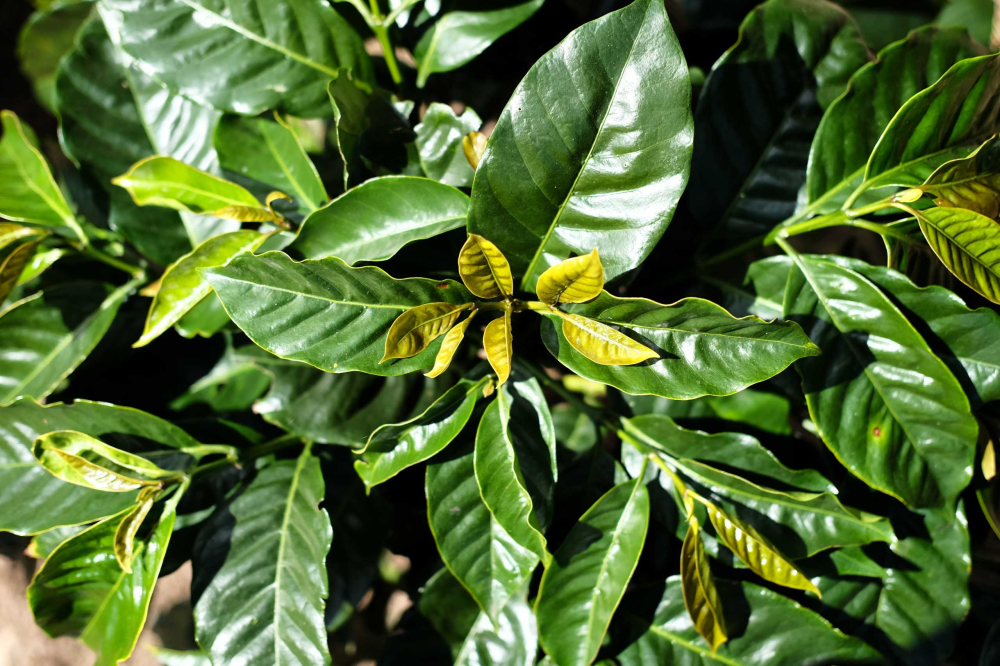
SL34 was initially selected from the "French Mission" (Bourbon variety) on the Loresho estate. However, after reviewing materials, Front Street Coffee learned that genetic testing has now confirmed that this variety carries the Typica genetic group, and its plant performance characteristics are also similar to Typica, so it is generally believed that SL34's selection source is Typica. Because it is close to Typica, SL34's bean appearance is relatively elongated, oval-shaped, and somewhat flat when viewed from the side. (As shown in the picture)
What is the difference in flavor between SL28 and SL34 coffee beans?
After understanding the characteristics of both, Front Street Coffee will now discuss their differences. According to Front Street's understanding, SL28 has earned a higher reputation, while SL34 has higher yields and is grown at slightly lower altitudes. According to botanists at the SL laboratory, both SL28 and SL34 are genetic variants. Among them, SL28 combines the lineage of Mocha and Yemen Typica. The original goal of cultivating SL28 was to mass-produce coffee beans that were both high quality and resistant to pests and diseases. Although the final yield did not meet expectations, thanks to the excellent sweetness, balance, and complex flavors brought by its bronze-colored leaves and fava-bean-like shape, as well as its signature citrus and smoked plum notes, SL28 has been passed down to this day.
Front Street Coffee believes that SL34 and SL28 have similar flavor directions, also possessing complex acidity and a beautiful sweet finish, but its mouthfeel is heavier and more intense than SL28, and its cleanliness is also higher. SL34 carries Bourbon lineage as well as more Typica lineage. Therefore, many of the Front Street Kenya single-origin coffee beans currently in Front Street Coffee's store are blends of SL28 and SL34.
In addition, Front Street Coffee also learned that Kenya later developed two varieties, Ruiru and Batian, which are also widely planted in Kenya. Below, Front Street Coffee will introduce their characteristics separately.
Ruiru11
Ruiru appeared only after SL28 and SL34. According to Front Street's understanding, in the 1970s, the Ruiru station began attempting to breed different CBD and rust-resistant varieties, and the final result was Ruiru11, released in the 1980s. It has high yield and combines CBD and rust resistance, and was once regarded as the solution to all difficulties in Kenyan coffee production.
Batian
Batian was released by the Coffee Research Institute (CRI) on September 8, 2010, and is Kenya's newest variety at present. It was developed through further experimentation based on the lessons learned from Ruiru11. Genetically, it is essentially selected from backcrosses of SL28 and SL34, and is closer to SL28 than Ruiru 11. This also removes problematic Robusta variety elements, thereby improving cup quality.
Kenyan Coffee Bean Grading System
The difference between Kenyan coffee beans and those from other producing regions lies not only in varieties but also in the grading system. For example, the common Front Street Kenya coffee grades in Front Street Coffee's store include AA, AB, and PB. Although it is called "grading," is AA grade necessarily tastier than AB grade?
According to Front Street Coffee's understanding, Kenya's grading standard is mainly based on size, and the difference between AA and AB is only bean size. As for whether it tastes good, Front Street Coffee's conclusion through cupping is: whether AA or AB grade Kenyan coffee beans, they are all very delicious coffees. Differences in taste among different producing regions may come more from factors such as region, altitude, and growing conditions. But what is certain is that AA and AB grade Kenyan coffee definitely have the most guaranteed quality.
From the above, these grades are merely distinctions in bean size, and the most famous processing method for Front Street Kenya coffee beans is none other than the K72 washed process, so Kenya's highest-quality coffee beans are basically washed. Washed processed coffee is roughly divided into eight grades:
E: Elephant Bean, also called Elephant ear, flat beans with a screen size above 19 AA: Screen size 17 to 18
AB: Screen size 15 to 16, accounting for most of production TT: Lighter-weight beans blown out from AA and AB grade beans by an airflow sorter C: Screen Size smaller than AB / below 14, too small in size to be classified as specialty grade. T: Lighter-weight beans blown out from C grade beans (below 14 screen) by an airflow sorter, that is, too small in both size and density to be classified as specialty grade. PB: Peaberry, meaning round bean, classified not by size but by appearance, unrelated to flavor or weight, accounting for about 10% of total production UG: Those not meeting the above standards
Next, there are also low-quality natural coffee bean grades. Because of poorer quality, they do not undergo Kenyan-style washing and are generally supplied to Kenya's domestic market. This bean grade is called M'buni.
MH: M'buni Heavy = large beans ML: M'buni Light = small beans
In addition, one point Front Street Coffee wants to emphasize is that this "green bean grading system" still in use today was issued by a government agency in 1938, even 40 years earlier than the birth of the concept of "specialty coffee," so present-day Kenya has long had new concepts for coffee bean grading standards, but the size-based grading standard is still the more commonly seen one.
The following is Kenya's current new coffee grading standard:
According to Front Street Coffee's understanding, when Kenyan coffee research institutions and the local industry assess coffee quality, they commonly use a set of "coffee bean quality grading procedures" formulated by Kenyan coffee research institutions, grading comprehensively based on three aspects: green bean quality, roasted bean quality, and cupping quality.
Green bean quality: The assessment items are further subdivided into green bean appearance and size, green bean color, and defects. Roasted bean quality: Subdivided into center crack condition, roasted bean condition, and defective beans. Cupping quality: Scored by acidity, body/texture, flavor, and negative defects.
Combining the scores from the three aspects, coffee beans are divided into grades 1 to 10, with grade 1 being the best and grade 10 the worst.
The above is the relevant knowledge compiled by Front Street Coffee about Front Street Kenya coffee bean varieties and grading, and we hope it can help coffee fans who want to understand related knowledge. Next, Front Street Coffee will share the flavor and roasting and brewing data of Front Street Kenya coffee beans.
Front Street Coffee Kenya Little Tomato Coffee Beans
Country: Kenya Region: Asali (Honey Processing Station) Altitude: 1550-1750m Variety: SL28, SL34 Processing Method: 72-hour washed process Flavor: snow pear, smoked plum, yellow sugar, cherry tomato, plum
"Front Street Coffee Roasting Parameter Sharing"
Front Street Kenya Little Tomato Coffee Beans:
This Front Street Kenya Asali bean has a plump and round body. In order to fully express its bright and mellow acidity, Front Street Coffee uses a light roast level.
Yangjia 800N semi-direct fire, charge amount 480g: charge when the drum temperature reaches 160°C, set airflow to 3, heat power to 120. Turning point: 1'28". When the temperature rises to 130°C, set airflow to 4. Roast until 6'00'', temperature 154.6°C, the bean surface turns yellow, the grassy smell completely disappears, and dehydration is complete.
When the bean surface shows ugly wrinkles and dark spots, and the toast smell clearly turns into coffee aroma, this can be defined as the prelude to first crack. At this time, listen clearly for the sound of the first crack. At 9'28'' first crack begins, airflow remains unchanged, first crack development time is 2'20'', and the beans are dropped at 193.8°C.
Front Street Kenya Sachini PB Coffee Beans:
Because this rich Front Street Kenya Sachini coffee bean is grown at a higher altitude, its bean quality is harder. At the beginning, it climbs with a relatively high temperature rise, and the turning yellow point is around 5 minutes, then the heat power is lowered to enter the Maillard reaction. At 166°C, the heat power is lowered again to prolong the Maillard reaction time. When first crack begins, heat absorption is stronger, so it is recommended to maintain heat at this stage to prevent stagnation. First crack development takes a relatively long time, which helps reduce acidity and develop flavor.
Roaster Yangjia 800N (roasting amount 300g), charge at drum temperature 170°C, heat power 100, airflow set to 3; turning point 1'42", when drum temperature is 140°C open airflow to 3.5, heat power unchanged; when drum temperature is 149°C the bean surface turns yellow, the grassy smell completely disappears, entering the dehydration stage; at 7'14'' dehydration is complete, heat power and airflow unchanged, at 7'30'' wrinkles and dark spots appear on the bean surface, the toast smell turns into coffee aroma, which is the prelude to first crack. At this time, pay attention to listen for the sound of first crack. At 8'20'' first crack begins, open airflow to 4, lower heat power to 50. After first crack, development time is 1'50'', when reaching 188°C lower heat power to 30, flatten the temperature rise, and drop at 193.3°C.
Front Street Coffee Brewing Suggestions
Dripper: V60 or cake cup Water temperature: 90-91°C Coffee-to-water ratio: 1:15 Grind size: fine grind (80% passing rate on China standard No. 20 sieve)
Brewing method: Staged extraction. Use 30g water for blooming for 30 seconds, pour in a small stream in circles until 124g for the stage break, when the water level is about to expose the coffee bed continue pouring until 228g and stop pouring. When the water level is about to expose the coffee bed, remove the dripper. (Start timing from the beginning of blooming) Extraction time is 1'55".
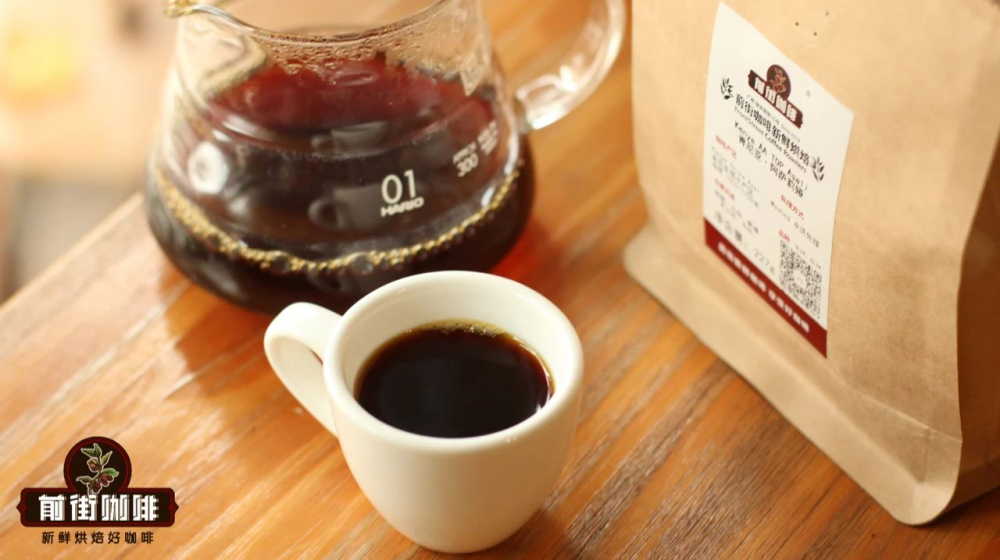
Front Street Kenya Little Tomato Coffee Bean Flavor: The wet aroma has ripe tomato and floral notes. On the palate, there are flavors of cherry tomato and smoked plum, with bright acidity, a clean and rich mouthfeel, prominent sweetness in the middle, a juicy feel, and a finish of berry aroma and yellow sugar sweetness, along with green tea aroma.
The above content is compiled by CoffeeHunters, a coffee news website.


