








What Sets Panama Geisha Coffee Beans Apart?
Panama Geisha coffee beans are the variety that turned a small Central American origin into a reference point for specialty coffee. Three estates define that reputation: Hacienda La Esmeralda, which led the trend after the 2004 reliable of Panama competition; Ninety Plus Gesha Estates, built around experimental processing; and Sofia Estate, planted at roughly 2,100 meters above sea level.
Each estate manages its own lots and processing methods, and Esmeralda alone sells Geisha under Red, Green and Blue Label tiers that differ in price and cup profile. The Geisha variety itself comes from Ethiopia's wild forests, where heirloom trees can live over a century and produce very limited yields.
Geisha coffee has always been the unreachable beloved in the hearts of specialty coffee lovers, and Panama is the stage where it shines before the world. From its breakthrough at BOP in 2004 to the fierce competition among major estates today, the legend of Geisha continues to be written. This time, Front Street Coffee will take you deep into three world-class Geisha estates: the 90+ Gesha Estate, known for experimentation and innovation; Hacienda La Esmeralda, the leader of the Geisha trend; and Sofia Estate at 2,100 meters above sea level. The article not only sorts out each estate's history, series divisions, and processing methods, but also compares in detail the differences between Front Street's Esmeralda Red Label, Green Label, and Blue Label Geisha, and includes the prices and characteristics of the 90+ series, aiming to provide coffee lovers with a professional and comprehensive knowledge map of Geisha.
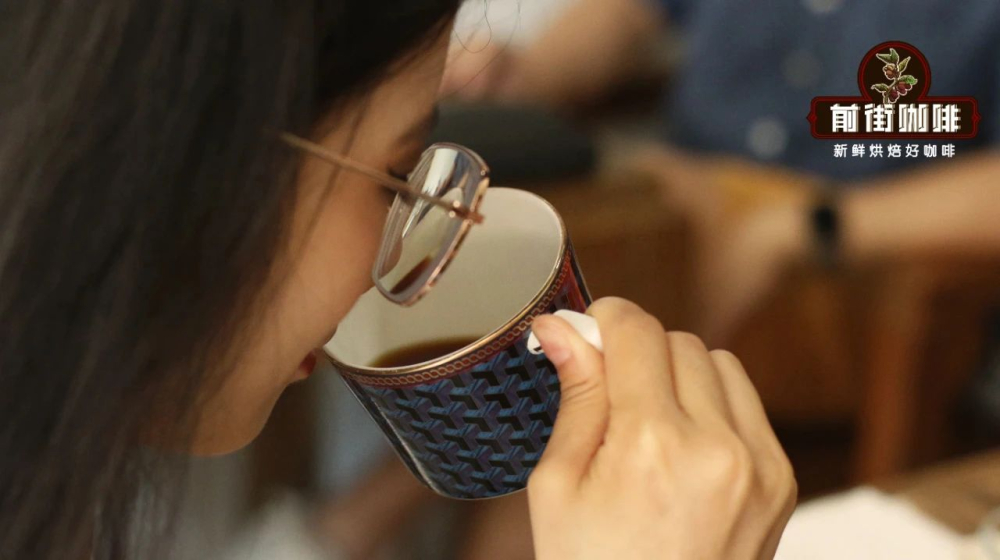
Guests who come to Front Street for coffee often ask, which coffee tastes the best? Front Street finds it hard to give a standard answer. After all, taste is subjective. Some people prefer the herbal and dark chocolate notes of Front Street's Indonesian Mandheling; some are fond of Front Street's Panama Butterfly, with its clean sweet aftertaste and delicate floral aroma; and others are drawn to the rich, boozy fermented character of Front Street's Honduras Sherry. Everyone has different preferences, so naturally there is no unified answer. But Front Street can tell you which coffee sells for the highest price in the shop. For many specialty coffee lovers, Front Street's Geisha coffee is truly the unreachable beloved in their hearts, representing the highest level of coffee experience.
Although Panama is not among the world's top coffee-producing countries, it is home to the world's most expensive coffee—Panama Geisha. Since the 2004 BOP (Best of Panama), the price of Geisha has remained consistently high. Today, Front Street Coffee will introduce you to three world-famous estates closely connected to Geisha: Hacienda La Esmeralda, 90+ Gesha Estate, and Sofia Estate.
The design philosophy of Ninety Plus Gesha Estates originates from the natural habitat of coffee in Ethiopia's wild forests. The Geisha variety, as well as all heirloom varieties, originated in Ethiopia's wild forests. These heirloom coffee trees have extremely long lifespans, some exceeding a hundred years, and their yields are very limited. In 2009, Joseph Brodsky, founder of 90+ Gesha Estate, seized the opportunity to purchase this roughly 200-hectare piece of land and planted Ethiopian Geisha, which prefers shade. In 2014, the estate planted Geisha on a large scale for the first time, and within the following six years, 90+ Gesha Estate won the World Brewers Cup championship five times.
According to Front Street Coffee, 90+ Estate currently has four series: Signature, Innovation, Founder's Selection, Limited Edition, and Ascent. The Signature series includes five coffees: Nekisse, Lycello, Juliette, Perci, and Lotus, plus one heirloom blend. The Innovation series also has five: Ruby, Carmo, Tigre, Yuzo, and Kule. The Founder's Selection series currently has three lots of Geisha (#0602, #0526B, #0317), starting at US$200 for 10 grams. The Limited Edition series currently has only one blended Geisha-variety coffee, explicitly labeled on the official website as Geisha-flavored coffee, with each serving containing only 1 gram of Geisha. The Ascent series includes three Geishas: Drima Zede, Kemgin, and Kambera, starting at US$19, US$21.85, and US$24.70 respectively.
It should be noted that 90+ does not mean a cupping score above 90, but rather a brand series of selected top coffees. 90+ collaborates with different estates, covering the entire process of cultivation, sampling, harvesting, processing, and cupping. The coffee is processed separately according to variety, climate, and ripeness to present the best taste and perfection, and is ultimately sold under the 90+ name.
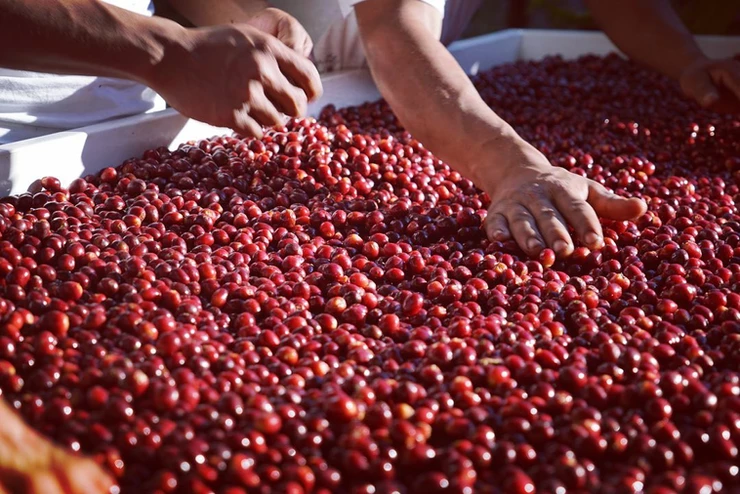
90+'s sustainable development model and environmentally friendly practices have also become a learning model for many coffee producers. Through coffee forest restoration projects covering more than 1,500 hectares in Panama and Ethiopia, the company has built an international brand, promoted an ecologically and socially oriented agricultural economic model, and improved the quality of life of coffee-growing professionals. Simply put, it guides coffee farmers to grow high-quality coffee, then uses the proceeds to improve their lives and the ecological environment of the coffee forests. Today, 90+ Coffee Estate is highly sought after by coffee lovers worldwide and is known as the LV of the coffee world.
The Geisha coffee regularly featured on Front Street Coffee's bean list comes precisely from Hacienda La Esmeralda. Although previous articles have introduced it many times, let us review it again here to deepen the impression.
The history of Hacienda La Esmeralda can be traced back to 1967, when Swedish-American banker Rudolph A. Peterson (1904-2003) bought Hacienda La Esmeralda as a retirement property. At the time, the land was mainly used for grazing beef cattle, with only a small amount of coffee planted. In 1997, the Peterson family purchased another piece of land, which later became Jaramillo farm, specifically planting coffee at a higher altitude in hopes of developing coffee with higher scores, livelier acidity, and greater refinement.
It is said that Geisha was initially used only as a windbreak, and a chance discovery allowed the Peterson family to recognize its potential. In 2004, Hacienda La Esmeralda won the Best of Panama competition with the astonishing flavor of Geisha and set a record for the highest price at that time. Since then, the Geisha variety began to attract more and more attention. In that year's competition, the Petersons also made an unprecedented experimental classification of Geisha: during processing, production from different areas of the farm was divided into separate lots.

Front Street Esmeralda Special (Red Label Geisha)
It uses Geisha coffee beans grown at an altitude of 1,600-1,800 meters, with a cupping score above 90, and originating from the Jaramillo and Cañas Verdes production areas. It must also participate in Hacienda La Esmeralda's own independent auction; only the Geisha lots put up for bidding from the divided plots are the auction Red Label.
However, there is now also non-auction Red Label on the market. It is actually Geisha selected from the same plots that was not entered into the auction and then circulated on the market. The varietal quality is consistent; only the selling price differs.
Front Street Private Collection (Green Label Geisha)
Its difference from Red Label Geisha is that it is not an independent competition lot, but still a high-quality Geisha variety. Green Label Geisha uses micro-lots blended from beans grown at 1,600-1,800 meters and originating from different plots such as Jaramillo and Cañas Verdes. Because it uses a blended-bean model and does not specify the plots in detail, Green Label Geisha sometimes has a very high degree of flavor similarity to Red Label Geisha. Although Green Label Geisha is not as high-grade as Red Label Geisha, it still carries the classic flavors of Geisha, such as the floral aroma, fruity notes, citrusy acidity, and thick, juicy mouthfeel unique to Geisha coffee.
Here we would also like to share some extra little knowledge about Hacienda La Esmeralda's Geisha coffee: according to Front Street Coffee, Geisha coffee has a strange characteristic—the more extreme and harsh the growing environment, the better its flavor expression. This also means Geisha coffee is especially difficult to harvest and its yield is very low. Therefore, not just any estate can grow delicious Geisha coffee; sufficient conditions and equipment are required to produce Geisha coffee with excellent flavor. This is also why Hacienda La Esmeralda's Geisha coffee beans stand out from the rest.
Front Street Geisha 1500 (Blue Label Geisha)
In 2021, Hacienda La Esmeralda canceled the Blue Label Geisha grade for unknown reasons, but we will still share some knowledge about Front Street Blue Label Geisha. Front Street Esmeralda Blue Label Geisha uses blended beans grown at 1,400-1,500 meters and originating from three different blocks: Jaramillo, Cañas Verdes, and El Velo. Compared with Green Label and Red Label, its mouthfeel is not as thick, but it still has the classic Geisha flavor. Front Street purchased Blue Label green beans from the 2020 harvest.
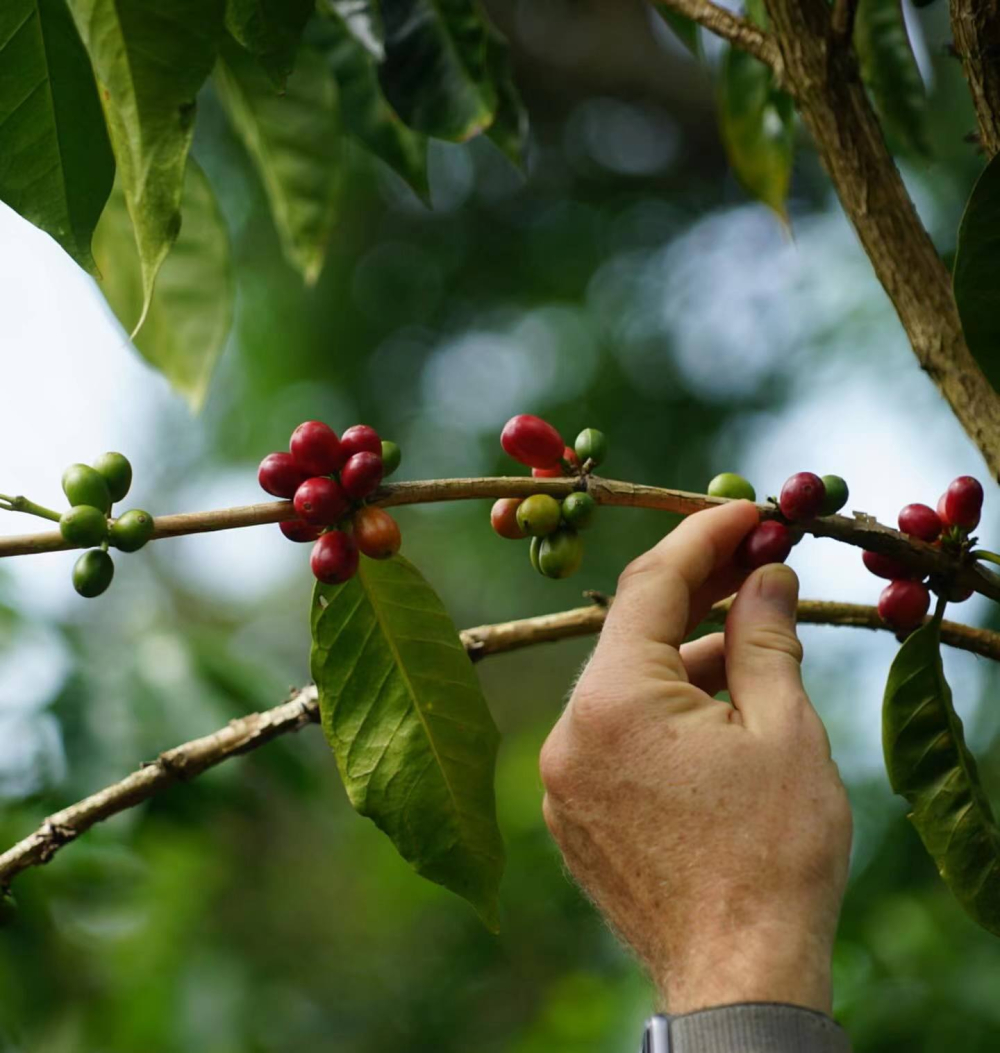
In addition to the above two estates, today Front Street will also introduce a relatively newer coffee estate. This estate almost exclusively grows Geisha coffee, and its altitude of 2,100 meters has also become the estate's exclusive advantage. This estate is Sofia Estate.
Sofia Estate was established in 2008 and is located in the highlands of Panama near Nueva Suiza. It also boasts magnificent views of Cerro Punta and Volcan Barú as well as dense tropical forest. Sofia Estate is an experimental estate aimed at testing the limits of coffee cultivation in Panama. In 2016, it was selected as a Good Food Awards winner; the following year, it won first place in the washed category of the Best of Panama competition; and in 2020, it achieved second place in the natural group. If you are interested, we may do a separate detailed feature on Geisha coffee estates.
The above content is compiled by CoffeeHunters, a coffee news website.


