







What Makes Blue Mountain Coffee Grade So Distinct?
Blue Mountain Coffee is the top grade of Jamaican Blue Mountain coffee, reserved for beans grown only in the designated 6,000-hectare core area of the Blue Mountains, between 910 and 1,700 meters. The Jamaican Industry Board sets strict limits on bean size, defect rate, and moisture content, and beans from outside that zone may only be sold as High Mountain Coffee or Jamaican Coffee.
The grade sits above No.2, No.3, and Peaberry in the island's four-tier system, and the historic Clifton Estate BMCP processing plant in Jamaica handles washing, drying, and sorting before the beans are shipped in barrels. Japanese buyers have long invested in this plant, which is one reason Jamaican coffee retains such a strong presence in that market.
Jamaican Blue Mountain coffee was once hailed as the king of coffee, and even in the current era of Geisha's popularity, it still firmly holds a place in the hall of specialty coffee with its unique quality. But did you know that not all beans produced in the Blue Mountains can be called "Blue Mountain Coffee"? The Jamaican Industry Board has strict definitions for the core production area, and only coffee grown within a specific altitude range is granted this honor. Blue Mountain No.1, as the highest grade, has stringent standards for bean size, defect rate, and moisture content. This article will guide you through the production area divisions, grading system, barrel packaging tradition of Blue Mountain coffee, and provide an in-depth introduction to the historic Clifton Estate and its BMCP processing plant. Finally, we will share the Blue Mountain No.1 pour-over recipe and flavor experience recommended by Front Street Coffee.
Jamaican Blue Mountain coffee has long been known as the "king of coffee," and top-grade Blue Mountain beans once commanded astronomical prices. Even with Geisha currently in the spotlight, this former king still firmly occupies a place in the specialty coffee landscape with its distinctive quality.
What kind of beans truly qualify as Blue Mountain coffee?
As is well known, Blue Mountain coffee comes from the Blue Mountains of Jamaica. But according to Front Street, not all coffee beans produced in the Blue Mountains can bear the name "Blue Mountain Coffee."
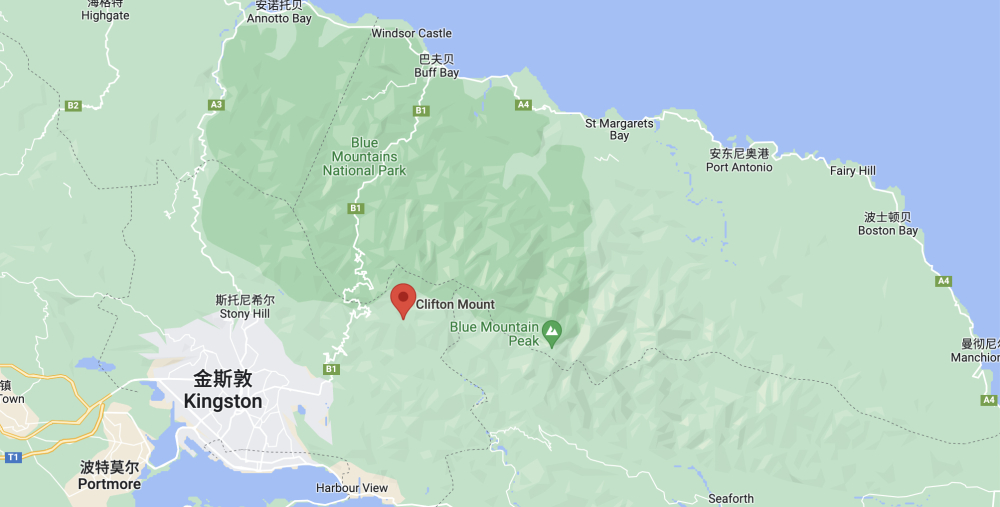
The official documents of the Jamaican Industry Board (CIB) clearly stipulate that only coffee beans produced within the core 6,000-hectare area of the Blue Mountains are permitted to be sold under the "Blue Mountain Coffee" label; beans grown outside this core area can only be called High Mountain Coffee or Jamaican Coffee. After comparing the document descriptions and marking them on a map, Front Street found that the CIB's division is actually closely related to altitude. As is well known, the higher the altitude at which Arabica coffee trees are grown, the better the flavor expression. The main peak of the Blue Mountains is 2,256 meters high, but the government has designated areas above 1,700 meters as a nature reserve, strictly prohibiting any cultivation activities. Within the designated 6,000-hectare area, the lowest point is 910 meters (3,000 feet). In other words, only coffee grown between 910 and 1,700 meters is eligible to be called Blue Mountain Coffee.
The grading system of Blue Mountain coffee beans
Jamaican Blue Mountain coffee is divided into four grades, from No.1 to No.3, followed by PB, which stands for Peaberry. The highest grade, Blue Mountain No.1, requires beans of 17 mesh or larger, a defect rate below 3%, and a moisture content of about 13%. In the Chinese market, what is called Blue Mountain coffee usually refers to Blue Mountain No.1; other grades are rarely seen domestically.
The packaging method for Blue Mountain coffee is quite unique—neither burlap sacks, nor high-barrier degradable bags, nor vacuum packaging are used. Instead, it is one of the few production areas today that still insists on wooden barrel packaging. The barrel material undergoes special treatment, achieving a balance between dryness and moisture retention, while ensuring the green beans are not crushed or tainted with odors.
Barrels stamped with official certification seals not only protect the quality of green beans during transport, but this time-consuming, labor-intensive packaging method that balances production and preservation also highlights the distinguished status of Blue Mountain coffee, giving buyers greater satisfaction when they receive the green beans after a long wait. In earlier years, when Taiwanese traders finally obtained Blue Mountain green beans, they would even solemnly hold a barrel-opening ceremony.
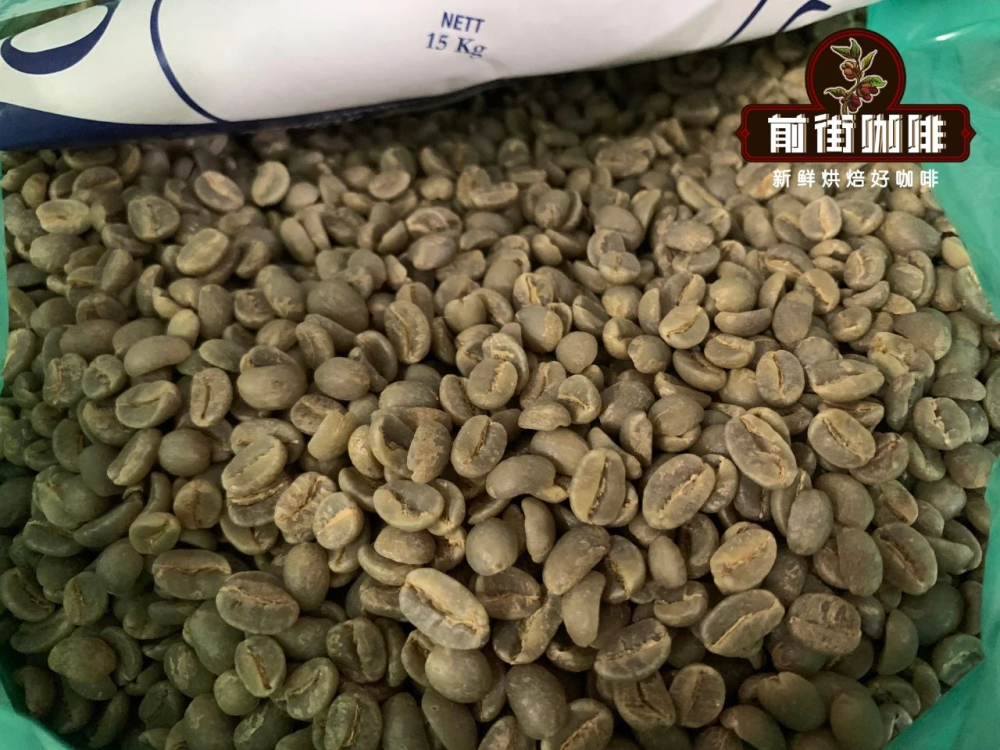
Blue Mountain coffee barrels generally come in three sizes: small 15 kg, medium 30 kg, and large 70 kg. Front Street's Blue Mountain No.1 coffee beans are all imported in original barrels from the historic local Clifton Farm and are classic washed batches. Nowadays, a green transparent sealed bag is also placed inside the Blue Mountain barrel to properly preserve the coffee beans.
Introduction to Blue Mountain estates
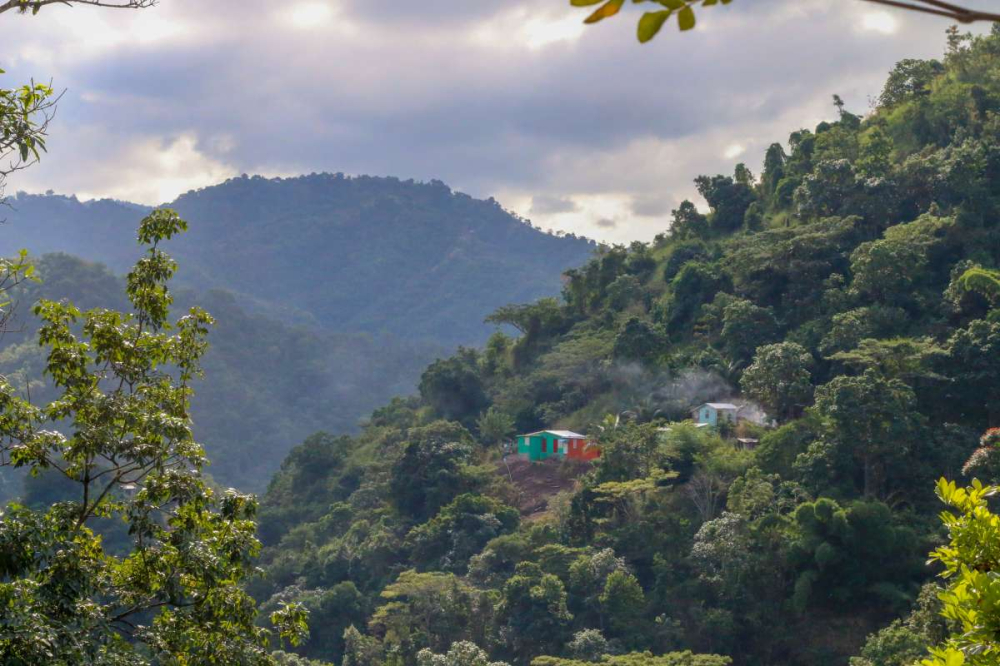
Clifton Estate is the oldest estate in Jamaica, having begun cultivating coffee in the mid-18th century, and by 1900 it had developed into the largest estate in Jamaica. In 1978, the Sharp family took over the management of Clifton Estate, improved the cultivation environment, introduced advanced equipment, and established BMCP, currently the largest coffee processing plant in Jamaica.
Clifton Estate has always upheld environmental protection principles, investing heavily in solar power stations and wastewater treatment plants. The removed fruit skins are also fermented into organic fertilizer. Traditionally, Clifton Farm has always used the washed method to process coffee cherries. After harvesting, the cherries are first screened by floating in water, then depulped, and fermented for 12 to 8 hours. The fermented beans are then placed in water tanks and moved back and forth, using the friction between the beans and the force of flowing water to wash the coffee beans until they are smooth and clean. After washing, the green beans must be dried until the moisture content reaches 12% to 14%. After drying, they undergo another screening, and finally are packaged and stored in warehouses.
Washed Blue Mountain coffee has a rich aroma, a clean taste, and a balance of acidity, sweetness, and bitterness. Front Street believes that washed Blue Mountain coffee best represents the standard of Jamaica's high-quality specialty coffee.
The quality of Blue Mountain coffee beans
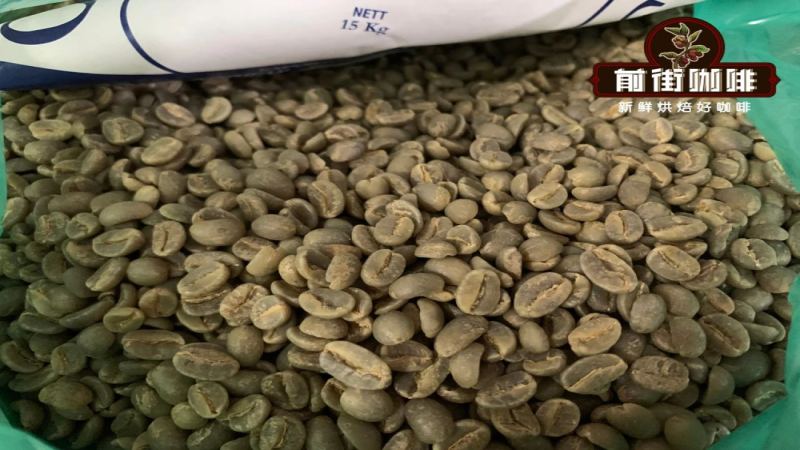
The variety of Blue Mountain No.1 is Typica. Those familiar with coffee varieties know that this is a classic, ancient, and excellent Arabica variety. Jamaican coffee basically uses the washed process, so the green beans appear pale green. The quality control for No.1 is extremely strict, requiring a defect rate of no more than 3% and a mesh size greater than 17, so Blue Mountain No.1 beans look particularly plump and large.
The flavor and taste characteristics of Blue Mountain coffee
Blue Mountain coffee is famous for its balance of acidity, sweetness, and bitterness and its full-bodied mouthfeel, making it very pleasant to drink. Brewing Blue Mountain coffee is not complicated either; Front Street recommends using the pour-over method for extraction.
Front Street recommends using freshly roasted coffee beans for brewing, as this allows you to experience the coffee's rich flavors to the fullest. Coffee beans shipped by Front Street Coffee are roasted within 5 days, because Front Street deeply understands the huge impact of freshness on flavor. Front Street's roasting philosophy is "Freshly roasted good coffee," ensuring every customer who places an order receives the freshest state upon delivery. The coffee resting period is about 4 to 7 days, so when customers receive it, it is exactly at its peak flavor.
Dripper: KONO
Dose: 15 grams
Grind: Medium-coarse grind, 75% passing through a No. 20 sieve
Ratio: 1:15
Water temperature: 88°C
Technique: Three-pour method
First pour: 30 ml for blooming for 30 seconds. Second pour: circular pouring of 100 ml. When the liquid level drops and the coffee bed is almost visible, continue pouring. Third pour: circular pouring of 95 ml. Once the coffee liquid in the dripper has finished dripping, the extraction is complete. Total time is about 2 minutes.
After grinding Blue Mountain No.1, you can smell rich chocolate and cocoa aromas. During brewing, there is a caramel sweetness. On the palate, it presents a full-bodied feel of nuts and dark chocolate, with moderate acidity and sweetness, a clean mouthfeel, and a long-lasting aftertaste.
The above content is compiled by CoffeeHunters, a coffee news website.


