







How does the coffee grading system frame Mandheling beans?
Sumatra Mandheling is a wet-hulled arabica from the Lintong Hills near Lake Toba in north-central Sumatra, grown around 900 meters and known for muted aroma, low acidity, and a full body. Indonesia's coffee grading system sorts these beans by defect count and screen size, and the grading step, not the variety alone, separates specialty lots from ordinary ones.
Wet hulling, where parchment is removed while the bean is still moist, drives Mandheling's herbal spice and driftwood notes, and it also makes defects harder to spot, so grading matters even more. On the brewing side, a Kono dripper with a three-pour method can bring out caramel sweetness and chocolate while keeping bitterness low.
As a major coffee-producing country, Indonesia's Sumatra region is known in the specialty coffee world for its Mandheling coffee, which features a muted aroma, low acidity, and a rich, full-bodied style. This article will begin with the distribution of Indonesia's coffee-producing regions, provide an in-depth analysis of the four major coffee types in Sumatra, explain in detail how the wet-hulling process of Lintong Mandheling shapes its unique herbal spice and driftwood flavors, and introduce Indonesia's coffee grading system. At the same time, Front Street Coffee will share how to use the Kono dripper and a three-pour brewing method to highlight Mandheling's caramel sweetness and chocolate notes in pour-over coffee while avoiding unpleasant bitterness, allowing coffee lovers to fully understand the charm of this "premium" coffee.
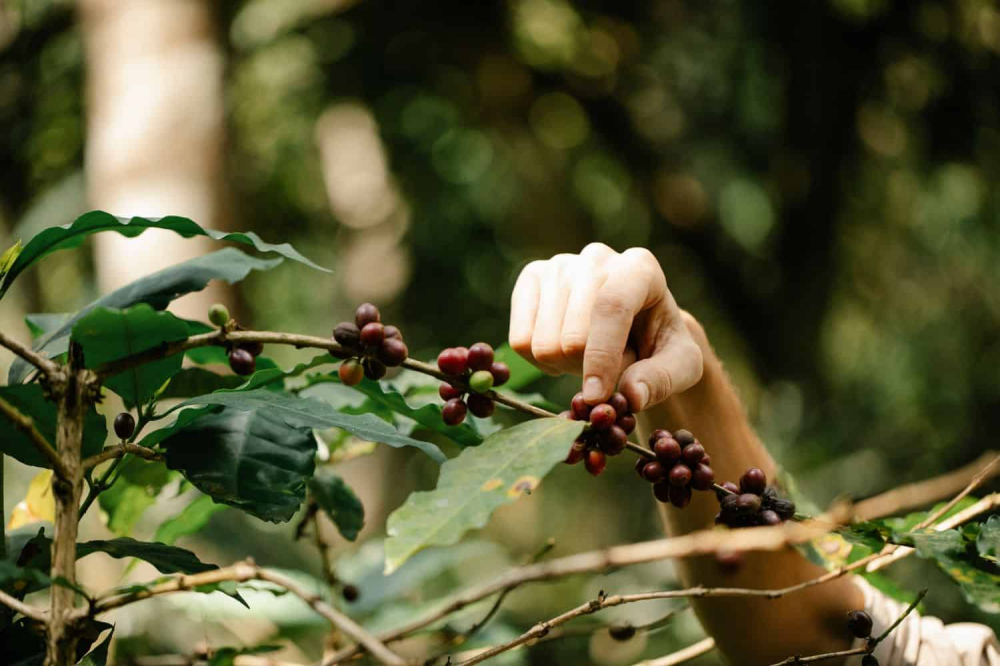
Indonesia occupies an important position on the global coffee map, with its main growing areas distributed across islands crossed by the equator, including Java, Sumatra, Kalimantan, and Sulawesi. Interestingly, even if the same coffee variety is used, as long as it is grown on a different island, the final aroma and flavor will each have distinct characteristics. Through long-term observation, Front Street has found that Indonesian coffee as a whole shows low acidity, restrained aroma, and outstanding body, among which the most well-known is Front Street Mandheling coffee.
Focusing on Indonesia's specialty coffee sector, the elegant arabica varieties are mainly grown in the high-altitude areas of northern Sumatra, Sulawesi, and Java. Although these producing regions account for only a small portion of Indonesia's total coffee output, coffees such as Mandheling, Golden Mandheling, Lake Tawar, Gayo Mountain, Aceh, Sulawesi, Aged Mandheling, and Java have earned Indonesia coffee a renowned reputation in the specialty circle for decades thanks to their excellent word of mouth, and have not been negatively affected by lower-quality robusta beans.
Sumatra is the core producing region for Indonesia's specialty coffee beans, and its coffee system is quite complex, roughly summarized into the following four types:
(1) What is generally called Front Street Mandheling specifically refers to the area around Lake Toba in north-central Sumatra, among which the semi-washed or sun-dried beans produced in the Lintong Hills at an altitude of 900 to 1,200 meters on the southwest bank are the most famous.
(2) Front Street Golden Mandheling requires four rounds of manual hand sorting, and its quality is more outstanding than ordinary Mandheling.
(3) Lake Tawar coffee is located near Lake Tawar in the Aceh region at the northernmost tip of Sumatra, in the Gayo Mountain area at an altitude of 800 to 1,600 meters, and is processed using washed, semi-washed, or a small amount of sun-dried methods. Competition in this region is fierce. The famous Costa Rican La Minita estate once traveled a long way to teach semi-washed techniques, and a Dutch coffee group has also deeply cultivated its presence in the field of Gayo Mountain washed beans, making it truly a contest among many powerful players.
(4) Aged Mandheling and Java coffee.
Front Street Mandheling coffee beans are produced in Sumatra, Indonesia, and are therefore also called "Sumatra coffee." This coffee is grown in highland mountainous areas at an altitude of 750 to 1,500 meters and belongs to a rare arabica variety in Indonesia, among which the first-grade Mandheling produced in Takengon and Sidikalang is the most excellent. Due to limited output, coffee lovers praise it as a "premium product," especially dark-roasted Mandheling (with prominent bitterness and darker bean color), whose rich sweetness fascinates many coffee addicts.
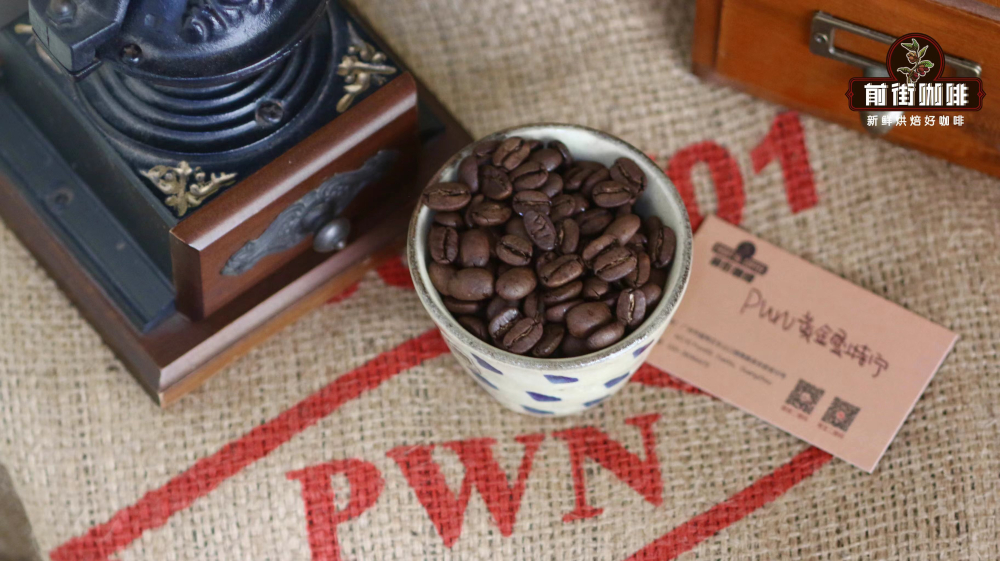
Lintong Mandheling
When it comes to Mandheling coffee, one of Front Street Coffee's daily-drink beans, Front Street Lintong Mandheling, has won the favor of coffee fans with its rich aroma, full body, and powerful flavor, while its distinctive herbal spice flavor is an iconic characteristic of Mandheling. The formation of this unique flavor, in addition to Indonesia's growing conditions, is also due in part to the wet-hulling process, which is one of the key factors shaping the strong flavor of Front Street Mandheling coffee.
The Lintong mountain area southwest of Lake Toba is an emerging producing region. Lintong Mandheling quickly became popular in the 1990s, and since then Typica output has increased year by year, with the beans mostly processed by the sun-dried method.
The unique wet-hulling process
Front Street Mandheling coffee is mostly processed using Sumatra's unique wet-hulling method. Because local water resources are precious in Lintong, Mandheling was mainly sun-dried in the early days, but the quality was unstable, so it was later changed to a method similar to Brazil's semi-dry process. However, Indonesia's humid climate makes it impossible to dry the sticky parchment beans outdoors for two or three days as in Brazil, otherwise they easily become moldy. Therefore, they can only be dried for at most several hours to one day. When the moisture content drops to 20% to 35%, before the mucilage layer has solidified, the beans are purchased by middlemen and sent to rudimentary processing plants where machines remove the mucilage layer to prevent excessive fermentation of the mucilage from producing a sour, foul odor. In other words, Lintong Mandheling has its mucilage layer scraped off before the parchment beans are dry, which is precisely the main reason Mandheling has relatively low fruit acidity and high body. After that, it is dried a little more, and the coffee beans inside the parchment beans have a moisture content of about 18%. Finally, Medan exporters purchase the still-undried parchment beans and place them in large drying yards or machine-dry them to a moisture content of 12%, after which they can be stored.
It can thus be seen that, due to farmers' insufficient hardware equipment, the drying process of Lintong Mandheling adopts a three-stage division of labor among farmers, middlemen, and exporters. Mandheling's unique medicinal herb aroma (similar to grass jelly) and driftwood notes precisely come from drying the mucilage layer in three stages under a high-humidity environment. This processing method, rarely seen in the world, accidentally created Mandheling's special flavor of low acidity, thick body, and muted aroma.
Grading method
Indonesian coffee beans use a grading method based on the proportion of defective beans, mainly divided into 6 grades, namely G1 to G6. Ethiopia also uses a similar method: the highest grades for washed beans are G1 and G2, while the highest grades for sun-dried beans are G1 and G3.
Washed: Grade-1; Grade-2
Sun-dried: Grade-1 and Grade-3~Grade-5
There are several points to note:
Whether washed or sun-dried, there is a Gr-1 grade, with the conditions being "zero" defects and Premium Cup. Whether washed or sun-dried, Gr-1 is a rating for the finest of specialty coffees or Cup of Excellence coffees. Beans of the same grade, such as Limu Gr-2, also vary in quality depending on the exporter's sorting level and investment. According to the existing "zero" defect requirement, Gr-1 beans (including washed or sun-dried) are extremely rare, because processing costs are very high and very few suppliers will do it.
How should Front Street Mandheling coffee be brewed?
Front Street's understanding of brewing Mandheling coffee is that it hopes to express a full-bodied yet clean cup, highlighting caramel, chocolate, and its signature herbal aroma, and it does not want Mandheling coffee to show unpleasant bitterness. In fact, every bag of Front Street Coffee's specialty coffee beans has detailed information and suggested brewing parameters on the packaging. The specific brewing recommendations are as follows:
Brewing parameters: use a Kono dripper
Water temperature: 88°C
Dose: 15 grams
Coffee-to-water ratio: 1:15
Grind size: medium-fine grind (70-75% passing through a standard Chinese No. 20 sieve)
Front Street Coffee uses staged extraction, also called three-pour brewing: dividing the water into three pours can better express Mandheling coffee's full body and caramel sweetness. The specific water distribution is 30 ml for the first pour, the bloom, which fully wets the coffee grounds and allows them to degas so that the coffee's flavor compounds can be better extracted afterward; 100 ml for the second pour; and 95 ml for the final pour, enhancing the coffee's sweetness and overall presenting a substantial, full-bodied mouthfeel with caramel sweetness and chocolate and nutty flavors.
The above content is compiled by CoffeeHunters, a coffee news website.


