







Brewing Blue Mountain No. 1 Drip Bag Coffee: Steps and Common Mistakes
Brewing drip bag coffee seems simple, but small changes in water temperature, pouring amount, or steeping time can noticeably alter the flavor. Based on Front Street Coffee's practice, this article outlines the correct steps and common mistakes. It also answers whether drip bags can be brewed repeatedly and why their optimal flavor period is shorter than that of coffee beans, and explains whether Blue Mountain drip bag coffee is truly made from Jamaican Blue Mountain beans.
Drip bag coffee has gained popularity for its convenience. According to Front Street Coffee, it was born in 1990 when Yamanaka Sangyo applied tea bag ideas to coffee, but the design tipped easily. In 1998, Daiki Shoji improved it by extending the bag portions outward, creating today's common form. It was created because Japan's economic boom accelerated life, leaving less time for pour-over coffee. Today, many coffee lovers in China are office workers, and drip bag coffee is more convenient and cost-effective than pour-over.
Drip bag coffee brewing looks simple, but a slight deviation in water temperature, pouring amount, or steeping time can greatly diminish the flavor. Based on Front Street Coffee's practice, this article systematically sorts out the correct brewing steps and common mistakes for drip bag coffee, answers questions such as whether drip bags can be brewed repeatedly and why their optimal flavor period is shorter than that of coffee beans, and explains whether Blue Mountain drip bag coffee is truly made from Jamaican Blue Mountain beans. Finally, it includes recommendations for several single-origin beans from Front Street that are suitable for making drip bags, for coffee lovers to choose according to taste.
Drip bag coffee has won the favor of a large number of coffee lovers thanks to its convenience and effort-saving features. Many beginners who have just come into contact with drip bags ask Front Street Coffee: How exactly should drip bag coffee be brewed? Why does the coffee I brew myself always seem to taste wrong? What differences are there between it and instant coffee and single-origin pour-over coffee? Next, Front Street Coffee will talk about how to drink drip bag coffee and the specific brewing methods.
The Origin of Drip Bag Coffee
According to Front Street Coffee, drip bag coffee was born in 1990. At that time, Yamanaka Sangyo Co., Ltd. of Japan applied the idea of tea bags to coffee, created filter drip coffee, and applied for a patent. However, the drip bag designed by Yamanaka Sangyo could not support the weight of the coffee during brewing, and it easily tipped over and lost balance during brewing, so it was not successfully brought to market. It was not until 1998 that Daiki Shoji improved the original design by extending the drip bag portions outward, forming the common drip bag coffee form we see today.
Japan itself is a major coffee-consuming country. The reason drip bag coffee was created back then was that, as the economy took off, people's pace of life clearly accelerated, and many people who had already entered the workplace did not have enough time to make pour-over coffee. If pour-over coffee is rushed, the resulting coffee is inevitably unpleasant, so portable drip bag coffee came into being.
Today, the coffee-loving crowd in China is also mostly office workers. Compared with making pour-over coffee by hand, drip bag coffee is indeed significantly more convenient; moreover, the brewing method for drip bag coffee is much simpler than pour-over, and it is more cost-effective in terms of equipment costs. However, according to Front Street Coffee's observations, many friends who have just come into contact with drip bag coffee do not know the correct brewing method. Next, Front Street Coffee will explain it for everyone.
The Correct Brewing Method for Drip Bag Coffee
1. Warm the cup
First prepare a cup for brewing drip bag coffee and pour in some hot water to warm the cup. This is to keep the brewed coffee from cooling too quickly. Coffee presents different flavors as the temperature drops, which is the layering of flavors. If it cools too quickly, many layers of taste cannot be experienced.
2. Water temperature
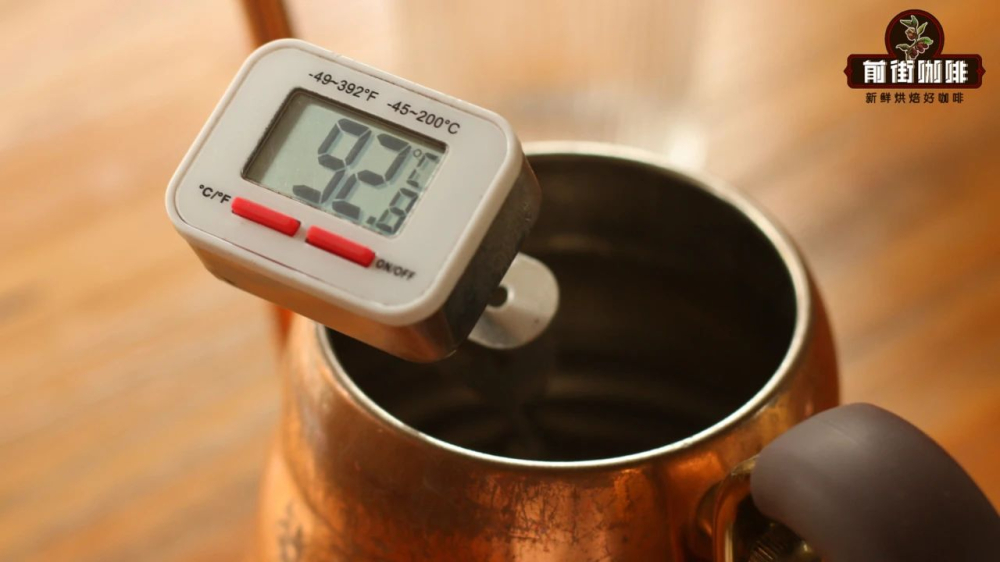
The brewing water temperature is very critical and is recommended to be controlled between 90 and 99 degrees. If the brewed coffee tastes too bitter, try lowering the water temperature; conversely, if the taste is too light or astringent, raise the water temperature, but the range should still remain between 90 and 95 degrees.
3. Hang it on the edge
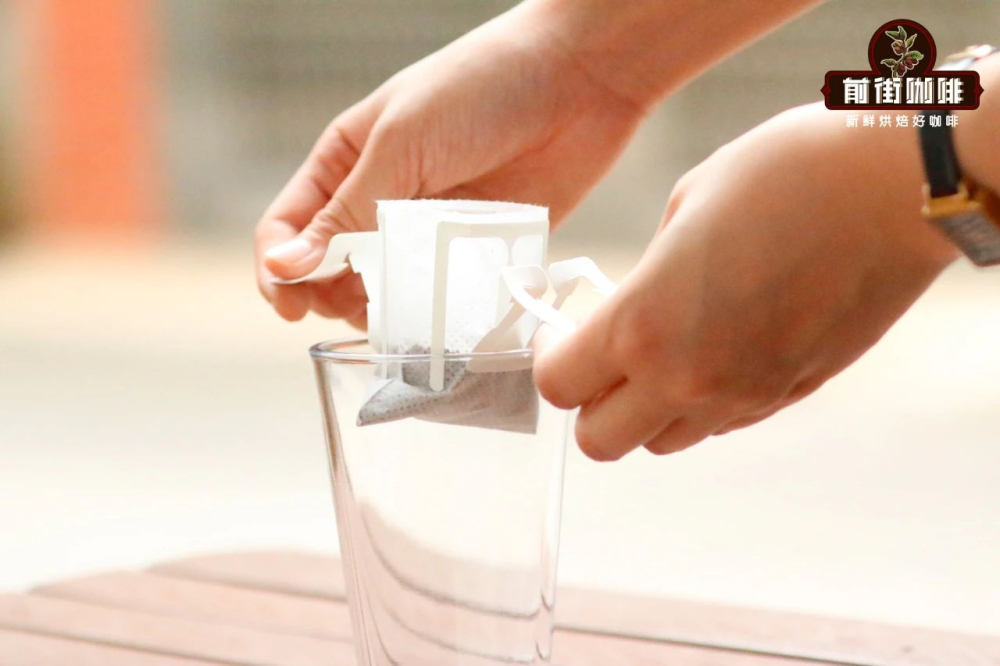
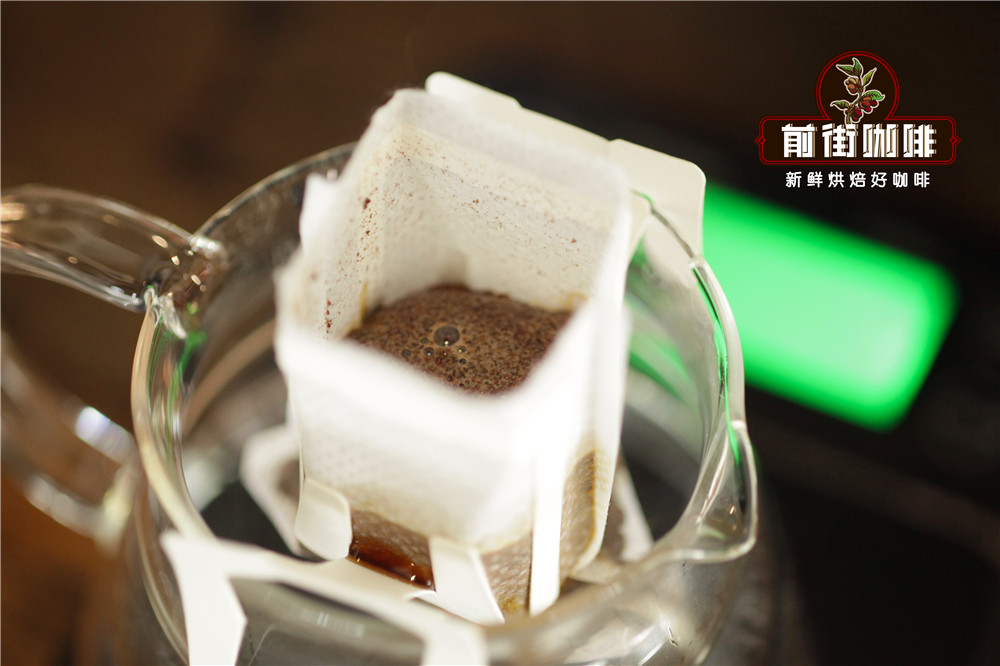
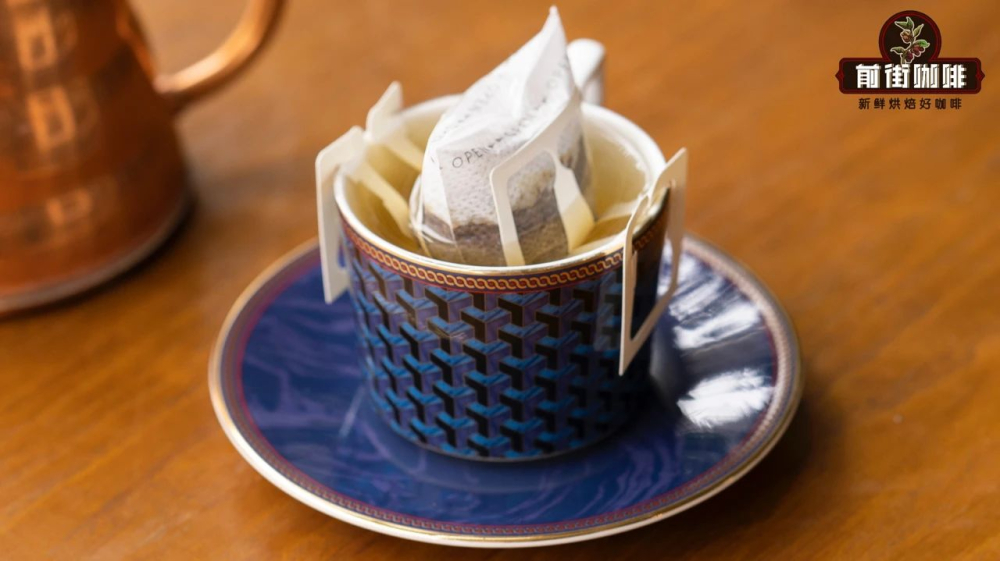
First gently shake the drip bag to let the coffee grounds inside settle to the bottom, avoiding powder spilling out when tearing it open. Then pour out the hot water used to warm the cup, tear open the seal at the top of the drip bag, spread the paper tabs on both sides outward, and shake it so the surface of the coffee grounds is level. Finally, set it on the rim of the cup.
4. Pre-wet the drip bag coffee
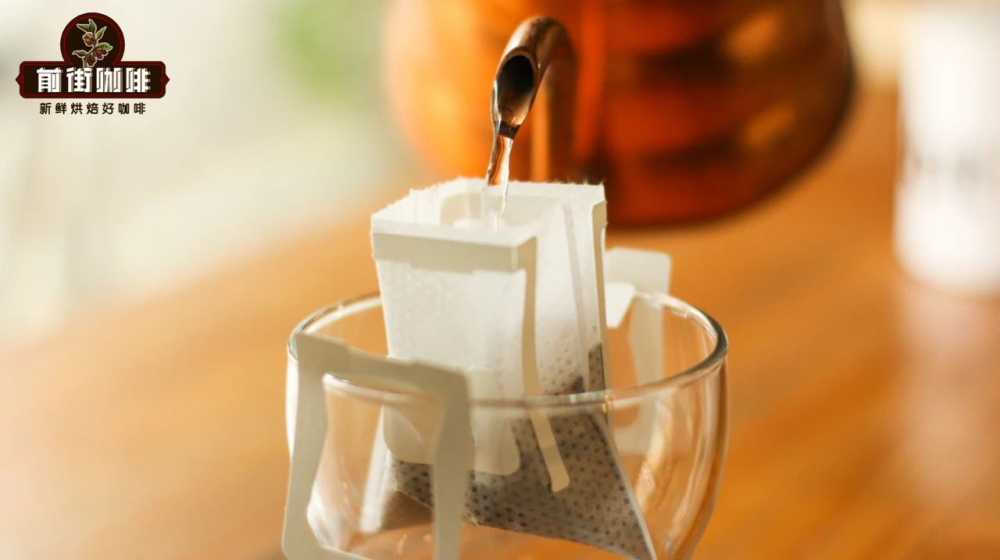
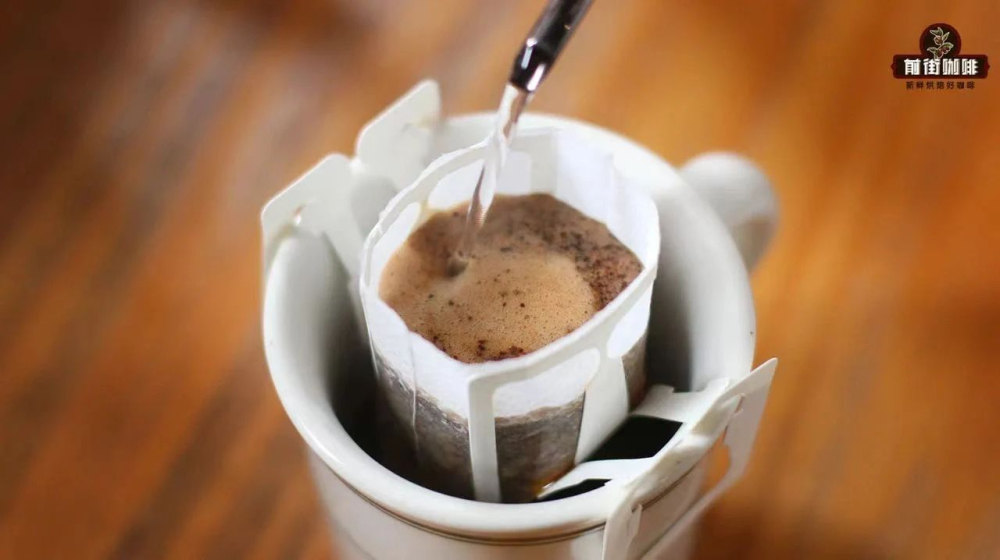
For the first pour, the amount of water should be just enough to wet the coffee grounds. Too much or too little will affect the final flavor. Then let it sit for 20 seconds so the coffee grounds fully absorb water. The strength of the coffee can be adjusted by the pre-wetting time; extending it to 40 seconds yields stronger coffee.
5. Pour water
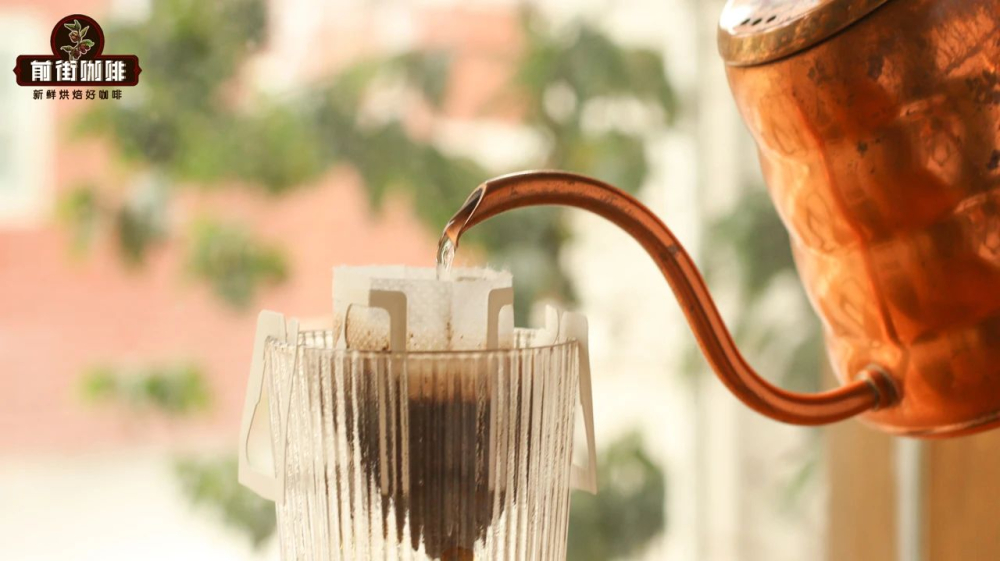
For the second pour, you can fill to eight-tenths of the filter paper, preferably using a thin, long stream of water. After the water level drops to the height it was at during pre-wetting, continue pouring to eight-tenths full until the extracted coffee liquid reaches 150 to 180 cc. After extraction is complete, there is no need to wait for all the water in the filter paper to drip through; simply discard it.
The above is the correct brewing method for drip bag coffee. In addition, Front Street Coffee has also noticed that many people make the following mistakes when brewing drip bag coffee. The drip bag coffee brewed this way does not taste good, so coffee lovers should try to avoid these practices.
Incorrect Brewing Methods for Drip Bag Coffee
1. The brewing water volume is too high or too low
Front Street believes that some friends who have just come into contact with drip bag coffee will directly throw the drip bag into a cup and soak it in hot water. This is not completely impossible, but the coffee taste will be diluted by the water and become weak, unless you prefer mild American-style coffee. Otherwise, Front Street suggests that a 10g drip bag only needs 150cc to 180cc of water. Beyond this amount, besides the flavor becoming weaker, it is also easy to extract undesirable flavors. If you want coffee with a lighter flavor, Front Street suggests brewing to 150cc, then removing the drip bag first, and separately adding hot water.
2. Leaving the drip bag in the water the whole time
Although the inspiration for the drip bag came from tea bags, that does not mean it is the same as a tea bag. Although both become stronger the longer they steep, long soaking will cause caffeine to be continuously released, resulting in over-extraction, and the undesirable substances in coffee will also come out, namely bitterness and off-flavors. Therefore, Front Street suggests that a drip bag should generally be discarded after 4 minutes of brewing, or used as flower fertilizer, which is also a good choice.
3. The drip bag coffee temperature is not within the optimal extraction range
Drip bag coffee is essentially single-origin coffee ground into powder. Its water temperature requirements are the same as those for pour-over coffee, so it cannot be brewed with water that is too low in temperature, otherwise it will lead to under-extraction. The water temperature must be well controlled. Front Street suggests using freshly boiled water that has been left to sit for 1 to 2 minutes before brewing drip bag coffee.
4. Repeatedly brewing drip bag coffee
How many times can drip bag coffee be brewed? The answer, of course, is only once. As Front Street Coffee mentioned in point 2, drip bag coffee cannot be soaked for a long time, which naturally means it cannot be brewed repeatedly, otherwise you will only get a cup of coffee that tastes bad and is harmful to your health.
Advantages and Disadvantages of Drip Bag Coffee
From the above description by Front Street Coffee (FrontStreet Coffee), the advantages and disadvantages of drip bag coffee can be seen. The advantage is portability. In addition, the coffee beans used in the drip bag are also single-origin coffee beans; making them into drip bags only saves the grinding step, and the flavor can also be comparable to single-origin coffee. The disadvantage is that it cannot be brewed repeatedly, nor can it be directly brewed and dissolved like instant coffee.
At the same time, there is one more thing to note: the optimal flavor period of drip bag coffee is shortened by half compared with single-origin coffee. Below, Front Street Coffee will explain the reason.
Is Blue Mountain Drip Bag Coffee Real Blue Mountain?
Some friends want to drink Front Street Blue Mountain coffee, but do not have coffee equipment on hand to brew it, so simple and quick products like Blue Mountain drip bag coffee have appeared on the market. But it also makes people wonder whether such expensive Front Street Blue Mountain coffee will still taste good when made into drip bags.
Basically, as long as it is drip bag coffee made from real Blue Mountain coffee beans, you can taste a good Blue Mountain character. As for Blue Mountain drip bag coffee costing only a few dozen yuan, most of it is not produced in Jamaica's Blue Mountain region. At Front Street, Front Street Blue Mountain drip bag coffee is generally not listed directly for sale. If you need to buy it, you can directly purchase Front Street Blue Mountain coffee beans, one bag is 198 yuan/100 grams, and then note that it should be made into drip bag coffee and add a 20 yuan drip bag production fee. There is one more thing to note when making Front Street Blue Mountain coffee beans into drip bag coffee: it needs to be finished as soon as possible, otherwise the flavor will quickly dissipate.
How long is the optimal flavor period for drip bag coffee?
As Front Street said above, a drip bag coffee pack is actually single-origin coffee ground into coffee powder in advance, so the shelf life should be about the same. But in fact, the optimal flavor period of drip bag coffee is somewhat shorter than that of coffee beans. This is because making drip bag coffee first requires grinding the coffee beans into powder, which increases the surface area of the coffee exposed to air and makes preservation more difficult. According to Front Street Coffee's practice, only within two weeks can the original aroma of the coffee be fully tasted in drip bag coffee. But this requirement is only for coffee lovers who have demands regarding flavor. If you do not have overly high requirements for coffee aroma and flavor, then in fact, according to China's food laws, the shelf life of coffee products is within one year, and coffee beans will not spoil during this period.
Making the optimal flavor period of drip bag coffee longer is actually very difficult to achieve. According to Front Street's practice, even using vacuum packaging cannot inhibit the disappearance of coffee aroma, because from the moment coffee beans finish roasting, carbon dioxide begins to be released. Therefore, careful coffee lovers, when receiving drip bag coffee mailed by Front Street, can notice that the packaging is somewhat puffed up. This means that this pack of coffee was packaged while fresh, so when coffee lovers receive it, it is exactly at its optimal flavor period.
After the carbon dioxide in the coffee has been fully released (about two weeks), it begins to release aroma. No change can be seen on the surface, but the coffee has already begun to deteriorate slowly. If left at room temperature for more than two weeks, the coffee's aroma will probably be almost gone. But because the drip bag is sealed packaging, the aroma can still be smelled when opened, though after brewing it is not as fragrant. That is why Front Street suggests that coffee lovers finish it within two weeks after receiving drip bag coffee, so they can taste its best flavor.
So coffee lovers can see in the coffee market that many coffee bean packages are equipped with one-way valves. The purpose is to allow the coffee's carbon dioxide to be released, so as to prevent the package from bursting due to carbon dioxide expansion, while also preventing a large amount of air from entering. But many coffee lovers who do not know this squeeze the one-way valve to smell the aroma. In fact, while squeezing out the aroma, they also shorten the life of the coffee. So even if a drip bag is equipped with a one-way valve, not only is the cost high, but it also cannot extend its optimal flavor period.
The above is the related content compiled by Front Street Coffee about drip bag coffee brewing methods and characteristics, hoping to help coffee lovers better understand drip bag coffee so that they can use the correct brewing method in the future. Finally, many coffee lovers have also asked Front Street Coffee to recommend single-origin coffee beans suitable for making drip bag coffee. Next, Front Street Coffee will recommend several relatively popular drip bag coffee brands.
Drip Bag Coffee Brand Recommendations
1. Front Street Ethiopia Natural Red Cherry Drip Bag Coffee
Region: Yirgacheffe Altitude: 2000-2200m Variety: Heirloom Processing method: Natural Flavor: Tropical fruit, strawberry, berries, cream
Front Street Red Cherry coffee beans are produced in Ethiopia's famous Yirgacheffe region. The origin of the name Red Cherry involves a local project called the Red Cherry Project, a coffee quality improvement plan proposed by a Dutch green bean company.
This company is called Trabocca. The reason this project was created is that at the time Ethiopian coffee varied greatly in quality, so there was not much room for price increases, and coffee farmers' incomes were also very low. In order to substantially help them, it cooperated with local coffee farmers to launch the Red Cherry Project, solving the quality problem at the source. Through manual hand-selection, only fully ripe coffee cherries are picked, and they are purchased at a higher price. This can raise coffee farmers' requirements for quality and grow coffee of better quality.
2. Front Street Sidamo Huakui Drip Bag Coffee
Country: Ethiopia Region: Sidamo Altitude: 2250-2350m Variety: Local heirloom Processing method: Natural Flavor: Berries, floral tea, honey, lemon, black tea
The Front Street Huakui coffee beans introduced by Front Street Coffee are the champion of the natural group in Ethiopia's 2017 TOH coffee competition. It appeared before everyone with a unique strawberry cream flavor and made a stunning debut, so that year this batch of green beans was introduced to China by Beijing green bean trader Hongshun. In the same year, Li Jianfei used this bean to win second place in the China region of the 2017 World Brewers Cup. This Ethiopian bean stood out particularly among many Geisha competition beans, and was therefore given the name Huakui.
3. Front Street Honduras Sherry Drip Bag Coffee
Region: Marcala Estate: Moca Estate Altitude: 500-1700 meters Variety: Caturra, Catuai, Pacas Processing method: Fine washed + whiskey sherry barrel fermentation Flavor: Vanilla cream, fermented wine aroma, nuts, dark chocolate, maple syrup sweetness
This Front Street Honduras Sherry coffee bean is very popular among coffee fans, because its flavor carries the aroma of whiskey, but when tasted it also has the scent of vanilla cream, very charming. Therefore, coffee fan friends strongly hoped that Front Street Coffee would launch a drip bag coffee made from this Sherry coffee bean. And this Front Street Honduras Sherry coffee bean is also one of the blend beans used in Front Street Coffee's shop for making espresso, all of which is enough to prove its popularity.
4. Front Street PWN Golden Mandheling Drip Bag Coffee
Region: North Sumatra, Gayo Mountain, Aceh Company: PWN Altitude: 1100-1600 meters Variety: Ateng Processing method: Wet hulled Flavor: Herbal, caramel, dark chocolate, mellow and clean, high balance, long finish
The specification standard of this Front Street Indonesia Golden Mandheling coffee bean purchased by Front Street Coffee is above 18 screen size, with fewer than 3 defective beans (300g green bean sample), belonging to the highest grade G1. The color is darker green, and the shape is neat flat beans.
Moreover, qualified Front Street Golden Mandheling coffee beans must also undergo three manual screenings and one machine screening. Front Street found that Mandheling coffee treated in this way not only no longer has the earthy off-flavors unique to ordinary Mandheling, but also tastes cleaner and clearer.
The above are the relatively popular drip bag coffee brands in Front Street Coffee's shop, hoping to help coffee lovers choose drip bag coffee that suits their own taste. Secondly, in fact, when choosing drip bag coffee, coffee lovers can completely choose according to their usual preferences for drinking single-origin coffee. For example, Front Street Guatemala Flor del café coffee beans, Front Street Blue Mountain coffee beans, and so on can all be made into drip bag coffee packs with Front Street's help.
The above content is compiled by CoffeeHunters, a coffee news website.


