







Ethiopian Sidamo Coffee: A Guide to Its Sub-Regions and Flavor Differences
Ethiopian Sidamo is a renowned coffee region, and its sub-regions Guji and West Arsi produce distinct flavor profiles. This article compares Guji Hambela's Huakui 4.0 with a West Arsi natural bean, covering terroir, processing, green bean appearance, roasting, and brewing. By examining aroma, acidity, sweetness, and aftertaste, you can decide which coffee matches your taste preferences.
Sidamo sits in southern Ethiopia at elevations from 1,400 to 2,000 meters. Local farms use the natural method, which often highlights fruity aromas and a smooth mouthfeel. Guji, once part of Sidamo, became a separate region in 2010. Its fertile black soil and high altitude contribute to the complex flavors found in coffees like Huakui 4.0, while West Arsi offers a distinct alternative.
Sidamo is one of Ethiopia's most prestigious specialty coffee regions, and its sub-regions Guji and West Arsi produce high-quality coffees with distinctly different styles. In this article, Front Street Coffee will provide a comprehensive comparison of Guji Hambela's Huakui 4.0 and a West Arsi natural bean, covering terroir, processing method, green bean appearance, roasting curve, and cupping and brewing, to help you understand the differences between the two beans in aroma, acidity, sweetness, and aftertaste, and thereby determine which one better suits your taste preferences. Whether you prefer tropical fruit fermentation notes or are more drawn to a jam-and-honey-like sweet, smooth mouthfeel, you will find the answer in this article.
Sidamo is a highly representative large specialty coffee region in Ethiopia, and many of its sub-regions are famous, with some particularly outstanding ones even having become independent regions. This time, Front Street Coffee (FrontStreet Coffee) will take you deeper into this renowned specialty coffee origin.
Sidamo Coffee Region
Sidamo is located in southern Ethiopia, bordered by the Arsi and Bale administrative zones to the east, and extending to the Gamogofa administrative zone to the west, with coffee cultivation at elevations between 1,400 and 2,000 meters. The local economy is mainly agricultural, and coffee cultivation is concentrated mainly around the East African Rift Valley. In recent years, Sidamo has developed strongly and has become an important coffee export hub. Because soil types, microclimates, and the large number of native coffee varieties all differ, Sidamo's coffee flavors are extremely diverse, and the coffee produced by each town shows clear differences and individuality.
Within the Sidamo region, the most famous coffee-growing areas are Guji (GUji) and West Arsi (West Arsi). Sidamo generally uses the natural processing method to process green beans, and Front Street believes that the natural method gives local coffee rich fruit aromas and a smooth mouthfeel.
Front Street Ethiopia Sidamo Natural Huakui 4.0 Coffee Beans Region: Ethiopia Guji Hambela Processing Station: Buku Able Altitude: 2,350 meters Variety: Dega Processing Method: Natural
Guji Region
The Guji region once belonged to Sidamo, but in 2010 it was independently classified as a new region by the Ethiopia Commodity Exchange (ECX). Guji is located southeast of Yirgacheffe, with complex terrain of high mountains, valleys, and plains. The soil in this area is fertile black soil (Vertisol), with a soil layer nearly two meters deep, and an average altitude of more than 1,800 meters. The unique geographical conditions create a significant temperature difference between day and night, providing an ideal terroir foundation for producing high-quality specialty coffee. And to explain what made Guji widely known, Front Street must mention Front Street's Natural Huakui bean.
The bean "Huakui" comes from Hambela (Hambella), located in Guji, Ethiopia's largest coffee region, and administratively part of Oromia. To the west of Hambela, it faces Yirgacheffe Kochere across the mountains, with a highland about 30 kilometers wide and 3,200 meters above sea level lying between the two regions. To the southeast, north, and south, it borders Guji's Shakiso, Uraga, and Kercha sub-regions respectively, making it Ethiopia's highest-altitude coffee sub-region.
At present, the Hambela region has nearly 20 processing plants of various sizes. In 2017, Ethiopian green bean company DW sent coffee beans to the TOH (the Taste Of Harvest) green bean competition hosted by the African Coffee Association, and a natural batch from the "Buku Abel" processing station won the TOH Ethiopia championship with its rich strawberry and cream aroma. That batch of green beans was introduced into China that year by Beijing green bean trader Hongshun. In the same year, Li Jianfei used this bean to win second place in the China region of the 2017 World Brewers Cup. This Ethiopian bean stood out among a field of Geisha competition beans, and thus was named "Huakui."
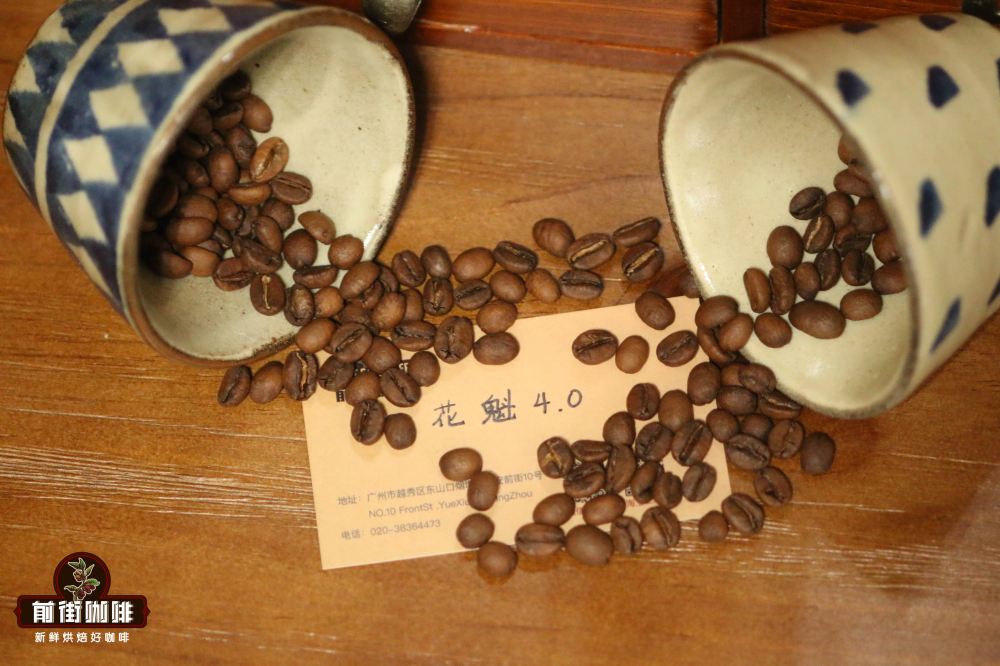
Therefore, if Huakui coffee is understood in a narrow sense, only the 2017 TOH natural group champion batch entering China can be called Huakui coffee beans. Of course, it would be a pity if such a wonderful name were only a fleeting appearance, so afterward Hongshun continued to introduce coffee beans from the "Buku Abel" processing station in the Hambela region and named them Huakui 2.0, Huakui 3.0, and Huakui 3.1 to distinguish them from previous batches and different harvest seasons. At this point, Huakui coffee still maintained certain characteristics, namely that it was purchased and introduced by Hongshun, and the region was still locked to the "Buku Abel" processing station in Hambela. Of course, as coffee is an agricultural product, its flavor changes every year.
Front Street Coffee (FrontStreet Coffee) has cupped Huakui, Huakui 2.0, and Huakui 3.0, and found that although the flavors of Huakui 2.0 and 3.0 are very close to the 2017 Huakui, their body and aftertaste are not as good as the original Huakui. Surprisingly, however, Front Street can sometimes still identify green beans exactly the same as the original Huakui batch among these two batches of green beans. As for Huakui 3.1, Front Street found that its flavor is far from Huakui, and even felt that Huakui 3.1's flavor is somewhat close to Geisha, a change also confirmed by the green bean trader. 2020 was the fourth year for this Huakui bean, and the production area had expanded to several times its original size. Coupled with more scientific cultivation and management, Huakui 4.0's flavor is even more outstanding and has received praise from many coffee enthusiasts, and Front Street has also listed a Front Street Sidamo Huakui 4.0 coffee bean.
Front Street Ethiopia Sidamo Natural Arsi Region: Ethiopia Sidamo West Arsi Altitude: 1,900-2,200 meters Variety: Local heirloom varieties Processing Method: Natural
West Arsi Region
West Arsi (West Arsi) is located between the famous Yirgacheffe (Yirgacheffe) coffee-growing area and Hararge (Hararge), at an altitude of 1,900 to 2,200 meters, in the western part of the Sidamo area. The name of this area comes from a branch of the Oromo (Oromo) people who have long lived there. West Arsi is composed of three woredas (Ethiopia's third-level administrative divisions): Arsi (Arsi), Bale (Bale), and East Shewa (East Shewa). About 88.52% of West Arsi's population is Oromo, which is of great significance in coffee history because they were the first tribe in human history to drink coffee, and half of the coffee produced in Ethiopia comes from this region.
Coffee cultivation in the West Arsi region adopts a smallholder model, with the average farm size of each smallholder household not large, about 2 to 3 hectares, but even so, it is slightly larger than the 1.5 to 2 hectares common in most parts of Ethiopia. Although current coffee cultivation technology is still in a stage of development, compared with other regions, West Arsi's cultivation technology is developing very rapidly. Coffee farmers do not need to hire temporary or full-time workers, but instead rely on family members to help select coffee, which enables them to better control coffee quality. Processing stations usually also pay extra for fully ripe red cherries, greatly increasing coffee farmers' motivation.
Natural Processing Method
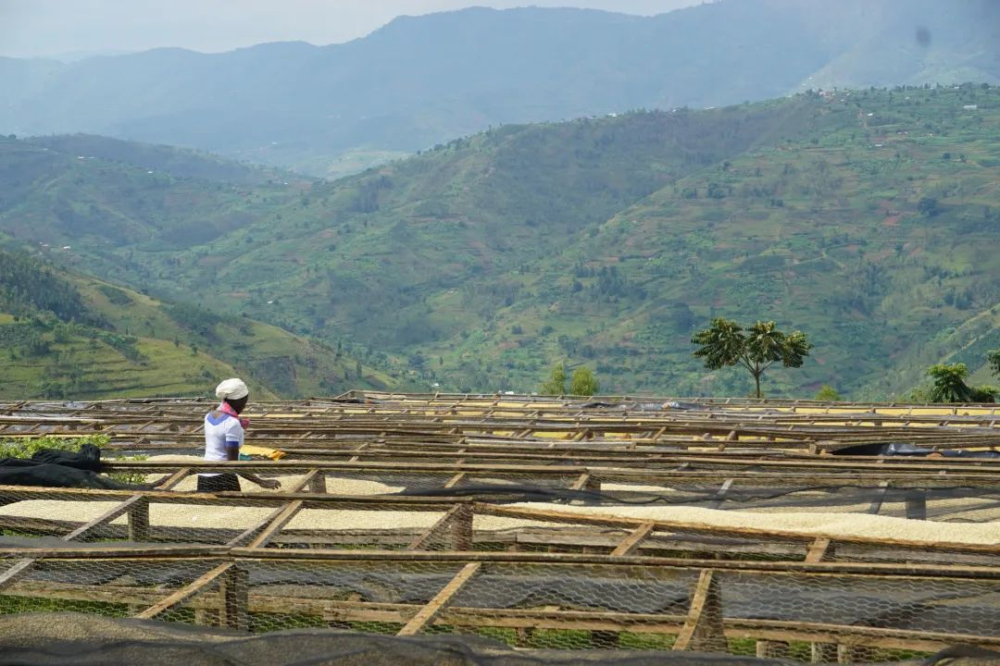
Both beans are naturally processed. During the coffee harvest season, coffee farmers in the Sidamo region pick only ripe red cherries, placing them one by one into baskets. After picking, the coffee cherries are uniform in size, similar in ripeness, and free of other impurities. During processing, defective beans as well as unripe or overripe cherries are first manually sorted out, and then the red coffee cherries are spread evenly on raised wooden frames or entire drying beds for sun drying, which prevents the beans from contacting the ground and absorbing off-flavors.
During sun drying, they are constantly turned to ensure even drying and even moisture loss in the coffee beans; every three to five days, coffee farmers manually remove moldy and defective beans. After the fruit skin dries and hardens, a huller is used to remove the dry hard fruit skin. After obtaining the green coffee beans, in pursuit of perfect flavor, the coffee farmers also conduct one final sorting.
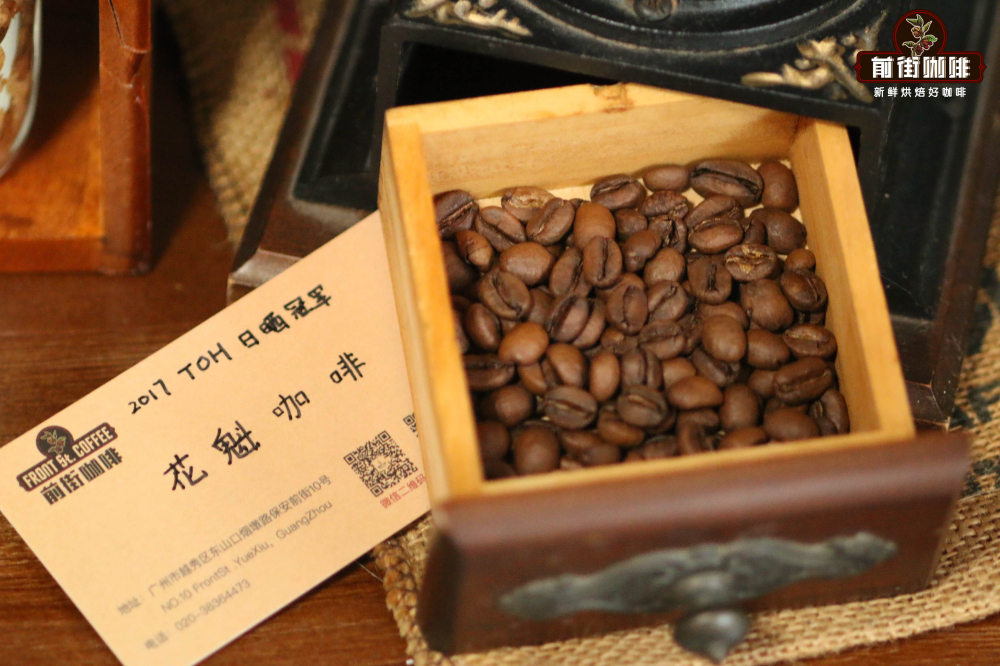
Next, Front Street will use Front Street Sidamo Natural Huakui 4.0 from the Guji region and Front Street Sidamo Natural Arsi coffee beans from West Arsi to conduct a series of comparisons of green beans, roasting, cupping, and brewing, to see how the coffee beans from the two regions differ.
Front Street Coffee (FrontStreet Coffee) Green Bean Comparison
Both coffee beans are naturally processed, and the green beans are green with a yellow tinge. Huakui 4.0 has some small-sized beans and appears uneven in size; Arsi's beans are relatively uniform in size.
Front Street Coffee (FrontStreet Coffee) Roasting Suggestions
For these two new-crop beans, during roasting we extend the drying time so that the bean surface and bean core are heated evenly. To showcase the acidity and floral and fruity aromas of these two Front Street Sidamo coffee beans, we use a light roast level.
Front Street Sidamo Natural Huakui 4.0: Yangjia 800N, charge amount 480g: charge when the roaster temperature reaches 175°C, set airflow to 3, heat to 120. Raise to 140°C, set airflow to 4. Roast until 6'00'', temperature 151.7°C, the bean surface turns yellow, the grassy smell completely disappears, and drying is complete. When the bean surface shows ugly wrinkles and dark spots, and the toast aroma clearly turns into coffee aroma, this can be defined as the prelude to first crack. At this time, listen carefully for the sound of the first crack. At 9'50'' first crack begins, open the airflow fully, reduce heat to 80 at 188°C, first crack development time 1'40'', drop at 196°C.
Front Street Sidamo Natural Arsi: Yangjia 800N, charge amount 480g: charge when the roaster temperature reaches 160°C, set airflow to 3, heat to 120. Adjust heat once at 115°C, set airflow to 4. Roast until 6'00, temperature 154.9°C, the bean surface turns yellow, the grassy smell completely disappears, and drying is complete. At the 8th minute, the bean surface shows ugly wrinkles and dark spots, and the toast aroma clearly turns into coffee aroma, which can be defined as the prelude to first crack. At this time, listen carefully for the sound of the first crack. At 9'08'' first crack begins, open the airflow fully, first crack development time 1'20'', drop at 193.5°C.
Front Street Coffee (FrontStreet Coffee) Brewing Suggestions
Dripper: V60 #01 Water temperature: 90-91°C Dose: 15g Coffee-to-water ratio: 1:15 Grind size: EK43s setting 10 / fine sugar size (80% of grounds pass through a No. 20 sieve)
Front Street brewing method: In the first stage, pour 30 grams of water for a 30-second bloom, then pour 95 grams (the scale shows about 125 grams), finishing in about 1 minute. When the water level drops to 2/3 of the coffee bed, pour the remaining 100 grams (the scale shows about 225 grams), finishing in about 1 minute 40-1'45'' seconds. Drawdown is completed at 2'00''-2'10'', remove the dripper, and extraction is complete.
Front Street Sidamo Natural Huakui 4.0 brewing flavor: It smells of ripe berries, with bright acidity like passion fruit and citrus on the palate, and in the middle and finish, fermented fruit aromas and sweetness of jackfruit, with rich layers. After cooling, it has the sweet finish of oolong tea.
Front Street Sidamo Natural Arsi brewing flavor: It smells of berries and honey, with jam-like sweetness filling the mouth on the palate, very sweet, and the finish carries nectarine flavor, with a juicy mouthfeel. After cooling, it is more like a cup of plum and nectarine-flavored juice.
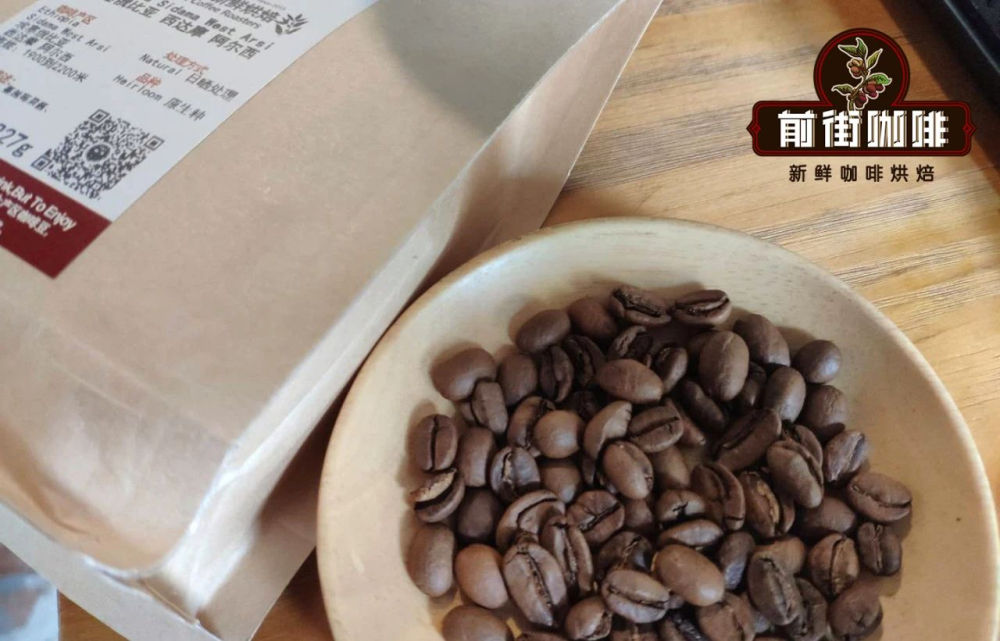
In the flavor comparison of these two beans, Front Street Arsi's fruit sweetness and juiciness are slightly superior, especially when hot, when the jam and honey flavors are irresistible, and after the temperature drops, the juiciness becomes even more obvious and very pleasant.
Front Street Huakui 4.0, on the other hand, leans toward tropical fruit flavors, and the alternating contrast between sweetness and acidity is very surprising. Compared with the other, Front Street Huakui 4.0 has a stronger fermented note.
For professional coffee knowledge exchange and more coffee bean information, please follow Coffee Workshop (WeChat public account cafe_style)
For more specialty coffee beans, please add the private WeChat of Front Street Coffee (FrontStreet Coffee), WeChat ID: kaixinguoguo0925
The above content is compiled by CoffeeHunters, a coffee news website.


