








What is golden mandheling and how is aged mandheling made?
Golden mandheling is the name used for Indonesia's aged Mandheling, a wet-hulled coffee that trades freshness for a deliberately matured flavor. Aging began by accident: slow colonial-era sea voyages dried moisture-rich beans and sea breezes changed their taste. Today it is done on purpose, with warehouse humidity and temperature monitored and green beans turned regularly to avoid mold and uneven drying.
Old crop beans are not simply stale. Aging aims to create a different pleasant flavor rather than remove flavor, which is why mandheling from Indonesia still draws drinkers who normally insist on freshly roasted coffee. Front Street Coffee uses its Golden Mandheling to show how to brew a rich, solid Mandheling black coffee at home.
In the world of specialty coffee, freshness is usually regarded as the key to quality, yet Indonesia's Aged Mandheling has won the favor of coffee lovers with a completely different stance. This coffee bean, known for its "expired" name, hides behind it a story of colonial-era shipping and a unique aging process. This article will explore the origins of Aged Mandheling, the characteristics of the wet-hulled process, and its differences from Golden Mandheling, and use Front Street Coffee's Golden Mandheling as an example to share how to brew a rich and solid Mandheling black coffee at home. Whether you are a beginner just getting to know Mandheling or a seasoned connoisseur seeking advanced techniques, you can gain practical knowledge and inspiration from it.
For more specialty coffee knowledge, please follow the WeChat official account: FrontStreet Coffee
We usually repeatedly emphasize the importance of coffee freshness, and also compare the differences between coffee beans of the new crop season and old crop season, thereby reminding everyone to choose freshly roasted coffee as much as possible. However, Aged Mandheling is an exception. On what basis does it still fascinate so many coffee drinkers as "expired" coffee?
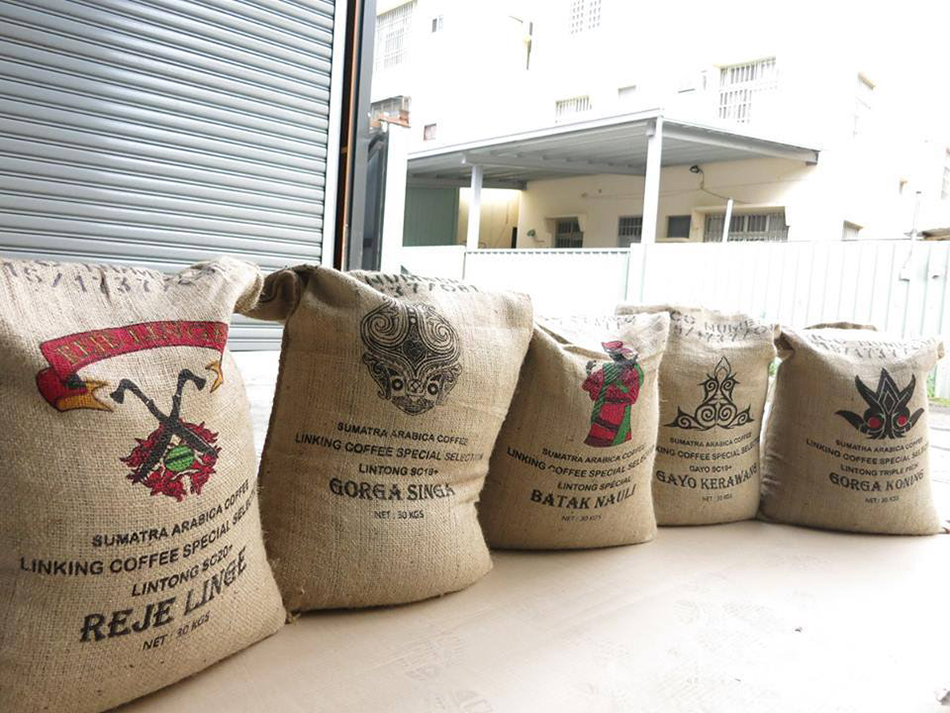
In fact, aged coffee has a long history in Indonesia. In the early years, when navigation technology was not yet developed, shipping coffee from Indonesia to other countries took a considerable amount of time. During the long transportation process, the originally moisture-rich fresh coffee beans gradually dried, and combined with the blowing of sea breezes, unexpectedly developed a very unique flavor. As modern shipping speeds have greatly increased, this special flavor is no longer naturally produced, and instead has evolved into a deliberately practiced specialized processing method. The processing of aged beans is a technical task, requiring strict monitoring throughout the entire aging process of the coffee beans. The warehouse's humidity and temperature both have clear standards, and the green beans must also be regularly turned to avoid uneven dryness and humidity between the upper and lower layers or mold that could ruin the entire batch. The purpose of aging is not to make the coffee lose flavor, but to create another pleasant flavor.
What is Aged Mandheling?
It can be said that this was an "accidental" product. The story traces back to the Dutch colonial period in Indonesia, when Sumatra was one of the world's major coffee-producing regions, and the coffee it produced had to satisfy the huge demand of European consuming countries. Indonesia continuously shipped coffee beans to Europe, and in order to ensure that supply was not interrupted, it would appropriately store a batch of beans. However, due to the long transportation distance, plus external factors that caused excessively long shipping times, and exposure to sea breezes, by the time the coffee beans arrived in Europe, they had already formed a unique special flavor that made European coffee connoisseurs compete to pursue them.
Thus people discovered that by aging processed coffee beans for several years, the coffee's acidity would gradually disappear, leaving a solid finish and sweet aftertaste, with a flavor as captivating as Pu'er tea. But one cannot always rely on "accidents" to produce aged beans, as this would undoubtedly add uncertain risks to coffee quality. We must make one point clear: "aged beans" do not mean simply throwing coffee beans into a warehouse and waiting a few years, because beans left for too long will deteriorate, and may even become moldy or insect-infested. In that case, they are not "aged beans," but bad beans. Therefore, the production model of Aged Mandheling has gradually become standardized and mature.
The aging process of Mandheling
First, freshly picked coffee cherries must undergo conventional processing. For example, Front Street Coffee's Aged Mandheling coffee beans are processed using the wet-hulled method. In this step, good beans (plump, large screen size, defect-free) need to be carefully selected for aging. After screening is completed, the coffee beans must be stored in the warehouse and enter the aging stage.
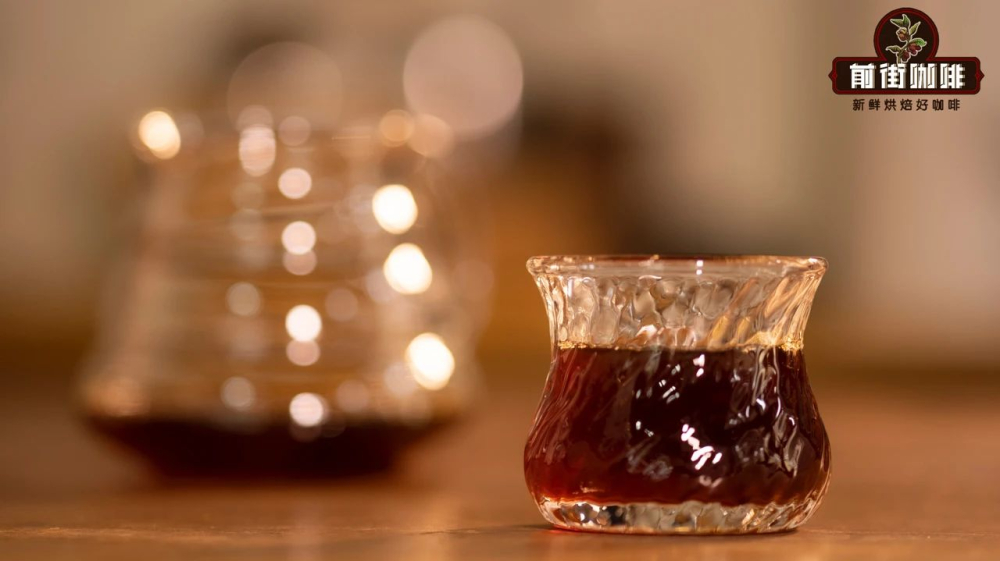
The aging process must be carried out in the place of origin, stored in a warehouse with temperature and humidity control or good ventilation. During the aging period, they must be frequently turned and inspected for two purposes: first, to allow the coffee beans to evenly contact the air and maintain consistent dryness; second, to check whether moldy or insect-damaged beans appear, preventing large-scale contamination.
At present, the aging time for Aged Mandheling is generally 2 to 3 years. During this period, the coffee beans' acidity slowly weakens and transforms into sugars, and the color also becomes darker, mostly yellowish-brown or dark brown, with very high recognizability.
What is Golden Mandheling?
Besides Aged Mandheling, many friends have surely also heard of "Golden Mandheling." So what does it represent? The fame of Mandheling coffee originated from Pawani Coffee Company (PWN) successfully bringing Mandheling to the Japanese market. Unlike many local green bean traders in Indonesia, PWN is the exclusive supplier of high-grade Golden Mandheling coffee and has contracted Indonesia's best Mandheling coffee-producing regions, so the Mandheling beans it produces are all top-grade. Front Street Golden Mandheling coffee is exactly the genuine product from PWN.
The wet-hulled method saves a great deal of time cost and labor cost in green bean processing, but the rapid process also brings a relatively high defect rate. Therefore, only through strict hand sorting can defects that machines cannot screen out be removed. PWN conducts one machine sorting plus three manual selections on the Mandheling green beans it purchases, with quality far higher than Indonesia's local highest G1 grade. To meet the production standards of Front Street PWN Golden Mandheling, the following points must be satisfied:
1. Green bean screen size: above 18-19 screen after one hand selection
2. Fewer than 3 defective beans in a 300-gram green bean sample
3. Green coffee bean grade is G1
4. Color tends toward dark green, uniform in size, neat in shape
Here Front Street needs to add one more point: whether it is Aged Mandheling or Golden Mandheling, after the green beans are harvested, they will all be processed using the locally customary wet-hulled method.
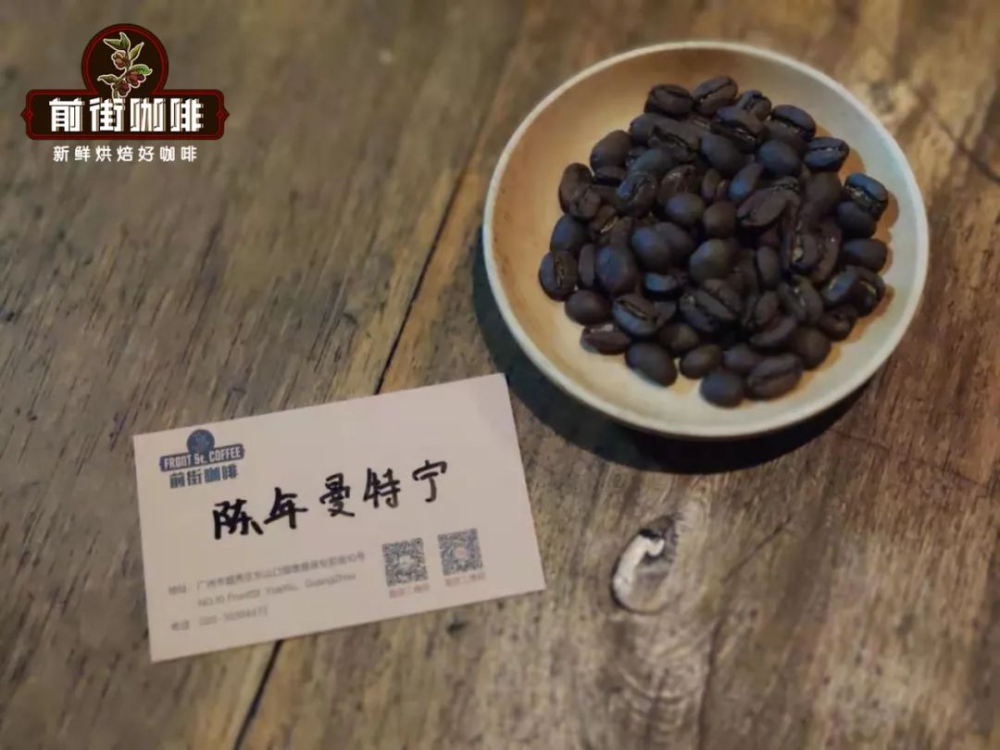
The origin of this processing method is that the local climate is mostly rainy, with constant typhoons, unable to achieve the good weather required for natural sun-drying; moreover, the local economic conditions are poor, and it cannot afford the more expensive washed method. Under the interweaving of various factors, the wet-hulled method with strong local characteristics was derived. The wet-hulled method is a rapid green bean processing method: remove the coffee beans' skin and pulp, briefly ferment and then dry, then remove the mucilage and parchment layer, and continue the later stage of drying until the moisture content drops to 12%. Wet-hulled Mandheling coffee beans clearly show varying degrees of squeezing and cracking. Front Street Coffee believes that this is not a defective bean, but an original characteristic of Mandheling.
Before Front Street launches a coffee bean, it tastes the coffee through cupping. Cupping is an evaluation of coffee bean quality and flavor; unified standards can more objectively identify the advantages, disadvantages, and characteristics of the flavors presented by the beans. After cupping, Front Street's Lintong Mandheling staple beans present a rich nutty profile, with a hint of melon aroma in the later stage; after the temperature drops, herbal plant flavors emerge, with a rich mouthfeel and saturated aroma. Front Street PWN Golden Mandheling not only has the aromas of dark chocolate, nuts, and caramel, but also flavors of herbal spices and pine wood, the sweet aftertaste of dark chocolate, a full finish, and high cleanliness, carrying gentle fruit acidity after the temperature drops.
Back to the point: since high-quality Golden Mandheling is hard to come by, how can its essence be brewed out? Below, we will use Front Street Golden Mandheling as a demonstration to walk everyone through how to extract a rich and solid cup of Golden Mandheling black coffee at home.
Front Street Coffee Golden Mandheling brewing recommendation
Dripper: Kono dripper Water temperature: 86°C Dose: 15 grams Coffee-to-water ratio: 1:15 Grind size: medium-fine grind (EK43s grinder setting 11)
*Reason for choosing the Kono dripper: The Kono dripper has few ribs and they are located at the lower end. The filter paper fits tightly against the dripper, which can restrict airflow and lengthen the contact time between water and coffee grounds, allowing the coffee grounds to be fully extracted and enhancing the rich mouthfeel. Therefore, this dripper is not only suitable for brewing Front Street Golden Mandheling, but can also be used to brew Front Street Brazil Queen's Estate, Front Street Jamaica Blue Mountain No. 1, and other medium-dark roasted coffee beans.
Brewing technique: staged extraction Use 30 grams of water for blooming for 30 seconds, pour in a small stream in circles until 125 grams for the stage break, and when the water level is about to expose the coffee bed, continue pouring until 225 grams and stop pouring. When the water level is about to expose the coffee bed, remove the dripper. (Start timing from the beginning of blooming.) The extraction time is 2'00".
Front Street Golden Mandheling flavor description: Layered and changing, rich and clean, with high balance, strong nutty and chocolate flavors, rich spice and caramel aromas, with fruity notes, and a lasting finish.
The above content is compiled by CoffeeHunters, a coffee news website.


