







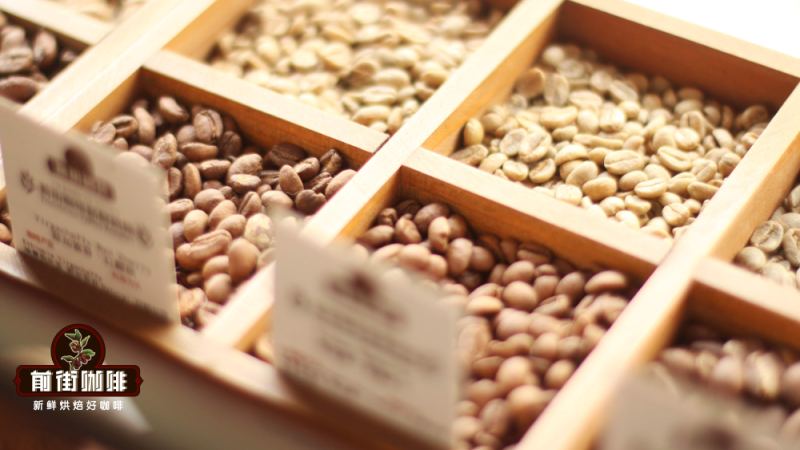
Sidamo is not a single coffee, but a highly representative specialty coffee region in southern Ethiopia, known for its bright citrus acidity, smooth black-tea-like mouthfeel, and fuller tropical fruit notes compared to Yirgacheffe. This article will cover the region's history, administrative boundary changes, heirloom variety system, and natural processing methods, all the way to the most talked-about Hambella coffee — how it went from a TOH champion bean to the "king of flowers" sought after by domestic consumers. At the same time, Front Street will also share brewing parameters, flavor performance, and freshness recommendations for natural Hambella, helping coffee enthusiasts more systematically understand the origins and development of this Ethiopian coffee.
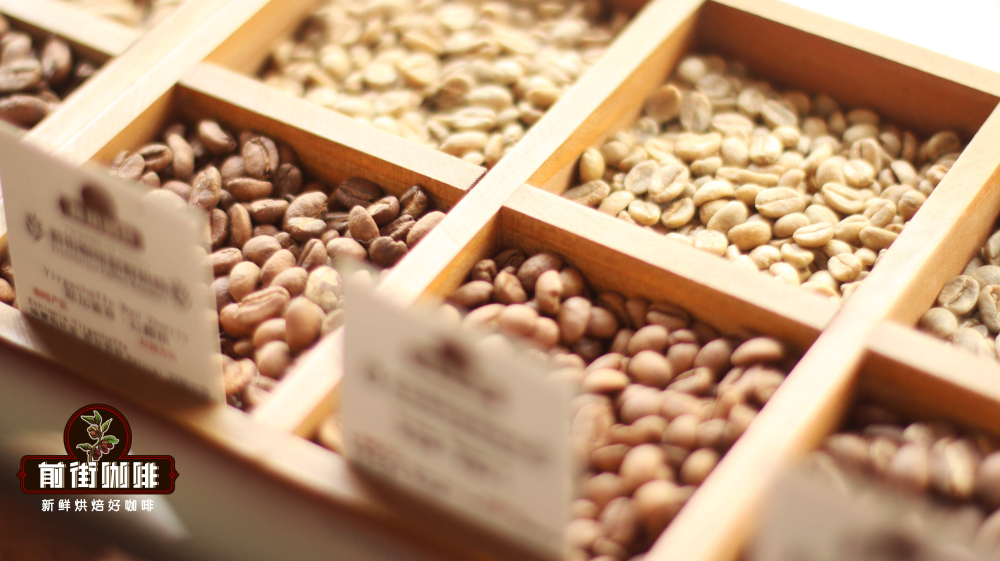
What kind of coffee is Sidamo exactly? Front Street's understanding is: strictly speaking, Sidamo cannot be considered the name of a single coffee; it first and foremost refers to an important specialty coffee region within Ethiopia. Because Ethiopia has long been accustomed to naming coffees after their regions, people naturally also call the beans from here Sidamo coffee. When mentioning Sidamo, one cannot avoid the most well-known Sidamo Hambella. Like Yirgacheffe, it has long established its reputation in the international coffee community, and the name of the Sidamo region frequently appears at the top of award lists in various coffee competitions and green bean contests such as COE and TOH.
Getting to Know the Sidamo Region
Sidamo is located on the fertile highlands south of Lake Awasa in the East African Rift Valley, with abundant rainfall, superior climatic conditions, and an altitude range of approximately 1,500 to 2,200 meters, which is very suitable for the environment required for coffee cultivation. High altitude combined with appropriate shade cultivation allows coffee cherries to mature slowly in relatively cool temperatures, thereby accumulating more nutrients and converting them into rich flavor compounds. Sidamo and Yirgacheffe are both among Ethiopia's most renowned specialty coffee regions. The most prominent characteristics of its coffee are bright citrus acidity and a smooth black tea mouthfeel, with a fuller body overall than Yirgacheffe, and tropical fruit-like notes.
Similar to other regions in Ethiopia, coffee production in Sidamo is mainly based on smallholder farming, and individual yields are not large. Many coffee cooperatives and processing stations are distributed among local towns and villages, and they handle the processing of green coffee in the region. Every coffee cherry maturation season, surrounding farmers deliver their harvested coffee cherries to processing stations or cooperatives established near water sources, where they are processed uniformly and then sold externally under the name of the processing station. As the specialty coffee wave advances, more and more producers have begun purchasing directly from farmers and strengthening the management and traceability of micro-lots, further improving coffee quality and giving rise to more finely processed micro-lots.
Historically, Sidamo was the name of an old province before Ethiopia's 1995 administrative reorganization. The Sidama people had already settled in southern Ethiopia as early as the 9th century AD, with their own culture, religion, and language. At the end of the 19th century, Ethiopian Emperor Menelik II launched an invasion, the Sidama people were defeated, and thereafter were incorporated into the Ethiopian Empire. The name Sidamo was precisely the designation given to the Sidama people by imperial rulers, and therefore carries a somewhat derogatory connotation.
After 1995, Ethiopia began adopting a federal system of administration, and also, out of respect for the cultures of the various ethnic groups within its borders, the local government reorganized planning according to the residential areas and languages of major ethnic groups. Sidama was therefore placed under the jurisdiction of the newly created Southern Nations, Nationalities, and Peoples' Region, and the area also accordingly restored its historical original name: Sidama.
However, before the administrative redrawing, Sidamo Coffee had already made its name worldwide with its unique aroma, so compared with "Sidama," people are more accustomed to using the term "Sidamo." In addition, when the Ethiopian government protected the coffee of this region through trademark registration, it also chose the old name Sidamo® as the registered trademark for Sidama coffee. Even today, domestic consumers, like Front Street, are accustomed to calling the coffee from here "Sidamo."
In the 2010 to 2012 period, Sidamo coffee continuously received high scores of 92 to 94 from the authoritative American coffee evaluation website CR, fully demonstrating the extraordinary strength of green beans from this region. The coffee flavors of Sidamo are very diverse, and this diversity is jointly created by different soil types, microclimates, and countless heirloom coffee varieties. Within its territory are towering mountain ranges, highlands, plateaus, valleys, and plains, with rich topographical variation. The geology of the area consists of fertile volcanic soil with good drainage, soil depth approaching two meters, and topsoil that is dark brown or brown. The greatest local advantage lies in the fact that soil fertility is maintained through the cycling of organic matter; fallen leaves from surrounding trees or residual plant roots all become natural fertilizer.
Because Ethiopia has obvious variations in terrain and altitude, combined with various mutations and as-yet-unclassified heirloom varieties, the differences between different Ethiopian regions are very large. The cup profile of coffee produced in each region, micro-region, or even farm is also different. This also leads coffee buyers, when purchasing, to prefer judging based on region, altitude, and cupping score rather than distinguishing Ethiopian coffee by variety. For this reason, Front Street has acquired more than ten Ethiopian single-origin coffee beans, mainly from the Yirgacheffe and Sidamo regions.

Guji Region — Hambella — Hambella Coffee
In China, when mentioning the representative category of Sidamo coffee, it must be natural Hambella — Hambella coffee. Hambella refers to a naturally processed coffee bean from Ethiopia's Hambella region, with the full English name "Ethiopia Guji Hambella Buku Abel." Broadly speaking, it is a champion bean from Guji, Ethiopia; more specifically, it is a natural lot processed and produced by the smaller Hambella Buku Abel processing station.
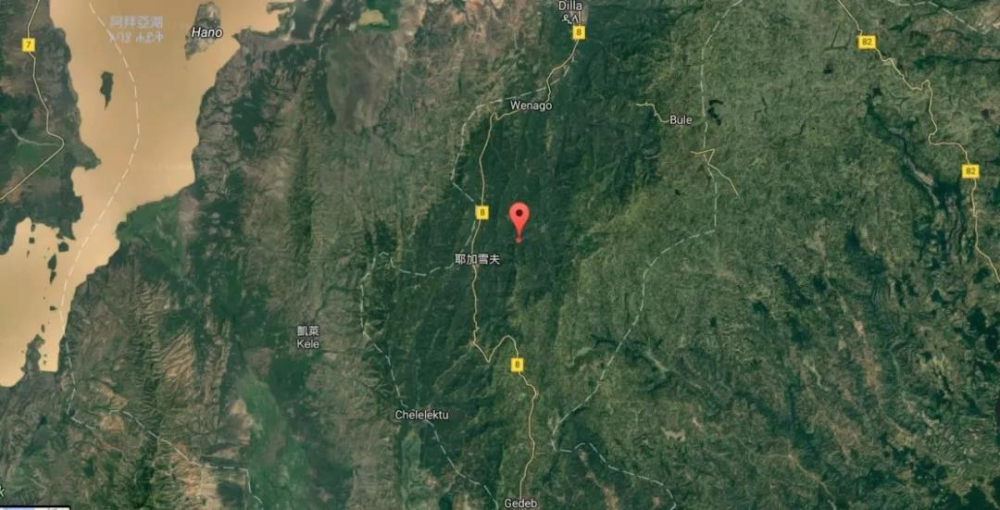
Hambella is located at the border zone between the Sidamo and Guji regions, under the administration of the Guji region, adjacent across the mountains to Kochere of Yirgacheffe, separated in the middle by a highland at 3,200 meters altitude and about 30 kilometers wide, and bordering the Guji sub-regions of Shakiso, Uraga, and Kercha to the southeast, north, and south respectively, making it the highest-altitude coffee sub-region in Ethiopia.
This coffee bean, Hambella, was submitted by DW Company in 2017 to that year's TOH (Ethiopia National Taste of Harvest competition) and won the championship in one stroke, thereby officially coming onto the scene. Hambella is called Hambella in English, which is also the name of the Hambella production area. In the same year, this batch of coffee beans was noticed by a Beijing trader, and precisely because of its champion status, it was named "Hambella" and promoted to the domestic market, implying "king of a hundred flowers, outshining all others." As its popularity continued to rise, this traditional natural bean from the Buku Abel processing station also successfully "debuted," and with its accessible price and pleasant flavor, it quickly became a high-quality Ethiopian coffee widely recognized within the industry.
Every year during the coffee harvest season (December to January), the Buku processing station organizes farmers to pick fully red coffee cherries, with a sugar content value required to reach above 30. The selected coffee cherries are placed on African raised beds for drying. Because the local temperature difference between day and night is very large, coffee farmers will shade the sun at noon to avoid excessive fermentation caused by too-high temperatures; at night, to prevent sudden rainfall, they use plastic sheeting to cover them. They are turned continuously throughout the day, and it is also necessary to ensure the coffee cherries are not piled too thick, so that the fruit can dry evenly while preventing sun damage or the production of unpleasant fermentation flavors. After about 18 days of natural processing, the green coffee beans have a moisture content of only 13%, at which point the shells can be removed by machine.
What does Hambella X.0 mean?
Currently in the Hambella region, there are about nearly 20 processing stations of various sizes. In 2017, Ethiopia's DW Green Bean Company sent their coffee beans to the TOH (the Taste Of Harvest) green bean competition hosted by the African Coffee Association, and a natural lot from the "Buku Abel" processing station won the TOH Ethiopia championship in one stroke with its strong strawberry and cream aroma.
That year, this lot of green beans was introduced into China by Beijing green bean trader Hongshun, and in the same year Li Jianfei used this bean to win second place in the China region of the 2017 World Brewers Cup. This Ethiopian bean stood out especially among many Geisha competition beans, and was therefore given the name "Hambella." (Geisha means geisha in Japanese, while Hambella means the chief of geisha, used here to indicate the excellence of this bean.)
Subsequently, DW Company added processing stations in Dimtu, the core production area of Hambella, namely "Buku Abel," "Buku Saysay," "Haro Soresa," and "Tirtiro Goye," with an annual coffee output of about 1,100 tons. In terms of growing regions and processing stations, among all these estates and processing stations, only those from the processing area of the "Buku Abel" processing station cover the small production area that originally produced the natural coffee bean "Hambella." In other words: only coffee beans produced by Buku Abel and processed naturally can truly be called "Hambella."
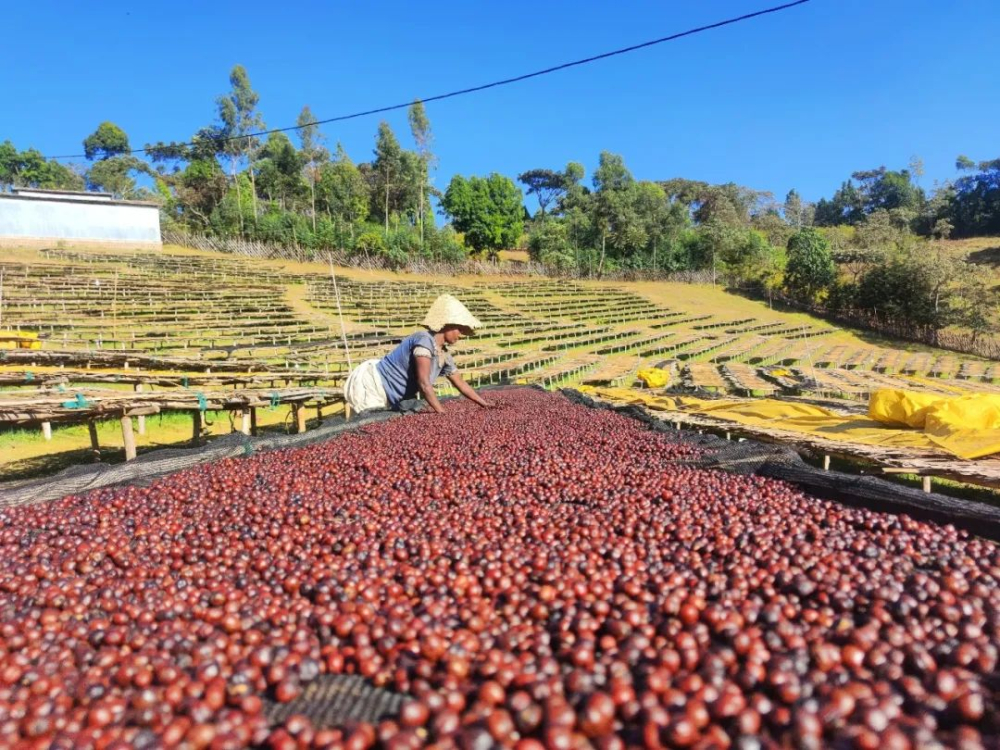
The place where Hambella is grown has a high altitude of more than 2,000 meters, and the coffee trees are surrounded by tropical plants such as sugarcane and bananas, providing appropriate shade for the coffee trees. Coffee is also a crop, and naturally has a direct relationship with climate and environment, so the flavor still varies somewhat from year to year. The naming method of Hambella X.0 is based on the year: in 2018, Hambella 2.0 was released; in 2019, Hambella 3.0 and 3.1 were released; in 2020, Hambella 4.0 was released; in 2021, Hambella 5.0 was released; in 2022, Hambella 6.0 was released. By 2024, naturally, it is Hambella 8.0.
The Coffee Variety of Hambella
As the birthplace of coffee, Ethiopia possesses a huge number of coffee varieties, whether unknown or known, and Ethiopia is like a treasure trove of varieties. Many varieties have yet to be discovered, and of course, out of confidentiality regarding species genetic information, the Ethiopian government collectively calls local varieties heirloom. Therefore, Hambella's variety is also a local heirloom variety.
In Ethiopia, the garden planting system is the cultivation model on which the vast majority of small coffee farmers depend for their livelihoods, and Heirloom varieties are the "unknown varieties" from their backyards. Coffee trees may have been left by a previous owner of the land, may have been obtained through sharing among neighbors, or may possibly have been cultivated from seeds from another production area. Various coffee plants are interplanted with other cash crops on the land, and are picked and sold only when ripe.
Therefore, Heirloom does not refer to a certain type of coffee variety; it represents a green bean blend from the production area. The coffee gathers the same-period harvests of multiple small farmers and is combined together, so a single lot may contain dozens or even hundreds of varieties that have not been finely classified. Precisely because there are differences among varieties, and each mixing method is different, these coffees also differ in bean size, dimensions, and shape, with some large and some small, some long and some round, and can be understood as "blended-type lots."
The Processing Method of Sidamo Coffee Beans
The processing method of Yirgacheffe coffee is washed, but in fact Yirgacheffe's processing method is the traditional natural processing method. At present, naturally processed coffee beans account for more than 70% in Ethiopia. Coffee beans from the Sidamo coffee region are mainly natural.
The natural processing method is one of the oldest and most classic processing methods. Compared with other processing methods, the steps of natural processing are simpler: dry the coffee cherries in the sun, and the drying time can last for several weeks. Once the moisture content of the coffee drops to about 11%, the skin, pulp, and other parts of the coffee cherries can be removed together by machine, and then the coffee is stored in warehouses awaiting export.
Sidamo green coffee beans are slightly grayish, coarse in some places and fine in others, with acidity that is both soft and intense, body that is appropriately rich or light, and a sweet, spicy aroma. It is one of the garden coffees of the southern Ethiopian highlands. What distinguishes it from general African coffee is that Sidamo has clear fruity acidity, a smooth mouthfeel, and refined floral and herbal aromas.
Front Street's Brewing Parameters for Natural Hambella Coffee:
As a light-roasted Yirgacheffe, Front Street chose: V60 dripper, water temperature 90°C, water-to-coffee ratio 1:15, coffee dose 15g, grind size (80% passing through China standard No. 20 sieve).
Use staged extraction, blooming with twice the amount of water as the coffee grounds, that is, 30 grams of water for a 30-second bloom. The reason a blooming process is needed is to allow the coffee grounds to release internal carbon dioxide gas, thereby making the later stages of extraction more stable. Pour in a small stream in circles until 125 grams, then pause, continue pouring until 225 grams and stop. After the water in the dripper has dripped through, remove the dripper. Starting timing from the beginning of pouring, the extraction time is 2'00". Next, pick up the entire cup of coffee and swirl it to mix evenly, then pour it into a cup for tasting.
[Natural Hambella 5.0 Coffee Flavor] Floral and fruity aromas are very obvious, with citrus, passion fruit, strawberry, oolong tea, and a very high sweetness.
Front Street's Coffee Brewing Recommendations:
No matter what kind of coffee is being brewed, Front Street has always believed that the freshness of coffee beans has a great relationship with coffee flavor. Therefore, the coffee beans shipped by FrontStreet Coffee are all within 5 days of the roasting date. Front Street's roasting purpose is "freshly roasted good coffee," so that every customer who places an order receives the freshest coffee when it arrives. The resting period for coffee is about 4-7 days, so when the customer receives it, it is exactly at its best flavor.
For friends who need ground coffee, Front Street kindly reminds you: once coffee beans have been ground in advance, they no longer need further resting, because during transportation, the pressure generated by carbon dioxide inside the package can also make the coffee flavor rounder, so once you receive the ground coffee, you can immediately brew a cup and drink it. However, ground coffee needs to be brewed promptly, because after ground coffee contacts air it oxidizes relatively quickly; in other words, the coffee flavor will dissipate relatively quickly, and the coffee flavor will not be as good. Therefore, Front Street recommends buying whole beans and grinding fresh before brewing, so that you can better taste the coffee's flavor.

The coffee flavors of Ethiopia's various regions are all different, for example those Front Street has acquired: Yirgacheffe washed Kochere, Yirgacheffe natural Red Cherry, washed Yirgacheffe, Sidamo natural Hambella, Sidamo washed Kochere, Yirgacheffe Gesha Village natural Red Label, Yirgacheffe Gesha Village natural Gold Label, Yirgacheffe washed Gutingting, etc. Each bean's flavor is different, but Ethiopian coffee is mostly dominated by floral aromas and fruity acidity. Nowadays, friends who like coffee have all fallen in love with this fresh, light floral-and-fruity tea-like coffee!
For professional coffee knowledge exchange and more coffee bean information, please follow Coffee Workshop (WeChat public account: cafe_style)
For more specialty coffee beans, please add the private WeChat of FrontStreet Coffee, WeChat ID: qjcoffeex
The above content is compiled by CoffeeHunters, a coffee news website.


