







What Defines Yunnan Coffee Flavor and Typica Planting?
Front Street Coffee moved from a failed trial planting in Guangdong to Lincang, Yunnan, and spent seven years refining the Typica beans sold as Front Street 2013. Yunnan coffee flavor in the cup reflects small-bean Arabica grown at suitable elevation and soil, which the brand learned matters far more than variety alone.
Early planting in Guangdong used Catimor, but altitude and soil proved decisive, so the focus shifted to Yunnan, since Hainan's low average altitude suits Robusta rather than Arabica coffee. The article also covers the four main Yunnan production regions, the origin of the name Yunnan small-bean coffee, and brewing parameters for Front Street 2013.
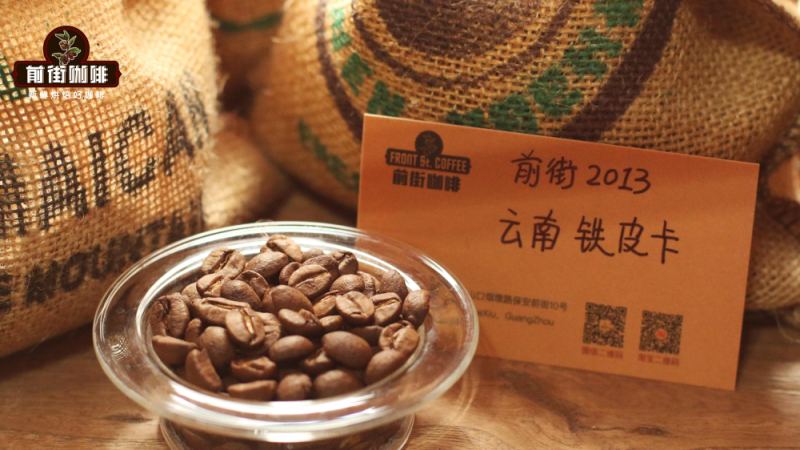
Front Street Coffee has a deep connection with Yunnan coffee, from a failed trial planting in Guangdong to putting down roots in Lincang, Yunnan, and ultimately spending seven years to refine the Typica coffee beans known as 【Front Street 2013】. This article will introduce you to the flavor characteristics and taste description of Yunnan small-bean coffee, trace the planting story of the Front Street brand in the Yunnan production region, and compare the differences between two bean varieties, Typica and Catimor. At the same time, we will also introduce the four major coffee production regions of Yunnan, explain the origin of the name "Yunnan small-bean coffee," and present the complete brewing parameters and method used in Front Street stores for 【Front Street 2013】.
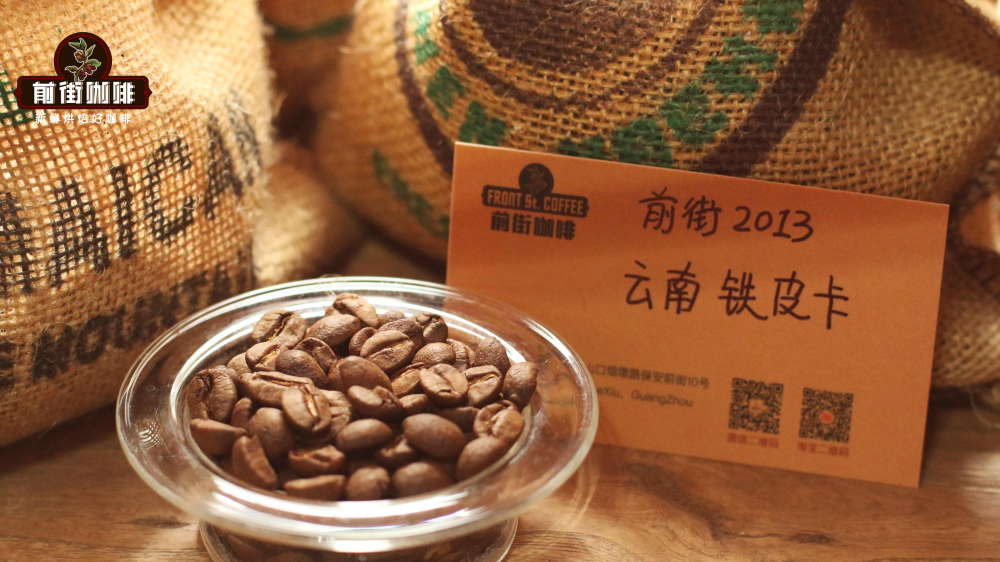
On the bean list of Front Street Coffee (FrontStreet Coffee), 【Front Street 2013】 is a bean that customers often ask about. Many people naturally become curious as soon as they see the two words "Front Street" in front of the bean name.
Unlike the path taken by most coffee shops, Front Street planted coffee first and then opened a coffee shop. At first, Front Street chose a place in Guangdong called Dazhen as its planting base and grew the Catimor variety now commonly seen in Yunnan. Front Street will discuss Catimor in detail later. At that time, China's coffee industry was just starting out, and there was very little information available, so Front Street's knowledge base was not particularly solid. After more than half a year of practice, Front Street truly realized that coffee planting is extremely closely related to altitude and soil. Only by placing excellent bean varieties at the right elevation is it possible to harvest specialty coffee with outstanding flavor.
After that, Front Street expanded its vision to the whole country. Anyone who pays a little attention to China's coffee production regions will know that there are roughly three places in the country where coffee is grown: Yunnan, Fujian, and Hainan. Hainan's average altitude is relatively low, precisely lacking one of the most critical conditions for growing coffee. Front Street learned that most coffee grown in Hainan is Robusta. Robusta does not demand much from its growing environment, and its genes determine that it is easier to manage than Arabica and also has higher yields, so production costs are naturally lower.
Robusta's caffeine content is about twice that of Arabica, it has more antioxidants, and it is less susceptible to disease. But every advantage has its drawbacks. Although Robusta is high-yielding and disease-resistant, it is generally considered more bitter and coarser in mouthfeel than Arabica, so it is often not classified as specialty coffee.
Looking across the whole country, Yunnan is the most suitable place to grow coffee. At that time, most coffee grown in Yunnan belonged to Arabica, so Front Street Coffee (FrontStreet Coffee) made an important decision: to abandon the planting project in Guangdong and turn to Yunnan. Front Street did not directly buy an existing estate, but instead took a novel approach by purchasing hillsides suitable for coffee cultivation. However, previous experience had made Front Street understand that Catimor was not the variety it wanted, so it chose the more expensive Typica. Why is Typica more expensive than the Catimor that was popular in Yunnan at the time (and now)?
The difference between Catimor and Typica:
Let's start with Typica. The Typica group, like all Arabica, should have originated in southwestern Ethiopia. At some point in the 15th or 16th century, it was brought to Yemen. By 1700, seeds from Yemen began to be planted in India.
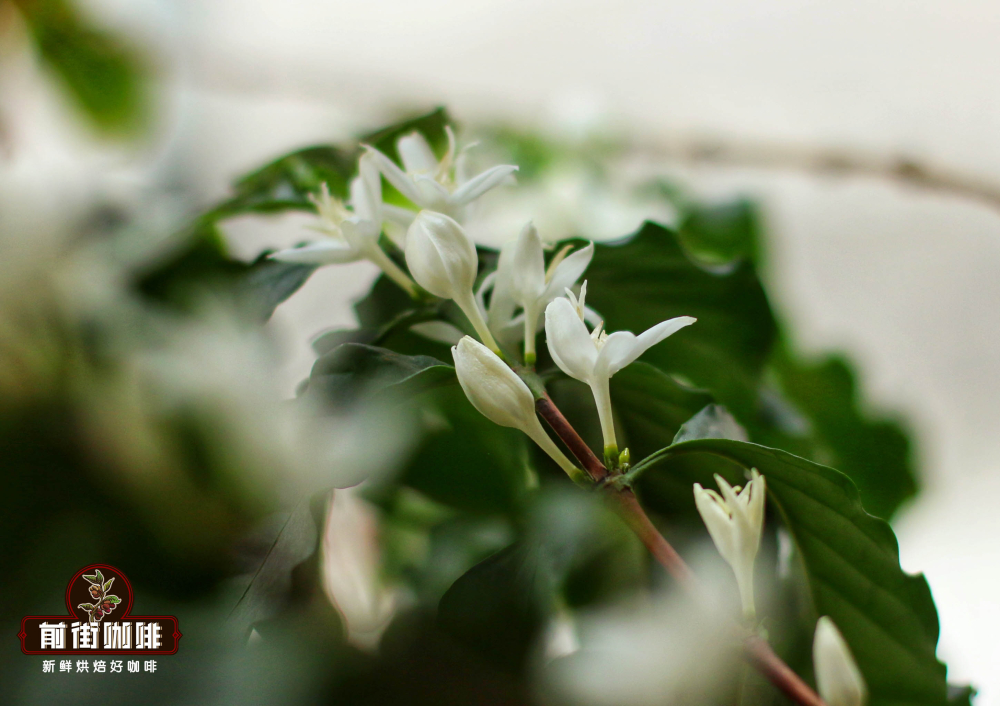
In 1696 and 1699, coffee seeds were sent from India's Malabar Coast to the island of Batavia (now Java, Indonesia). It was precisely these few seeds that gave rise to the Typica variety we know today. Typica is one of the most important coffee genetic groups in the world, with excellent flavor, but its yield is relatively low compared with other varieties. Many famous coffees around the world come from Typica, such as Jamaica Blue Mountain and Hawaii Kona. In Yunnan, however, coffee farmers mostly chose Catimor for higher returns.
Second, Typica is extremely susceptible to disease. Catimor is a hybrid of Catuai and Timor coffee. Because it carries Robusta genetic material, it has stronger disease resistance and higher yield. But precisely because of this, Catimor inherits Robusta's strong flavor characteristics, and its coarse flavor is often criticized by coffee lovers.
The altitude at which coffee is grown in Yunnan is generally not high. Although many estates give an upper limit of around 1,800 meters, not all coffee trees grow at the highest point; most are still planted near the qualifying altitude line for Arabica. If the altitude is not high enough, use a good bean variety to make up for it. In order to achieve the most satisfactory results under limited conditions, Front Street chose Typica, which has a higher price per plant and lower yield. At the same time, Front Street implemented a stricter screening and management system and brought in a large number of skilled workers for training. All of these efforts ultimately condensed into the coffee beans known as 【Front Street 2013】.
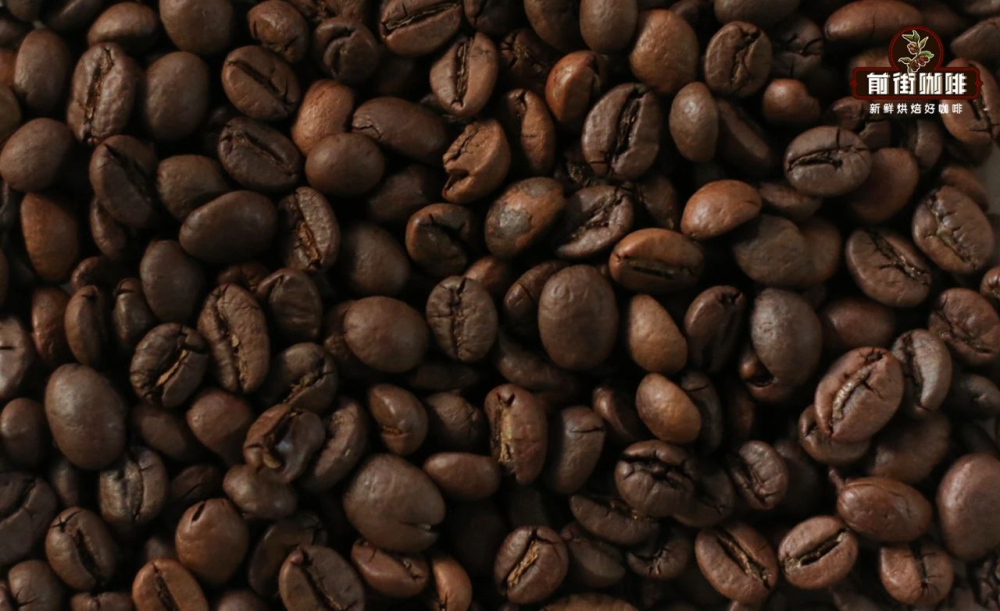
From seed to cup, 【Front Street 2013】 took 7 years. At first, Front Street remained in a trial-and-error stage, and coffee also needs three to four years from seedling to fruiting, so without experience it is difficult to succeed on the first try. Afterward, through multiple rounds of variety selection and improvement, this batch of Typica coffee beans, only about 200 kilograms, was finally produced. Hard work pays off. After this coffee was launched, it quickly sold out thanks to its good flavor quality.
Next, Front Street Coffee (FrontStreet Coffee) will brew a batch of 【Front Street 2013】 for everyone according to the store's production standards.
【Front Street 2013】
Origin: Lincang, Yunnan
Estate: Front Street Coffee (FrontStreet Coffee)
Variety: Typica
Processing method: Natural
Altitude: 1,300 meters
Dripper: V60
Water temperature: 91℃
Dose: 15 grams
Coffee-to-water ratio: 1:15
Grind size: fine granulated sugar coarseness (80% passing through China standard No. 20 sieve)
Extraction method: Front Street uses standard three-stage extraction. First, bloom with twice the coffee dose in water for about 30 seconds. Then, pour in a small stream in circles from the center outward to 125 grams. After the water level drops, continue pouring to 225 grams and stop. Wait until the water in the upper chamber has drained, then remove the dripper, controlling the extraction time to about 2 minutes.
The most prominent characteristic of this coffee is its pronounced black tea note, with obvious nutty tones and rich layering. As the temperature changes, you can perceive a flavor shift from berries to citrus, and the sweetness leans toward brown sugar.
Of course, the output of 【Front Street 2013】 is far from enough to meet the demand of Front Street Coffee (FrontStreet Coffee) consumers, so Front Street also purchased a batch of Catimor coffee in Baoshan, which is what we often call Yunnan small-bean coffee. Yunnan coffee beans belong to the Arabica species and are commonly known domestically as Yunnan small-bean coffee. Yunnan's excellent geographical and climatic conditions provide good conditions for coffee growth, and at present four major production regions have formed: Lincang, Baoshan, Dehong, and Pu'er.
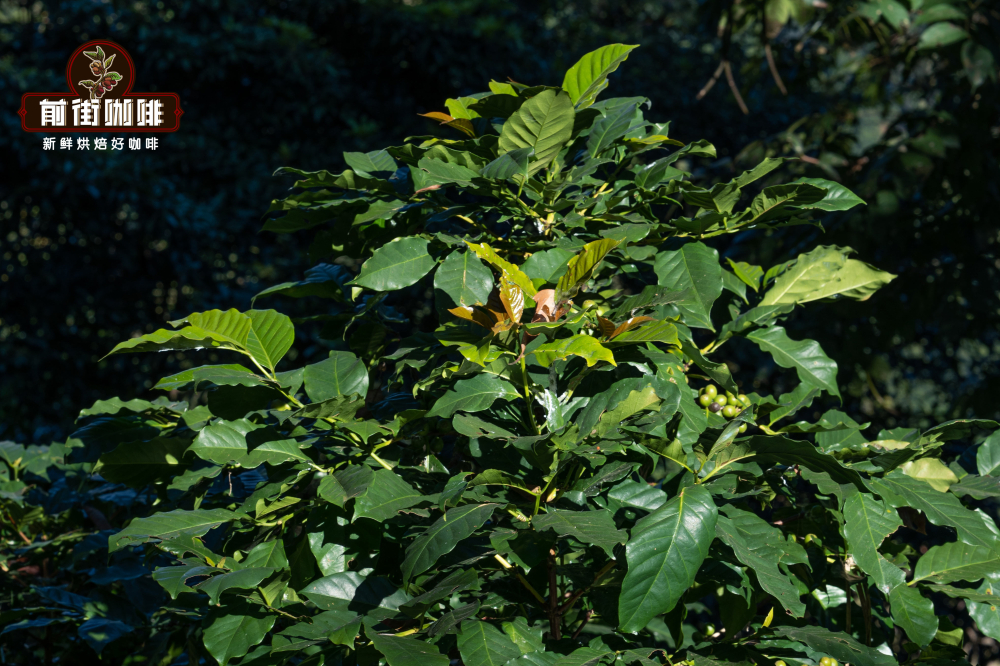
As for the origin of the name Yunnan small-bean coffee, Front Street will also explain it here. The earliest small-bean coffee actually referred broadly to Yunnan's Arabica coffee beans, and many people now think it refers to Typica. However, with the rise of China's coffee market, in pursuit of yield, Yunnan coffee farmers replaced the Typica they had originally planted with Catimor. The large-scale cultivation of Catimor naturally caused the name small-bean coffee to fall to Catimor. So what are the taste characteristics of Yunnan small-bean coffee? Front Street believes that compared with Typica, Catimor's flavor is not as refined and elegant, with a bit more tea-like quality and a considerable reduction in acidity.
For professional coffee knowledge exchange and more coffee bean information, please follow Coffee Workshop (WeChat public account: cafe_style)
For more specialty coffee beans, please add the private WeChat of Front Street Coffee (FrontStreet Coffee), WeChat ID: kaixinguoguo0925
The above content is compiled by CoffeeHunters, a coffee news website.


