







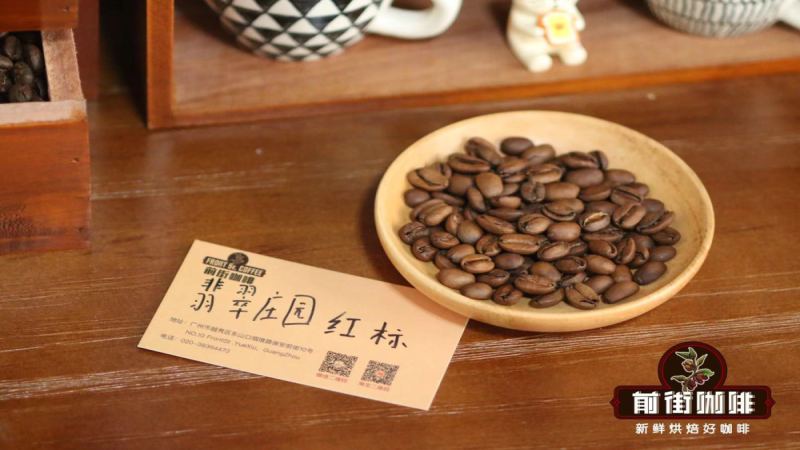
How Do Geisha Coffee Grades Differ at Hacienda La Esmeralda?
Hacienda La Esmeralda in Panama's Boquete region divides its geisha coffee into three grades: Red Label, Green Label, and Blue Label, each tied to altitude standards and cupping performance. The terroir near active volcanoes, with the highest peak at 3,475 meters in Panama, helps produce a flavor that is difficult to replicate.
Geisha beans were once listed among the most expensive coffee selections, drawing the nickname from the similar-sounding Japanese word. The variety comes from Ethiopia's Geisha Forest and was introduced from Costa Rica to Panama in 1963 by Don Pachi Serracin, with low yields keeping farmers uninterested until the estate's high-altitude trees stood out.
Why has Hacienda La Esmeralda's Geisha coffee become a legend in the specialty coffee world? This article, from Front Street's perspective, takes a deep dive into the natural terroir of Panama's Boquete producing region, traces Geisha's comeback journey from windbreak tree to champion bean, systematically explains the grading logic, altitude standards, and cupping performance of Hacienda La Esmeralda's three main grades—Red Label, Green Label, and Blue Label—and includes Front Street Coffee's brewing parameters and flavor descriptions for each grade. Whether you want to understand Geisha's grading system or need a reference for choosing beans for pour-over, this article will help you grasp the full picture of Hacienda La Esmeralda Geisha in one go.
The reason Hacienda La Esmeralda's Geisha is so captivating, Front Street believes, is inseparable from Boquete's exceptional terroir. The town of Boquete is known for its surrounding active volcanoes, the highest peak of which reaches 3,475 meters, making it the tallest mountain in all of Panama. Following the Sendero de los Quetzales trail from Boquete, you can reach Cerro Punta and Volcan Baru on the other side of the volcano, while the Caldera River winds through the entire town. For this reason, Front Street feels that the outstanding performance of Hacienda La Esmeralda Geisha is not a matter of luck, but rather the result of the area's remarkable natural conditions giving rise to a flavor that is difficult to replicate.
Geisha coffee beans were once included in Forbes' list of the "World's Top Ten Most Expensive Coffees." Because the pronunciation of Geisha is similar to the Japanese word for "geisha," it acquired this nickname. In the development of specialty coffee, Geisha's rise can be called the most remarkable legend since the turn of the millennium. Whether you call it Geisha coffee or geisha beans, it refers to the same variety, whose name comes from the Geisha Forest in Ethiopia.
Geisha originates from southwestern Ethiopia in Africa, and in 1963 Don Pachi Serracin introduced this variety from Costa Rica to Panama. Due to low yields, harvest volumes were significantly affected, and coffee farmers were not very enthusiastic about planting it. The turning point came at Panama La Esmeralda—the estate owner, Daniel Peterson, accidentally discovered that the Geisha coffee trees located at the highest point of the estate, originally used only as a windbreak, produced beans with the citrus and floral aromas typical of African beans. He immediately separated this batch of beans and sent them to the 2004 Panama coffee cupping competition, where they became an overnight sensation. Since then, Geisha beans have been unstoppable, winning the Panama coffee cupping competition championship for many consecutive years. In the minds of specialty coffee enthusiasts around the world today, the status of geisha coffee beans is almost unshakable.
Panama Hacienda La Esmeralda
Panama is located in Central America, connecting North America and South America, and bordering Costa Rica and Colombia. Panama's coffee industry could be said to have been born with a silver spoon in its mouth. As is well known, the Panama Canal was built by the United States, and after completion it was once controlled exclusively by the U.S. It was precisely the excavation of this canal that brought a large number of American elites southward at the end of the 20th century, both for work requirements and to seek business opportunities.
Hacienda La Esmeralda was precisely a product of that era. In 1964, American banker Rudolph Peterson retired and moved to Panama, purchasing Hacienda La Esmeralda in Boquete, initially focusing on dairy operations. Later, his son Price gave up his medical career to help his father manage the farm, and in 1987 introduced two coffee varieties, Caturra and Catuai. In 1994, a wet processing plant was built, giving them their own coffee processing capability. In 1996, the Petersons bought the neighboring Jaramillo estate—which had superior geographical conditions and excellent flavors from its existing coffee varieties—and incorporated it into Hacienda La Esmeralda.
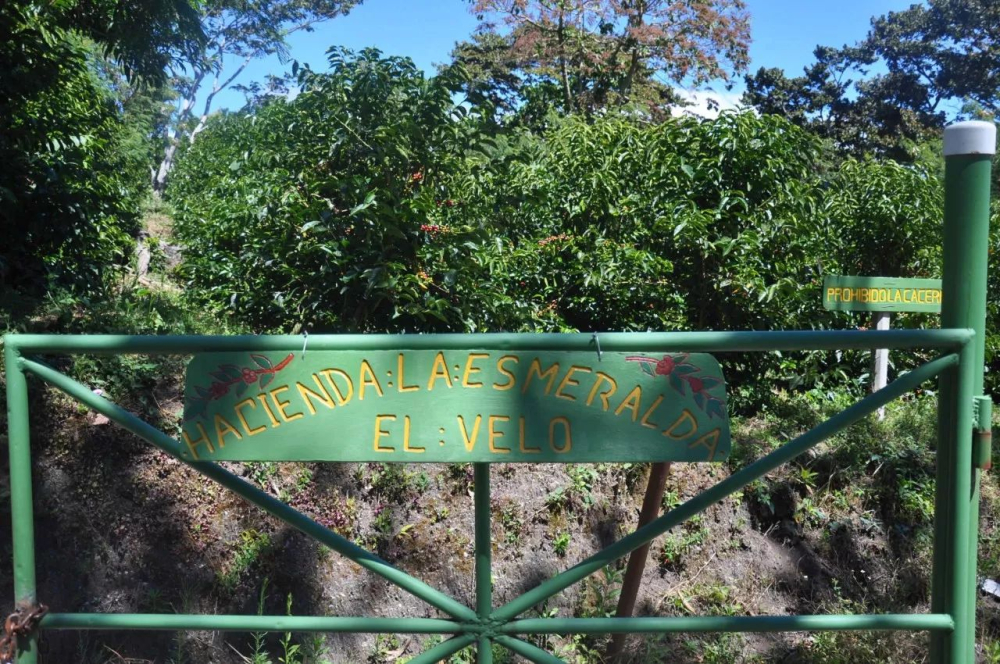
The reason the Petersons were interested in Jaramillo estate was precisely because its existing coffee beans had a pleasant orange aroma and floral-fruity notes, which differed from the usual flavor of Panamanian coffee. After cupping different areas of the estate, they discovered that the source of the aroma was a batch of unnamed coffee trees growing at the highest point of the estate. Due to low yields, the previous owner had used them only as windbreak trees, but the Petersons discovered them and decided to plant and cultivate the coffee trees in that area separately.
After winning the 2004 Best of Panama (BOP) green bean competition, this bean performed astonishingly, and was later identified by experts as the Ethiopian Geisha variety. Afterward, the Peterson family devoted most of their energy to infrastructure construction to support excellent lot separation and meticulous processing.
Hacienda La Esmeralda's Plot Division and Grades
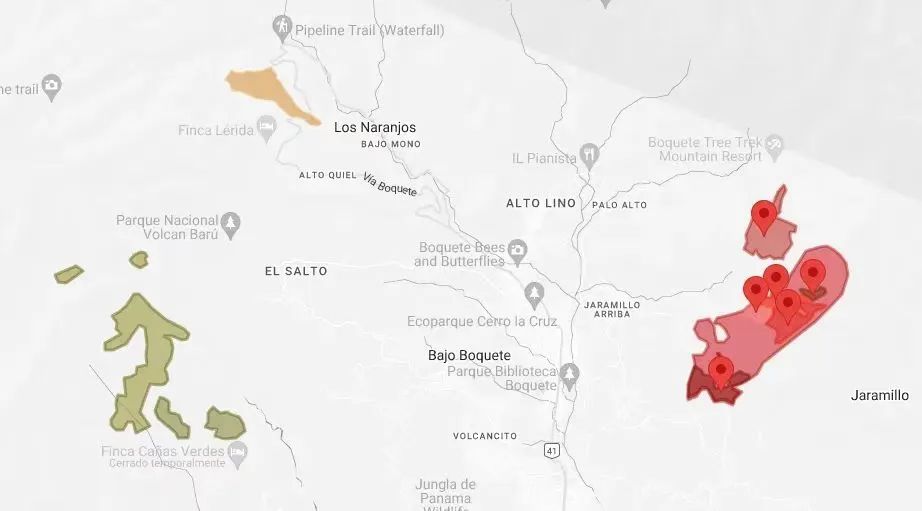
Hacienda La Esmeralda is located in Panama's Boquete producing region, an important coffee-producing area in Panama from which many well-known estates originate, such as Elida Estate and Kotowa Coffee Estate. Hacienda La Esmeralda owns three estates: Jaramillo, Cañas Verdes, and El Velo. In terms of Geisha plot division, the estate is extremely meticulous, with the three estates divided into a total of 22 small plots. Hacienda La Esmeralda's Geisha grades are basically determined by altitude. Simply put: below 1,500 meters is Blue Label; above 1,500 meters with blended harvest is Green Label; clearly marked with single plot information is Red Label. Some Red Labels participate in auctions organized by Hacienda La Esmeralda, commonly called bidding, but bidding is not actually an independent grade. High-quality Geisha mainly comes from the two major plots of Jaramillo and Cañas Verdes.
Jaramillo has annual rainfall of 4000ml, average daytime temperature of 19-25°C, average nighttime temperature of 11-15°C, and average altitude of 1600-1700m.
Cañas Verdes has annual rainfall of 3500ml, average daytime temperature of 16-23°C, average nighttime temperature of 10-15°C, and average altitude of 1600-1800m.
El Velo is the most recently acquired plot of Hacienda La Esmeralda, with an average altitude of 1700-1900m. In addition to planting Geisha and Catuai, this plot also has a small number of other introduced varieties, such as Laurina, Pacamara, Mocha, and SL28.
Awards
Specialty Coffee Association of America (SCAA) Cupping Competition Champion (2007, 2006, 2005) Best of Panama Champion (2017, 2015, 2013, 2010, 2009, 2007, 2006, 2005, 2004)
Rainforest Alliance Coffee Quality Cupping Competition Champion (2013, 2009, 2008, 2007, 2006, 2004)
Using auctions to allow valuable items to fetch high prices is a method equally applicable to the sale of high-quality coffee beans. Panama Hacienda La Esmeralda's Geisha is especially special. In order to give well-cultivated and well-managed fine coffee beans reasonable returns, after the cupping competition each year, Hacienda La Esmeralda holds its own global auction, which has also become an annual event in the specialty coffee world.
A Detailed Look at "Hacienda La Esmeralda Red Label," "Hacienda La Esmeralda Green Label," and "Hacienda La Esmeralda Blue Label"
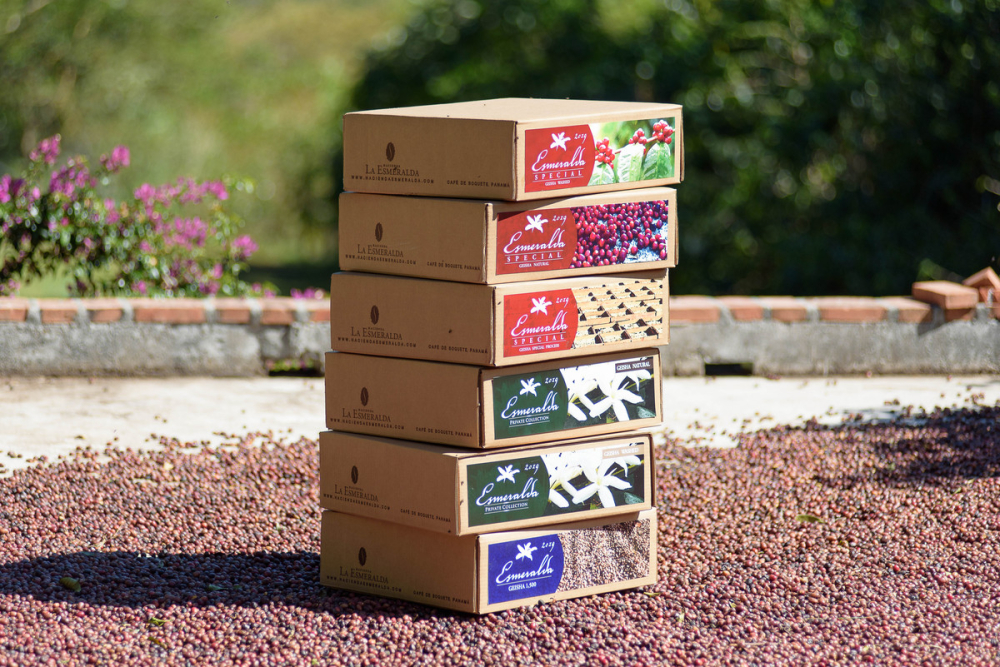
After years of experimentation, Hacienda La Esmeralda found that only Geisha beans from coffee trees grown above 1,400 meters can display the special flavor that this variety should have. Therefore, grading is mainly based on growing altitude, supplemented by actual cupping results, ultimately dividing Geisha beans into three grades: "Red, Green, and Blue Label."
Top Red Label [Auction Lot]
Growing altitude 1,600-1,800 meters
Cupping score above 90 points
Mainly from Jaramillo and Cañas Verdes estates, and also the highest-quality Geisha beans
Geisha beans harvested from the highest points of the Boquete mountains, with special, bright floral aromas and citrus notes
Coffee of this grade is processed into natural or washed green beans
Can only be purchased through the annual global auction
Second best: Green Label [Reserve Lot]
Growing altitude 1,600-1,800 meters
Micro-lot blends from three different estates: Jaramillo, Quiel, and Cañas Verdes
Although not the highest-grade auction beans, Geisha beans of this grade still carry the classic flavors of Geisha coffee beans: floral aroma, fruity notes, citrus acidity, and a rich, juicy mouthfeel
Selected from optimally ripe coffee cherries to create a sweet, bright fruity acidity, and delicious flavor
Geisha beans of this grade are also available as washed or natural processed green beans
Standard: Blue Label [Selection Lot]
Growing altitude 1,500 meters
Blends from three different estates: Jaramillo, Cañas Verdes, and El Velo
Slight floral aroma, fruity acidity, sweetness, with a less rich mouthfeel
Geisha beans of this grade are only available as washed processed green beans
Taking [FrontStreet Coffee Hacienda La Esmeralda Red Label, Green Label, and Blue Label] as examples
FrontStreet Coffee Brewing Recommendations
Dripper: Hario V60 Water temperature: 90℃ Dose: 15g Coffee-to-water ratio: 1:15 Grind size: medium-fine (BG#6S)
Pulse pouring—bloom with 30g of water for 30 seconds, then pour in a slow circular stream until the water reaches 125g and pause; when the water level is about to expose the coffee bed, continue pouring until 225g and stop; when the water level is about to expose the coffee bed again, remove the dripper. (Timing starts at the beginning of the bloom.) Total extraction time is 2'00".
Flavor Descriptions
[Red Label] Bright rose and citrus aromas, genmai, berries, apricot, complex fruit, honey, with a rich juicy mouthfeel, layered flavors, and pronounced sweetness.
[Green Label] On the palate, intense jasmine aroma and high sweetness, citrus, berries, juicy mouthfeel, cream, green tea, orange peel, cantaloupe; overall layered flavors with a lasting floral and citrus finish.
[Blue Label] On the palate, soft acidity of lemon and grapefruit; as it cools slightly, oolong tea, honey, and sugarcane sweetness return; the mouthfeel is relatively clean and bright.
For more specialty coffee knowledge, please add the private WeChat of FrontStreet Coffee. WeChat ID: kaixinguoguo0925
The above content is compiled by CoffeeHunters, a coffee news website.


