







How does a bottomless portafilter change coffee extraction?
A bottomless portafilter has an open bottom, so the puck and the espresso flow are visible during the shot. Channeling shows up immediately as spraying or uneven streams. A spouted or bottomed handle hides that view, but its closed base and diverter split one shot evenly into two cups with less mess.
The two handles share the same basket and dose, so the difference is observation and convenience rather than the recipe. A demonstration with a blend coffee shows how to read flow rate, color and beading on the open basket, and how to judge whether a shot ran evenly before tasting it.
The coffee extraction handle is an indispensable accessory for semi-automatic espresso machines. Among the common types on the market, what are the characteristics of the bottomed diverter handle and the bottomless straight-out handle? Front Street Coffee stores have long used bottomless handles. Starting from structural differences and a comparison of advantages and disadvantages, this article will deeply analyze how the two handles differ in extraction observation and operational convenience, and include a practical demonstration of bottomless handle extraction using Front Street Coffee's classic blend coffee beans, helping coffee lovers understand the espresso extraction process and quality judgment more intuitively.
For more specialty coffee knowledge, please follow the WeChat public account: Front Street Coffee (FrontStreet Coffee)
In semi-automatic espresso machines, the brewing handle is one of the indispensable core accessories. Structurally, handles are mainly divided into two categories: one is the closed handle with a diverter design at the bottom, and the other is the bottomless straight-out handle with a completely open bottom. Front Street Coffee stores currently use bottomless handles. So, what are the respective pros and cons of these two handles in actual operation?
Where do the structural differences between the two lie?
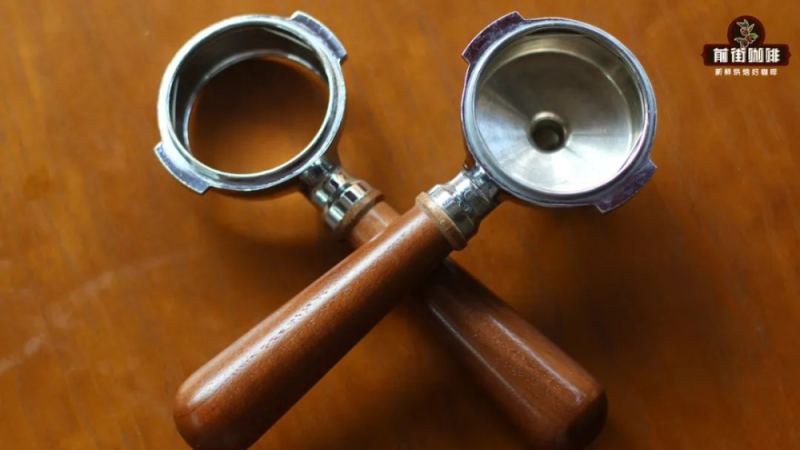
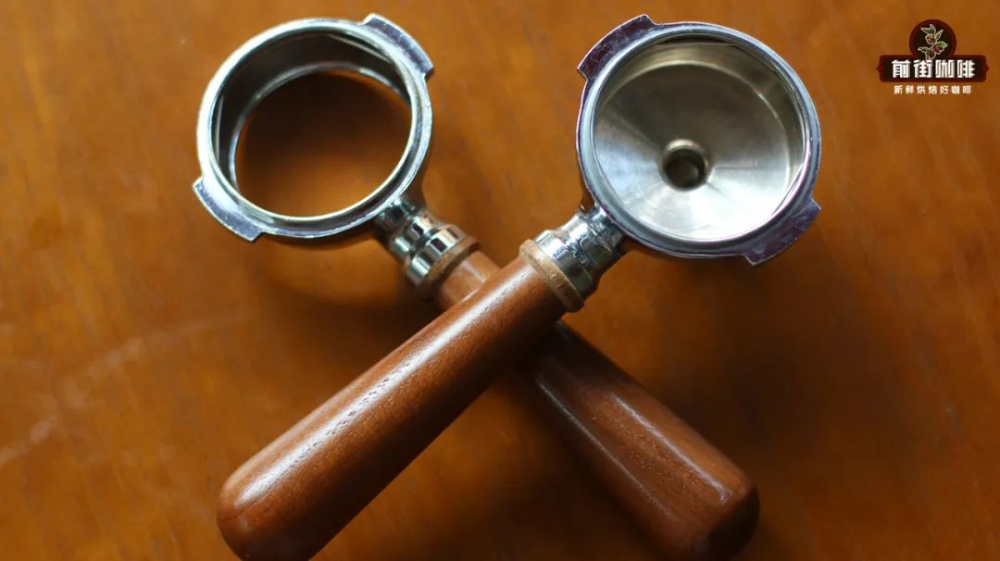
The bottom of a bottomed handle is closed, with only a small hole reserved as an outlet. A diverter is usually installed at the outlet, allowing one espresso to be distributed relatively evenly into two cups. The bottom of a bottomless handle, however, has no obstruction at all, so the state of the bottom of the filter basket can be seen directly.
The core difference between a bottomless handle and a bottomed handle lies in whether the bottom has a closed structure. Because the bottom is open, the operator can directly observe the flow of espresso and can also clearly catch the occurrence of channeling—when channeling occurs, spraying appears at the bottom of the filter basket. With a bottomless handle, this is obvious at a glance, while with a diverter handle, this detail is difficult to notice.
If the coffee machine you have only comes with a bottomed handle, and you want to experience a bottomless handle, you can actually just find a craftsman to cut off the bottom of the bottomed handle, and you will get a bottomless handle with exactly the same effect.
What are the advantages and disadvantages of bottomed handles?
Advantage 1: A bottomed handle has a pouring spout, which can effectively prevent splashing when the coffee liquid flows into the cup.
Advantage 2: A bottomed handle can be fitted with a diverter to evenly divide one espresso into two cups.
Disadvantage 1: A bottomed handle needs to be preheated before extraction, because the large piece of metal at the bottom will absorb heat, thereby affecting coffee quality.
Disadvantage 2: A bottomed handle easily accumulates coffee residue and needs frequent disassembly of the filter basket for cleaning; otherwise, it will cause subsequent extracted coffee liquid to pick up off-flavors.
What are the advantages and disadvantages of bottomless handles?
Overall, the birth of the bottomless handle was precisely to make up for the shortcomings of the bottomed handle. But the most important reason driving the emergence of the bottomless handle is that it allows for more intuitive observation of coffee liquid quality. When channeling occurs, spraying appears at the bottom of the filter basket. A bottomless handle makes this easy to observe, while a diverter handle makes it difficult to do so.
In addition, when making layered coffees such as Dirty, a bottomless handle is also more convenient. On some coffee machines, because the distance between the brewing head and the drip tray is limited, if a diverter handle is used, a 7 cm tall cup may not fit, while switching to a bottomless handle can save 4 to 3 cm of space.
The disadvantages are equally obvious: when extracting with a bottomless handle, the coffee liquid easily splashes.
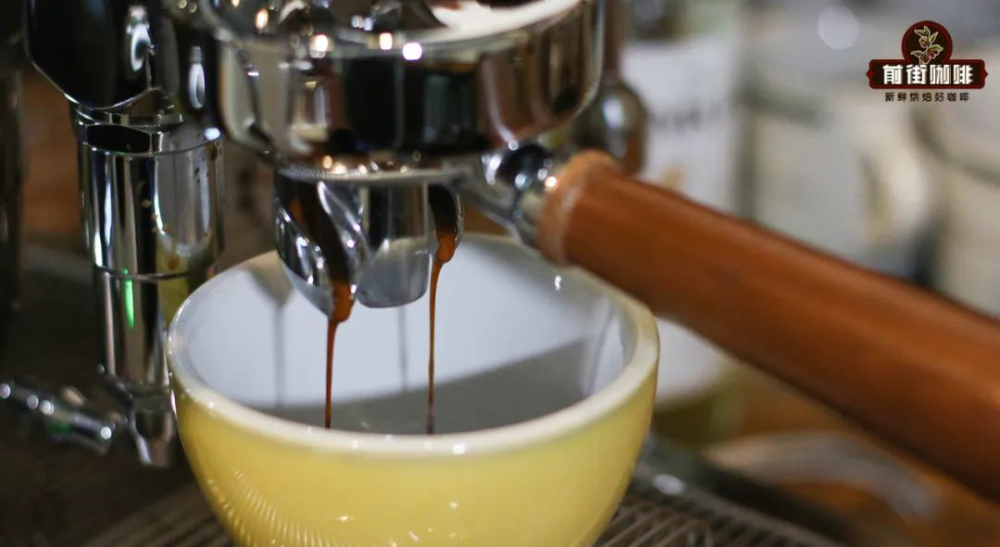
The core reason Front Street Coffee has always insisted on using a bottomless handle to extract espresso is that it allows clearer observation of the espresso flow rate and the state of the crema flowing into the cup. Moreover, once extraction becomes abnormal, the bottomless handle also helps quickly adjust parameters. To give everyone a more intuitive feel, we use Front Street Coffee's classic blend coffee beans, which have the richest crema performance, to demonstrate the complete process of extracting espresso with a bottomless handle:
Front Street Coffee (FrontStreet Coffee) espresso extraction parameters
Grinder: Galileo Q18
Grind setting: 2.1
Coffee machine: Faema E98
Pressure: 9±2 bar
Temperature: 90–96°C
Dose: 19.5 g
Yield: 35 g
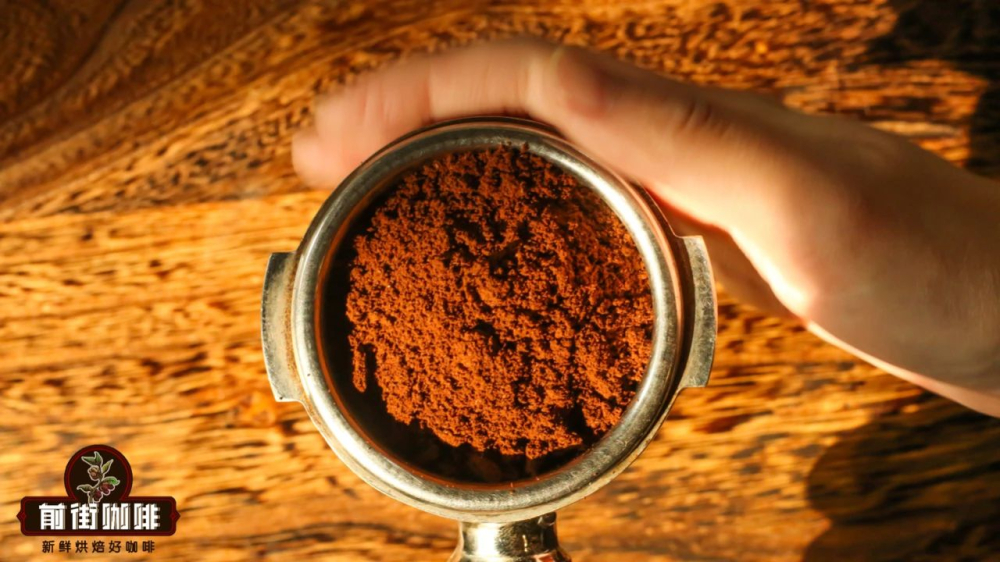
First turn on the coffee machine switch and wait for the machine to complete heating automatically. Then prepare freshly roasted coffee beans and grind them into a very fine coffee powder. Next, according to the capacity of the filter basket, lock the handle into the filter basket and fill it with the corresponding amount of coffee powder.
After filling in the coffee powder, use your fingers to spread the coffee bed as evenly as possible in the filter basket, then use the tamper supplied with the coffee machine (or the flat side of the other end of a coffee bean spoon/coffee scoop) to tamp the coffee powder bed vertically.
Then lock the handle into the brewing head position of the coffee machine and confirm whether it is locked tightly. Next, press the switch, and after extracting to the ideal state, the espresso is ready.
By observing the espresso flowing from the bottomless handle, you can see that the espresso extracted using Front Street Coffee's classic espresso blend has a beautiful, visible crema, with a thick and dense texture and a rich nutty cookie aroma. Front Street Coffee usually adds this espresso to fresh milk to make a latte. The taste is not only smooth and mellow, but you can also taste the nutty flavor of the espresso itself, which is very satisfying.
The above content is compiled by CoffeeHunters, a coffee news website.


