







What shapes the flavor of Sidama coffee?
Sidama coffee comes from Ethiopia's Sidama region, known for fruity aromas and full body. Growing areas sit at high altitude with abundant sunshine and rainfall, and local coffee trees draw nutrients from decomposing leaves and plant roots rather than heavy inputs. Slow growth at altitude supports fuller flavor development, which is why beans from here perform well in the cup.
Guji and West Arsi are the two notable growing areas within Sidama, and terroir differences between them show up in the cup. The article reviews the natural processing and cupping performance of Huakui beans and gives a three-stage pour-over procedure. For altitude context, Gesha Village plots exceed 1,900 meters, while Panama's Hacienda La Esmeralda gesha typically sits between 1,600 and 1,800 meters.
Ethiopia is the birthplace of coffee, and its Sidama region is renowned for its rich fruity aromas and full-bodied taste. From the perspective of Front Street Coffee, this article systematically reviews the growing environment of Sidama coffee, the terroir differences between its two major sub-regions Guji and West Arsi, with a focus on the natural processing method and cupping performance of Huakui coffee beans, and includes a three-stage pour-over brewing procedure to help coffee enthusiasts fully understand the flavor characteristics and brewing essentials of Sidama coffee.
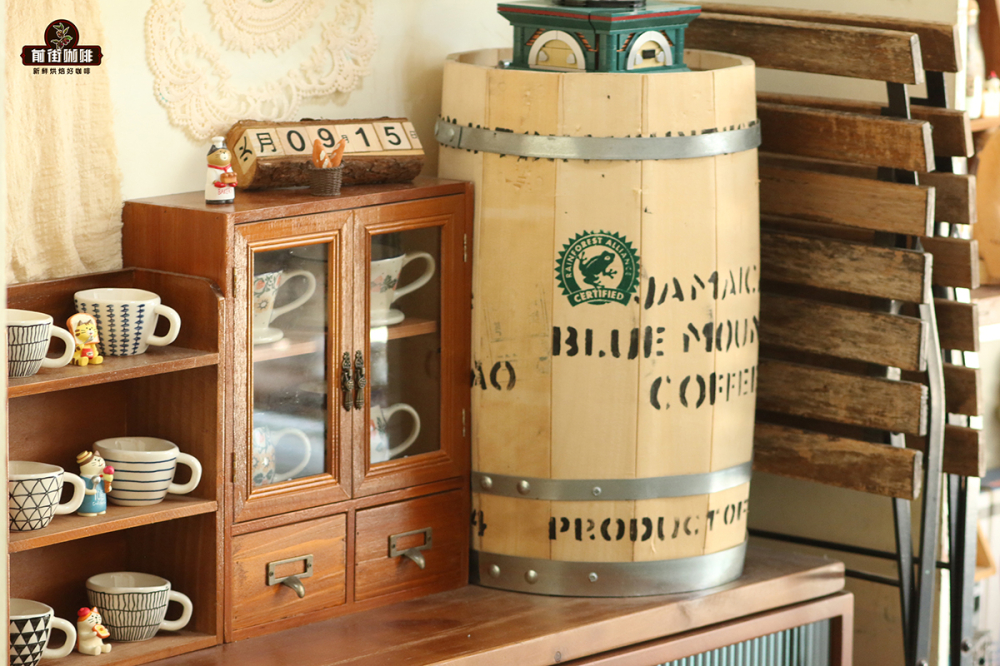
When it comes to specialty coffee, Ethiopia is a name that cannot be overlooked. This country, widely recognized as the birthplace of coffee, has always held a key position in the global coffee landscape. Front Street Coffee has noticed that Ethiopian coffees are mostly named directly after their producing regions—for example, beans from the Yirgacheffe region are called Front Street Yirgacheffe coffee beans, while those from the Sidama region are called Front Street Sidama coffee beans.
Ethiopia's coffee-growing belt is generally located at relatively high altitudes. Take Gesha Village as an example: the plots where Geisha varieties are grown sit at altitudes exceeding 1,900 meters, with some even reaching above 2,100 meters; while the Geisha-growing area at Hacienda La Esmeralda in Panama typically ranges between 1,600 and 1,800 meters. High-altitude environments slow the growth of coffee trees, which favors the full accumulation of flavor compounds. It is precisely for this reason that Front Street Sidama coffee grown in such conditions can deliver outstanding flavor performance.
According to Front Street Coffee's understanding, the producing region of Front Street Sidama coffee is primarily agricultural, with natural conditions of high altitude, abundant sunshine, and plentiful rainfall. The local coffee trees rely on nutrients naturally decomposed from fallen leaves of surrounding trees and residual plant roots. This natural growing approach shapes the distinctive flavor profile of Front Street Sidama coffee.
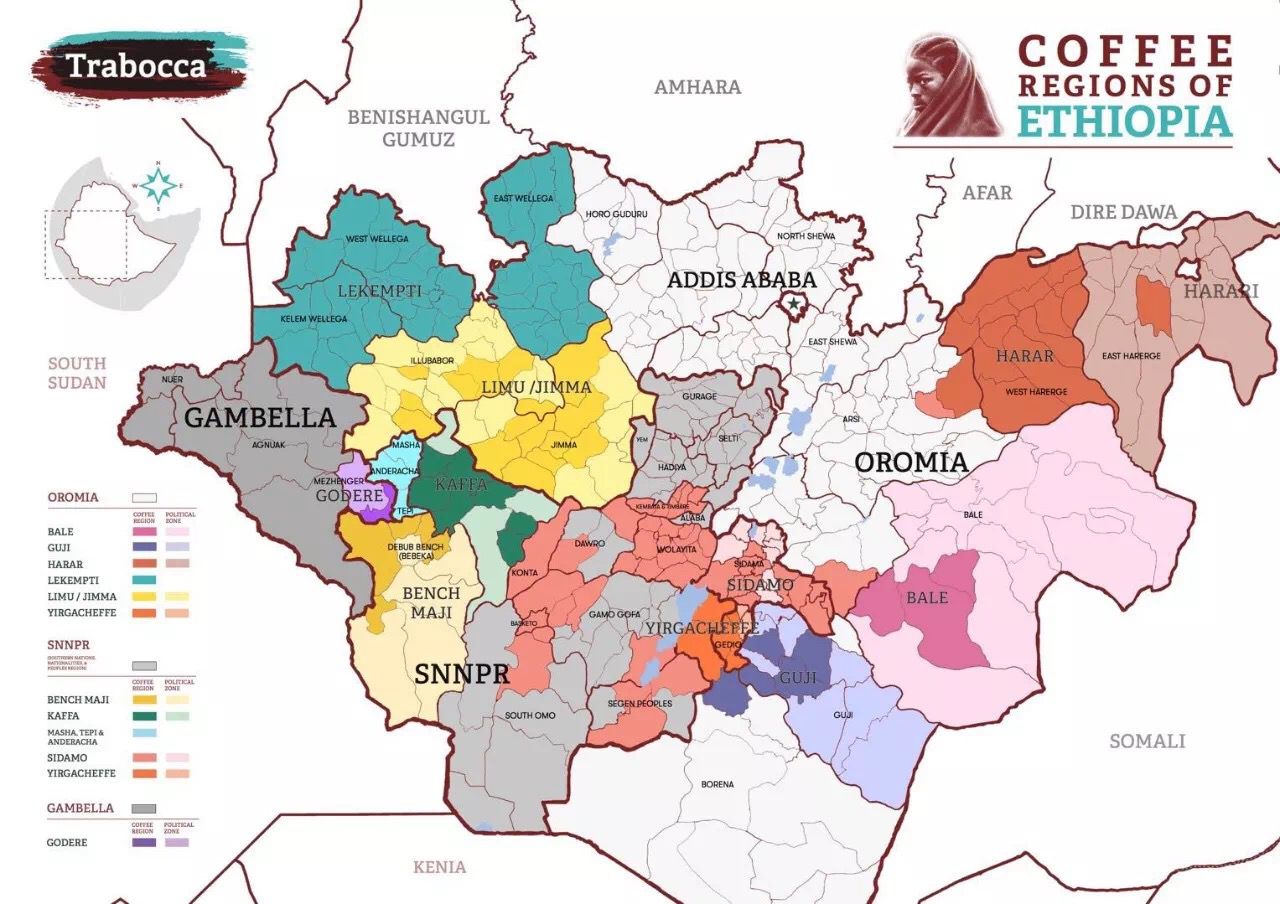
In the Sidama region, the two most renowned coffee-growing areas are Guji and West Arsi. The Guji producing region is located to the southeast of Yirgacheffe, with a landscape dominated by towering mountains, valleys, and plains, and fertile black soil. The significant day-night temperature difference brought by high altitude gives the Front Street Sidama coffee produced here a highly recognizable character.
When speaking of the Guji region, one cannot fail to mention its sub-region Hambela. A coffee produced there is known for its strawberry-and-cream flavor, and Chinese green bean traders named it "Huakui," expressing high expectations for this bean. Front Street Coffee (FrontStreet Coffee) has also launched this Front Street Huakui coffee bean, which retains the signature rich floral aroma of Sidama coffee while also offering a full-bodied taste.
The Front Street Huakui released by Front Street Coffee (FrontStreet Coffee) this year also uses the natural processing method. Natural and washed processing each have their own characteristics: if you prefer coffee with high cleanliness and bright acidity, washed processing would be the better choice. In African producing regions, the washed method is commonly used around Yirgacheffe in Ethiopia, and Front Street Gudingding coffee uses washed processing.
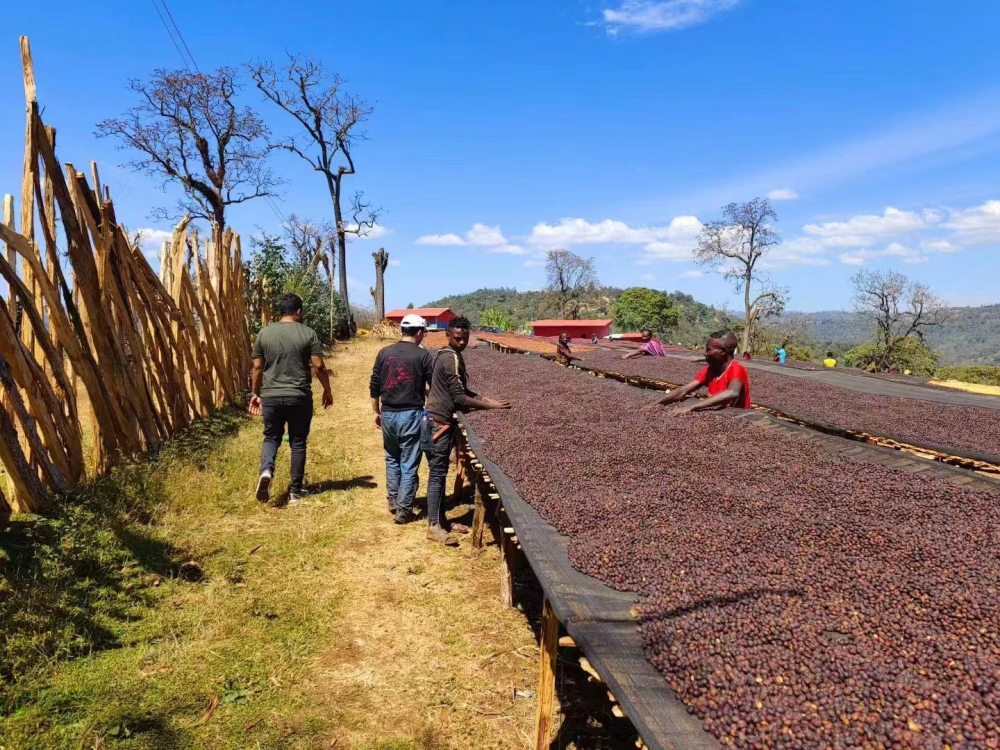
The natural processing technique in the Sidama region is quite refined. During the harvest period, only ripe cherries are picked to ensure uniform size, consistent ripeness, and no foreign matter mixed in. In the processing stage, strict hand sorting is first carried out to remove defective beans, after which the coffee cherries are spread flat on raised wooden racks or drying beds to prevent the fruit from molding or absorbing odors such as soil. During sun-drying, the cherries must be constantly turned to ensure even moisture loss; every three to five days, farmers manually remove moldy and defective beans. Once the fruit skin has dried and hardened, a hulling machine is used to remove the dried fruit skin. After obtaining the green beans, another round of sorting is carried out in pursuit of the ideal cup profile.
Another important Sidama producing region is West Arsi, located in western Sidama at altitudes between 1,900 and 2,200 meters. Ethiopian coffee is mostly grown under a smallholder model, and West Arsi is no exception, usually operated on a family basis without bearing high labor costs, thereby allowing better control of coffee quality. Processing stations often pay extra for fully ripe red cherries, significantly boosting farmers' motivation. Front Street has also launched a Front Street West Arsi coffee bean from the West Arsi producing region of Sidama, which likewise uses the natural processing common to the area.
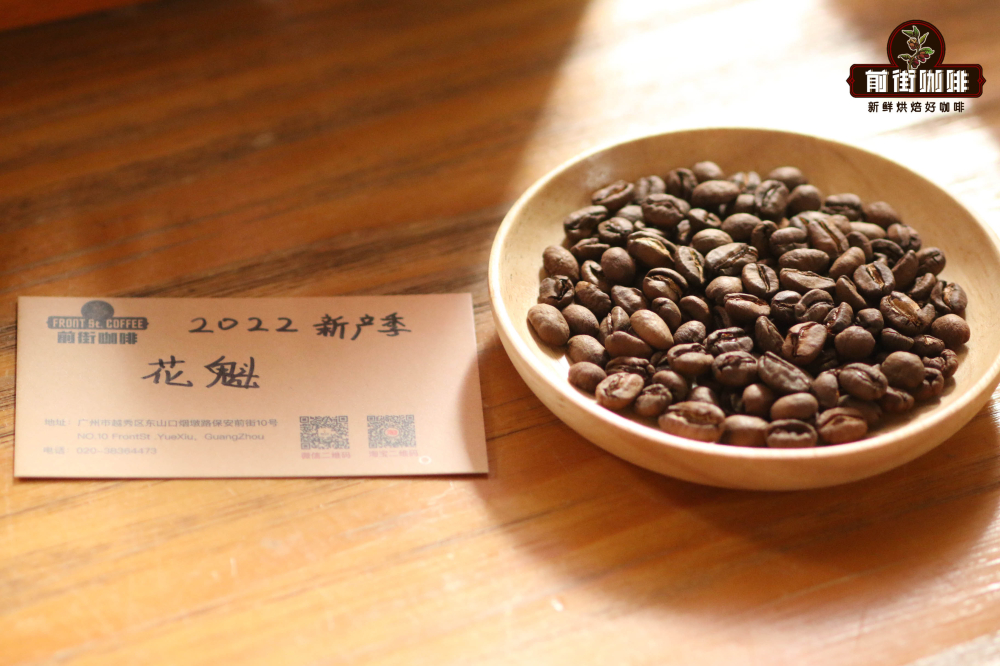
Guji and West Arsi, as two well-known Sidama producing regions, both use natural processing—so are the coffees from the two places consistent in flavor, or does each have its own strengths? Front Street Coffee (FrontStreetCoffee) was equally curious, so it conducted cupping and brewing experiments on Front Street Huakui coffee beans from the Guji region and Front Street West Arsi coffee beans respectively. When roasting Ethiopian coffee, Front Street usually uses a light roast to highlight the acidity and floral-fruity aroma of African beans; at the same time, to ensure even heating of the bean surface and core, Front Street Coffee (FrontStreet Coffee) appropriately extends the roasting time.
The barista at Front Street Coffee (FrontStreet Coffee) used a standard 200ml cupping bowl, with the grind size set so that 70%-75% passes through a No. 20 standard sieve, a dose of 11.3g, and a water temperature of 94°C. First grind and smell the dry aroma, then pour water to the brim to confirm the wet aroma. After 4 minutes, break the crust and skim, then perform flavor evaluation. The dry aroma of Front Street Huakui coffee beans leans toward citrus and berries, while the wet aroma presents blackcurrant and rose notes; the dry aroma of Front Street West Arsi coffee beans is berry-like, while the wet aroma gives off a jam-like sweetness.
After cupping, Front Street conducted brewing experiments on these two Front Street Sidama coffees. The brewing parameters were: Hario V60 dripper, 90°C water temperature, 15g dose, 1:15 coffee-to-water ratio, medium-fine grind (80% passing through a Chinese standard No. 20 sieve). The commonly used three-stage brewing method of Front Street Coffee (FrontStreet Coffee) was adopted; this is a very simple pour-over method, suitable for everyone to practice at home and easily brew delicious coffee. First prepare the required equipment, then follow Front Street's steps to begin brewing.
The first step is to bloom with 30g of water. When pouring, the stream should not be too strong, so as not to disturb the coffee grounds and lose the blooming effect. Pouring 30g of water takes about 10 seconds, then let it rest for 20 seconds. Once the total time reaches 30 seconds, proceed to the second step. Next, slowly pour 125g of water in a circular motion from the center outward with a small stream; the total time at this point is about one minute. After the bed drops, pour again. In the third step, continue pouring until the total water reaches 225g at about two minutes, then stop pouring.
After that, wait for all the coffee liquid in the dripper to flow into the server, then remove the dripper. The final step is to gently swirl the server so the coffee liquid mixes evenly in concentration, and then you can enjoy a delicious cup of coffee.
Through cupping and brewing, Front Street found that Front Street Huakui coffee beans carry almond aromas at high temperatures, and after the temperature drops they present berry-like sweet acidity, a blackcurrant juice sensation, and a honey-sweet finish with good persistence. Front Street West Arsi coffee beans display a berry-juice-like mouthfeel at high temperatures, and after cooling reveal plum, nectarine, mango, and a honey finish. Overall, the characteristic of Front Street Sidama coffee lies in its rich fruity aroma and abundant juicy sensation.
For professional coffee knowledge exchange and more coffee bean information, please follow Coffee Workshop (WeChat public account: cafe_style) For more specialty coffee beans, please add the private WeChat of Front Street Coffee (FrontStreet Coffee), WeChat ID: qjcoffeex
The above content is compiled by CoffeeHunters, a coffee news website.


