







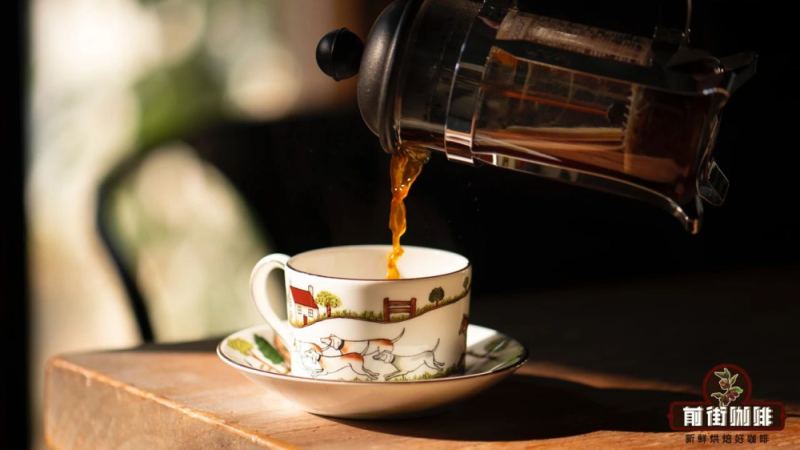
How do you brew French press coffee without bitterness?
A French press can match pour-over when grind size, steep time, water temperature, and coffee-to-water ratio are controlled. The device is a cylinder with a lid and a central metal filter pushed down to separate grounds from liquid, much like brewing tea. One brew yields two or more servings, which suits home use.
Guides often insist on a coarse grind, but the practical target is a particle size with about a 70 percent pass rate on the chosen setting. Common complaints about weak or muddy results usually trace back to grind and timing rather than the press itself. Bean type, parameters, brand selection, and cleaning are the four areas the guide works through step by step.
The French press has a low barrier to entry and delivers consistent results, with extremely high household penetration in Europe and the Americas, yet many domestic users still habitually treat it as a tea-making tool. In fact, as long as you master the variables of grind size, steep time, water temperature, and coffee-to-water ratio, a French press can fully present coffee flavors on par with pour-over, and a single brew can yield two or more servings, making it ideal for home use. In its daily recommendations, Front Street Coffee also frequently lists the French press as a top beginner device. This article will cover four dimensions—suitable bean types, parameter settings, brand bean selection advice, and cleaning and maintenance—to help coffee enthusiasts consistently reproduce a rich, balanced French press coffee in a simple way.
For more specialty coffee knowledge, please follow: Front Street Coffee (Frontsteet Coffee)
The French press is one of the easiest coffee brewing tools to get started with, enjoying very high usage rates in Europe and the Americas. However, most domestic consumers' first reaction to it is still "something for making tea." In fact, the coffee it extracts is not inferior to pour-over, and a single brew can easily cover two or more people, so when Front Street faces the need for simple coffee at home, it often prioritizes recommending the French press. So what kind of coffee beans actually match the French press? Front Street will explain one by one below.
French Press Introduction
This device originated in France. Structurally, it is a cylindrical body with a lid, and in the center of the lid is a metal filter that can be pushed up and down to separate the coffee grounds from the coffee liquid, thereby controlling the extraction process. The working logic of the French press is similar to brewing tea: after pouring in hot water, let the coffee grounds steep for a period, then press down the plunger to filter out clean coffee liquid. Although the operation is indeed convenient, Front Street has also received considerable feedback saying that the coffee made with a French press is always not tasty enough.
French Press Usage Parameter Recommendations
Looking through French press tutorials on the market, almost all emphasize using a coarse grind. Front Street's recommendation is to choose a particle size with a 70% pass rate on the China No. 20 standard sieve, roughly equivalent to the granular feel of coarse granulated sugar.
Choosing a coarse grind has two benefits: first, it increases the margin for error during extraction; second, it reduces the proportion of ultra-fine particles produced by grinding. The metal filter of a French press typically has pores between 80 and 300 microns, with mesh openings visible to the naked eye, so fine particles can easily pass through the filter and mix into the coffee liquid, making the final product cloudy. Of course, if you want a richer layering of flavors, you can also switch to a fine grind, but you must simultaneously shorten the steep time to prevent over-extraction.
Time is the variable easiest to adjust on your own with a French press. Since there is no manual stirring involved, steep time becomes one of the core factors determining extraction yield. Under otherwise identical conditions, the longer the steep, the fuller the body tends to be, but it also more easily leads to over-extraction, bringing bitterness, astringency, and even woody notes. When paired with a coarse grind, Front Street recommends steeping medium-light roasted beans for about 4 minutes; medium-dark roasted beans, because they more easily release bitterness, can have the filter pressed down at 3 minutes 30 seconds. This range both fully releases positive flavor compounds and avoids the bitter, off-flavors produced by prolonged steeping.
The French press is filled with water all at once, and during extraction the water temperature will continuously drop over time, so the starting water temperature needs to be slightly higher than for pour-over. If brewing a medium-light roasted, acidity-forward coffee, you can use 92–94°C; for medium-dark roasted, bitterness-forward coffee, 89–90°C is recommended. In autumn and winter when room temperature is low, you can first preheat the French press with boiling water to slow heat loss during extraction.
When it comes to concentration control, you cannot avoid the coffee-to-water ratio. Front Street usually recommends 1:16—for example, 15 grams of coffee grounds correspond to pouring in 240 milliliters of water. Coffee made at this ratio has a concentration of roughly 1.1–1.2%, which is a very palatable range. If you prefer a richer taste, you can also tighten it to 1:15.
What coffee beans are suitable for brewing with a French press?
Many customers, after choosing their beans, come to ask Front Street whether a particular bean can be made with a French press. In principle, any coffee bean that can be used for pour-over can be used in a French press, but considering that the French press is a static immersion extraction, the oils can give the coffee a more pronounced full body, with flavors leaning toward rich, bold, and balanced, so it is better at presenting beans roasted at medium or darker levels.
If you don't like acidity, Front Street recommends Golden Mandheling, Queen's Estate, Bird of Paradise, and Huilan—these medium-dark roasted beans, which come with notes of dark chocolate, nuts, and caramel; if you can accept slight acidity, you might try Front Street's Strawberry Candy, Mozart, and Sidra—these medium roasted beans, with outstanding fruity notes, can help you easily make a delicious French press coffee.
Finally, Front Street would like to remind you once more: after long-term use, the metal filter of a French press will absorb and accumulate oils released from the coffee, and the oily residue left on the filter and plunger rod will oxidize and deteriorate, thereby affecting every subsequent brew. Therefore, be sure to clean the French press promptly after use. When cleaning, disassemble all metal parts, wash the body and components with detergent, and thoroughly wipe dry or air dry before storing.
The above content is compiled by CoffeeHunters, a coffee news website.


