







Jamaican Coffee and Golden Mandheling: How Do They Differ?
Jamaican Blue Mountain and Indonesian Golden Mandheling are two classic coffees chosen for a full-bodied mouthfeel, usually at a medium-dark roast. Blue Mountain gives a clean cup with balanced acidity, sweetness, and bitterness, plus dark chocolate and nutty cream notes. Golden Mandheling leans toward herbal and spice notes with a long caramel sweet aftertaste.
The differences start at origin. Jamaica's Blue Mountains rise to 2,400 meters, the highest point in the Caribbean, with fertile new volcanic soil, regular rainfall, high humidity, and large day-night temperature swings. Blue Mountain is also the only coffee region that still ships green beans in wooden barrels instead of burlap sacks, which sets it apart from Golden Mandheling from Sumatra.
Everyone's taste preferences differ—some love acidity, some crave bitterness, and some seek balance—while those who favor a full-bodied mouthfeel often gravitate toward medium-dark roasted coffee. Front Street Coffee recommends two classic coffees renowned for their richness: Jamaican Blue Mountain and Indonesian Golden Mandheling. This article will comprehensively compare the differences between these two coffees, from growing region environment, variety characteristics, processing methods, and green bean appearance to pour-over flavor. Blue Mountain has a clean flavor with balanced acidity, sweetness, and bitterness, featuring notes of dark chocolate and nutty cream; Golden Mandheling, on the other hand, stands out with herbal and spice notes and a long-lasting caramel sweet aftertaste, making it a favorite among those who love bold flavors. If you're torn between the two, this article will help you find the cup that suits you.
Front Street knows well that no two people in this world have exactly the same taste—everyone has their own preferences. Coffee is no different: some like it acidic, some like it bitter, some like it balanced—a hundred thousand people have a hundred thousand demands. Those who love a rich, full body are pursuing medium-dark roasts; rich and mellow is what they love most. Front Street recommends these two for you!
Jamaican Blue Mountain Coffee
Jamaica is an island located in the Caribbean Sea, and the famous Blue Mountains are found in Jamaica. The highest point of the Blue Mountains is 2,400 meters, making it the highest peak in the Caribbean.
Located in the coffee belt, this area has fertile new volcanic soil, fresh unpolluted air, year-round rainfall, high humidity, and large temperature differences between day and night. The soil here is rich in nitrogen and phosphorus, highly suitable for coffee cultivation. Fertile volcanic soil, regular rainfall, and the hazy cloud cover over the island shield it from the scorching sun. All these factors combined are what make Blue Mountain coffee what it is.
Blue Mountain coffee is the only coffee-producing region in the world that still uses wooden barrels to package green beans; all other coffee exports use burlap sacks. Moreover, coffee grown on the Blue Mountains is not necessarily equivalent to Blue Mountain coffee. The Jamaican-certified authentic Blue Mountain coffee-producing region refers to four eastern administrative districts: St. Andrew, St. Thomas, St. Mary, and Portland—which happen to be the foothill areas that the Blue Mountains span. At an elevation of 1,000–1,700 meters, covering an area of only about 6,100 hectares, only coffee planted within this region and meeting the 1,000–1,700 meter elevation requirement qualifies as authentic Blue Mountain.
Even if planted within these four administrative districts but at an elevation of only 500–1,000 meters, it must be downgraded to Jamaican High Mountain Coffee; below 500 meters, it becomes the even lower grade Jamaican Supreme Coffee. The other 1.21 hectares outside this region certainly cannot be called Blue Mountain coffee. The Jamaican government has strict regulations for Blue Mountain coffee—at most only 25% of Jamaican coffee qualifies as Blue Mountain.
Clifton Farm
As early as the mid-18th century (around 1750), Clifton Farm began cultivating and producing coffee. Its coffee planting and processing areas are situated at an average elevation of 1,310.64 meters. Sufficient elevation, gentle afternoon cloud cover shading the mountain forests, ample sunlight, and mineral-rich planting soil provide excellent growing conditions for coffee trees and also extend the maturation of coffee cherries.
Blue Mountain coffee is entirely harvested by hand. Workers must move among the trees on the slopes, picking each ripe coffee cherry one by one. Because coffee cherries on the same tree ripen at different rates—the cherries change color from green to red during ripening—once fully red they must be picked immediately to avoid fermentation and spoilage. Thus, it often takes dozens of rounds to complete the harvest of all coffee, an extremely laborious process. After the beans are dried, they undergo strict manual selection and machine grading.
All exported Blue Mountain coffee must undergo detailed review by the Jamaican Coffee Industry Board. Only coffee that passes the Cupping Test conducted by professional quality control personnel can enter the world market.
Indonesia Golden Mandheling
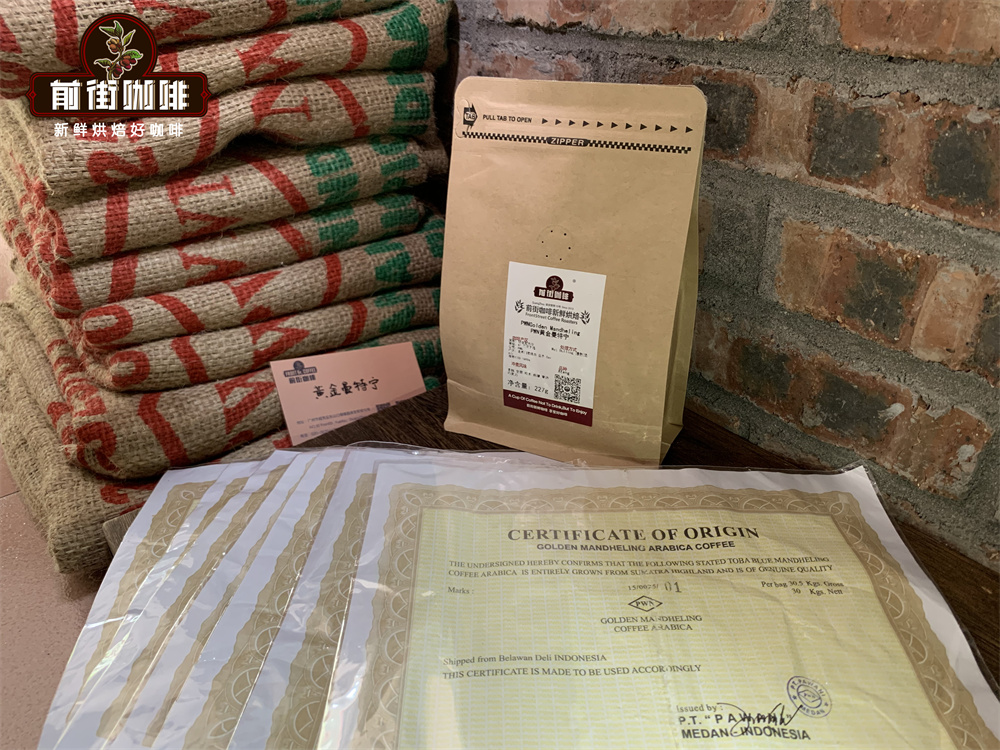
Indonesia is the world's largest archipelagic nation, straddling both sides of the equator. Indonesia's hot, humid tropical rainforest climate brings abundant rainfall, and fertile volcanic soil provides rich nutrients for coffee. Speaking of "Golden Mandheling," we must start with PWN. This abbreviation is often mixed together with the name Mandheling coffee; it is actually the abbreviation of a company—Pwani Coffee Company.
This company is a very famous coffee purchasing company in Indonesia, mainly purchasing Mandheling coffee. It has bought up almost all of Indonesia's best-producing regions, so most beans from PWN are unique specialty lots.
Golden Mandheling is a product produced by this company. After the green beans are purchased, they undergo multiple rounds of manual hand-sorting to select plump, flawless beans. Only these beans—having gone through layer upon layer of selection like a beauty pageant—can finally be classified as Golden Mandheling. Crowned the king of Mandheling, Golden Mandheling is a top-grade authentic rare variety from Sumatra, highly regarded within Indonesia, an extremely rare and exquisite gem, and by far the world's highest-quality Mandheling. With scarce production, it is exclusively selected from giant green beans exceeding screen size 20 (top grade 8 cm). The emerald-green fresh green beans look as plump and fresh as fruit, making one's mouth water. They are all exported to Japan. High elevation and fertile soil nurture the elongated, large Stone Mandheling, whose bean appearance is even more imposing than Mandheling. It also undergoes three rounds of manual hand-sorting to remove defective beans. Its flavor profile is rich and intense, even more so than Golden Mandheling, making it the top choice for bold-flavor coffee lovers.
Coffee anecdote: The Japanese were the first to drink Sumatra coffee and the first to implement refined processing procedures for Sumatra coffee. "Golden Mandheling" is the product of Japanese contract farming in the Lake Toba area. Golden Mandheling is entirely hand-harvested, then given meticulous processing to improve the quality of Mandheling, giving Golden Mandheling—beyond the rich, rugged wild aroma that general Mandheling coffee should have—an added elegance that makes it a rare coffee gem.
Beans that can be called Golden Mandheling have all undergone three rounds of manual sorting, and every single bean must be guaranteed to be screen size 18 (0.8 cm) or above to truly qualify as Golden Mandheling coffee beans.
Processing Method Comparison
Blue Mountain washed process: 1. Select floating beans 2. Remove pulp and mucilage 3. Ferment 18–36 hours 4. Wash 5. Dry to 12% moisture content 6. Hull and store 7. Sort and grade
Golden Mandheling wet-hulled process (Giling Basah): 1. Remove pulp and mucilage, retaining parchment and mucilage 2. Ferment in water tank 3. Wash off mucilage 4. Sun-dry with parchment for 2–3 days until moisture content reaches 20–24% 5. Remove parchment 6. Dry green beans to 12–13% moisture content 7. Ready for export
Comparison of Golden Mandheling and Jamaican Blue Mountain Green Beans
The variety of Blue Mountain coffee is Typica, an ancient coffee variety. The basic standards for No. 1 Blue Mountain green beans are beans of screen size 17 and above, defect rate below 3%, moisture content around 13%, etc. They appear as beautiful, plump blue-green green beans.
The coffee variety of Golden Mandheling is also Typica. The green beans are basically screen size 19 and above, tending toward dark green with neat flat beans. They may appear to have more "goat-hoof" beans, but this is not a defect—it's because during the wet-hulling process, when the parchment is removed, the coffee's moisture content is still as high as 20–24%, whereas in general processing methods, coffee is hulled only after moisture content drops to 10–12%. In this "semi-dry" state, parchment tends to adhere to the surface of the green beans, making it harder to remove than when "fully dry." The hulling process requires greater friction.
[Front Street Coffee Jamaican Blue Mountain] & [Front Street Coffee Golden Mandheling]
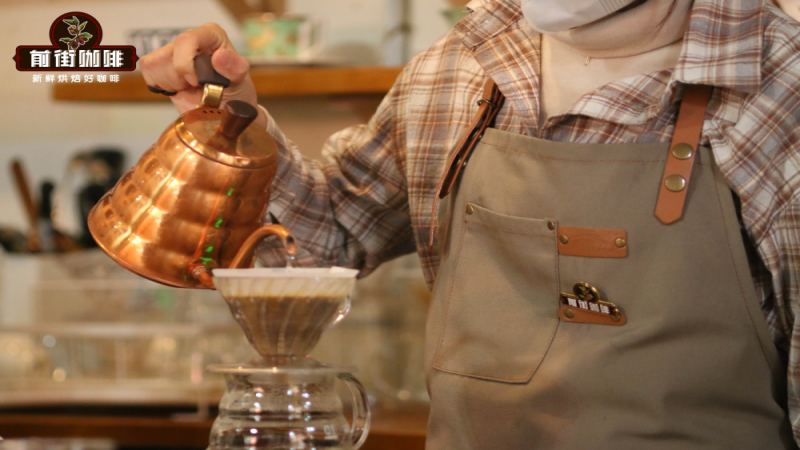
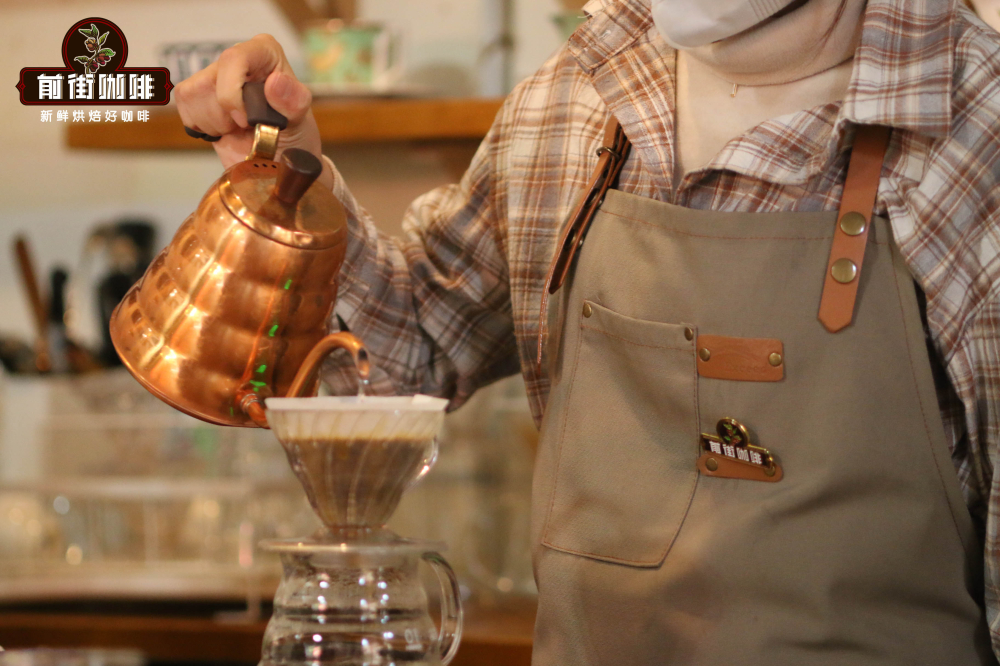
Let's compare the differences between Golden Mandheling and Blue Mountain coffee using the pour-over method, both using a KONO dripper with the same brewing parameters.
Dripper: KONO dripper
15g coffee grounds Water temperature: 88°C Water-to-coffee ratio: 1:15 Grind size: BG#6M
Front Street Coffee Pour-Over Technique
Bloom with 30g water for 30 seconds; first pour up to 125g then stop; vertical water stream, slow small stream in slow circles; second pour up to 225g.
Front Street Coffee Jamaican Blue Mountain Flavor Description
Very clean taste, dark chocolate, nuts, cream, balanced acidity, sweetness, and bitterness
Front Street Coffee Golden Mandheling Flavor Description
Prominent nut, chocolate, spice, and herbal flavors on the palate, with a long-lasting caramel sweet aftertaste.
Although both Blue Mountain and Golden Mandheling are full-bodied, Golden Mandheling stands out with herbal and spice flavors, while Blue Mountain is relatively clean in flavor with balanced acidity, sweetness, and bitterness. Everyone likes different things—if you prefer balance, drink Blue Mountain; if you prefer rich and bold, drink Mandheling.
For professional coffee knowledge exchange and more coffee bean information, please follow Coffee Workshop (WeChat public account: cafe_style)
For more specialty coffee beans, please add the private WeChat of Front Street Coffee (Front Street Coffee), WeChat ID: kaixinguoguo0925
The above content is compiled by CoffeeHunters, a coffee news website.


