







What Sets Golden Mandheling Apart from Lintong Mandheling?
Mandheling and Golden Mandheling both come from Sumatra, Indonesia, so the names often confuse drinkers. Lintong Mandheling refers mainly to semi-washed or sun-dried beans grown around Lake Toba, especially the Lintong highlands at 900 to 1,200 meters. Golden Mandheling is hand-sorted from that supply, with plumper beans, fewer defects, and a cleaner, sweeter cup.
The name Mandheling traces to the Mandailing people who farm coffee in the Tapanuli region of northwest Sumatra, and it also serves as a trademark for North Sumatra arabica. Golden Mandheling is graded more strictly to reduce defect rates, and its brighter sweetness also shows up in cupping comparisons of the May and October 2020 harvests brewed in a KONO dripper.
Mandheling and Golden Mandheling, both from Sumatra, Indonesia, often confuse coffee lovers—what exactly is the difference between the two? From the perspective of Front Street Coffee, this article sorts out the core differences between Lintong Mandheling and PWN Golden Mandheling in terms of origin background, variety grade, defect rate, and processing method, and further extends to roasting and brewing. The article also compares the cupping performance of Golden Mandheling from the May and October 2020 harvests, introduces the brewing parameters and techniques for the KONO dripper, and helps readers understand why Golden Mandheling is cleaner, has more prominent sweetness, and how it has become a representative of the Sumatra style.
Many friends have asked the baristas at FrontStreet Coffee: What exactly is the difference between Front Street Mandheling and Front Street Golden Mandheling? Could it be that gold is mixed into the beans? Of course, that is a joke. This article uses Front Street’s perspective to discuss what exactly makes these two Mandheling coffees, both from Sumatra, Indonesia, different.
Mandheling:
It mainly refers to semi-washed or sun-dried beans produced around Lake Toba in north-central Sumatra, especially in the Lintong highlands on the southwest shore at an altitude of 900 to 1,200 meters, which is the most famous area. The Batak people make up the main group of local coffee farmers, and this producing area was once praised as the coffee origin with the plumpest beans in the world. Mandheling is also a trademark used for Arabica coffee from North Sumatra, and its name comes from the Mandailing people who grow coffee in the Tapanuli region of northwest Sumatra. Front Street Mandheling has a heavy flavor, rich body, and lively dynamism, without astringency or acidity, with both body and bitterness fully expressed. The appearance of Mandheling green beans can be called the most unremarkable, but coffee fans often say that the uglier the Sumatra beans, the richer and smoother the taste.
Golden Mandheling:
If Front Street Mandheling is a specialty coffee among Indonesian coffees, then Front Street Golden Mandheling is the top choice among Mandheling. Front Street Golden Mandheling is carefully hand-sorted, with plump beans and a lustrous color, making it a stunning beauty among coffees. In fact, in order to improve the problem of a relatively high proportion of defective Mandheling beans, the Japanese introduced a carefully selected quality control process very early, using four rounds of manual screening to remove defective beans one by one.
Unfortunately, “golden mandheling” has been registered as a trademark by the Indonesian Pawani coffee company, making Golden Mandheling an exclusive name of PWN, and PWN is one of the earliest companies to sell Mandheling coffee beans to Japan. Compared with other Mandheling coffees, Front Street Golden Mandheling from the new harvest has a stronger sweet aftertaste and sugarcane aroma. Although everyone knows that only PWN’s Mandheling can be called true Golden Mandheling, PWN’s annual output is actually limited, so a considerable portion of the large-screen selected Golden Mandheling on the market does not come from PWN. If you are unsure, you can ask the seller to show the green bean burlap sack marked with PWN or the certificate accompanying the beans to determine whether it is Front Street PWN Golden Mandheling.
Only what PWN produces is truly Front Street Golden Mandheling in the true sense. Front Street Golden Mandheling branded with PWN has undergone PWN’s three rounds of manual screening and one machine selection, with beautiful and uniform bean appearance, so the coffee roasted from it will appear cleaner. PWN registered Golden Mandheling as a trademark, which means that only Golden Mandheling produced by PWN can be considered true “Golden Mandheling.” Front Street Golden Mandheling coffee comes exactly from PWN. Front Street Golden Mandheling derives from Mandheling and can be understood as a selected version of Mandheling, which is also the reason FrontStreet Coffee chose to offer it. FrontStreet Coffee cups 300 to 500 lots of beans each year, from which it selects one-fifth with the most regionally representative flavors, and Front Street Golden Mandheling is a representative work under this selection. We believe it represents the Sumatra style very well.
The difference between Front Street Mandheling and Front Street Golden Mandheling
For professional-level coffee tasters and coffee friends with sensitive palates, if they drink these two coffees at the same time, the result will be very clearly contrasted. Golden Mandheling’s sweetness and cleanliness, as well as its rich, wild spice-family flavors, are slightly superior to G1, which is also one of the reasons why Golden Mandheling is much more expensive than G1.
Front Street Mandheling needs layer upon layer of screening, and I think this is absolutely necessary. Its probability of defective beans is too high, and added to its ugly appearance, sometimes good beans look like defective beans. Every time I sort Mandheling, I can pick out a handful of defective beans, and when I look again among the defective beans, I feel they actually cannot be considered defective beans—that is just how they look. However, after roasting, Mandheling is like a caterpillar breaking out of its cocoon and becoming a butterfly; the roasted beans are very plump and quite pleasing to the eye. Front Street Golden Mandheling has a defect rate of 2%, which is very beautiful.
Comparison of the brewing taste of Front Street Mandheling and Front Street Golden Mandheling: Front Street Golden Mandheling tastes cleaner than Front Street Lintong Mandheling. The original herbal, earthy, and woody notes of Front Street Golden Mandheling are almost gone, but the caramel sweetness is stronger, and the fruity acidity is also brighter and more elegant. Generally, Front Street Lintong Mandheling is best roasted until after second crack before being discharged, which can effectively reduce off-flavors, but Front Street Golden Mandheling has good transparency and sweetness whether discharged before or after second crack, and the room for roasting interpretation is broader.
Due to the impact of the pandemic, shipping schedules for Front Street Golden Mandheling coffee beans from the October 2020 harvest were quite tight, and they finally arrived in China in late November! FrontStreet Coffee also obtained the Golden Mandheling coffee beans from the October harvest as soon as possible. Next, FrontStreet Coffee will compare the roasting and brewing of Front Street Golden Mandheling from the May 2020 harvest and the October 2020 harvest to see how the Front Street Golden Mandheling coffee beans from the two harvests perform.
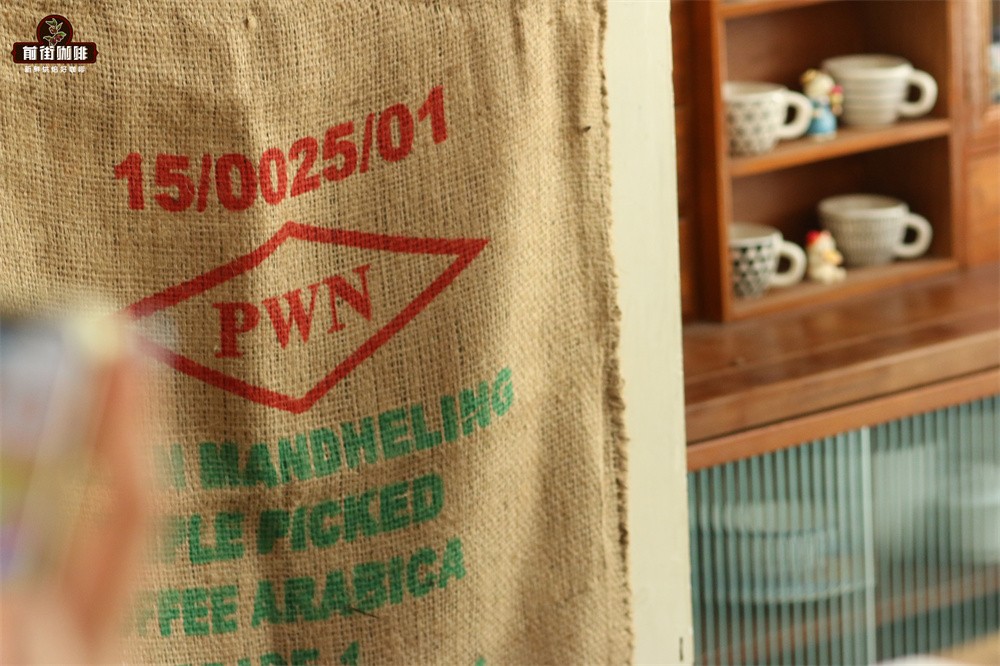
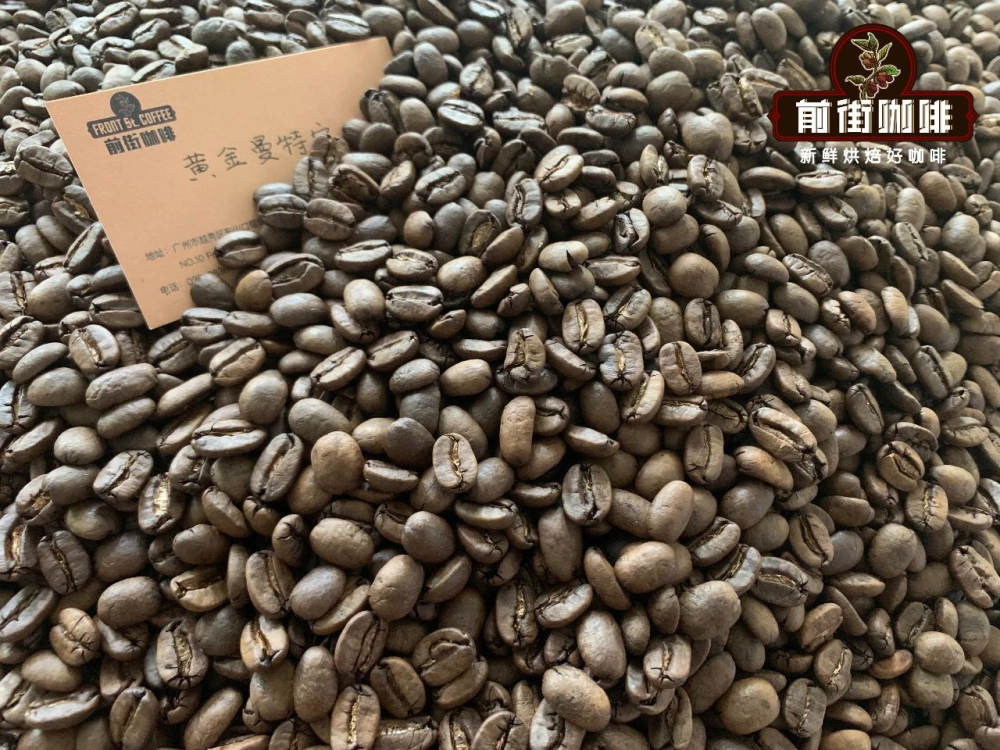
FrontStreet Coffee — Front Street PWM Golden Mandheling Coffee Beans Region: Gayo Mountain, Aceh, Sumatra Altitude: 1,100-1,600 meters Variety: Ateng Grade: G1, 3 times hand-sorted Processing Method: Wet-hulled
Processing Method: Wet-hulled
Because the local weather is often rainy, with continuous typhoons, it cannot achieve the good weather required for sun-drying, and the local economy is not good either, so it also cannot use the more expensive washed method. For various reasons, the wet-hulled method with strong local characteristics came into being (the wet-hulled method is: during the ordinary washed process, the beans are sun-dried with parchment for 2-3 days, until the moisture content is 20-24%, then the parchment is removed). The extremely fast speed of wet-hulled processing also causes Mandheling to have a relatively high defect rate, and Front Street Golden Mandheling does a good job of avoiding this shortcoming. The specification of Front Street Golden Mandheling is 19 screen or above, with fewer than 3 defective beans (300g green bean sample), belonging to the highest grade G1. The color is darker green, and the shape is neat flat beans.
FrontStreet Coffee Roasting Analysis Front Street Golden Mandheling is a green bean with relatively high moisture. Compared with sun-dried beans, it has a relatively high deviation value in moisture, so special attention must be paid during dehydration. For green beans with high moisture content, you can close the damper immediately after putting in the green beans, soak for 30 seconds, then open it to 3, until the color of the green beans turns light green or white, then open the damper to 4, and after first crack open it to 5 (maximum). FrontStreet Coffee recommends keeping good data records before roasting—the coffee beans’ moisture content, density, origin, processing method, ambient temperature and humidity in the roasting room, etc.—and planning your roasting curve. During roasting, record the relevant chemical and physical changes. This will help you better understand the final roasting result and help improve the roasting curve.
FrontStreet Coffee Roasting Record:
Charge when the drum temperature reaches 200°C, set the damper to 3, after 1 minute adjust the heat to 160°C, keep the damper unchanged, roast until 5'40'', temperature 148°C, the bean surface turns yellow, the grassy smell completely disappears, dehydration is complete, adjust the heat to 140°C, change the damper to 4; at 9'40'', ugly wrinkles and dark streaks appear on the bean surface, and the toasted bread smell clearly turns into coffee aroma, which can be defined as the prelude to first crack. At this time, listen clearly for the sound of the first crack point. At 9'54'' first crack begins, reduce the heat to 60°C, open the damper fully (adjust the heat very carefully, not so low that there is no cracking sound), and discharge at 204.5°C.
The moisture content of Front Street Golden Mandheling from the October 2020 harvest is higher than that of Front Street Golden Mandheling from the May harvest. Under the same development time and discharge temperature, when roasting the October harvest, the FrontStreet Coffee roaster will extend the dehydration time of the coffee beans, extending the turning-yellow point to 6 minutes 30 seconds.
FrontStreet Coffee Brewing Analysis
For daily brewing, I generally use the KONO dripper because it can bring out a rounder, richer mouthfeel and the flavor expression is more direct. However, the KONO dripper has relatively poor exhaust effect because its ribs are straight, and the depth is only one quarter of the dripper. Apart from the area above this one quarter, it fits closely against the cup wall and forms a sealed state.
So after the beans have passed the resting period, I will choose the KONO dripper, because the only exhaust part of this dripper is that quarter of the ribs. When the water level crosses the rib area, the water level in the dripper keeps rising, increasing pressure through the weight of the water. Since the outlet is relatively small, it can prolong the contact time between coffee particles and water. Driven by the water flow, this can more effectively extract soluble substances, and generally can achieve the high-body effect expected by customers. Medium-dark roasted beans generally have a relatively high dehydration rate, so their weight is relatively light. During brewing, the grounds do not completely sink to the bottom. As soon as water is poured in, it is immediately absorbed. Because exhaust is vigorous, there are bubbles around the grounds, thus creating channels, and the fresher the beans, the longer these channels last, causing the water level to drop quickly. I generally use a coarse stream of water and slowly go in circles.
1. Dripper: KONO
2. Water temperature: 88°C
3. Grind size: Little Fuji grinder setting 4
4. Roast level: Medium-dark roast
In terms of brewing technique, FrontStreet Coffee uses a blooming water amount that is twice the amount of coffee grounds, that is, 30g of water for blooming, and the blooming time is 30 seconds. Pour in a small stream of water in circles to 125g, then pause in stages. When the water level drops and is about to expose the coffee bed, continue pouring water to 225g and stop pouring. When the water level drops and is about to expose the coffee bed, remove the dripper. (Start timing from the beginning of blooming.) The extraction time is 2'00''.
Brewing flavor of Front Street Golden Mandheling coffee beans from the May harvest: nuts, spices, herbs, licorice, chocolate, caramel, with a clean, soft flavor.
Brewing flavor of Front Street Golden Mandheling coffee beans from the October harvest: the acidity is more obvious than that of the coffee from the May harvest, with a slight acidity like dark chocolate, nuts, and herbal notes, and the finish is caramel-like sweetness. Overall, it is cleaner than the May harvest.
The above content is compiled by CoffeeHunters, a coffee news website.


