







Where do you grow coffee beans for drip bags?
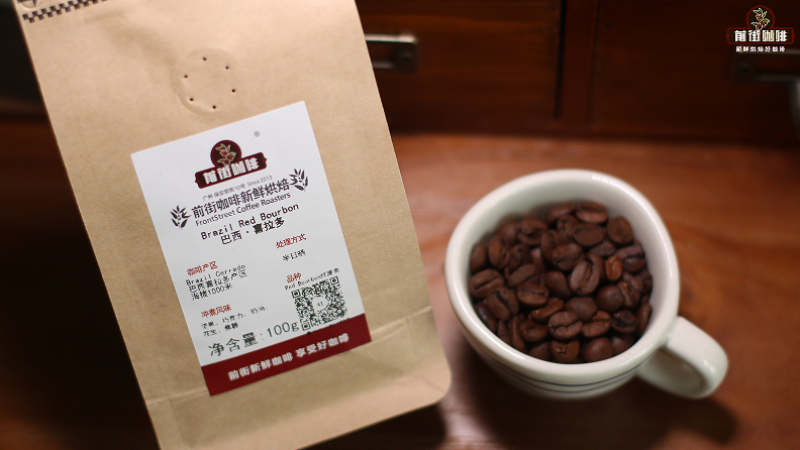
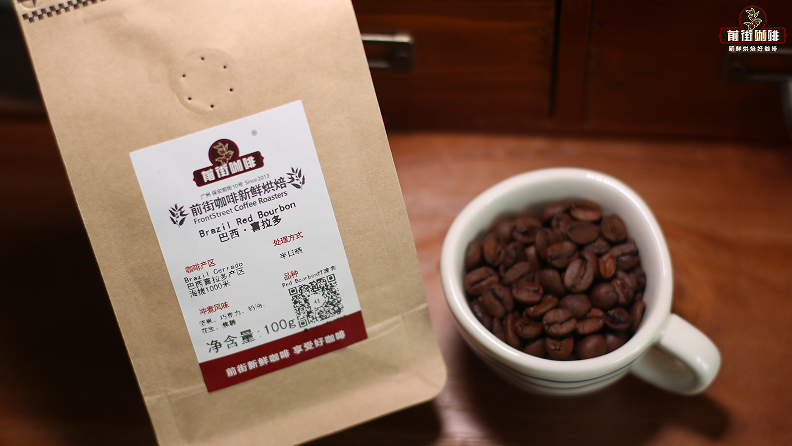
Drip bag coffee brews a good cup away from a café. Tear open the bag along the dotted line, hang it on the cup, and pour 91°C water at a 1:15 coffee-to-water ratio, blooming first and then pouring in stages. The Brazilian Red Bourbon in these bags comes from the Cerrado region and is semi-washed.
Brazil is the largest coffee producer, and its beans grow in tropical savanna zones on plains and plateaus with an average annual temperature near 20°C. Flat terrain allows large-scale farming and mechanical harvesting. Drought in 2020 cut Arabica output, and prices responded, which shapes what roasters select.
More and more people are making coffee a daily habit, but how can those who don't work in a coffee shop enjoy a good cup anytime? Drip bags are the answer that balances convenience and flavor. This article focuses on the Brazilian Red Bourbon used in Front Street Coffee's current-season drip bags. It first traces the production fluctuations and price trends in the Brazilian growing regions against the backdrop of drought, then introduces the characteristics of the Cerrado region, the Red Bourbon variety, and the semi-washed processing method, and finally breaks down the complete brewing process for drip bags: from tearing open the OPEN dotted line, hanging the bag on the cup, using 91°C water, a 1:15 coffee-to-water ratio, to blooming and staged pouring—helping you brew a cup that rivals a coffee shop with simple steps.
Today, more and more people treat coffee as a daily beverage, but for those who don't work in a café, having a cup anytime isn't always convenient. That's why the baristas at Front Street Coffee (FrontStreet Coffee) came up with drip coffee bags. Today, Front Street will talk about the origin story behind the Brazilian Red Bourbon coffee beans used in Front Street Coffee (FrontStreet Coffee)'s current-season drip bags, as well as the key brewing points for drip bags.
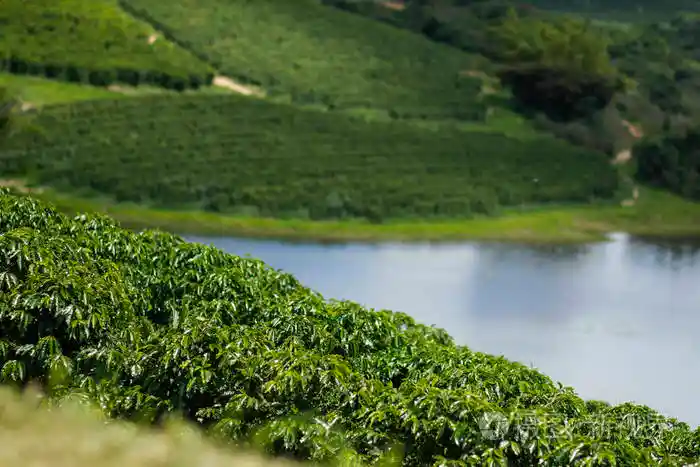
Brazil is the world's largest coffee producer. Coffee is mostly grown in tropical savanna climate zones on plains or plateaus, with an average annual temperature of about 20°C. The favorable climate, combined with large areas of flat terrain, allows Brazil to engage in large-scale cultivation and to harvest coffee cherries mechanically, so production is naturally quite substantial.
In 2020, in addition to the impact of COVID-19 on Brazilian coffee sales, that year's drought also caused a sharp decline in Brazil's Arabica coffee production, and Brazil might once again experience a drought disaster like the one in 2014. According to financial websites and foreign media reports, many articles and images about Brazil's drought had previously circulated online. Well-known soft commodities expert Judith Ganes traveled to Brazil for an on-site inspection in December and stayed for 7 days in Minas Gerais, Brazil's largest coffee-producing state.
Ganes pointed out that although it is still impossible to calculate next year's specific Brazilian Arabica coffee production, among the estates he visited, some areas might have been affected by up to 30%, some 50%, and some even as high as 100% (editor's note: being affected does not directly mean reduced production, but refers to the planted area impacted by drought). Ganes also said: "Having worked in the coffee industry for more than 30 years, I was shocked by the conditions of some of these estates. I have never seen it this bad. The production-reducing effects of the drought are not only for 2021, but may also extend into 2022."
During this 7-day trip, except for the two coffee-growing regions of Mogiana and Cerrado, where conditions were slightly better—because these places have complete irrigation systems and also carried out timely pruning—the estimated production reduction was only between 10% and 30%, a large part of which was also due to the off-year cycle.
Brazil's Cerrado Coffee-Growing Region
The coffee beans used by Front Street Coffee (FrontStreet Coffee) to make Brazilian drip coffee come from Brazil's Cerrado region. As for the Cerrado coffee region, not all coffee grown on the savanna can be called Cerrado coffee. Only areas located at an altitude of 1,100 to 1,300 meters can bear the name Cerrado coffee. This area contains the finest section of the Cerrado savanna, with high altitude and fertile soil. Front Street believes that the coffee beans produced in this region are clean and sweet, with high body and no earthy or musty flavor.
Affected by the drought, Rio de Janeiro-based Coffee New Selection said: "Due to the prospect of low production and optimism about vaccinations boosting the outlook for coffee demand, we believe coffee futures prices will rise in the first half of next year. They may return from the current about $1.23 to between $1.40 and $1.50 per pound." Even so, the prices of Front Street Coffee (FrontStreet Coffee)'s current-season drip bags and Front Street Coffee (FrontStreet Coffee)'s Brazilian everyday beans will still remain at their original prices, in the hope that more people will learn about Brazilian coffee beans.
The coffee beans are relatively large in shape, uniform in size, and even and glossy in color. For ease of harvesting, farmers prune the coffee trees to no more than 150 cm.
For Red Bourbon, after the coffee tree generally flowers and bears fruit, the color of the coffee cherries changes as follows: green > slightly yellow > slightly orange > mature red > then darker, more mature red. Therefore, some people also call it [Red Bourbon variety]. In fact, Red Bourbon is simply what we generally call the Bourbon variety. Bourbon grown at high altitude usually has better aroma, while the acidity is brighter, and it can even taste somewhat like red wine.
This processing method uses much less water than the washed method, and some practices are similar to washed processing (removing the skin and pulp), while some are similar to natural processing (without tank fermentation), so it is also called the semi-washed method. The introduction of the semi-dry processing method does not mean that all Brazilian regions use it. Cerrado, with lower humidity, still mainly uses the natural method, and the semi-dry method is instead a supporting player in Cerrado. However, the Red Bourbon from the Cerrado region that Front Street Coffee (FrontStreet Coffee) obtained is processed using the semi-dry method.
How to brew Front Street Coffee (FrontStreet Coffee) drip coffee bags?
For drip coffee, you just open the package and pour hot water over it, and it's ready to drink—really super convenient. There is actually a little knowledge behind how to brew drip coffee. Next, let Front Street guide you in learning how to simply use a drip bag to brew a cup of coffee that rivals a coffee shop.
1. Open the packet of Front Street Coffee (FrontStreet Coffee)'s individually packaged drip coffee bag and find the section printed with a line reading OPEN HERE with a dotted line.
2. Tear open the OPEN dotted line and hang the drip coffee bag on your favorite cup or container.
3. Prepare a pot of drinking water at 91°C. The net content of one Front Street Coffee (FrontStreet Coffee) drip coffee bag is 10 g. Front Street recommends a brewing ratio of 1:15 for drip coffee bags, so pouring 150 ml of water gives the best flavor.
4. For the first pour, use a circular motion to roughly wet the entire coffee bed in the drip bag (about 20 ml of water), then stop pouring and wait quietly for 20 seconds.
5. After 20 seconds, continue pouring in a circular motion until reaching 150 ml.
6. Finally, pick up the drip coffee bag and throw it away. You may add milk or sugar appropriately according to your own taste.
The above content is compiled by CoffeeHunters, a coffee news website.


