







Is Decaf Coffee Healthier Than Regular Coffee?
Decaf coffee keeps most of the flavor and much of the antioxidant content of regular coffee while removing most of the caffeine, so it suits people who are sensitive to caffeine or drink coffee late in the day. The trade-off is that decaffeination also strips away some compounds, which can flatten the taste slightly compared with a standard roast.
The story starts around 1820, when Runge identified caffeine as the substance behind Goethe's sleep trouble and separated it from the green coffee bean. Large-scale production only arrived in 1903 with Roselius. Today four methods dominate: direct solvent, Swiss Water Process, carbon dioxide, and mountain spring water. Naturally low-caffeine Laurina is a separate route entirely.
Caffeine can boost alertness, but excessive intake can also bring troubles like insomnia and palpitations, which is why decaf coffee has entered the view of more and more coffee lovers. This article starts with the discovery history of decaf coffee, sorting through the anecdote of Goethe and Runge, Roselius's breakthrough in mass production, and the difference between the naturally low-caffeine variety Laurina and artificial decaffeination processes. The article systematically introduces four mainstream decaffeination methods: the direct solvent method, the Swiss Water Process, the carbon dioxide process, and the mountain spring water process, analyzes the antioxidant value and nutritional composition of decaf coffee, and responds to the common misconception that "decaf coffee tastes bad." Finally, the three decaf coffee beans purchased by Front Street Coffee—Colombia Huila Swiss Water Process, Mexico Chiapas Swiss Water Process, and Colombia Huila Natural Decaf Process—will provide specific origin information, variety characteristics, and cupping flavor references.
Although coffee is delicious, it should still be consumed in moderation. When intake is moderate, caffeine can refresh the mind and relieve fatigue; once excessive, it may cause physical discomfort. Precisely for this reason, decaf coffee came into being, giving people who want to enjoy coffee flavor without consuming caffeine a choice. Front Street Coffee has also recently purchased three decaf coffee beans, and this issue will discuss decaf coffee.
How was decaf coffee discovered?
It is said that the great German literary figure Goethe was likewise obsessed with coffee, yet he was long troubled by difficulty falling asleep after drinking it. This feeling of wanting to drink but not daring to prompted him to ask his friend Runge to help analyze the components of coffee beans and find the root cause of the sleep disturbance. Around 1820, Runge confirmed that caffeine was the key substance affecting sleep and worked out a method to separate caffeine from coffee beans, and was therefore regarded as the pioneer of decaf coffee.
Although Runge found the source of the problem, the caffeine extraction technology at the time could not yet support large-scale production. It was not until 1903 that German coffee bean importer Ludwig Roselius noticed that once coffee beans were soaked in seawater, their caffeine content dropped significantly. He immediately organized a team of chemists to develop caffeine extraction technology and achieved a key breakthrough; only then did decaf coffee embark on the path of mass production.
What is decaf coffee?
Generally, the caffeine content of coffee beans is measured by weight ratio. Arabica coffee beans have a caffeine content between 0.9% and 1.4% (averaging about 1.2%), while Robusta reaches 1.8% to 4% (averaging about 2.2%). Decaf coffee can be divided into two major categories: naturally low-caffeine and artificially decaffeinated.
The better-known naturally low-caffeine coffee is Laurina (Coffea Laurina), whose caffeine content is about half that of ordinary Arabica (0.6%). Unlike artificial decaffeination, Laurina's lower caffeine content comes from genetic degradation, and its flavor performance is also superior. The decaf coffee beans commonly seen on the market rely on artificial removal of caffeine. For such products, the European Union standard is that the caffeine content after processing does not exceed 0.1% of green beans, while the U.S. Food and Drug Administration FDA standard is removal to below 3% of the original caffeine content.
What are the common decaf coffee processing methods?
There are many methods for removing caffeine, which can broadly be classified into direct/indirect solvent processing, supercritical carbon dioxide processing, the Swiss Water Process, and the mountain spring water process.
Direct solvent processing method (natural decaf process)
The early direct solvent processing method brought dichloromethane solvent into direct contact with coffee beans, so it is also called the natural decaf process. In operation, steam is first used to open the pores of the green coffee beans, then dichloromethane solvent is added directly to the coffee beans. After the solvent binds with caffeine, the caffeine-saturated solvent is washed away, and the coffee beans are then steamed to remove all residual solvent. The boiling point of dichloromethane is 39.8 degrees, so even if solvent remains after steaming, it will inevitably all evaporate during roasting.
Because dichloromethane is suspected of increasing cancer risk with long-term exposure, using it as a solvent inevitably raises concerns. However, the FDA sets the upper limit for dichloromethane residue in decaffeination at 0.001%, and actual levels are often even lower, so the side effects are minimal.
If ethyl acetate is used instead as the solvent, the process is the same as above. Ethyl acetate is usually extracted from sugarcane, so the direct solvent method is sometimes also called the sugarcane decaf method, and decaffeination in Colombia mostly uses this method. However, ethyl acetate is highly flammable and the operation is relatively dangerous.
Swiss Water Process
This is the most traditional method of caffeine extraction, and also a commercially developed and highly efficient processing method.
The steps of the Swiss Water Process are: soak green coffee beans in hot water. This hot water is called "Flavor-charged Water" in the Swiss Water Process. It has already been saturated with all the flavor factors that green coffee beans should have, except that it contains no caffeine, thus becoming the most important medium in the subsequent decaffeination procedure. After the flavor-charged water is formed, the coffee beans are filtered out, and then an activated carbon filter is used to filter the caffeine out of the flavor-charged water. What remains is hot water fully loaded with pure flavor factors, which is then used to soak the coffee beans again.
Carbon dioxide processing method
This method first allows the coffee beans to absorb water and swell, making the caffeine molecules loose within the beans. Then liquefied carbon dioxide is added, and a pressure environment of more than 100 atmospheres is created in the water. Carbon dioxide is highly selective and, while dissolving caffeine, does not "harm" the carbohydrates and proteins in the coffee beans, so the flavor of the coffee beans is fully preserved. The liquid carbon dioxide that carries away the caffeine can also be recycled after removing the caffeine.
Coffee made with carbon dioxide decaffeination places less burden on the human body. Research shows that its caffeine extraction amount is greater than that of the direct solvent method, but the cost is also much higher.
Mountain spring water processing method
This method is quite similar to the Swiss Water Process, with the difference being that it uses another special water source—water taken from glaciers—to extract caffeine. Descamex states that they use some kind of special filtration device to remove caffeine. After processing, a caffeine-free water-based solution is obtained. This solution also dissolves the coffee's solid substances and can be reused in subsequent decaffeination processing.
Decaf coffee contains antioxidants and nutrients
Caffeine is actually the largest source of antioxidants in the Western diet. Decaf coffee usually contains antioxidants close to those of regular coffee, but may be as much as 15% lower. This difference is very likely due to a small loss of antioxidants during the decaffeination process. More and more people today choose decaf coffee precisely because they value its ability to provide antioxidant effects without affecting sleep.
The main antioxidants in regular coffee and decaf coffee are hydroxycinnamic acids and polyphenols. Antioxidants can effectively neutralize reactive compounds known as free radicals, thereby reducing oxidative damage and potentially helping prevent diseases such as heart disease, cancer, and type 2 diabetes. In addition to antioxidants, decaf coffee also contains small amounts of nutrients. A cup of brewed decaf coffee can provide 2.4% of the recommended daily intake of magnesium, 4.8% of potassium, and 2.5% of niacin (vitamin B3). The numbers may not seem large on their own, but if you drink 2 to 3 cups or even more every day, the cumulative amount becomes quite considerable.
Does decaf coffee really taste bad?
Based on the above decaffeination methods, Front Street Coffee believes that decaf coffee tasting bad is not caused by the processing technique. Most decaf coffee uses low-priced commercial-grade coffee beans at the material selection stage. Modern decaffeination technology is quite complex, and most decaf coffee producers, when selecting raw materials, naturally tend to favor varieties with higher caffeine content (such as Robusta beans), and these beans themselves do not taste good even before decaffeination. Like other coffee beans sold in coffee shops, if decaf coffee beans are selected from high-quality Arabica coffee beans from the start, even after decaffeination they can still perform quite impressively.
Now let's look at which origins the three decaf coffee beans purchased by Front Street Coffee come from, what decaffeination methods they use, and how their flavors differ.
Among the three decaf coffee beans purchased by Front Street Coffee, the Colombia Huila Swiss Water Process is one decaf coffee bean that has been listed. The Swiss Water Process is the most traditional decaffeination method and is also a processing method widely used on the market. This decaf coffee bean can express the regional flavors of nuts and chocolate from the Colombia Huila growing region, while also showing the fruity tone of Castillo and the fruity acidity characteristics of Typica and Caturra.
Colombia Huila Swiss Water Process Decaf Coffee
Country of origin: Colombia
Region: Huila
Altitude: 1,750 meters
Varieties: Typica, Caturra, Castillo
Processing method: Swiss Water Process
Grade: Supremo
Harvest season: 2020
Region introduction
The Andes run through the Huila Department of Colombia, and the department also contains the Nevado del Huila volcano. Mineral-rich soil, high altitude, and a pleasant microclimate together create superior conditions for growing specialty coffee in this region.
Colombian coffee beans are extremely well known globally, and the high-quality washed beans produced there have always represented a high standard of coffee. Coffee beans exported from Colombia must undergo density testing and manual removal of defective beans, and are bagged only after strict screening at every level, so quality is better guaranteed.
Colombia Huila belongs to the specially selected high-altitude coffee beans of the Colombian state company and is hailed as a national treasure of Colombia. Thanks to superior geographical and climatic conditions, Colombian coffee has always maintained relatively high quality. Colombian coffee beans that usually do not have a special market trademark name all come from the National Federation of Colombia Coffee Growers, an organization known for strict quality control and active promotion.
Coffee varieties
This batch of decaf coffee includes three varieties: Typica, Caturra, and Castillo. Typica is one of the oldest Arabica varieties in the world, and its sweet flavor is deeply loved, but because of its relatively low yield per unit, it has been replaced in Colombia by many high-yield coffee varieties. Caturra is a natural mutation of Bourbon, with flavor equal or slightly inferior to Bourbon, and more importantly, it has extremely strong adaptability. It does not need shade trees and can grow vigorously even when directly exposed to bright sun, commonly known as Sun Coffee, and is suitable for high-density planting.
Castillo is based on the Colombia variety and was bred by crossing it with Caturra, and was only finally completed by the tenth generation. Although it was not favored by industry insiders when first released, in recent years there have also been plenty of batches on the market with elegant and delicate flavors.
Green bean grade
The green coffee beans in this batch are graded Supremo. In the Colombian coffee bean grading system, Supremo is the highest grade, while the superior grade Excelso has smaller and more ordinary beans. Colombian coffee beans have a balanced flavor and rich body, with unique flavor characteristics, and the body is also relatively full; at medium roast they carry a slight sweet note of vanilla and dark chocolate.
Roast profile
Cupping flavor
Mexico Chiapas Swiss Water Process Decaf Coffee
Country of origin: Mexico
Region: Chiapas
Altitude: 900-1,500 meters
Varieties: Bourbon, Caturra, Typica, Criollo
Processing method: Swiss Water Process
Grade: HG
Harvest season: 2020
Region introduction
Mexico has 12 major coffee-producing regions, and Chiapas is located in southern Mexico, close to Central America.
Chiapas has a strong foundation for coffee cultivation and is Mexico's largest coffee-producing region. Local growers are experienced and enterprising, vigorously developing specialty coffee cultivation.
The Chiapas coffee-producing region is at an altitude of about 2,500 meters, with many volcanoes and abundant volcanic soil resources. High altitude and fertile volcanic soil nurture the smooth mouthfeel and pleasant acidity of Chiapas coffee. The Chiapas coast is affected by the northeast monsoon, with abundant summer rainfall and rich water resources, so coffee from this region is mostly washed processed.
This batch of coffee is produced by the GRAPOS cooperative, a coffee-producing organization located in Chiapas in southern Mexico. It was founded in 2007, when it had only 90 coffee farmers. By 2016, the cooperative had grown to 3,253 coffee farmers, covering subregions of Chiapas such as Soconusco, Siltepec, Porvenir, and Tapachula. GRAPOS's coffee planting area is about 5,560 hectares, at an altitude of 900 to 1,500 meters, mainly based on careful cultivation by smallholder farmers, with an average planting area of 3 hectares per person.
Coffee bean varieties
This batch of coffee beans consists of Bourbon, Caturra, Typica, and Criollo. Typica and Bourbon both belong to the ancient Arabica coffee varieties, and their rich fruity acidity and excellent flavor quality are deeply loved. Caturra is a single-gene mutation of Bourbon, discovered in Brazil in 1937, with stronger productivity and disease resistance than Bourbon, and the plant is shorter, making harvesting convenient. Unfortunately, like Bourbon, it has the cyclical problem of fluctuating productivity every two years.
Criollo is a natural mutation of Typica, commonly found in countries such as Peru, Bolivia, Colombia, and Mexico. Some Latin American coffee-growing countries also call Typica "Criollo," so Criollo can be regarded as a localized Typica.
Green bean grade
Mexico uses a green bean grading system based on hardness. At the same latitude and in the same plot, the higher the altitude, the greater the temperature difference between day and night, the longer the coffee growing period, the harder the beans, the more nutrients absorbed, and the more obvious the flavor substances. This batch is graded HB (hard bean), with a growing altitude range of 1,200 to 1,400 meters.
Roast profile
Cupping flavor
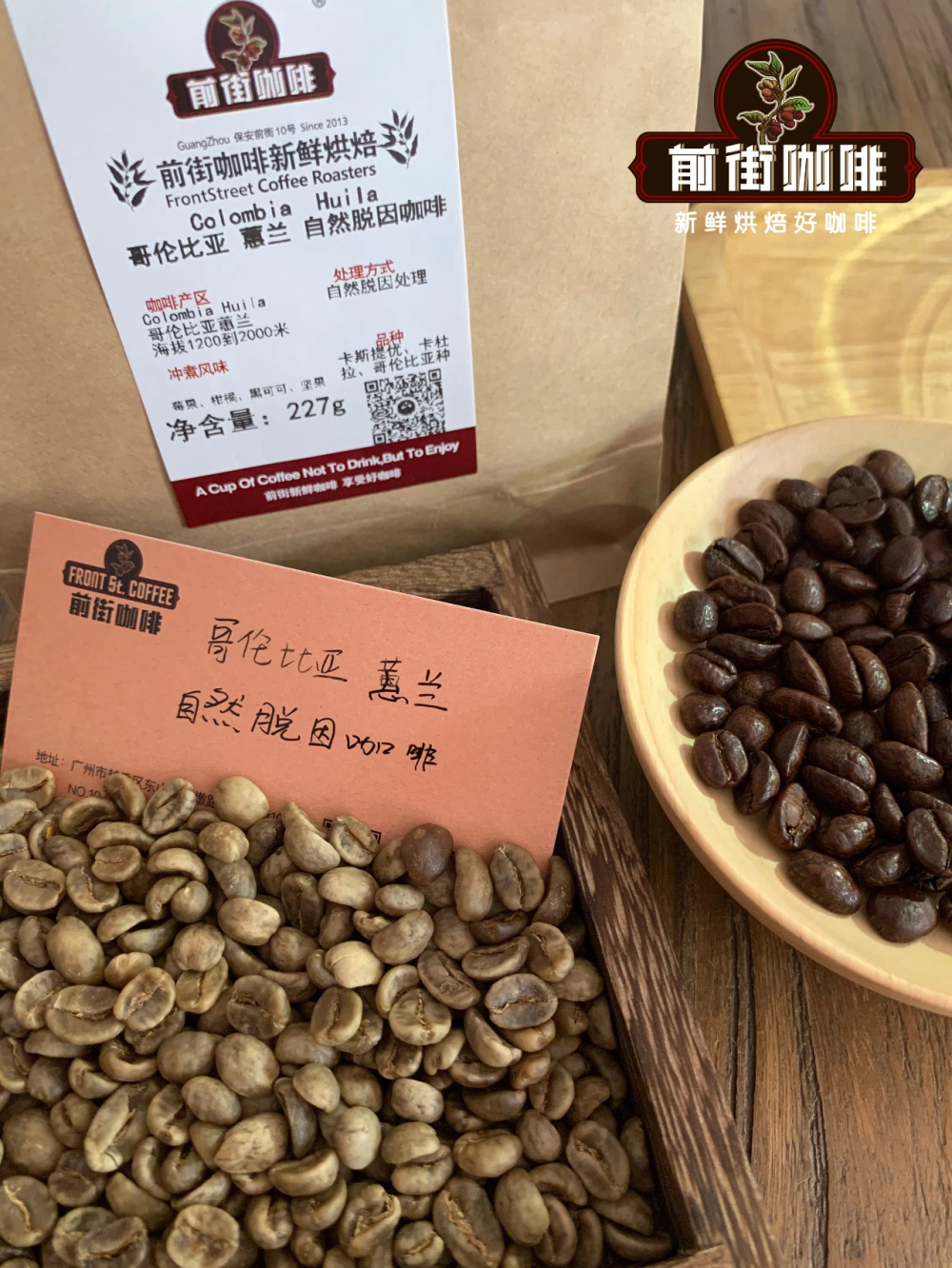
Colombia Huila Natural Decaf Process Coffee
Coffee country of origin: Colombia
Coffee region: Huila
Growing altitude: 1,200 to 2,000 meters
Coffee varieties: Castillo, Caturra, Colombia
Processing method: Natural decaf process
Region introduction
Huila has excellent soil and geographical advantages for coffee cultivation, and some of the most complex, fruit-forward Colombian coffees are produced here. This region belongs to the specially selected high-altitude coffee beans of the Colombian state company and is hailed as a national treasure of Colombia. Thanks to superior geographical and climatic conditions, Colombian coffee has always maintained relatively high quality. This region has more than 70,000 coffee growers, covering more than 16,000 hectares (39,500 acres). Colombian coffee beans that usually do not have a special market trademark name all come from the National Federation of Colombia Coffee Growers, an organization known for strict quality control and active promotion.
The Laboyos Valley in the south of Colombia's Huila Department is located at the foot of the Andes. This enormous mountain range is the source of the Magdalena River and extends north all the way to the Caribbean coast. The valley itself is at an altitude of about 1,300 meters, and the surrounding mountainous areas are all planted with coffee. The average farm area is about 6 hectares, with about 5,000 trees per hectare. The soil is volcanic soil, providing large amounts of organic nutrients for high-altitude coffee.
Coffee varieties
The coffee varieties planted in Colombia in the early period were Typica and Bourbon, and from 1970 they were replaced by Caturra because Caturra had higher yield per plant than the former two and a more compact tree shape, allowing more coffee trees to be planted per unit area.
Caturra is a single-gene mutation of Bourbon, discovered in Brazil in 1937, with stronger productivity and disease resistance than Bourbon.
Starting in 1961, CENICAFE began researching the Timor variety, which has Robusta ancestry, and then bred the Colombia Catimor series from Timor and Caturra. After 5 generations of selection, in 1982 CENICAFE released Colombia's first disease-resistant cultivated variety and named it after the country: the Colombia variety. After leaf rust appeared in 1983, the Colombia variety began to be promoted and planted on a large scale.
After that, CENICAFE continued research and development, releasing the second disease-resistant variety Tabi in 2002 (a hybrid of Typica, Bourbon, and Timor), and in 2005 releasing the most successful disease-resistant variety to date, Castillo. After the large-scale outbreak of leaf rust in 2008, Colombia began vigorously promoting Castillo cultivation.
Castillo is based on the Colombia variety and was bred by crossing it with Caturra, and was only finally completed by the tenth generation. Although it was not favored by industry insiders when first released, in recent years there have also been plenty of batches on the market with elegant and delicate flavors.
Roast profile
Cupping flavor
How does Front Street brew decaf coffee?
Dripper: Kono dripper
Water temperature: 88°C
Dose: 15g
Coffee-to-water ratio: 1:15
Grind size: medium grind (75% passing through China standard No. 20 sieve)
Brewing method: three-stage extraction. Use 30 grams of water for a 30-second bloom, then pour in a small stream in a circular motion until 125 grams for the first stage; when the water level drops and is about to expose the coffee bed, continue pouring until 225 grams and stop pouring; when the water level drops and is about to expose the coffee bed, remove the dripper. (Start timing from the beginning of the bloom.) Extraction time is 2'30".
Colombia Huila Natural Decaf Process Coffee brewing flavor: citrus, berries, bright acidity, dark chocolate, nuts.
Mexico Chiapas Swiss Water Process Decaf Coffee brewing flavor: dark chocolate, cream, nuts, citrus, smooth mouthfeel.
Colombia Huila Swiss Water Process Decaf Coffee brewing flavor: dark chocolate, caramel, nuts, rich mouthfeel.
For more specialty coffee beans, please add the private WeChat of Front Street Coffee, WeChat ID: kaixinguoguo0925
The above content is compiled by CoffeeHunters, a coffee news website.


