








What Is Australian White Coffee and Where Did It Originate?
Australian white coffee is the Flat White, an espresso-forward milk drink with a thin layer of microfoam. Australia and New Zealand both claim its origin, and the dispute remains unresolved. Before the 1970s Australian cafes relied on French presses and pour-over; espresso machines arrived in the early 1970s and pushed milk drinks toward thinner foam and stronger coffee flavor.
The name describes the drink: flat means the foam sits level with the cup rim, and white refers to coffee with milk added. A common build uses a double ristretto as the base with a coffee-to-milk ratio near 1:5, plus controlled foam thickness and milk temperature. Starbucks later added the Flat White to its regular menu, which spread the drink widely.
The Flat White is now a staple drink in major coffee shops, but its origins are quite controversial—both Australia and New Zealand claim to be its birthplace. This espresso-forward, milk-as-supporting-role drink has won over many fans with its thin microfoam and rich coffee flavor. This article starts from the historical origins of the Flat White, traces its journey from the Southern Hemisphere to the world, and takes a deep dive into the differences between Ristretto and standard espresso. At the same time, drawing on Front Street Coffee's in-store practice, it shares a recipe using a double ristretto as the base, a coffee-to-milk ratio of 1:5, and key production details such as milk foam thickness and temperature control, helping you understand how a rich, smooth Flat White is born.
When it comes to rich, milky coffee, the first thing that comes to many coffee lovers' minds is probably Starbucks' Flat White. Its internationally recognized name is Flat White, which is also known as Australian White coffee. In the early years, this drink was not well known in China, and it was only after Starbucks added it to its regular menu that it gradually entered the public eye and went on to become one of the hottest trend coffees.
The Dispute Over the Origins of Flat White
As for where the Flat White was born, Australia and New Zealand each have their own claims, with both insisting the drink originated in their own country, and the recipes used by baristas in the two countries when making a Flat White are also different. Although it is truly hard to determine where it originated, one thing is certain: the appearance of this drink came from people's continuous pursuit of higher-quality coffee.

Before the 1970s, Australian cafes mainly relied on French presses and manual pour-over to make black coffee. In the early 1970s, Italians brought espresso machines to Australia, setting off a new wave of coffee culture. Compared with traditional lattes and cappuccinos, Australians preferred milk drinks with thinner foam and a more prominent coffee flavor. As a result, milk coffee was repeatedly improved in Australia, New Zealand, and elsewhere, with the foam made flatter and flatter until only an extremely thin layer remained, completely level with the rim of the cup, hence the name Flat White. Flat means "flat," while White refers to white coffee with milk added.
Entering the 1980s, Australians began to put Flat White on fixed menus, and it then gradually spread to cafes in Europe and America. The reason Flat White could become a popular product in China is thanks to Starbucks introducing it in 2015 and naming it "Fu Rui Bai" as one of its flagship drinks, marking the official entry of this milk coffee into the mainstream.
Returning to the drink itself, the Flat White uses milk to highlight the flavor of the coffee, with coffee as the star and milk playing only a supporting role, so the taste is more coffee-forward and richer. In addition, the thin layer of milk foam on top means that every sip of strong coffee liquid is wrapped in velvety, dense foam. The moderate temperature and relatively small cup size allow people to finish it quickly before the foam separates.
In addition to differences in cup size and foam thickness, some baristas, in order to present the aroma of the coffee beans more perfectly, replace the base with a double Ristretto and incorporate milk foam of a thickness comparable to that of a latte into a 150ml cup.
The Difference Between Ristretto and Standard Espresso
Ristretto means "restricted" in Italian, and is also called extra-concentrated espresso. It can be understood as a "restricted" version of espresso, usually extracting only the first and middle portions of an Espresso, so the taste is more intense and the flavor more concentrated.
Most of the espresso drinks served at Front Street stores use Espresso as the base, so before opening, the baristas at Front Street Coffee (FrontStreet Coffee) use a standard-extraction Espresso as a reference. Each coffee bean has a slightly different extraction recipe, and this recipe is the extraction parameter adjusted by the barista before opening each day based on the Sunshine Blend used in the store.
Front Street Espresso extraction recipe: 20g coffee powder extracts 40g coffee liquid, taking 28 to 30 seconds. Ristretto does not change the grind size or dose, also using 20g coffee powder, extracting 27g coffee liquid, taking 20 to 25 seconds. Because Ristretto takes only the first and middle portions of the espresso, its concentration is higher than Espresso and its taste is stronger, while its caffeine content is actually lower, showing richer berry acidity, vinous notes, and caramel aromas in flavor.
The Making of Flat White and the Milk Ratio
The espresso drinks served at Front Street use the house-roasted "Sunflower Sunshine Blend," composed of 70% Honduras Sherry coffee and 30% Yirgacheffe sun-dried Red Cherry coffee. The whisky, vanilla, and cream flavors brought by the Sherry, paired with the tropical fruit and fermented notes of the Red Cherry, make the coffee in the cup rich yet gentle.

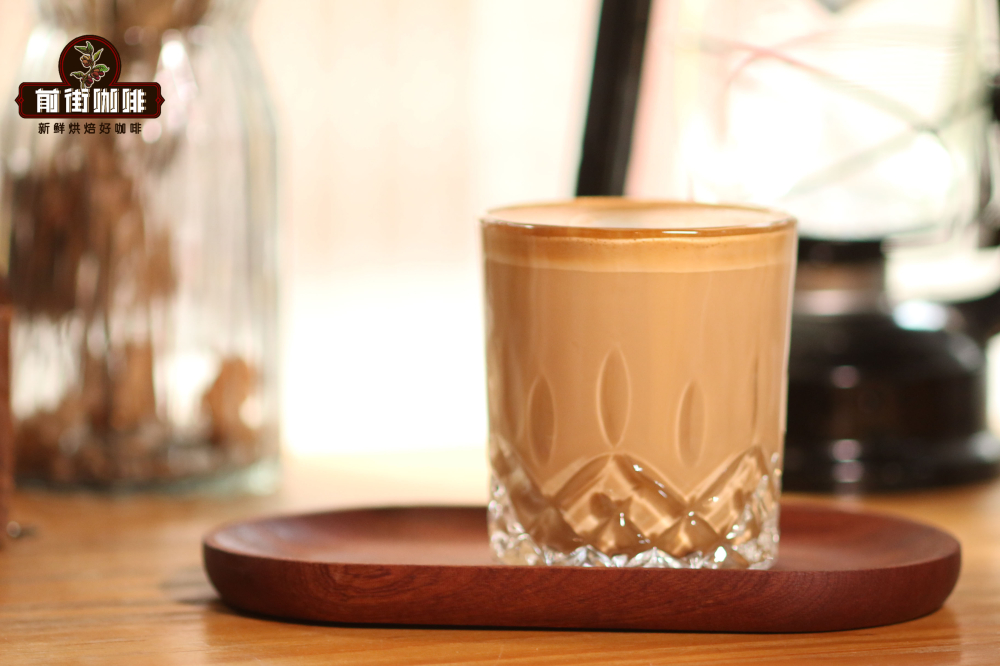
When serving the Flat White, Front Street retains the characteristics of a small cup size, thin milk foam, and a double ristretto as the base. To make a Flat White, a ceramic cup of about 200ml, smaller than that used for a hot latte, is chosen, and the freshly extracted double Ristretto is poured in. Front Street believes that too much milk should not be used, otherwise it will overpower the rich aroma of the coffee, so the coffee-to-milk ratio here is 1:5, which is about 150ml of fresh milk.
Front Street wants guests to drink a Flat White that is creamy and smooth rather than too "watery," so it keeps a 0.3cm layer of milk foam; therefore, when frothing the milk, less air is incorporated than for a latte, so that the foam layer can be this thin. Front Street believes the milk temperature is best controlled at 55 to 60 degrees Celsius, which both highlights the sweetness and keeps it from being too hot. Finally, the frothed milk is evenly integrated into the coffee liquid, and it is ready to enjoy.
The Flat White at Front Street stores presents aromas of vanilla, cream, chocolate milk, and whisky-filled chocolate, along with the sweet-and-sour notes of berries; it is smooth, fragrant, and mellow on the palate, with a very long-lasting finish.
For professional coffee knowledge exchange and more coffee bean information, please follow Coffee Workshop (WeChat public account: cafe_style)
For more specialty coffee beans, please add the private WeChat of Front Street Coffee (FrontStreet Coffee), WeChat ID: qjcoffeex
The above content is compiled by CoffeeHunters, a coffee news website.


