







What is SOE coffee and how does it differ from a blend?
SOE stands for Single Origin Espresso: espresso pulled from beans grown in one place rather than a blend of several origins. The style is chosen to highlight a region's aroma and richness, and barista competition entrants often use it. SOE is not automatically specialty coffee, so bean selection matters more than the label.
Front Street Coffee released a Red Cherry SOE, an Ethiopian natural bean with fruity sweetness and floral notes, plus a medium roast intended for home espresso machines. A common starting point is 20 g of grounds, a 27-second extraction and 40 g of liquid, then adjusting grind, dose and yield to taste.
In recent years, SOE has continued to gain popularity in the coffee world, and many barista competition contestants frequently choose this type of coffee. SOE stands for Single Origin Espresso, which typically highlights the aroma and richness of the region itself. However, SOE is not inherently equivalent to specialty coffee, and selecting beans actually tests one's skills even more—generally, single-origin beans with high flavor distinctiveness are chosen for production. Front Street Coffee has also released SOE products, using Ethiopian natural Red Cherry; this bean has prominent fruity sweetness and floral notes, and Front Street Coffee even launched a medium-roast version specifically for home espresso machines. So, what exactly are the differences between SOE, pour-over, and espresso blends? What parameters should be paid attention to during extraction? This article will explore these questions and also introduce Front Street Coffee's approach to selecting espresso blend beans.
In recent years, SOE coffee has become increasingly popular, and many barista competition contestants frequently use SOE coffee. SOE coffee relatively highlights the flavor and richness of the origin. So what is SOE coffee ? SOE stands for Single Origin Espresso, known in Chinese as single-origin espresso. Although it represents single-origin espresso, it does not necessarily equal specialty coffee, so great effort is needed in selecting coffee beans. Generally, single-origin coffee beans with easily identifiable flavors are chosen as SOE, so that espresso with unique flavors can be produced.
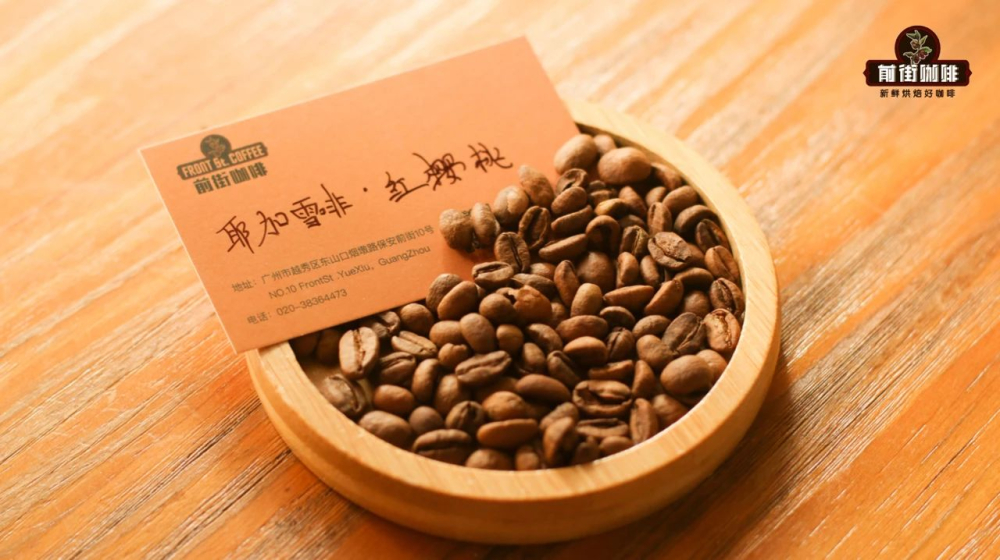
Front Street Coffee has also made SOE coffee, choosing the highly distinctive Ethiopian natural Red Cherry. This coffee bean is Front Street Red Cherry from a Dutch trader and an Ethiopian local cooperative, using fully red coffee cherries that are then naturally processed. So Front Street Red Cherry coffee beans have very rich fruity sweetness and floral notes, making them not only very suitable for pour-over coffee but also for cold brew. As a Yirgacheffe with extremely high flavor distinctiveness, Front Street Coffee has also launched a medium-roast Front Street Red Cherry SOE for home espresso machines.
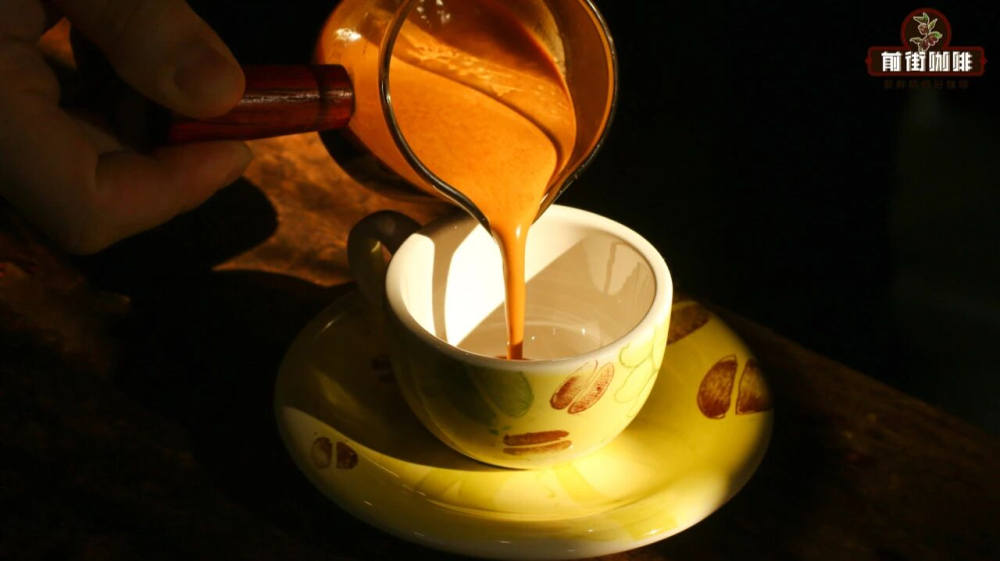
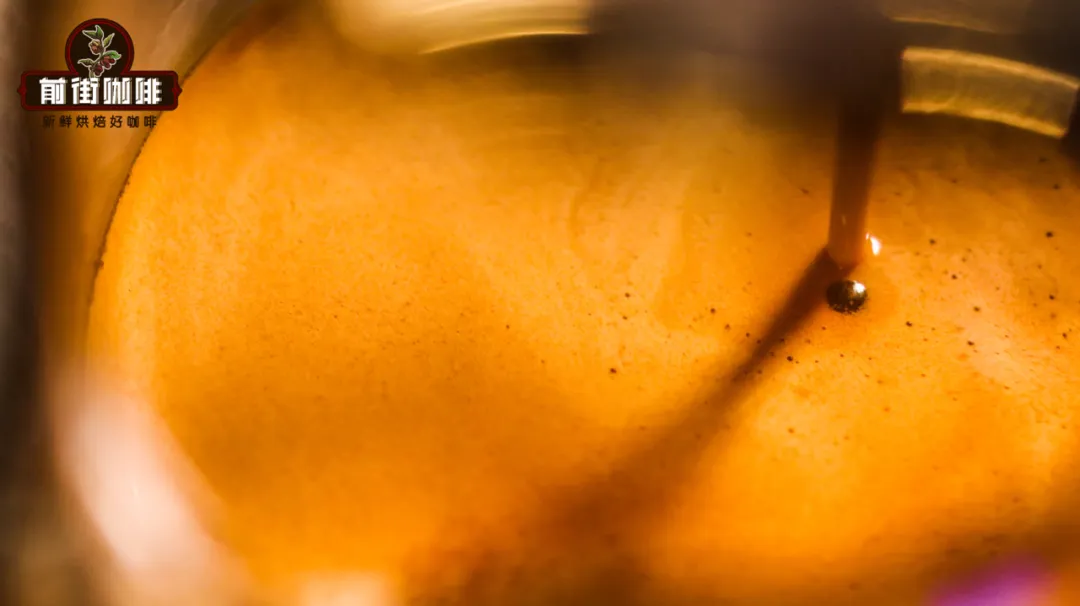
Then we use 20g of Front Street Red Cherry coffee grounds, with an extraction time of 27 seconds, and the extracted coffee liquid is 40g. If you carefully observe this extracted liquid, you will find a layer of brownish-red crema floating on the surface of the coffee, smelling very fragrant. After tasting, there are citrus, berry, fermented aromas, a viscous body, medium bitterness, medium-high acidity, and a bright, lively acidity.
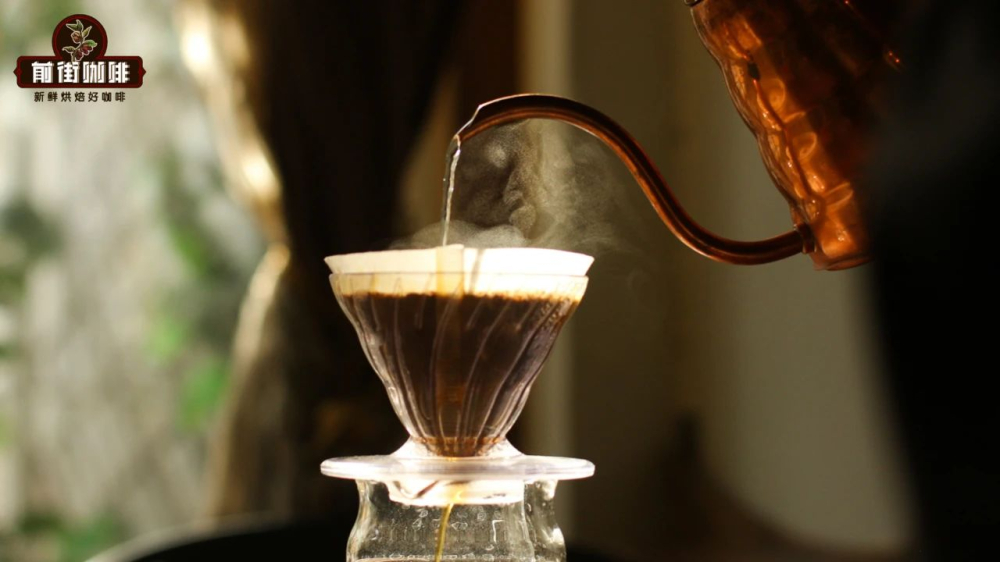
You will find that if Front Street Coffee uses the same natural Red Cherry coffee beans for pour-over, generally there will be no crema on the surface of the pour-over coffee liquid. This is because the filter paper used in pour-over coffee has a filtering effect, filtering out some of the oils from the coffee beans.
SOE coffee and pour-over coffee share one thing in common: the coffee beans chosen generally are not roasted too dark in order to highlight the flavor of the origin. For example, Front Street Coffee's pour-over single-origin coffees cover more than 50 origins, most of which are medium-light roasts, and only for special reasons would medium-dark or dark roasts be used based on the origin's flavor.
This is the difference between SOE coffee and pour-over coffee. So what is the difference between SOE coffee and espresso blend coffee? First, among the coffee beans used in traditional espresso, most are blended from multiple coffee beans. Some espresso beans may be blended from as many as ten different beans, and the minimum is also three or more. The greatest advantage of using espresso beans blended from multiple coffee beans is that it ensures stability of flavor and mouthfeel. For example, Starbucks and Luckin Coffee both use espresso blends.
SOE coffee, on the other hand, uses single-origin coffee beans. Although it better highlights the flavor of the origin, SOE coffee also has drawbacks. SOE coffee is greatly affected by seasonality, because the harvest time and quantity of coffee beans vary each season, which leads to instability in single-origin beans. In addition, since coffee is an agricultural product, it is often affected by weather, cultivation, planting, and many other factors, making yield instability very likely. Second, the grade of SOE is often higher than that of blends, so you will find that the price of SOE coffee in coffee shops on the market is much higher than that of espresso.
Moreover, the beans generally used for espresso are blend beans, and the requirements for green coffee beans are not as high as those for SOE coffee. In addition, they can be matched according to the coffee flavor you want. For example, Arabica coffee beans are rich in oils and have good flavor and mouthfeel, but the body is not rich enough, the acidity is too high, and the coffee color is not bright enough. Therefore, many baristas add an appropriate amount of Robusta beans when blending to adjust the richness and bright color of the coffee. Because Robusta is relatively cheap, the espresso blended with it will not be priced as high as SOE coffee.
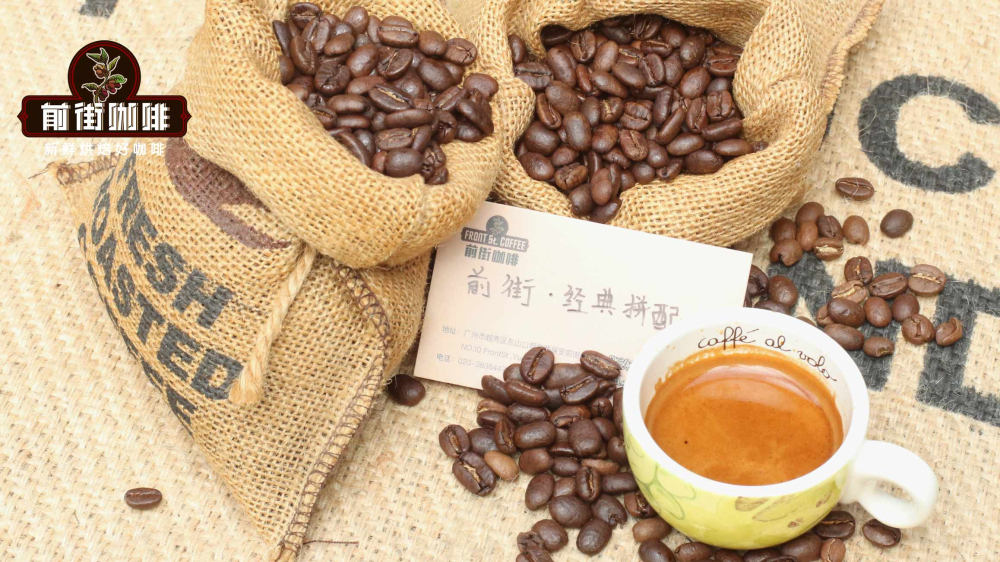
Because Front Street Coffee is also a self-roasting coffee bean brand, the espresso blend beans used in its stores are also formulated according to the coffee flavors desired by itself and the public. Among them, Front Street Commercial Blend is specially designed for opening coffee shops. It uses a combination of Colombian washed coffee beans plus Brazilian semi-natural coffee Arabica, along with a small amount of Robusta coffee beans, and has flavor notes of nuts, cocoa, and caramel. Compared with other espresso coffees, Front Street Commercial Blend uses the typical combination of Brazil and Colombia, then adds a small amount of Robusta, adding the finishing touch to the original flavor layers. The coffee shows complex nutty aromas such as toasted bread, almond, and walnut, with good crema fluidity and a low-acid, rich body.
After drinking too much traditional darker-roast coffee flavor, many customers hope to drink a non-bitter Americano or latte. At this time, you can choose Front Street Strawberry Candy Espresso Blend. From the name, you can tell this is a coffee with extremely high sweetness, because it is composed of three single-origin coffees from different regions. Besides its own rose floral aroma, Front Street Strawberry Candy also lets you taste grape, dried blueberry, sweet orange, and fruit candy flavors in Americano and latte, with a very unique mouthfeel.
I wonder if everyone has noticed that Front Street Coffee does not have many types of espresso blend beans. Generally speaking, if there are too many types of blend beans, not only will it fail to achieve the purpose of blending, but it will also make the coffee bean flavors very chaotic, producing the opposite effect. Therefore, Front Street Coffee suggests using no more than five types of beans.
There is also the matter of the parameters for extracting espresso. Whether it is the SOE coffee mentioned earlier by Front Street Coffee or espresso, the parameters need to be adjusted constantly, because you need to know that factors such as the concentration and extraction time of espresso are more demanding than those of pour-over coffee. A slight deviation will be magnified exponentially in the flavor of a cup of espresso.
For example, when Front Street Coffee makes espresso, it uses a coffee grounds-to-water ratio between 1:1.5 and 1:2.5, and a ratio of 1:2 is more commonly used, such as extracting 40g of coffee liquid from 20g of coffee grounds. If it is lower than this ratio, the coffee will taste very intense and heavy, and may even carry a bitter taste. If it exceeds this ratio, the coffee will be very light and may also bring sharp acidity.
There is also the matter of extraction time. Whether it is pour-over coffee or espresso, there are concepts of over-extraction and under-extraction. Generally speaking, the time to extract a shot of espresso is about 20-35 seconds. The last issue is the flow rate of the coffee liquid. If you find that the first drop of coffee liquid begins to fall about five seconds after pressing the extraction button, and the subsequent flow rate is relatively even, it means this is normal. If the coffee liquid takes a long time to come out or the flow rate is too fast, it may be that the coffee grounds are too fine or too coarse, which leads to this extraction situation.
After everyone has adjusted the corresponding coffee parameters, Front Street Coffee believes that whether making SOE coffee or espresso, it will be very easy!
The above content is compiled by CoffeeHunters, a coffee news website.


