







How Do You Brew Gesha Coffee From Geisha Village?
Geisha Village Red Label is a natural-process Ethiopian Gesha, and it responds well to a gentle pour-over that keeps the white floral aroma, juicy body and honeyed sweetness intact. The beans carry citrus, creamy and tea-like notes when extraction is kept moderate.
The Geisha variety was found in Ethiopia's Geisha forest in the 1930s, sent to CATIE in Costa Rica as T2722 in the 1950s and 1960s, and planted in Panama in the 1970s before winning the 2004 competition. Panama geisha and Ethiopian geisha are not closely related genetically, yet both are worth tasting side by side.
Geisha coffee has always been famous for its white floral aroma, juicy body, and honeyed sweetness, and Geisha Village in Ethiopia, the birthplace of the variety, has returned to the top ranks of specialty coffee in recent years. This article starts from the historical development of the Geisha variety, outlines the establishment of Geisha Village Coffee Estate and its three core varieties, focuses on the red-label lot with outstanding value for money, and fully shares Front Street Coffee's natural processing method, roasting curve, cupping performance, and pour-over extraction parameters, helping coffee lovers brew the citrus, creamy, and tea-like flavors of Geisha Village Red Label at home.
For more specialty coffee knowledge, please follow the WeChat public account: Front Street Coffee (FrontStreet Coffee)
When it comes to Geisha coffee, many people first think of the rich white floral aroma, alluring juicy texture, and honey-like sweetness of Panama Geisha. Those familiar with the development of the Geisha variety know that the currently recognized Geisha variety was discovered in the Geisha forest of Ethiopia in the 1930s, then passed through several hands and was sent as a sample to CATIE in Costa Rica in the 1950s and 1960s, numbered T2722. In the 1970s it was distributed to Panama for planting, and in 2004 it became famous overnight after winning the Best of Panama (BOP) championship and setting a new auction price record for green coffee beans.
Although modern scientific instruments show that Panama Geisha and Ethiopian Geisha are not closely related at the genetic level, this does not mean we should give up tasting and comparing the differences between the two. After all, being open to all is the wise approach.
Geisha Village is a representative estate of Ethiopia's return to the top ranks of world coffee, and it has always been a specialty coffee that Front Street does not want to miss. It enjoys extremely high recognition, and the estate owner's passion and persistence for coffee are the guarantee of long-term stable quality. Geisha Village grows the Geisha variety itself, and this is also the source of the top Panama Geisha variety. Superior growing conditions and post-harvest processing make Geisha Village coffee expensive yet still widely admired.
Whether natural or washed, Geisha Village coffee shows elegant floral and fruity aromas and a round, smooth mouthfeel. Front Street has always preferred coffee beans with distinctive character and a background story, and the coffee produced by Geisha Village Coffee Estate fits this standard perfectly. What we are sharing today is the red label, which offers relatively good value among Geisha Village coffees.
Geisha Village
In 2007, documentary director Adam Overton and his photographer wife Rachel Samuel came into contact with the Gera coffee forest in the Bench-Maji region while filming a coffee documentary for the Ethiopian government. This experience not only gave them a new understanding of the great land of Ethiopia, but also inspired the idea of establishing their own coffee estate and brand.
In 2009, they were fortunate to meet the renowned owner of Hacienda La Esmeralda and BOP judge Willem Boot, and Willem Boot's ideas also opened up new thinking for the Overton couple: return to Ethiopia and look for the original home of Geisha. Eventually they came to Bench-Maji, the area in southwestern Ethiopia near South Sudan, where many places are called Gesha Village and which is the most likely place to find original Geisha. When they arrived in 2011, there was still nothing on the estate.
Adam followed Willem Boot on an "expedition" in the forests around the estate, and in a jungle magically wrapped in dense forest they found many wild tree species, and what delighted them most was wild Geisha. Only later did they learn that this was the Gori Geisha forest, where the Geisha variety was first discovered. So they collected seeds from the original Geisha trees, selected them, and planted them in Geisha Village. They decided to establish an estate here, named Geisha Village Coffee Estate, located about 12 miles from the Gori Gesha forest and covering 475 hectares.
Geisha Village Coffee Estate is completely different from the vast majority of Ethiopian farms. It is not a small farm but a large 500-hectare farm with its own washing station and laboratory, located in the southwest near the Sudanese border. What is most special is that the entire farm grows only the Geisha variety, rather than the Ethiopian heirloom varieties whose exact identity is generally difficult to determine. Geisha Village divides the farm into 8 blocks and grows 3 main Geisha varieties, all with seeds collected from nearby forests.
The farm broke ground in October 2011 and welcomed its first harvest in 2015. Because of the enthusiastic response from all sides, with the assistance of Panama estate owner Willem Boot, they held their first international auction on May 31, 2017, offering 21 micro-lots, of which 19 were 120 kilograms and the remaining lots were slightly smaller. Bidders from Europe, North America, Asia, and Australia were more active than expected, and the top lot finally closed at $85 per pound, setting a new auction price record for African coffee beans.
Coffee varieties at Geisha Village
Geisha Village has three varieties in total, named after the expedition teams at the time the coffee was discovered: Gesha1931, Gori Gesha, and Illubabor provided by the Ethiopian Coffee Research Center.
Gesha1931 was confirmed by observing plant morphology, bean shape, size, and cupping performance, and it is closest to the mother plant of Panama Geisha. The Gori Gesha variety, by contrast, was collected by the owner of Geisha Village during a personal expedition in 2011 from the wild Geisha forest of Gori Gesha, 20 kilometers from the current farm, and no duplicate samples have yet been found elsewhere.
Geisha Village Red Label Geisha
Geisha Village's coffee grading includes: auction, gold label, red label, green label, and CHAKA. Among them, the red label grade requires the lot to be fully traceable, score above 88 points under the SCA evaluation system, and have the typical flavor of Ethiopian Geisha Village. Through cupping, Front Street found that Geisha Village Red Label has the complex fruit, honey, and floral notes characteristic of classic Geisha, plus a little of the bright, uplifting acidity of African coffee, though its overall flavor intensity and complexity are slightly weaker than the gold label lots. At Front Street stores, you can taste Geisha flavor of this grade for only 30 yuan, making it a single-origin lot with very high value for money.
Front Street Coffee (FrontStreet Coffee): Geisha Village Coffee Estate Red Label coffee beans
Region: Bench Maji, Ethiopia
Estate: Geisha Village Coffee Estate
Altitude: 1909 meters—2069 meters
Variety: Gori Gesha
Estate fine natural processing
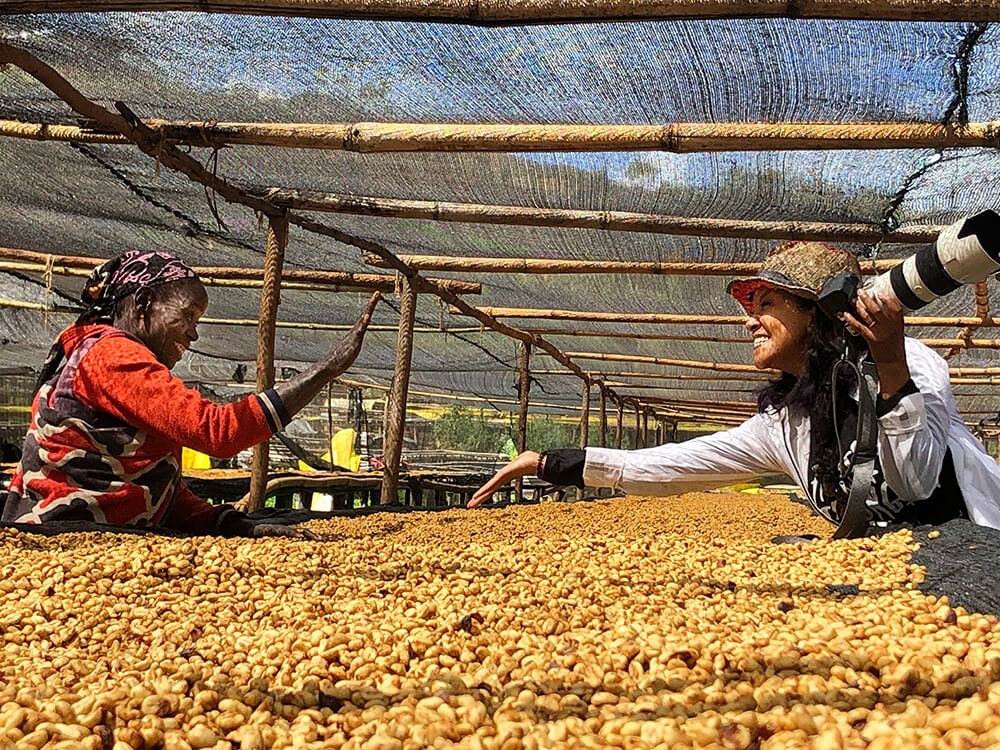
Front Street Coffee (FrontStreet Coffee)'s Geisha Village coffee uses natural processing. First, floating matter and impurities are removed, then the cherries are dried in thin layers on African raised beds covered with plastic sheeting. When using drying beds, they are screened again to remove insect-damaged beans and greenish beans. The total drying time is 18 to 30 days. Front Street believes that naturally processed coffee has a prominent sweetness, soft acidity, and a flavor profile that presents complex fruit tones.
Front Street Coffee (FrontStreet Coffee) roasting analysis
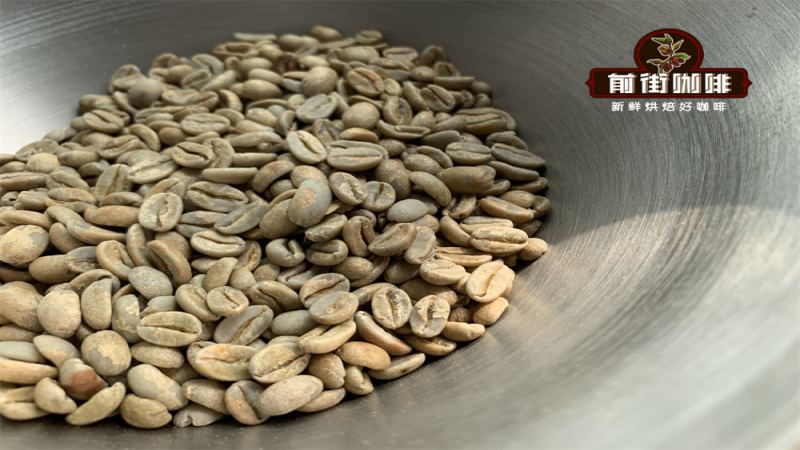
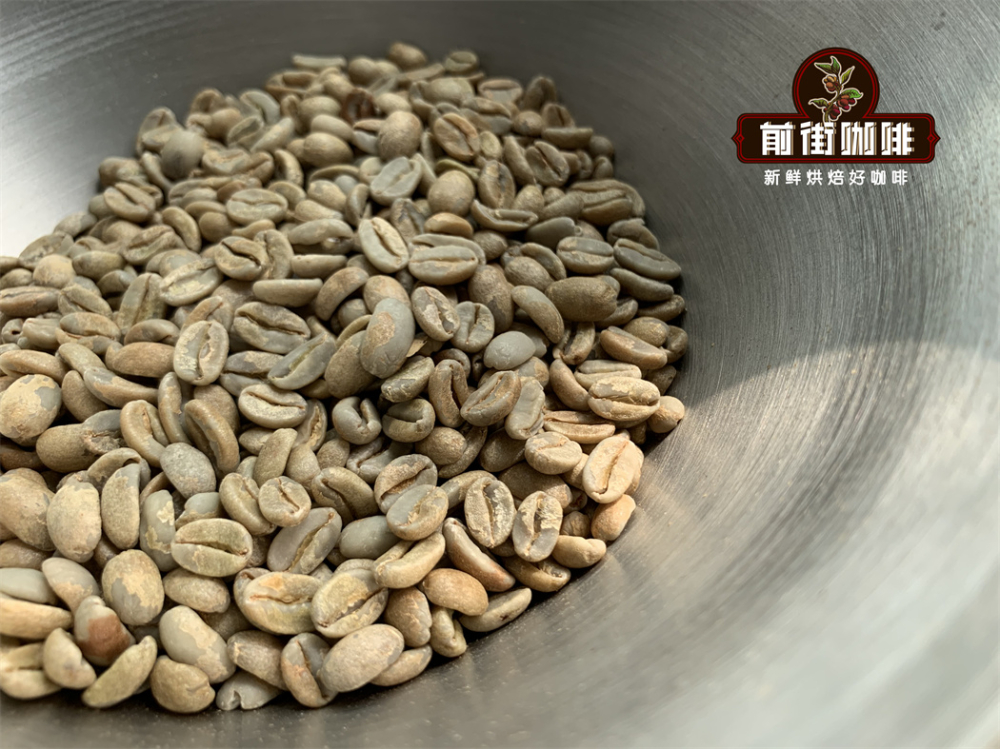
Because this lot is coffee from the new 2020 crop and has a relatively high moisture content, the dehydration time was extended during roasting. It was finally determined to be a medium-light roast to highlight the fruity sweetness.
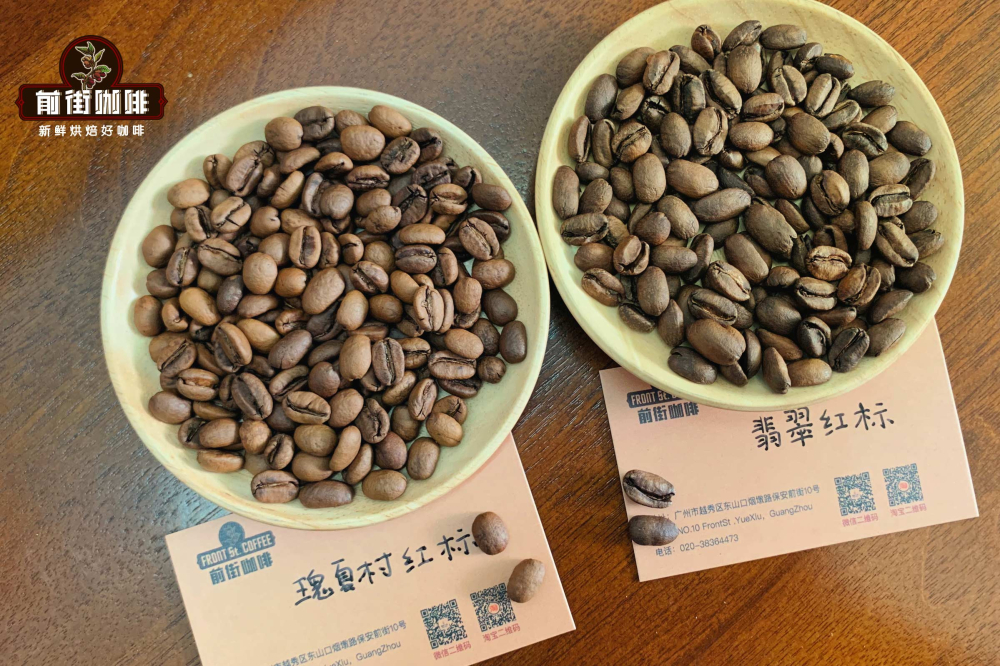
Yangjia 800N, charge weight 500g: charge at 175°C, power 130, damper opened to 3; turning point at 1'36", when the temperature is 92.8°C, open the damper to 4 at 3 minutes and increase power to 140; when the temperature is 152.6°C (6:26), the bean surface turns yellow, the grassy smell completely disappears, and the dehydration stage begins, with airflow and power reduced to 100; at 8'20", the bean surface shows ugly wrinkles and dark streaks, and the toasted bread smell clearly turns into coffee aroma, which can be defined as the prelude to first crack. At this time you need to listen clearly for the sound of first crack. First crack begins at 9'55", the damper is opened to 5, and after first crack it develops for 1'30'' and is dropped at 193.5°C.
Front Street Coffee (FrontStreet Coffee) cupping report
Brewing parameters
Dose: 15 grams
Coffee-to-water ratio: 1:15
Grind size: fine grind for pour-over (78% passing through a No. 20 standard sieve)
Water temperature: 90°C
Front Street brewing method: first rinse the filter paper and preheat the dripper and coffee pot. Use 30 grams of water for a 30-second bloom, then pour in a small stream in circles until 125 grams for a stage break; when the water level drops and is about to expose the coffee bed, continue pouring in circles until 225 grams and stop pouring; when the water level drops and is about to expose the coffee bed, remove the dripper. (Start timing from the beginning of the bloom.) The total extraction time is exactly 2 minutes.
Front Street Geisha Village Red Label Geisha coffee beans pour-over flavor description: Citrus, cream, fermentation notes, tea-like quality, juicy mouthfeel, plum, high cleanliness.
The above content is compiled by CoffeeHunters, a coffee news website.


